
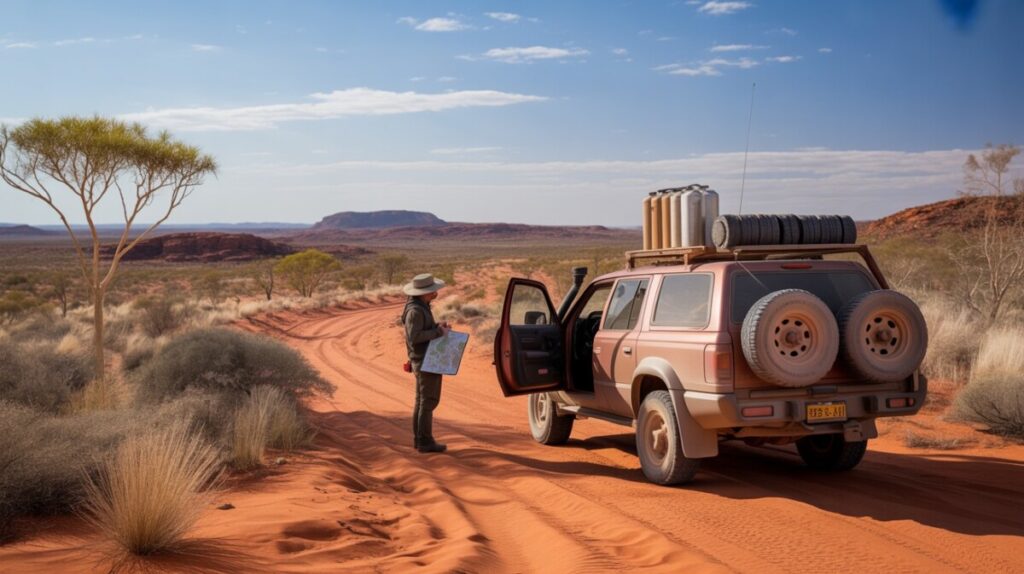
Driving in Australia’s Red Centre is less about finding the most scenic road and more about reading the conditions correctly. Before you commit, check road access, weather, fuel range, and whether your route suits a standard vehicle or a 4WD.
If you’re still comparing trip styles, it can help to think of this page as the practical side of an outback journey, while all-wheel-drive rental options cover the vehicle choice stage and the broader route planning pages in the cluster can help you benchmark drive expectations. This guide focuses on the Red Centre itself: distance, remoteness, closures, and the decisions that keep the trip realistic.
What to check first
- Road Surface sealed, gravel, or sand changes what vehicle you need.
- Weather Window heat, rain, and dust can shift access quickly.
- Fuel Range remote stretches can be much longer than they look on a map.
- Communications phone coverage is patchy, so plan backup contact options.
- Permits And Local Rules confirm restrictions before you leave.
Red Centre Driving At A Glance
The Red Centre rewards patient, prepared drivers. It is not a place to improvise around long distances, late starts, or vague assumptions about services. A successful trip usually comes down to choosing the right road, leaving enough fuel margin, and matching your itinerary to the season rather than the other way around.
| Planning factor | Best choice | Why it matters |
|---|---|---|
| Road type | Sealed road for first-time visitors; 4WD for rougher tracks | Surface determines comfort, speed, and safety margin. |
| Timing | Cooler months or shoulder season | Heat and sudden weather changes are the biggest day-to-day disruptors. |
| Vehicle setup | Reliable tyres, good spare, fluids checked, recovery basics on board | Breakdowns are harder to solve when help is far away. |
| Fuel planning | Top up early and keep a wider margin than you would in a city | Fuel stops are spaced out and hours can be limited. |
| Risk level | Moderate on sealed routes, higher on remote or unsealed tracks | Your route choice should match experience and backup capacity. |
When This Page Is The Right Fit
This guide is for readers who want to understand the practical side of an Australia Red Centre road trip before they book, pack, or set off. If you need a more general scenic-drive frame, the cluster includes other route ideas, but the Red Centre has its own logic: longer distances, thinner services, and more dependence on weather and road advisories.
That is also why this page should not be read like an inspirational travel essay. It is more useful as a planning filter. Start with road conditions, confirm what your vehicle can handle, and then build the route around what is open and realistically supportable. A place like the Badlands scenic-drive guide is a better match for a broader scenic-route comparison, while this page stays focused on the Red Centre’s remote driving realities.
How To Plan The Route Without Overcommitting
A strong Red Centre itinerary starts with the map, not the wish list. Once you know where fuel, accommodation, and services sit along the route, the rest becomes much easier to judge. The most useful habit is to work backward from the longest unsupported stretch and make sure the vehicle, timing, and driver stamina all fit that gap.
- Keep Your Daily Driving Realistic long desert distances look manageable until you factor in stops, photo breaks, and rougher surfaces.
- Build In Buffer Time delays from weather, closures, or slow-going sections are common enough to plan for.
- Assume Fewer Services if a town is your next fuel or food point, do not assume the next one arrives quickly.
- Check Road Notices On The Day conditions can change after rain or strong wind even when the route looked clear earlier.
If your trip is part of a larger rental decision, a practical next read is rental car insurance basics, because remote travel is one of the few situations where coverage details and excess terms become much more than fine print.
Vehicle Choice, Fuel, And Communications
For sealed highways and the most straightforward outback connections, a well-maintained standard rental can be enough. Once you move toward rougher roads, corrugations, or tracks with looser surfaces, the value of higher clearance and stronger tyres rises quickly. That is the practical reason many travelers compare vehicle categories before they compare scenery.
Fuel is another point where city instincts can fail. In the Red Centre, the smartest habit is to treat every refuel as an opportunity, not a chore. Top up earlier than usual, and avoid assuming that a short side trip will stay short once you factor in detours, roadworks, or slower speeds. Communications matter just as much: the farther you travel from towns, the more important it becomes to tell someone your route and expected arrival time before you leave.
A Practical Packing Shortlist
- Extra drinking water and a simple snack reserve
- Paper map or offline navigation backup
- First-aid basics and any personal medication
- Sun protection, layers, and closed shoes
- Tyre pump, jack, and a proper spare if your vehicle provides one
- Charging options for phone and camera gear
Timing, Closures, And The Best Window To Travel
Even when the destination stays the same, the best time to drive it can change the whole experience. The Red Centre is often most manageable when temperatures are lower and daylight is easier to use efficiently. In hotter periods, drivers need more caution around heat exposure, tyre stress, and fatigue. After rain, some roads become slower or temporarily unusable, so the “best” window is as much about access as weather comfort.
| Travel window | What to expect | Planning note |
|---|---|---|
| Cooler season | More comfortable driving, fewer heat stress issues | Best for first-timers and longer days behind the wheel. |
| Shoulder season | Balanced conditions, but weather can still shift | Book with flexibility and keep an eye on road notices. |
| Hot periods | Higher fatigue, more strain on tyres and passengers | Start early, drive conservatively, and carry extra water. |
| After rain or storms | Closures, detours, or slow surfaces can appear quickly | Confirm access again on the travel day rather than relying on yesterday’s advice. |
Safety, Comfort, And What Experienced Drivers Do Differently
Experienced outback drivers tend to be cautious in boring-looking ways: they leave early, they do not push range limits, and they keep the day simple when conditions are uncertain. That attitude is useful because the environment rewards patience more than bravado. The goal is not to “conquer” the route; it is to finish it comfortably and with enough margin left over to enjoy the place you came to see.
- Check The Weather Before Departure And Again On Arrival Day.
- Let Someone Know The Route And Timing. Remote travel is easier to manage when one person outside the car knows the plan.
- Keep The Pace Steady. Aggressive driving increases fatigue and can punish tyres on rough surfaces.
- Use Daylight Wisely. In remote country, arriving before dark is a real safety advantage, not just a preference.
- Carry A First-Aid Kit And Know The Basics. Small injuries are easier to handle when help is distant.
There is a reason research and traveler reports alike keep returning to the same themes: nature can feel restorative, but only when the logistics are under control. The Red Centre offers that rare combination of awe and constraint. It can be deeply rewarding, but the reward is strongest when the practical pieces are handled first.
If You Want The Trip To Feel Easy, Book And Confirm In This Order
Start with the route, then the vehicle, then the backup plan.
That sequence prevents the most common outback mistake: booking first and discovering later that the road, weather, or fuel stops do not suit the vehicle you chose.
If you are comparing vehicles for rougher conditions, the most relevant internal next step is 4×4 car hire for tough terrain and climate, which sits naturally after route feasibility and before checkout. If your trip remains on sealed roads, a standard rental may be enough, but only after you confirm the exact route and current access conditions.
A Few Questions People Actually Ask About Outback Driving
The main concerns behind most Red Centre trip searches are practical rather than poetic: can I get there safely, what kind of vehicle do I need, and what happens if the road changes? Those are the right questions to ask. The rest of the experience becomes much more enjoyable once the answer is yes, the vehicle fits the route, and your timing has enough slack for the unexpected.
Frequently Asked Questions
What Is The Most Common Problem On An Outback Drive?
The most common problem is underestimating distance, fuel use, and the impact of heat or poor road conditions. Most issues start as planning gaps rather than dramatic emergencies.
Do I Need A 4Wd For The Red Centre?
Not always. If your route stays on sealed roads, a standard vehicle may be fine. If you plan to use rougher tracks or remote unsealed roads, a 4WD becomes much more important.
How Do I Reduce Risk Before Leaving?
Check road conditions, leave with extra water, top up fuel early, carry a backup navigation method, and make sure someone knows your route and expected arrival time.
When Should I Confirm The Route Again?
Confirm it again on the day you leave, especially after rain, storms, or heat events that may affect access or slow travel.
The Red Centre is at its best when the planning is clear and the expectations are realistic. If you treat it as a route to prepare for rather than a mystery to figure out on the fly, the drive becomes safer, calmer, and far more rewarding.

Jessica Malone is a passionate writer and travel enthusiast, specializing in affordable car rental solutions. With a keen eye for detail, she explores various aspects of cheap car rentals, offering readers practical tips and insights to maximize their travel experiences. Through her engaging articles, Jessica aims to empower travelers to make informed decisions and navigate the world of online car rental services with ease.




I really resonate with your thoughts on Outback drives. There’s something about those expansive, rugged landscapes that really puts life into perspective, right? It’s like the further you go into the Outback, the more you shed those everyday worries. I remember my own Outback trip where I had to adapt our route because of a sudden storm. It turned what could’ve been a setback into an incredible detour through breathtaking canyons that we would’ve missed otherwise.
Your exploration of Outback drives indeed highlights several critical aspects of adventure travel and the unique allure of Australia’s remote regions. The emphasis on preparation, safety, and adaptability resonates particularly well, as these elements are not just practical essentials but also serve to deepen the travel experience.
Your insights into Outback drives beautifully highlight the unique blend of adventure and preparation that defines this profound experience. As someone who recently embarked on a road trip through the Australian bush, I can truly appreciate the careful planning you emphasize—it’s not just about hitting the road, but about crafting a journey that resonates on both a personal and spiritual level.
Your experience in the Australian bush perfectly captures the essence of what makes an Outback drive so special. It’s fascinating how the journey transforms from something purely logistical into a deeply personal exploration. The vastness of the landscape often mirrors what’s happening inside us. That feeling of isolation can lead to profound reflections—about life, choices, and the world around us.
Your insights on Outback drives are truly inspiring! The way you’ve highlighted the importance of preparation, safety, and adaptability resonates deeply with anyone who has ventured into remote areas. The vastness of the Outback indeed invites a transformative experience, and it’s fascinating how something as simple as planning can significantly affect the outcome of such adventures.
I appreciate your thoughts on Outback drives. There’s something so grounding about the vastness of that landscape, isn’t there? I remember my first trip out there; the serenity was surreal, but I quickly learned that preparation is key. It’s not just about having supplies, but also being mentally ready for the unexpected.
Your exploration of Outback drives truly resonates, especially the emphasis on preparation and adaptability in such unpredictable environments. I recently took a road trip in a remote area and found that having a solid plan for potential road closures and weather changes was crucial. It highlighted how a little foresight can transform an adventure from potentially stressful to genuinely enjoyable. It also made me reflect on the diminishing boundaries between our fast-paced lives and the serenity of nature.
You’ve touched on an essential aspect of adventuring in the Outback: the unpredictability and the need for thorough preparation. While preparing for an Outback drive is crucial, I can’t help but think about how technology has changed our approach to this kind of travel. Tools like navigation apps and real-time weather updates can enhance our safety and flexibility on these journeys. However, I often wonder if this reliance on technology detracts from the raw experience of disconnecting and immersing oneself in nature.
I really appreciate your take on the Outback drive! It certainly resonates with the adage, “A journey of a thousand miles begins with a single flat tire,” or something along those lines. Just the thought of venturing into those rugged landscapes gets my mind swirling with both excitement and a touch of anxiety—who wouldn’t worry about unexpected roos on the road?
Your take on the journey really captures that mix of excitement and anxiety. The idea that “a journey of a thousand miles begins with a single flat tire” feels particularly fitting when thinking about the Outback. There’s something deeply evocative about those wide-open spaces and the unpredictability they bring. It makes me think of how much we rely on our plans and routines—yet, nature has a way of reminding us just how little control we truly have.
Your reflections on Outback drives resonate deeply with me, especially the emphasis on preparation and adaptability. I’ve always believed that the journey is just as important as the destination, and the Outback drives exemplify this philosophy perfectly. The remote landscapes of Australia offer something uniquely transformative—an opportunity to experience nature in its purest form and to truly disconnect from the hustle and bustle of everyday life.
Your insights on preparing for an Outback drive resonate deeply with me, particularly the emphasis on the elements of preparation, safety, and adaptability. This mirrors not only the journey through Australia’s breathtaking landscapes but also reflects broader themes in life. As someone who has ventured into both urban and remote areas, I’ve come to appreciate how the sense of adventure lies not just in the destination, but in the journey itself and how we navigate the unknown.
I really appreciate your perspective on Outback drives and how crucial preparation is for making the most of these adventures. It reminds me of my own experience driving through the Australian outback a couple of years ago. I was so excited about the adventure that I almost skipped some preparation steps, like checking road conditions and weather predictions. Thankfully, I did my homework on permits and local advisories, which saved me from a last-minute scramble!
Your insights on Outback drives truly capture the essence of what makes these adventures so unique. I resonate with your emphasis on preparation and adaptability; those are crucial when venturing into remote areas where conditions can change rapidly.
Your insights on Outback drives truly resonate with me, particularly the emphasis on preparation and adaptability. Those long stretches of rugged terrain not only challenge our physical limits but also invite us to reflect on our place within the vastness of nature. I remember a trip to the Australian Outback where we encountered unexpected weather changes and road closures, forcing us to rethink our route. It turned out to be one of the most enriching experiences, leading us to discover hidden gems off the beaten path.
I truly resonate with the insights you’ve shared about Outback drives and how they can be transformative experiences. The emphasis on preparation, safety, and adaptability highlights the critical nature of planning in such remote explorations—these aren’t just journeys; they’re immersive encounters with the natural world that demand our respect and attention.
Your insights into Outback drives resonate with me, particularly regarding the transformative nature of these adventures. Having just returned from a road trip through some of Australia’s less-traveled routes, I can confirm the importance of preparation and adaptability that you highlighted. The isolation of the Outback truly has a way of disconnecting you from the noise of daily life, allowing for a deeper appreciation of the landscapes and the moments of solitude.
Your insights on Outback drives resonate deeply with me. The untouched landscapes and the sense of adventure are indeed transformative. I recall a trip I took through the Flinders Ranges, where the isolation forced me to unplug and truly connect with my surroundings. The preparation you mentioned can’t be overstated; I learned the hard way about checking road conditions when a sudden storm altered our route. It’s this unpredictability that makes such journeys so rewarding, though, don’t you think? Balancing excitement with safety creates a unique experience that can feel both daunting and liberating. Have you had any particular challenges on your Outback adventures that reshaped your perspective on travel?
Your insights on planning an Outback drive resonate with my own experiences exploring remote areas. Preparation truly is key; I’ve encountered my fair share of unexpected road closures and unpredictable weather during my travels, especially in regions as vast and dynamic as the Outback. It’s fascinating how these experiences can shift our perspective on travel—every obstacle can become part of the adventure if approached with the right mindset.
This is a crucial reminder about the complexities of planning a trip through Australia’s Red Centre. I can relate to the importance of understanding the nuances of road conditions and the prevailing weather, especially given how quickly situations can change in remote areas.
It’s fascinating to think about how much planning goes into an adventure in Australia’s Red Centre! Reminds me of when I tried to drive through the Outback with my college buddy. We were in a standard sedan, convinced we could conquer the land with nothing but a map and sheer willpower. Spoiler alert: we ended up stuck on a dirt path that was more ‘frozen tundra’ than ‘sunburnt country’!
This is such a valuable reminder about preparation before hitting the roads in the Red Centre! I remember planning a trip there a few years ago, and the weather played a huge role in our itinerary. We ran into unexpected closures due to rain, which shifted our plans entirely. Your point about checking road conditions and permits is spot on—it’s essential for making the most of such an incredible landscape!
I found your guide on navigating the unique driving conditions in Australia’s Red Centre incredibly insightful. It’s so true that many travelers, myself included, can get swept up in the allure of scenic routes or the excitement of adventure without fully considering the practical factors that can make or break a trip.
It’s interesting to see the emphasis on planning and adaptability when it comes to driving in Australia’s Red Centre. I remember my own experience driving in remote areas, and it’s so true that the conditions can shift dramatically. One of the key takeaways for me was learning to prioritize local weather updates. I recall a trip to a national park where a sudden downpour turned a perfectly passable gravel road into a muddy challenge. Fortunately, we checked the conditions beforehand, which saved us from getting stuck.
Ah, the great Australian outback drive—it’s like being in a real-life version of “Mad Max,” but with fewer post-apocalyptic encounters and more kangaroos. Your reminder about toll roads and weather windows really hits home! I once found myself blissfully cruising along, only to be stopped by an unexpected road closure due to a surprise rainstorm. Let’s just say my plans for a smooth journey turned into an accidental detour through a less-than-glamorous roadside café that was serving questionable meat pies.
Your insights on planning road trips in Australia’s Red Centre are incredibly helpful, especially when it comes to navigating the unique challenges this region presents. I’ve embarked on a similar adventure in the Australian outback, and I can definitely relate to the importance of considering road conditions and weather. When I was there, I learned the hard way about the necessity of checking fuel availability along the route, as certain stretches can be surprisingly remote with limited resources.
Your insights on planning an outback adventure in Australia’s Red Centre resonate with me, particularly the emphasis on preparing for dynamic conditions. I’ve had my share of road trips where a lack of foresight led to unexpected detours and delays, especially when weather and road accessibility are in flux.
Your insights on navigating the unique challenges of driving in Australia’s Red Centre resonate deeply, especially given how easily plans can shift based on environmental conditions. It’s interesting to think about how the landscape is not just a backdrop, but a vital part of our journey—really influencing our choices.