
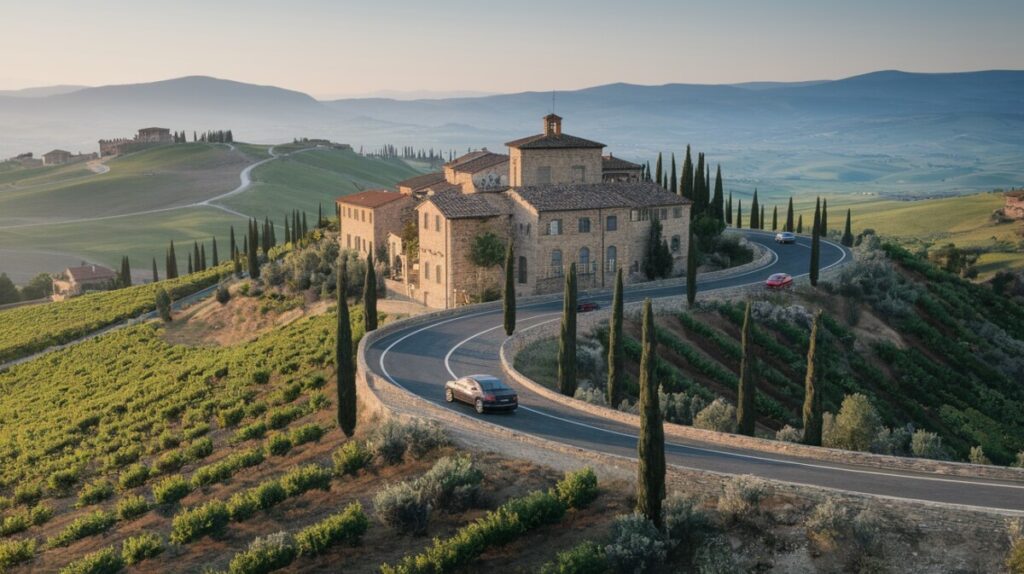
Driving Tuscany’s hill towns is one of the best ways to turn a simple itinerary into a memorable road trip. The right route keeps the experience scenic, manageable, and practical for real-world parking, timing, and village access.
Best Fit a slow road trip centered on Tuscany’s compact hill towns, with an easy base in Florence, Siena, or the Chianti area depending on your route.
If you want broader trip-planning ideas first, start with these Italy road trip ideas, then come back to Tuscany for the finer route decisions.
Planning At A Glance
Tuscany rewards drivers who keep the plan simple: fewer towns per day, earlier starts, and a car that is easy to park in tight medieval streets. The goal is not to cover everything, but to choose the right bases and a route that matches how much driving you actually want to do.
| Planning choice | Best pick | Why it works |
|---|---|---|
| Best base for first-timers | Florence or Siena | Good access, strong services, and easy access to Chianti, Val d’Orcia, and nearby hill towns. |
| Best drive style | Loop with 2–3 towns per day | Keeps the trip relaxed and leaves time for lunch, viewpoints, and parking delays. |
| Easiest season | Spring or early fall | Milder weather, better visibility, and less stress than peak summer. |
| Most important car feature | Compact size | Helps with narrow streets, tight parking, and quick turns in old centers. |
| Main thing to watch | ZTL zones and parking | Many historic centers restrict traffic, so parking outside the core is often the safer plan. |
The Route Logic That Makes Tuscany Work
Tuscany looks effortless on a map, but the best drives are usually the ones that leave room for slow roads, village stops, and the occasional detour. If you are planning a broader Italy rental first, renting a car in Italy gives you the flexibility to build the route around the hill towns rather than around train schedules.
For this kind of trip, the most useful routes are the ones that connect memorable towns without forcing a long, tiring transfer at the end of the day. Chianti works well if you want vineyards and curves between Florence and Siena. Val d’Orcia is better if you want a more open landscape with classic postcard views around Pienza, Montalcino, and Montepulciano. Both styles reward slower travel.
Chianti Loop
Best for vineyard stops, rolling roads, and an easy connection between Florence and Siena. It is one of the most practical scenic drives for a short Tuscany itinerary.
Val D’orcia Loop
Best for iconic hill-town scenery, wider views, and slower pacing. This is the classic choice if your trip is built around the prettiest landscapes.
Southern Hill Towns
Best for travelers who want fewer crowds and more time on smaller roads. It pairs well with an overnight stop rather than a rushed day trip.
Timing Matters More Than Most Travelers Expect
The easiest Tuscany hill-town drive is not necessarily the shortest one. Timing changes the whole experience: parking gets harder in the middle of the day, photo stops are better in the morning or late afternoon, and summer traffic can make even pretty roads feel slow.
If you are planning around peak months, book your car early and keep your route flexible. That matters even more if you are combining Tuscany with a wider Italian road trip. A helpful next read is these essential Italian road-trip tips, which cover the bigger driving context you will still need once you leave Tuscany.
What To Know Before You Pick Up The Keys
Most Tuscany road-trip problems are avoidable with the right car and a few simple checks. A compact car is usually the smartest choice, especially if you want to enter or park near older centers. Manual transmission is still common in Italy, so confirm the gearbox before booking if you prefer automatic.
You should also think beyond the rental counter. ZTL restrictions can affect the center of many towns, and the penalty for entering them without authorization can be expensive. In practice, that means parking outside the historic core and walking in for most visits. It is a small adjustment that keeps the day easy.
Packing Basics
Comfortable shoes, layered clothing, a phone charger, and a small backup map if your signal drops in rural areas.
Driving Basics
Use lower gears on descents, slow down for narrow turns, and leave extra space when the road surface changes.
Vehicle Check
Tires, brakes, fluids, lights, and fuel range deserve a quick check before you head into the hills.
Scenic Stops Without Making The Day Feel Crowded
The best Tuscany drives are built around a few intentional stops rather than a long list of names. A tasting, a lunch viewpoint, and one hill town with time to walk are usually better than four rushed towns that blur together. If you are choosing a larger trip theme, this scenic-drive rental guide is a useful comparison point for deciding how Tuscany fits alongside other road-trip styles.
Popular stop patterns include a vineyard lunch in Chianti, a brief walk through a walled town like San Gimignano, or a sunset pause near Pienza or Montalcino. If you enjoy photography, keep your schedule loose enough to stop when the light is good. Tuscany looks its best when you are not rushing through it.
- Choose one long lunch stop instead of several tiny ones.
- Park outside the historic core whenever signs suggest restricted access.
- Leave time for a viewpoint or roadside pull-off between towns.
- Keep one town flexible in case weather or parking changes the plan.
Ready To Build A Tuscany Route That Actually Feels Easy?
If you want the trip to feel simple from the start, choose your base town, confirm the car size, and lock in the driving pattern before you book hotels.
For the broader booking side, compare car options here and then match the vehicle to the roads, parking, and distances in your Tuscany plan.
Frequently Asked Questions
What Is The Best Way To Visit Tuscany Hill Towns By Car?
Use a compact car, keep the route to two or three towns a day, and park outside the historic center when ZTL rules or narrow streets make entry impractical.
What Are The Most Picturesque Towns In Tuscany For A Road Trip?
San Gimignano, Volterra, Pienza, Montalcino, and Montepulciano are among the most popular choices because they combine strong scenery with straightforward road-trip appeal.
Is It Hard To Drive In Tuscany Hill Towns?
The roads are manageable if you are comfortable with narrow lanes, hills, and slower driving, but parking and historic-center restrictions matter more than the roads themselves.
When Is The Best Time To Plan This Trip?
Spring and early fall are usually the easiest periods because the weather is comfortable, daylight is good, and the towns are less stressful than in midsummer.

Megan Hartley is a dedicated writer and travel enthusiast specializing in affordable car rental solutions. With a passion for helping travelers navigate the complexities of securing budget-friendly transportation, she shares insightful tips and engaging content on her platform. Megan’s expertise extends to exploring the latest trends in the car rental industry, ensuring her readers make informed choices for their journeys. Through her work, she inspires others to explore the world without breaking the bank.




It’s interesting to see the emphasis on preparation for a car journey through Tuscany’s hill towns. While having the right vehicle certainly plays a role in the experience, I wonder how much attention travelers are paying to the local culture and interactions along the way. Exploring these towns isn’t just about the sights; it’s also about the people and the unique stories they carry.
It sounds like a truly enriching experience to explore the hill towns of Tuscany! I remember my last road trip through that region, where each bend in the road revealed breathtaking landscapes and charming villages. Preparing for such a journey, I found that having the flexibility of a rental car made all the difference. It allowed for spontaneous stops at local markets and vineyards, creating unforgettable memories.
I really appreciate the focus on preparation for a road trip through the hill towns of Tuscany. It’s so true that the right planning can make all the difference in having a smooth and enjoyable experience. I remember my first trip to this beautiful region – I got caught off guard by some unexpected road closures. Familiarizing myself with local rules and checking weather advisories would have made things much easier.
It’s interesting how the right car can really shape your experience while exploring the beautiful hill towns of Tuscany. I’ve found that a compact vehicle can be particularly beneficial, as many of those narrow, winding roads can be quite challenging. Plus, it’s easier to find parking in the charming town squares!
I completely resonate with the idea of meticulous planning when it comes to exploring Tuscany’s enchanting hill towns by car. Each town has its unique charm and history, and having the right vehicle can truly enhance that experience! It’s interesting to think about how car rental services like RentaCar24.org play such a pivotal role in facilitating this journey, offering options that cater to a range of travel needs—from compact cars perfect for winding roads to larger vehicles for families or groups.
Your insights on planning a car trip through the hill towns of Tuscany are spot on! I’ve always found that a strategic approach to preparing for such adventures can be the difference between a good trip and an unforgettable one.
Your insights into planning a road trip through the enchanting hill towns of Tuscany resonate deeply with anyone who has experienced the unique joys of such travels. It’s interesting how meticulous preparation can significantly impact the overall enjoyment of the journey. I completely agree on the importance of checking for permits, weather conditions, and local advisories beforehand. These small, yet vital details can shape the experience in unpredictable ways.
I truly appreciate your insights on planning a hill towns journey, especially in such a beautiful place as Tuscany. Having traveled through several Italian hill towns in the past, I can attest to the importance of thorough preparation. Each town has its own unique charm, history, and character, and the experiences can be drastically different, even if they are just a short drive apart.
I truly appreciate the insights you’ve shared regarding the complexities of planning a journey through Tuscany’s enchanting hill towns. It’s so true that adequate preparation can make all the difference between a stressful trip and a memorable adventure. The attention to detail you advocate—like checking for weather updates, closures, and specific rules—is vital, especially in places as beautiful yet remote as those hill towns.
Ah, the Tuscan hill towns—where every turn presents a postcard-worthy view, and the wine practically begs to be poured straight from the barrel. Planning a road trip through such enchanting scenery does, however, come with its own set of challenges—like deciding whether you’re going for the charmingly retro Fiat 500 or the sleek and modern SUV to conquer those winding roads. I mean, do you want to roll up to the quaint trattoria looking effortlessly chic, or do you have secret aspirations to embark on a game of “look at me, I drive a car that could probably fit in my pocket”?
Packing for a hill towns trip is like preparing for a first date—bring the essentials but leave room for spontaneity! I love the idea of checking permits and closures; it’s like getting the cheat codes to your adventure. Just imagine rolling up to a stunning vista and realizing you could’ve brought grandma’s secret pasta recipe for a picnic, but instead you’ve packed an emergency granola bar. Not quite the same vibe!
I really appreciate the focus on preparation for exploring the hill towns of Tuscany! Having driven through that region, I can’t stress enough how valuable it is to check for local rules, weather, and even road conditions before you set out. It’s definitely true that the winding roads and charming villages can be both beautiful and tricky.
Your observations about driving through Tuscany’s hill towns resonate deeply with anyone who has experienced the enchanting landscapes and historic charm that this region embodies. The emphasis on simplicity in planning is particularly astute. It reminds me of my own travels in Tuscany, where I learned that the journey is often just as enriching as the destinations themselves.
You’ve captured the essence of Tuscany beautifully. It’s amazing how the scenery can transform a simple drive into something profound. I remember my own journey through those hill towns; it felt less like a checklist of destinations and more like a slow unfolding of stories and experiences. Each curve in the road revealed a new vista or an unexpected encounter, whether it was stumbling upon a local festival or chatting with artisans.
Your insights on driving through Tuscany’s hill towns really resonate with my experiences. I particularly appreciate the emphasis on keeping the itinerary manageable. When I traveled through Tuscany, I found that the slower pace allowed me to immerse myself more in each town’s unique culture and history.
Your insights into driving through Tuscany’s hill towns beautifully highlight the balance between exploration and practicality. Having taken a similar trip recently, I found that starting early really did enhance the experience, especially when navigating through the quaint streets.
You’ve captured the essence of driving through Tuscany perfectly! There’s something truly magical about those quaint hill towns, isn’t there? I remember a road trip I took with friends where we decided to start in Florence and ended up spending a whole day just wandering through San Gimignano. The gelato there was life-changing, and taking the time to explore off the beaten path made the experience all the more memorable.
I really resonate with the idea that a slow road trip through Tuscany’s hill towns can transform a mere travel itinerary into a truly enriching experience. Having visited Tuscany a few years ago, I found that dedicating time to savor each town allowed me to connect more deeply with the local culture, food, and unique histories.
I love how you emphasize the simplicity of planning a road trip in Tuscany! I took a similar route a couple of years ago, basing myself in Siena, and it really made such a difference. The smaller villages, like San Gimignano and Pienza, felt so much more accessible without the pressure of ticking off every town on the list.
Ah, the joys of navigating Tuscany’s winding roads—it’s like driving through a painting, isn’t it? I once thought I could do the ‘Tuscany in a day’ tour; let’s just say a missed turn led me through an olive grove instead of a hill town. I did get to sample some excellent oil, though, so it wasn’t a total loss!
I love the idea of a slow road trip through Tuscany’s hill towns—it really makes the journey feel as rewarding as the destination. I did a similar trip a couple of years ago, starting from Florence and working my way to Siena. We spent a lot of time just soaking in the scenery and stopping at little local vineyards. One of my favorite surprises was discovering a tiny village called San Gimignano. The views from up there are absolutely breathtaking!
Ah, Tuscany’s hill towns! It’s like stepping into a real-life painting where every twist and turn of the road offers a new breathtaking view. I couldn’t agree more that simplicity is key—there’s no point in trying to check off every box like a frantic tourist on a treasure hunt. Last summer, I made the mistake of trying to see seven towns in two days, which resulted in more time spent wrestling with my GPS than actually enjoying the scenery!
Your insights on navigating Tuscany’s hill towns resonate deeply with my experiences exploring the region. I once based myself in Siena and discovered how its central location made day trips to places like San Gimignano and Pienza remarkably easy. The charm of these towns often lies in their leisurely exploration rather than trying to tick off a checklist of sights.
I couldn’t agree more with your insights on driving through Tuscany’s hill towns as a transformative way to experience the region’s beauty. There’s something inherently romantic and adventurous about navigating those winding roads, flanked by sun-kissed vineyards and olive groves. On my last visit, I opted for a similar approach, centering my itinerary around Florence, and it truly made all the difference.
Your reflections on driving through Tuscany’s hill towns genuinely resonate with me. There’s something magical about weaving through those winding roads, isn’t there? Each turn offers a glimpse into a picturesque village, often revealing hidden gems that a more hurried itinerary simply wouldn’t allow.
What a beautiful depiction of the Tuscan landscape and its charming hill towns! I completely resonate with the idea of savoring the journey rather than rushing from one town to another. On my last trip, I found that dedicating time to each village allowed me to truly immerse myself in the local culture—sampling fresh pecorino cheese in Pienza and sipping Chianti amidst the rolling vineyards in Radda.
I thoroughly enjoyed your insights on exploring Tuscany’s hill towns and couldn’t agree more about the beauty of a slow road trip in this stunning region. I’ve always believed that the journey can be just as rewarding as the destination, especially in a place as rich in history and culture as Tuscany. Your emphasis on choosing fewer towns and maximizing the experience truly resonates with me.
You’ve captured the essence of what makes driving through Tuscany so enchanting. Having recently taken a road trip through the region, I found that choosing a manageable number of towns to explore each day truly enhanced the experience. For instance, parking in the narrow streets of San Gimignano wasn’t as daunting as I anticipated, thanks to your tip about opting for smaller vehicles.
Your insights on driving through Tuscany’s hill towns resonate deeply with my own experiences exploring that beautiful region. I completely agree that simplicity is key! During a recent trip, we based ourselves in Siena, and it truly opened up our flexibility to explore nearby villages like San Gimignano and Volterra at our own pace. It allowed us to savor the scenery, enjoy leisurely meals, and immerse ourselves in the local culture without feeling rushed.
Your insights on planning a road trip through Tuscany’s hill towns resonate deeply. I remember my time driving through those winding roads and marveling at the way each village tells its own story—it’s like exploring a living museum.
I found your insights on road-tripping through Tuscany’s hill towns incredibly compelling, particularly the emphasis on simplicity and the importance of choosing the right base. Having traveled through this enchanting region myself, I can vouch for how the experience can shift dramatically based on one’s planning.
You bring up an important point about keeping the itinerary manageable while exploring Tuscany’s hill towns. During my visit a few years back, I made the mistake of trying to fit too many towns into one day. The experience felt rushed, and I ended up longing for a more immersive experience in each place.