
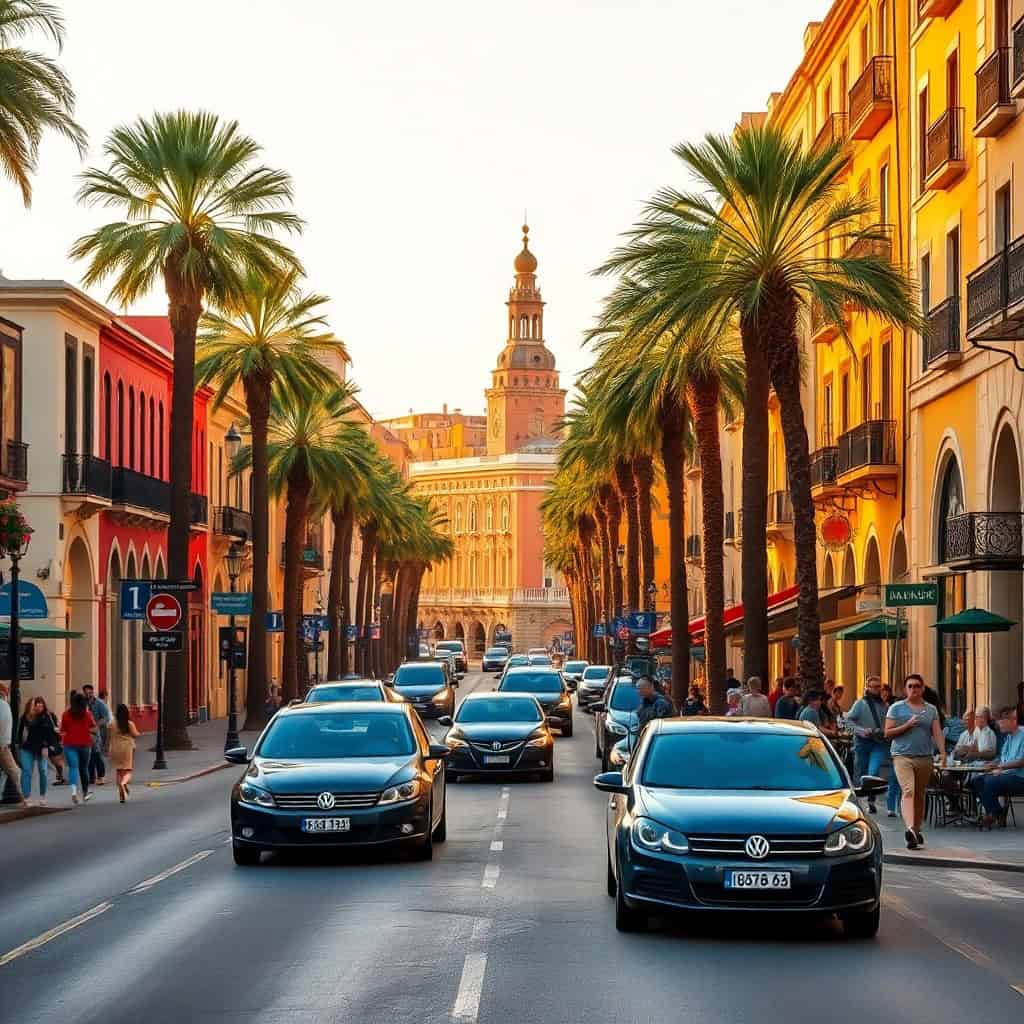
Driving in Spain is straightforward once you know the documents, licence rules, and road habits that matter most. If you are planning to hire a car, the right prep can save time, money, and a few avoidable fines.
Can you drive in Spain?
| Situation | What you need |
|---|---|
| Tourist with a valid UK driving licence | You can usually drive in Spain, but car hire companies may still ask for your passport, credit card, and booking details. |
| Driver whose licence was not issued in the UK | An International Driving Permit may be required, depending on the licence and rental company rules. |
| Hiring a car in Spain | Expect an age minimum, a full driving licence, a credit card for the deposit, and insurance you understand before you sign. |
| Driving your own car | Carry the required documents and equipment, including ID, registration papers, insurance, and safety items. |
If you are also comparing rental options, a good starting point is the site’s travel advice and car rental articles, which can help you move from general trip planning to a more specific booking decision.

Documents And Rules You Should Know First
Spain is not difficult for tourists, but it does expect drivers to be properly documented and road-ready. The most common mistakes are simple ones: forgetting a passport, assuming every foreign licence is treated the same, or arriving at a rental desk without understanding the insurance terms.
For your own car, keep the following close at hand:
- Valid UK Photocard Driving Licence
- Proof Of Id, such as a passport
- V5 Certificate or vehicle registration document
- Car Insurance Certificate
- UK Sticker, if required for your vehicle setup
- Warning Triangle and High-Visibility Jacket
- Spare Bulbs and Headlight Beam Deflectors where needed
The source article correctly notes that a valid driving licence is essential and that third-party liability insurance is the minimum insurance standard for hired vehicles. Those basics matter, but they are only the starting point. The real difference between a smooth trip and a stressful one is whether you check the car’s condition, understand the fuel policy, and know what coverage you already have before you leave the lot.
Rental Checklist: What To Confirm Before You Accept The Keys
If you are hiring a car, Spain’s rules are only part of the picture. The rental company’s own terms can change the cost of your trip more than the road rules do, so it pays to confirm the details before you drive away.
- Confirm the Minimum Age; the original article says most companies require you to be at least 21.
- Bring a Credit Card for the deposit, since many companies insist on it.
- Check whether an International Driving Permit is required for your licence type.
- Read the Insurance Policy carefully so you do not pay twice for the same protection.
- Ask about Unlimited Mileage if you expect a long drive or several day trips.
- Inspect the car and Photograph Any Existing Damage before leaving the pickup point.
- Return the car with the expected fuel level to avoid extra charges.
For a more detailed rental-prep perspective, the guide on rental car requirements, documents, payments, and tips is a useful companion page when you want to compare paperwork and payment expectations before booking.
Spain’s Road Rules: Speeds, Priority, Tolls, And Alcohol Limits
A lot of the anxiety around driving in a new country comes from not knowing the local rhythm. In Spain, the rules are manageable once you learn the main numbers and habits.
| Topic | Practical rule |
|---|---|
| Speed Limits | 50 km/h in built-up areas and 120 km/h on motorways, unless signs show otherwise. |
| Roundabouts | Give priority to vehicles already on the roundabout and choose your lane for your exit in advance. |
| Tolls | Some motorways are tolled; you may pay by cash or card, depending on the road and payment system. |
| Alcohol | The article notes a private-driver blood alcohol limit of 0.05%, with stricter limits for some drivers. |
| Child Seats | Children under 12 and under 4.5 ft tall must use a child seat suited to their size. |
The speed limit and roundabout rules are the ones tourists usually notice first, but the alcohol limit and child-seat requirements are just as important. Spanish police can issue fines on the spot, and the article’s warning about speeding penalties ranging from is a reminder that small mistakes can become expensive quickly.
Parking And Fuel Habits That Save Time
Parking in city centres can be the most frustrating part of a day’s drive, especially if you are not used to local zone systems. The original article points to blue zones, where you need to buy a ticket and display it on the dashboard. That advice is worth following, especially in busy urban areas where time limits are enforced more strictly than visitors expect.
Fueling is usually simple. Most petrol stations accept cash or card, and you will generally find unleaded petrol, diesel, and LPG options. If you are returning a rental car, remember that refuelling to the correct level before drop-off is often cheaper than paying the company’s own refuelling charge.
Best Time To Prepare, Book, And Drive
There is no special season when the rules change, but timing still affects how easy your trip feels. If you are planning to drive in Spain during school holidays, summer, or major city events, rental availability can tighten and pickup desks can be busier. Booking earlier gives you more choice on car size, insurance options, and pickup location.
| When you travel | What changes |
|---|---|
| Peak holiday periods | Book earlier, allow extra time at pickup, and compare insurance inclusions carefully. |
| City-only trips | Parking and low-emission restrictions can matter more than motorway driving. |
| Long-distance road trips | Unlimited mileage and a clearer fuel policy become more valuable. |
What To Remember Before You Set Off
Spain rewards calm, prepared drivers. If you have the right licence, the right documents, and a clear sense of the local rules, the country is very manageable to drive in and offers some of the best route flexibility in Europe.
The biggest wins are practical: keep your documents together, understand the rental terms before signing, check the car at pickup, and stick to the posted speed limits. Do that, and the trip becomes much less about problem-solving and much more about enjoying the drive itself.
Planning to rent a car for Spain?
Use the rental-specific guides to compare paperwork, insurance, mileage, and fee rules before you book. That is the easiest way to avoid surprise charges and choose a car that fits your route.
Frequently Asked Questions
Is It Easy For Tourists To Drive In Spain?
Yes, for most tourists it is manageable. The main challenges are adapting to speed limits, roundabouts, toll roads, and city parking rather than learning completely unfamiliar road rules.
Can I Drive In Spain With A Us Licence?
The original article focuses on UK licences, so if you are using a US licence you should check whether an International Driving Permit is needed for your trip and confirm the rental company’s policy before booking.
What Do I Need To Drive In Spain As A Tourist?
You need a valid driving licence, ID, and the correct documents for the vehicle or rental car. If you are hiring, bring a credit card, check the age requirement, and make sure your insurance cover is clear.
How To Rent A Car In Spain As An American?
In practice, the process is similar to other visitors: book with a company that accepts your licence, bring your passport and payment card, review the insurance terms, and inspect the vehicle carefully at pickup. If your licence or travel profile requires extra documentation, confirm that before arrival.
See also: Rent a Car US, Europe, Canada.

Matthew Thompson is an accomplished author specializing in topics related to budget travel and cheap car rental options. With a keen eye for detail and a passion for helping travelers save money, he shares valuable insights on navigating the complexities of online car rental services. Matthew’s work not only provides practical tips but also empowers readers to make informed decisions, ensuring they enjoy memorable journeys without breaking the bank.



It’s really interesting how the rules for driving in Spain can differ from those in the UK, and it’s important not to overlook the small details—like the International Driving Permit if you’re from outside the UK. I remember when I rented a car in Spain a few years back, and I was surprised by the emphasis on inspecting the vehicle. It felt more personal than in other countries, almost like a mutual agreement to ensure everything’s in good shape before hitting the roads.
I completely get what you’re saying about the differences in driving regulations. It’s interesting how small nuances, like needing an International Driving Permit, can catch travelers off guard. I think it really highlights how important it is to be informed when driving in a new country.
It’s refreshing to read about the driving requirements in Spain, especially as I’ve been contemplating a road trip there for quite some time now. The combination of beautiful landscapes, historic towns, and vibrant culture makes it such an enticing destination. I appreciate how you laid out the requirements so clearly, as it can be a bit daunting to navigate the rules of a foreign country.
It’s great to hear that you’re considering a road trip in Spain. The country is a wonderful mix of everything that makes travel enriching, from its stunning coastlines to its picturesque countryside and lively cities. If you’re planning to explore, you’ll find that driving can offer a level of flexibility that trains and buses might not provide, allowing you to discover hidden gems along the way.
I completely agree with you about the incredible experience of exploring Spain by road. Just thinking about driving through those winding coastal roads or vast olive groves along the countryside evokes such a sense of adventure. The last time I traveled there, I found myself drawn to the less touristy towns. Places like Ronda, perched on those stunning cliffs, truly offer a glimpse into the soul of Spanish culture that you might not catch in bigger cities.
You’re spot on about the flexibility of driving in Spain. There’s something special about being able to pull over wherever you fancy—like those charming villages that pop up out of nowhere or a stunning viewpoint that catches your eye. Plus, exploring the lesser-known places often leads to the best experiences. Have you thought about any specific routes or regions you’d like to check out? The contrast between the coast and the interior can be pretty remarkable, making it hard to choose just one path.
Your post highlights vital information for anyone planning to drive in Spain, and it touches on some critical aspects that many might overlook until they find themselves in a sticky situation. However, I think it’s worth further exploring the cultural nuances of driving in Spain, as well as the broader implications of these regulations.
Driving in Spain sounds like an adventure waiting to happen, especially with those winding roads and picturesque views! But let’s be real—navigating Spanish driving rules can feel like trying to decipher a Picasso painting while hopping on one foot. I mean, who doesn’t love a good game of “Is this the way I go?” when approaching a roundabout?
Driving in Spain really does feel like stepping into a vibrant painting. I get what you mean about those winding roads—they can be breathtaking but also a bit nerve-wracking, especially with the way they snake through the hills. And the roundabouts? It feels like a dance sometimes, trying to figure out the right timing to join the flow of traffic.
You raise some really important points about driving in Spain, and it’s fascinating how the rules might differ from what we’re used to in the UK. I remember my own experience driving there last summer—what a mixed bag of challenges and joys!
Driving in Spain really can be a unique experience, can’t it? I think what often surprises people is how quickly you notice the little quirks in driving culture. For instance, the roundabouts can be a bit of a puzzle, and I remember having to remind myself to yield to those already inside—definitely different from the UK’s approach!
Driving in Spain can be such an adventure! I remember the first time I rented a car there, I was both excited and a bit nervous about navigating the roads. One thing that caught me off guard was the toll system—definitely something to keep in mind if you’re planning on exploring the countryside.
Driving in Spain really is a whole adventure in itself! I remember when I rented a car there last summer; attempting to keep up with the locals’ driving style felt like a scene straight out of a Fast and Furious movie—minus the actual fast cars and iconic stunts, of course!
Driving in Spain really does have that unique thrill to it, doesn’t it? I remember my own experience trying to navigate through the narrow streets of Barcelona. It felt like a mix of a video game and a real-life puzzle. I found that the locals have this blend of confidence and creativity in their driving styles that can be both exhilarating and a bit intimidating. It’s fascinating how cultural differences shape driving habits—what might seem chaotic to an outsider often has its own rhythm and logic.
Your insights on driving in Spain highlight some essential nuances that many travelers may overlook. I’ve always found that the preparation phase can really set the tone for a hassle-free trip. When I rented a car in Spain last summer, I made sure to familiarize myself with local driving customs, which proved invaluable. For instance, I noticed that many drivers are quite courteous about yielding to pedestrians, something that might catch an outsider off guard if they’re used to more aggressive driving styles.
It’s interesting you mention the courteousness of drivers in Spain. I remember when I was there a few years back, I was pleasantly surprised by how much importance they place on pedestrian safety. It’s a refreshing change, especially compared to the more aggressive styles often seen in bigger cities elsewhere.
Your insights on driving in Spain truly highlight the nuances and intricacies of navigating a foreign country. As someone who has had the experience of driving in different European nations, I can emphasize how important it is to be well-informed about local driving regulations before hitting the road.
You make a great point about the importance of being informed about local driving regulations. Each country really has its own rhythm and set of rules that can feel so different from back home. When I drove through Italy, for instance, I found the roundabout etiquette to be particularly interesting—the way Italians zip in and out with a confident flair was something I had to get used to quickly.
I recently came across a great guide on renting a car in Spain that adds even more depth to those nuances you mentioned about driving in a foreign country.
‘Rent a Car Spain’
https://online.rentacar24.org/rent-a-car-spain/.
It’s really interesting to see how the rules for driving can change so much from one country to another. I’ve driven in a few places in Europe, and each time I encountered something new that made me rethink how I approached the road.
It’s true, the diversity in driving rules and practices can really shift your perspective. I remember driving in Italy and being stunned by how the concepts of right-of-way and lane discipline seemed to be more flexible there. It definitely made me rethink how I approached driving—turning it into more of a dynamic, almost intuitive interaction with other drivers rather than just a strict set of rules to follow.
I get what you mean about the different rules across countries; it’s like a whole new world each time you hit the road in a new place. I’ve had that experience too, where something as simple as a roundabout or a new speed limit suddenly makes you hit the brakes—figuratively and literally! Each country has its unique quirks, and those unexpected moments can really make the journey more memorable.