
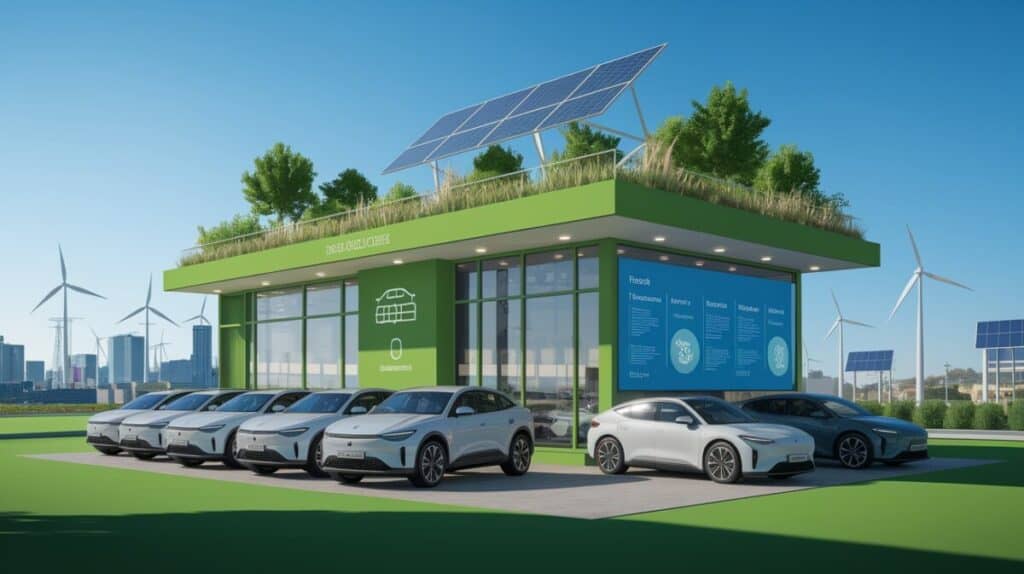
If you want a greener rental, the easiest place to start is the vehicle class itself: hybrid and electric options usually cut fuel use the most. From there, check the company’s claims against its fleet, fuel policy, and pickup convenience before you book.
What to look for first
- Lower-Emission Vehicle hybrid or electric is usually the strongest choice.
- Clear Fuel Policy avoid rules that create unnecessary top-up charges.
- Real Fleet Availability verify the eco-friendly model is bookable, not just advertised.
- Convenient Pickup choose a location that avoids extra transfers or long detours.
- Price Transparency compare base rate, mileage limits, and any EV charging or cleaning fees.
For a broader booking view, see eco-friendly travel solutions for car rentals as well as green-travel car rental options.
The phrase “eco-friendly car rentals” can mean different things depending on the company. Some providers focus on hybrid and electric vehicles, while others rely on offset claims, paperless booking, or fuel-efficiency messaging that sounds greener than it really is. That is why the smartest move is to verify the rental itself, not just the marketing around it.
This guide keeps the focus on car rentals, not general sustainability talk. It explains how to compare greener vehicle choices, what evidence actually matters, and when it makes sense to pay a little more for a lower-impact rental.

A Quick Comparison Before You Book
Best use case
If your trip is short and mostly urban, an electric or hybrid rental usually gives the cleanest balance of lower fuel use and convenience. If you are driving longer distances or to rural areas, a very efficient gas car may be the more practical choice, especially when charging is limited.
How To Verify An Eco-Friendly Claim
A greener label only matters if you can confirm what it means. Start by checking whether the company names the actual vehicle category, such as hybrid, plug-in hybrid, or fully electric, rather than relying on vague language about “sustainable travel” or “green choices.”
If the listing mentions eco-certifications, emissions reduction, or carbon offsets, treat those as supporting details rather than the main reason to book. The stronger signals are simple: lower fuel consumption, transparent operating rules, and a fleet that matches the promise.
- Look for a specific model name, not just a category headline.
- Read the fuel and charging policy carefully before checkout.
- Check whether EV charging stations are practical for your route.
- Compare the total price, not just the daily rate.
- Use customer reviews to confirm the company actually delivers the listed vehicle.
That last step is especially important. A rental can look green on paper but still disappoint if the pickup process is slow, the eco model is unavailable, or the hidden fees erase the savings. For broader booking strategy and platform comparison, the sustainable car rental sites guide is a useful next stop.
When An Eco-Friendly Rental Makes The Most Sense
If your route includes charging stops, book early and map them against your itinerary before you confirm the reservation. That is one of the simplest ways to avoid a supposedly eco-friendly choice that becomes inconvenient in practice. If you are leaning toward a fully electric car, the dedicated electric car rental guide can help you judge whether EV range fits your trip.
What A Smart Booking Checklist Looks Like
1. Confirm the vehicle type
Hybrid and electric listings are the cleanest indicators of a genuinely lower-impact rental. If the site only says “eco,” look for specifics in the vehicle description.
2. Check the fee structure
A lower-emission rental is not a better deal if the company adds steep mileage, charging, cleaning, or deposit charges.
3. Read real reviews
Search for comments about the exact model, pickup speed, range, charging access, and whether the company honored the listing.
4. Match the car to the trip
An eco-friendly rental should also be practical for your route, luggage, and daily mileage so you do not give up comfort for a shallow green label.
Choosing Between Nearby Eco-Friendly Options
Not every green-looking result belongs in the same bucket. One provider may be strongest on electric inventory, another may excel at simple booking and transparent pickup, while a third may offer hybrid models at a lower price. That is why it helps to compare the whole trip experience, not just the environmental label.
If your main goal is convenience with a greener angle, explore car rental apps for online booking after you have narrowed your vehicle type. If your priority is finding a trusted site with stronger sustainability positioning, the eco-friendly rental platforms guide is the better comparison point.
Want the broader booking strategy?
If you are ready to compare greener vehicles, pricing, and pickup options in one place, start with the main guide to eco-friendly travel solutions for car rentals.
For travelers who want a more specific choice, the electric and hybrid pages can help you decide which route is more practical for your trip.
Frequently Asked Questions
Choosing a greener rental is easiest when you focus on the actual vehicle, the full price, and the route you plan to drive. When those three things line up, the eco-friendly option becomes practical rather than just promotional.

Samantha Price is a dedicated author and travel enthusiast who specializes in writing about affordable car rental options online. With a keen eye for detail and a passion for helping readers save money, she provides insightful tips and practical advice on navigating the world of cheap car rentals. Through her engaging content, Samantha empowers travelers to explore new destinations without breaking the bank, making their journeys both enjoyable and budget-friendly.


Your exploration of eco-friendly rentals highlights a crucial aspect of modern travel and its intersection with sustainability. I find it particularly interesting how the design and functionality of these accommodations can significantly influence our experiences as travelers while also promoting environmental stewardship.
I completely agree with you about the design and functionality of eco-friendly rentals. It’s fascinating how these spaces not only provide comfort but also create a sense of connection to the environment. When you step into a place that uses reclaimed materials or runs on solar power, it often shifts your mindset as a traveler. It invites us to think more deeply about our choices, not just in travel but in everyday life.
I resonate with your thoughts on eco-friendly rentals; there’s something really profound about stepping into a space that embodies sustainability. It’s like a reminder of the delicate balance we have with nature. When I’m in a place that uses reclaimed materials or harnesses solar energy, it does evoke a sense of mindfulness. I can’t help but reflect on how our choices—big and small—impact the world around us.
You’ve touched on something really special about eco-friendly rentals. There’s just a unique energy in spaces that put sustainability at the forefront, isn’t there? When you walk into a home that’s made with reclaimed materials, it feels not just like a place to stay, but like a part of a larger story.
I completely agree with you about the profound nature of eco-friendly rentals. There’s a unique connection that forms when we occupy a space that honors sustainability. It feels intentional, almost like the environment is saying, “We can coexist harmoniously.” I often find that spaces built with reclaimed materials carry stories with them. Imagine the previous lives of those materials and how they were transformed into something new and functional.
I find that connection you mention so intriguing. It’s almost like each eco-friendly rental tells its own story, whispering reminders of its history through every reclaimed beam or upcycled piece of furniture. I often think about the craftsmanship that went into using those materials; it’s a true testament to ingenuity and respect for nature.
I really appreciate how you’ve highlighted the fundamental principles behind eco-friendly rentals. It’s fascinating to see how the movement not only addresses environmental concerns but also fosters a deeper connection with nature. Personally, I’ve always felt that staying in an eco-friendly accommodation heightens the whole travel experience. For instance, I once spent a weekend in a tiny house that utilized rainwater collection and had a composting toilet. It was eye-opening to see how even small design choices can significantly reduce one’s ecological footprint.
It’s inspiring to see the emphasis on sustainability in the realm of accommodations. I recently stayed at an eco-friendly cabin that not only used reclaimed wood but also offered farm-to-table meals sourced from local producers. It highlighted the interconnectedness of eco-conscious living—not just in the structure itself but in how we interact with the surrounding community and environment.
Your exploration of eco-friendly rentals brings to light an essential topic in today’s travel landscape. While many accommodations claim to boast “green” features, the depth of commitment to sustainability can vary significantly among them. It’s important for travelers to not only look for solar panels or energy-efficient appliances but to understand the lifecycle of the materials used in the construction and design of these spaces. For instance, has the building utilized recycled materials, or is it designed with longevity in mind to reduce the need for future renovations?
The commitment to sustainability in eco-friendly rentals really resonates with me, especially as I think about the way we can influence travel’s impact on our environment. It’s fascinating how these accommodations not only provide a comfortable stay but also serve as a platform for promoting awareness around responsible living.
It’s great to hear that you resonate with the commitment to sustainability in eco-friendly rentals. It really does highlight how our choices in travel can shape both our experience and the larger environment around us.
The exploration of eco-friendly rentals truly highlights the synergy between comfort and sustainability—a combination that seems increasingly vital in today’s world. I appreciate how you’ve outlined the commitment these accommodations have to reducing their environmental impact. The incorporation of renewable resources, from solar panels to sustainably sourced materials, reflects a broader societal shift towards mindful living.
You’ve raised some key points about the essential elements of eco-friendly rentals, particularly how they integrate sustainable practices into the travel experience. However, it seems imperative to explore the gap between intention and actual impact. Many accommodations market themselves as eco-friendly purely for the sake of branding, while their operations may not align with true sustainability.
You’re touching on an important issue. The gap between intention and actual impact can sometimes feel frustrating, especially with the rise of ‘greenwashing’ in the travel industry. It’s true that many places promote themselves as eco-friendly without implementing real sustainable practices.
Your exploration of eco-friendly rentals really highlights how sustainable accommodations reflect a growing consciousness surrounding our environmental impact. I’ve personally experienced the joy of staying in a vacation rental that not only focused on comfort but also embraced eco-friendly practices. One property I visited featured a rainwater harvesting system and composting facilities, which made me feel more connected to my surroundings and the resources I was consuming.