
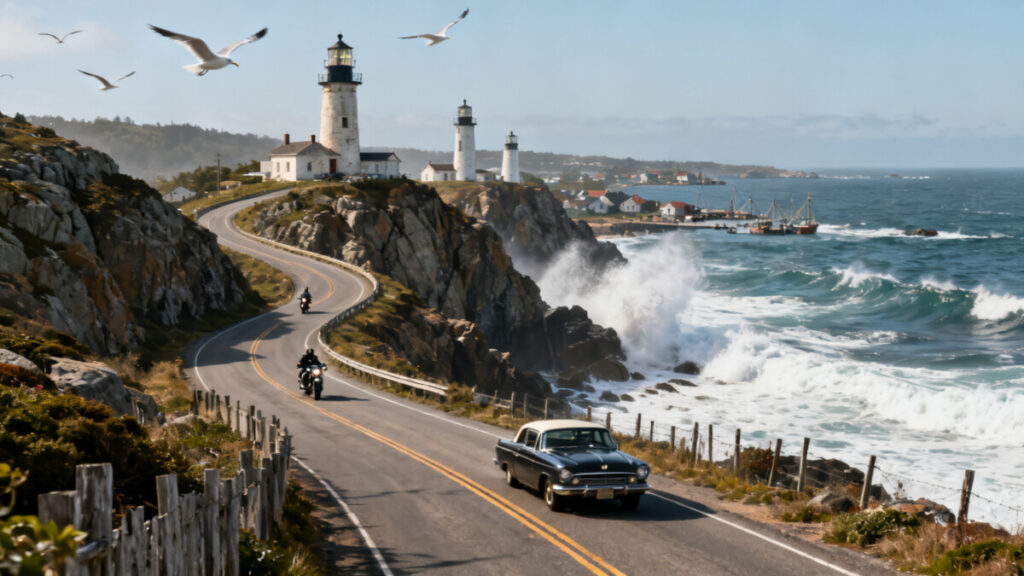
An East Coast lighthouse drive works best when you treat it like a route plan, not a sightseeing list. Pick a coastline, build your stops around driving time, and leave room for parking, weather, and photo breaks.
If you want a broader coastal road-trip frame first, start with the scenic-drive guide and then narrow it down to lighthouse stops that fit your schedule.
Plan The Drive At A Glance
Most travelers get the best results by choosing one region and grouping nearby lighthouses into a half-day or full-day loop. That keeps the trip scenic without turning it into a rushed highway sprint.
| Best season | Late spring through early fall for easier weather, longer daylight, and more frequent tower or museum access. |
| Ideal drive length | Half-day if you want 2–3 stops; full day if you want one scenic lunch, a short walk, and more photo time. |
| What to check | Parking rules, lighthouse access hours, local permits or entry fees, ferry or toll crossings, and weather-related closures. |
| Best stop pattern | One “anchor” lighthouse, one viewpoint stop, and one town stop for food or a short coastal walk. |
A Route-First Way To Choose Your Lighthouse Drive
The strongest lighthouse drives are the ones that fit into a clean route. Instead of trying to see every landmark, choose a coastal stretch with a few high-value stops and enough time to enjoy them.
That is why this page now focuses on trip planning first. It still covers why lighthouses matter, but only as context for the drive itself. If you want another route-style example for comparison, the Gulf Coast seafood trail is a good model for pairing scenery with practical stops.
Best Approach pick one region, confirm lighthouse access before you leave, and build the drive around daylight and parking rather than distance alone.
Where Lighthouse History Still Helps The Trip
Lighthouses have guided mariners for centuries, and that history is part of what makes the drive worth taking. The Pharos of Alexandria is often cited as the first lighthouse, and later designs evolved from simple fires and stone towers to more advanced optics such as the Fresnel lens. Those changes matter to travelers because they explain why so many towers look distinctive and why some still operate as working navigational aids while others serve as museums, viewpoints, or heritage sites.
A few famous examples show the range well. Cape Hatteras is known for its dramatic black-and-white spiral, while Portland Head Light reflects classic New England stonework. The point is not to turn the drive into a history lecture; it is to help you recognize which stops are likely to be the most photogenic, accessible, or historically meaningful.
Cape Hatteras Lighthouse
A strong anchor stop for an Outer Banks loop, especially if you want a classic coastal landmark with high visual impact.
Portland Head Light
Best for a New England-style route with rugged scenery, short walks, and a reliable photo stop.
Stops, Parking, And Photo Timing
The most frustrating lighthouse drives are the ones where the best viewpoint has no parking or the keeper’s house closes before you arrive. To avoid that, check whether each stop offers public parking, timed entry, or only exterior viewing. When a lighthouse sits inside a park or protected area, the easiest trip is often to arrive early, walk the grounds first, and save the town stop for later.
For travelers starting near Boston or planning a longer loop, local traffic and parking matter just as much as the coastline itself. If your route begins inland and ends on the coast, pair the lighthouse plan with a practical city pickup or parking strategy such as Boston parking tips or another departure point that keeps the day simple.

When To Go And When To Book
| Timing | What changes | Trip impact |
|---|---|---|
| Spring | Milder weather and fewer peak crowds | Good for photography and relaxed pacing |
| Summer | More tours and longer opening hours | Book earlier and expect slower roads near beach towns |
| Fall | Clear light and cooler driving conditions | Often the best balance of scenery and comfort |
| Winter | Fewer visitors but possible closures | Great for quiet views if you confirm access first |
If your route depends on tower access, ferry crossings, or timed exhibits, book as early as you would for any coastal weekend trip. That matters most in summer, holiday periods, and places where lighthouse viewing is bundled with a small museum, park permit, or guided tour.
How To Build The Day Without Overloading It
A useful lighthouse drive has rhythm. Start with the most important stop while energy is high, keep one flexible photo break in the middle, and leave the last stretch for a town walk, seafood lunch, or a short coastal trail. That structure works better than trying to fit in every tower on the map.
- Choose one region and one main lighthouse you do not want to miss.
- Check whether you need parking fees, park entry, or timed access.
- Plan for one lunch stop and one short walking stop, not a constant chain of exits.
- Use early morning or late afternoon for the best light and fewer crowds.
Where To Go Next
If you want to expand the route into a broader scenic trip, use the main coastal-drive guide as your planning base and then layer in lighthouse stops. Travelers who like longer road-trip comparisons may also find these route pages useful:
For most readers, the next practical step is to compare a route, confirm car rental details, and then lock in the lighthouse stops that fit the day. If you are choosing a vehicle for a coastal trip, the right rental-car guide can help you keep the drive comfortable and flexible.
Frequently Asked Questions
What Is The Most Scenic Drive On The East Coast?
There is no single universal winner, but the most scenic drive for you is usually the one that matches your pace, your starting point, and how much time you want to spend at overlooks and town stops.
What Is The Most Beautiful Lighthouse In Maine?
Portland Head Light is one of the most popular choices because it combines a dramatic shoreline, strong historic character, and a stop that fits easily into a coastal day trip.
How Long Does It Take To Do An East Coast Road Trip?
A lighthouse-focused road trip can be as short as half a day or stretch across several days depending on how many states, ferry crossings, and historic stops you want to include.
What Is The Best Time Of Year For An East Coast Road Trip?
Spring and fall are usually the easiest seasons for a lighthouse drive because the weather is more manageable, daylight is still useful, and the trip is less crowded than peak summer.
Preserved imagery and authoritative note block retained from the original article.

Jessica Malone is a passionate writer and travel enthusiast, specializing in affordable car rental solutions. With a keen eye for detail, she explores various aspects of cheap car rentals, offering readers practical tips and insights to maximize their travel experiences. Through her engaging articles, Jessica aims to empower travelers to make informed decisions and navigate the world of online car rental services with ease.




I appreciate your thoughts on the integral role of lighthouses in maritime history. They indeed symbolize more than just navigational aids; they represent humanity’s enduring struggle against the unpredictability of the sea. I’m fascinated by how lighthouses have not only provided guidance but have also inspired countless stories and legends.
It’s fascinating to think about how lighthouses have served not just as physical beacons but as symbols of guidance throughout maritime history. The Pharos of Alexandria is such an iconic example, demonstrating the importance of these structures even in ancient times. I’ve always been struck by how lighthouses represent more than just navigational aids; they embody hope and safety for sailors in perilous situations.
The connection between lighthouses and maritime history is incredibly fascinating, especially when you consider their symbolic role beyond just navigation. Lighthouses have always represented hope and safety for sailors, much like how they serve as beacons during times of uncertainty—comparable to how we seek guidance in our personal lives or communities today.
Lighthouses truly embody the intersection of history, technology, and human perseverance. I find it fascinating that these structures have evolved to accommodate not just the physical needs of navigation but also the emotional comfort of sailors. The symbolism of a lighthouse as a beacon of hope resonates deeply, especially in our fast-paced world, where certainty is often elusive.
Your post beautifully captures the essence of lighthouses as vital beacons for navigators throughout maritime history. It’s fascinating to think about how these structures have not only guided sailors but also served as symbols of resilience and hope during stormy seas. I often reflect on the stories of mariners who relied on lighthouses in moments of uncertainty. For instance, the construction of the iconic Cape Hatteras Lighthouse was a game-changer in navigating the dangerous waters off the North Carolina coast, demonstrating how engineering advancements can directly enhance safety.
Lighthouses truly represent a fascinating intersection of technology and human ingenuity throughout maritime history. It’s interesting how these structures evolved from simple fires to the intricate designs we see today, reflecting broader advancements in navigation and safety practices.
The role of lighthouses as navigational aids throughout maritime history is indeed a rich and fascinating topic. The Pharos of Alexandria stands as a testament to the ingenuity of ancient engineering, marking a pivotal moment in how humans have sought to conquer the challenges of navigating perilous waters. Beyond their practical function, lighthouses also evoke powerful symbolism—in many ways, they represent a beacon of hope and safety, not just for mariners but for communities that often depend on the sea for their livelihood and sustenance.
Ah, lighthouses! Those majestic sentinels standing proud on the edge of perilous coastlines, much like my cat guarding her territory from imaginary intruders! I always thought there was something quite poetic about these structures; they embody hope and a guiding light in the often chaotic and unpredictable world of maritime navigation.
I love how you highlighted the importance of lighthouses not just as navigation tools but as symbols of safety and hope. It’s interesting to think about how their evolution reflects broader technological advancements in maritime history. For instance, the introduction of electric lights and rotating beacons really revolutionized maritime navigation.
Your exploration of the significance of lighthouses in maritime history truly resonates with me. Lighthouses have always intrigued me—not just as physical structures, but as symbols of guidance and hope. They stand tall at the edge of peril, illuminating the way for sailors navigating treacherous waters. The reference to the Pharos of Alexandria as the first lighthouse is fascinating; it highlights how ancient civilizations recognized the need for such navigational aids long before modern technology.
Your exploration of lighthouses and their role in maritime history is a reminder of how essential navigational aids have always been in guiding not only ships but also the development of human civilization. As I reflect on the purpose lighthouses have served, I’m particularly struck by their profound symbolism—these beacons of hope represent safety, guidance, and the human desire to seek out the unknown with resolve. The mention of the Pharos of Alexandria is particularly interesting. Its historical significance as possibly the first lighthouse cannot be overstated; it embodies ancient innovation and the desire to protect seafarers from perilous conditions.
Your insights on the significance of lighthouses provide a solid foundation to explore their broader implications in maritime history and culture. It’s fascinating to consider how these structures not only serve as navigational aids but also symbolize humanity’s ongoing struggle against nature’s unpredictability.
I appreciate how you connected the practical considerations of planning a trip with the historical significance of lighthouses. It’s fascinating to think about how these structures not only guide sailors but also symbolize safety and hope throughout maritime history. The evolution from the Pharos of Alexandria to modern lighthouses illustrates how technology has transformed navigation, just as advancements in rental car services have streamlined travel experiences for us today. I think it would be interesting to explore how lighthouses have inspired art and literature over the centuries—many stories and poems reflect the loneliness yet steadfastness of these beacons. What are your thoughts on the cultural impact of lighthouses beyond their navigational role?
I find the connection between lighthouses and rental car travel quite fascinating! Just as lighthouses offer guidance to mariners, I think they symbolize the navigation we all face in our own journeys—whether on the water or the road. When planning a trip, especially to a coastal destination, knowing about local lighthouses adds a unique layer to the experience.
The connection between lighthouses and maritime history truly resonates with me, especially when considering their role beyond just guidance for sailors. As you pointed out, these magnificent structures have served as beacons of hope and safety throughout the centuries. Each lighthouse has its own unique story, reflecting not only the engineering prowess of its time but also the rich history and culture of the communities that built them.
I really appreciate the perspective you’ve shared about the East Coast lighthouse drive. There’s something so poetic about the combination of lighthouses and coastal scenery; they both represent guidance and adventure, reminding us of the vastness of the ocean and our own journeys.
Your perspective on treating the East Coast lighthouse drive as a route plan rather than just a sightseeing list is a refreshing approach. I completely agree that allowing for flexibility in scheduling can transform the experience from a hurried checklist into a leisurely exploration of the coast’s beauty.
Your approach to the East Coast lighthouse drive resonates deeply with me, particularly the emphasis on treating it as a route plan rather than just a checklist. It reminds me of my own experiences road-tripping along the coast of Maine, where the scenery is as captivating as the lighthouses themselves. By planning a half-day loop, I discovered charming coastal towns and hidden gems that I would have otherwise missed if I had been too focused on merely ticking off landmarks.
This approach to planning an East Coast lighthouse drive is indeed refreshing. I appreciate the emphasis on treating it as a route rather than a checklist. When I undertook a similar trip along the Maine coastline, I found that allowing for spontaneous stops not only enhanced the experience but also led me to discover hidden gems, like quaint seafood shacks and breathtaking overlooks.
Lighthouses: the original GPS before smartphones distracted us with cat videos and food delivery apps! I love your idea of treating the drive like a route plan instead of just crossing names off a list. There’s something almost therapeutic about letting the sea breeze mess up your hair while you meander from one iconic tower to the next. And you’re right—who wants to rush through these picturesque views?
I really appreciate your perspective on planning a lighthouse drive along the East Coast. It resonates with me because I remember my own experience last summer when I took a similar trip. We approached it with the mindset of exploration rather than simply checking off a list of landmarks, which transformed the journey into something much richer.
This is a thoughtful take on planning a lighthouse road trip. I completely agree that it’s important to approach the journey as a holistic experience rather than just a checklist of stops. I remember my own trip along the Maine coast, where I focused on a few lighthouses and discovered some charming small towns along the way that I never would have otherwise. Those spontaneous stops, whether for a local seafood joint or a beach with stunning views, were some of the highlights.
Your approach to planning an East Coast lighthouse drive resonates deeply with me, especially the emphasis on treating the journey as a holistic experience rather than a checklist of points to stop at. In my own travels, I’ve often found that the best memories are created when there’s flexibility in the itinerary. This is particularly relevant when exploring coastal routes where the scenery can be so captivating; it’s essential to factor in spontaneous stops for photographs, local eateries, or simply soaking in the views.