
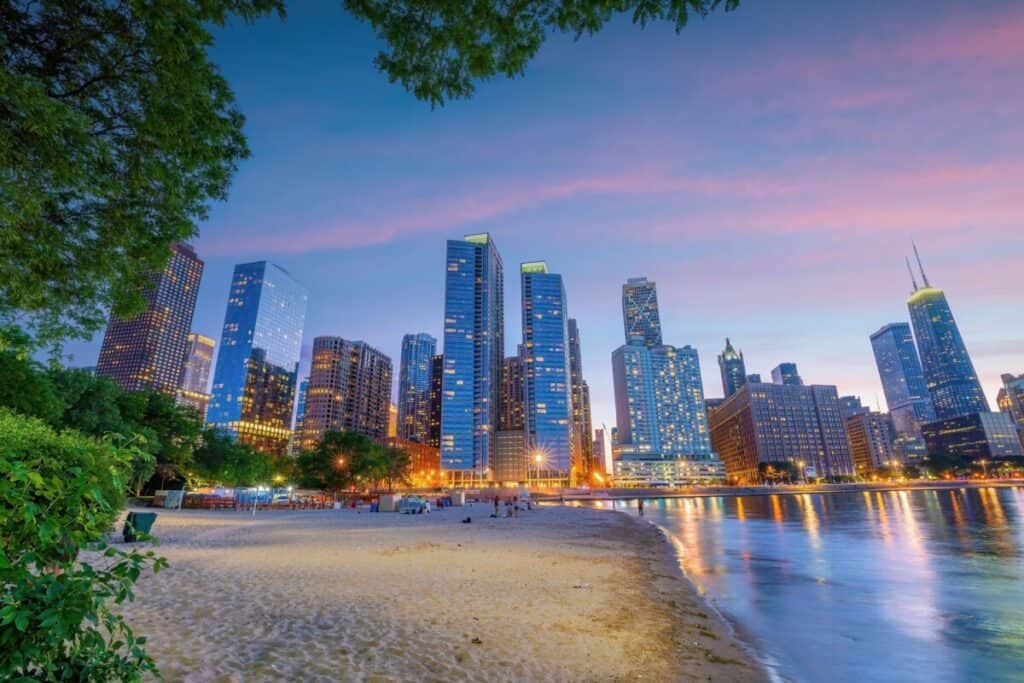
Chicago rewards visitors who mix the obvious landmarks with a few smart local choices. Start with the city’s headline sights, then build the rest of your day around the neighborhood, season, and how you want to get around.
If you are pairing the city with a longer drive, the Route 66 road trip guide is a natural next stop for planning outside the downtown core.
Chicago quick picks
- First-Time Visitors Millennium Park, the Chicago Riverwalk, Navy Pier, and the Art Institute of Chicago.
- Best For Outdoors Lakefront paths, beaches, parks, and architecture cruises on the river.
- Best For Families Shedd Aquarium, Field Museum, Lincoln Park Zoo, and the Museum of Science and Industry.
- Best For Budget Travelers Grant Park, the Riverwalk, Lincoln Park Zoo, and neighborhood wandering.

What Chicago Does Best
The strongest way to experience Chicago is to combine one iconic downtown stop, one museum or indoor attraction, and one lakefront or neighborhood walk. That gives you the city’s architecture, culture, and open-air energy without trying to do everything at once.
| Attraction type | Best for | Why it works |
|---|---|---|
| Iconic Landmarks | First-time trips | Gives you the classic Chicago skyline, park, and waterfront experience quickly. |
| Museums | Rainy days, families, culture lovers | Chicago has some of the country’s strongest collections in art, science, and history. |
| Lakefront And Parks | Free time, outdoor travelers | Easy to enjoy on foot, by bike, or with a scenic drive along the shoreline. |
| Neighborhoods | Repeat visitors, food travelers | Adds local character beyond the main tourist corridor. |
The Must-See Chicago Attractions
If you only have a short stay, prioritize the places that define the city visually and culturally. These are the attractions most travelers should not skip.
Millennium Park And The Central Loop
Millennium Park is the easiest starting point for a Chicago visit because it bundles together art, public space, and skyline views. Cloud Gate, Crown Fountain, and the surrounding downtown setting make it an essential first stop, especially if you want the city’s most recognizable images in one walk.
The nearby Chicago Riverwalk is just as useful for orientation. It gives you a clear feel for the city’s architecture and helps connect you to boat tours, restaurants, and riverfront viewpoints without a complicated plan.
Art Institute Of Chicago And Museum District
For culture-first travelers, the Art Institute of Chicago is the strongest museum pick in the city center. It is especially worthwhile if you want one major indoor stop that delivers both depth and convenience.
If you have more time, expand to the Field Museum, Shedd Aquarium, or the Museum of Science and Industry depending on whether your group prefers natural history, marine life, or hands-on science. For a broader look at popular museums beyond Chicago, you can also compare ideas with the most visited museums around the world.

Lake Michigan, Beaches, And The Lakefront Trail
Chicago’s lakefront is one of its best free attractions. Grant Park, the beach stretches, and the path system along Lake Michigan make the city feel open and spacious even in the middle of a downtown trip.
This is where a car can help if you want to hop between several shoreline stops or combine the lakefront with farther neighborhoods. If you prefer to skip driving, the area also works well with public transit and short rideshares.
Neighborhoods With Local Character
Once you have seen the central attractions, spend time in neighborhoods like Wicker Park, Lincoln Park, Hyde Park, and the West Loop. They give you a more relaxed version of the city through food, shopping, street art, and local energy.
If your trip is food-led, this is where Chicago becomes more than a sightseeing checklist. If you want a broader road-trip or city-driving perspective afterward, the New York scenic drives guide is a useful companion for comparing urban driving styles.
How To Choose What To Do First
Not every traveler needs the same Chicago itinerary. Use the guide below to match your time, budget, and travel style to the right mix of attractions.
| Traveler type | Best pick | Why | Typical time |
|---|---|---|---|
| First-time visitor | Millennium Park + Riverwalk | Fastest way to understand the city’s identity | 2–4 hours |
| Culture lover | Art Institute + one more museum | Strongest indoor sightseeing payoff | Half day |
| Family trip | Shedd Aquarium or Field Museum | Easy to fill a day with one major stop | Half to full day |
| Budget traveler | Grant Park, beaches, Lincoln Park Zoo | Strong free-value mix | Flexible |
| Repeat visitor | Neighborhoods and food spots | Adds a more local Chicago feel | Flexible |
When To Go And How To Time It
Chicago works year-round, but the experience changes a lot by season. Spring and early fall are usually the easiest for walking, lakefront time, and outdoor sightseeing. Summer brings the most events and the busiest tourist areas. Winter is colder, but it can be excellent for museums, holiday markets, and lower crowds at some attractions.
| Timing | Best for | Booking note |
|---|---|---|
| April to May | Balanced weather and manageable crowds | Book popular museums and hotels early if visiting over weekends. |
| June to August | Festivals, lakefront activities, long daylight | Reserve top attractions and parking plans ahead of time. |
| September to October | Best all-around sightseeing weather | A strong window for a first Chicago trip. |
| November to March | Museums, indoor plans, seasonal events | Keep transit or parking plans simple because weather can slow travel. |
Getting Around Without Losing Time
Public transit works well for downtown and many inner neighborhoods, and it is the easiest way to avoid parking stress around the busiest attractions. If you want more flexibility for a lakefront loop, neighborhood-hopping, or a side trip beyond the center, a rental car can make sense.
Keep the choice practical. Use transit for the central sightseeing corridor, then consider a car only when your route extends farther out or when your schedule is tight. If that is your plan, budget-friendly rental options can help you compare the basics before you book.
Planning to turn Chicago into a longer road trip?
Use Chicago for the city highlights, then extend your route if you want a broader Midwest drive or a cross-country trip. The Route 66 guide is the most relevant follow-on if you are building an itinerary around driving.
If your trip stays fully urban, skip the extra driving and focus on downtown sights, museums, and the lakefront instead.



A Few Honest Trade-Offs
Chicago’s most famous attractions are popular for a reason: they are visually strong, easy to pair together, and excellent for a short trip. The downside is that the busiest areas can get crowded, especially in peak season and around major events.
The best workaround is to stagger your day. Start early at one headline attraction, move to an indoor stop during the middle of the day, and leave the waterfront, architecture walk, or neighborhood visit for later.
Frequently Asked Questions
What Should You Not Miss In Chicago?
Millennium Park, the Chicago Riverwalk, the Art Institute of Chicago, and the lakefront are the core experiences most visitors should not skip.
What Is The #1 Tourist Attraction In Chicago?
For many first-time visitors, Millennium Park is the top pick because it delivers the city’s signature skyline, public art, and central location in one stop.
What Is The Best Thing To Do In Chicago That Is Not Touristy?
Spend time in neighborhoods like Wicker Park, Hyde Park, or the West Loop, where food, street life, and local character feel more relaxed than the main tourist corridor.
Where To Avoid Going In Chicago?
Stick to well-traveled, well-lit areas when sightseeing, and use the same common sense you would in any large city, especially late at night or when moving between neighborhoods.
For more travel ideas and related planning content, visit the articles hub.

Samantha Price is a dedicated author and travel enthusiast who specializes in writing about affordable car rental options online. With a keen eye for detail and a passion for helping readers save money, she provides insightful tips and practical advice on navigating the world of cheap car rentals. Through her engaging content, Samantha empowers travelers to explore new destinations without breaking the bank, making their journeys both enjoyable and budget-friendly.




Your insights on exploring Chicago really resonate with me, especially regarding the unique blend of history and modern urban life that the city embodies. It’s fascinating how each neighborhood in Chicago has its own distinctive character, allowing visitors to dive deep into the local culture. If you have the time, I’d highly recommend checking out neighborhoods like Pilsen, known for its vibrant murals and rich Mexican culture, or Hyde Park, which not only features the renowned Museum of Science and Industry but also beautiful parks that reflect the city’s commitment to green spaces.
You’ve captured the essence of Chicago beautifully. Pilsen is such a vibrant spot—every corner feels like a canvas with those incredible murals telling stories of the community. And it’s not just about the art; the food scene there is equally captivating, with authentic Mexican eateries that transport your taste buds. Hyde Park is another gem. I love how the area blends educational richness with natural beauty. Strolling by the Museum of Science and Industry or relaxing in the parks really gives you a taste of the city’s harmony between culture and green spaces. Each neighborhood, like you pointed out, feels like its own small world waiting to be explored. Have you found any favorite local spots or hidden treasures in those neighborhoods?
I really appreciate how you highlighted the blend of history and modern charm that Chicago offers. It’s one of those cities where every corner has a story to tell. I remember my last visit; I spent an entire afternoon wandering through the Art Institute of Chicago, completely captivated by the diverse artworks. The building itself is a piece of history!
I really appreciate how you’ve highlighted the variety of experiences Chicago offers. During my last visit, I was particularly taken by the cultural richness—exploring the Art Institute of Chicago was a highlight, especially seeing the Impressionist collection. I also made it a point to stroll along the waterfront, which provided such a serene contrast to the bustling city life.
It sounds like you had a wonderful experience in Chicago. The Art Institute really is a gem, and seeing the Impressionist collection can be such a moving experience. Each painting has its own story, and it’s fascinating how those artists captured moments in time. I remember my own visit there, being struck by how the play of light in those pieces evokes a sense of longing and beauty.
It really is striking how art can evoke such deep emotions, isn’t it? When I last visited the Art Institute, I found myself captivated by Monet’s work, particularly the Water Lilies series. The way he played with color and light took me to a different place entirely. It’s interesting how those moments captured in time can resonate with our own experiences of beauty and longing.
I can really relate to your experience with Monet’s Water Lilies. There’s something about the way he captured light and reflected nature that goes beyond mere representation; it feels almost immersive, doesn’t it? I remember standing in front of those enormous canvases and feeling as if the world outside just faded away.
I can definitely relate to that feeling of immersion in Monet’s Water Lilies. It’s interesting how art has this ability to transport us, almost creating a space where time stands still. When I first experienced those massive canvases, I felt enveloped by the colors and the way the light dances across the surfaces. It’s like stepping into a dream where nature and emotion blend seamlessly.
I completely relate to what you’re saying about the Art Institute and the Impressionist collection. There’s something particularly magical about how those artists captured fleeting moments, isn’t there? When I stood in front of those paintings, it felt like I could almost step into the scenes they portrayed. The way they played with light, color, and movement truly brings emotions to life. It’s like each piece offers a little window into the past, allowing us to feel the joy, sorrow, or tranquility that those moments might have held.
It’s wonderful to hear about your experience in Chicago. The Art Institute truly is a treasure, isn’t it? The Impressionist collection has such a way of drawing you in. You can spend hours just soaking in the colors and brushstrokes, and it feels like each painting tells its own story. I can see why it stood out for you.
Your description of Chicago captures the city’s essence beautifully. It truly is a place where history and modernity collide, offering a unique urban experience. One area that strikes me is the culinary scene. Beyond the famous deep-dish pizza, Chicago boasts a diverse array of restaurants that reflect its multicultural population. Each neighborhood has its own flavor—food from the West African community in the South Side, for example, presents an entirely different culinary adventure compared to the upscale dining in the Loop.
I really appreciate the emphasis you put on the blend of history and urban charm in Chicago! It’s fascinating how each neighborhood tells its own story, from the historic architecture in the Loop to the vibrant street art in Pilsen. I highly recommend checking out the Art Institute of Chicago—it’s not just a museum, but a true immersion into the world of creativity. Plus, there’s something so refreshing about taking a break at Millennium Park, especially in summer, when you can enjoy concerts or just relax near the Bean.
As someone who has spent quite a bit of time in Chicago, I wholeheartedly resonate with the sentiments expressed in your post. The city truly does offer an incredible fusion of history, culture, and life that is hard to find elsewhere. Every neighborhood has its own unique charm and vibe—take, for instance, the artsy streets of Wicker Park, which are filled with vibrant murals and indie boutiques, or the deep-rooted history found in the Pilsen area, known for its rich Mexican heritage and incredible cuisine.
Chicago is like that friend who boasts a little too much but really does have it all—great food, amazing skyline, and just enough quirky charm to keep things interesting. I love how you mentioned exploring the outskirts. That’s where you get to find the hidden gems—like the time I stumbled upon a pizza joint in a garage that completely ruined my ability to enjoy chain pizza ever again.
Your exploration of Chicago truly highlights the city’s multifaceted appeal. The balance of bustling urban life with the serene beauty of Lake Michigan is one of the aspects I love most. I remember my last trip, where I ventured out to the shoreline at sunrise—it’s a breathtaking experience that completely changes the way you feel about the city.
Your experience at sunrise along the Lake Michigan shoreline encapsulates a beautiful juxtaposition of nature and urban life that Chicago uniquely offers. There’s something special about those early hours as the city slowly wakes up. That quiet moment when the water reflects the first light of day can transform not just the landscape, but your perspective on the city itself. It’s the kind of scene that reinforces the connection many of us feel between the vibrancy of city life and the tranquility of nature.
Chicago truly offers a unique blend of history and culture that captivates every visitor. One aspect that really stands out to me is how the city’s architecture tells its own story. The skyline, with its mix of historic buildings and modern skyscrapers, reflects the city’s evolution over the years. I recommend not missing the Chicago Architecture Foundation river cruise; it provides a fascinating perspective on the city’s design heritage.
You’ve nailed it with your observation about Chicago’s architecture—it really does hold a mirror to the city’s evolution and character. The skyline isn’t just a collection of buildings; it’s a narrative that shares the story of Chicago, from the Great Fire to the modern era. Each structure has its own tale, reflecting the ambitions and innovations of the times they represent.
You’ve really captured the essence of Chicago’s architectural narrative. It’s fascinating to think about how each structure is not just a physical presence but a testament to the city’s resilience and evolution. The juxtaposition of historical buildings with modern designs, like the sleek lines of the Willis Tower against the classic charm of the Auditorium Building, really speaks to the ambitions and innovations you mentioned.
As I think about planning a trip to Chicago, I can’t help but feel inspired by the city’s rich tapestry of culture and history. One of my favorite experiences there was visiting the Art Institute, where the blend of modern and classic art sparked a deeper appreciation for creativity in urban spaces. Exploring neighborhoods like Pilsen, with its vibrant murals and authentic Mexican cuisine, reminded me how cities can be living canvases, reflecting the diverse communities that shape them.
Your reflections on Chicago truly resonate. The Art Institute is such a gem; it’s amazing how it weaves together narratives from different eras and styles. I often find myself wandering its halls, discovering something new each time. The connection between art and urban life is a powerful one, isn’t it? It transforms our spaces into stories and experiences.