
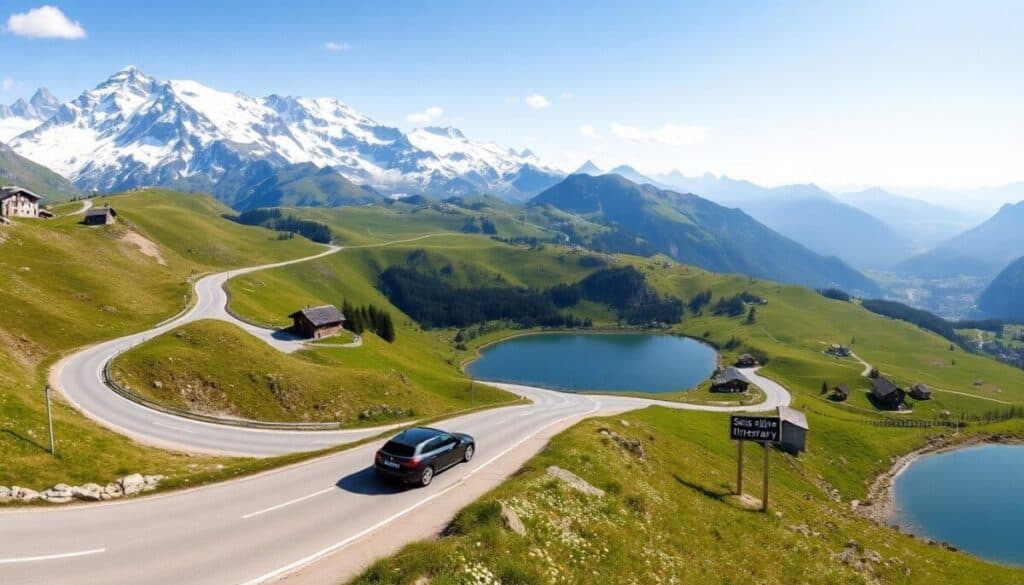
Swiss Alpine drives reward careful planning: the best routes combine a clear season window, the right vehicle, and a realistic pace through mountain passes. If you are comparing rental options for the trip, start with all-wheel-drive rental ideas for tougher terrain before you lock in your route.
This guide focuses on Switzerland-specific driving decisions: which passes fit your trip, when roads are reliably open, and what to expect on narrow alpine roads, even if you are starting from Zurich, Geneva, or another major city.
At a glance
Use this as a quick decision box before you choose a Swiss Alpine road trip.
| Trip type | Best season | Driving difficulty | Best vehicle | Time to allow |
|---|---|---|---|---|
| Classic scenic pass drive | June to September | Moderate | Compact car, sedan, or SUV | 1 to 3 days |
| High-pass route with steep climbs | July to early October | Challenging | SUV or AWD recommended | Full day or overnight |
| Low-stress lake-and-valley route | May to October | Easy to moderate | Any well-maintained rental car | Half day to 2 days |
Swiss alpine road trips are at their best when you treat them as a series of connected decisions rather than a single long drive. The roads can be spectacular, but mountain weather, seasonal pass openings, and narrow lanes mean a good itinerary depends on timing as much as scenery.
Best fit for this itinerary
Choose a Swiss Alpine drive if you want panoramic passes, lake views, mountain villages, and a route that feels like part of the destination. It is especially useful for travelers who are renting a car and want a practical, scenic way to move between cities, valleys, and high-altitude viewpoints.
Planning the route that fits your trip
The Swiss Alps are not one single drive. They are a network of passes, lakeside roads, and valley routes that each suit a different kind of traveler. If your goal is to see the country efficiently, a shorter scenic loop can work well. If your goal is to linger at viewpoints and stop in villages, build in extra time and choose fewer road miles.
Popular Swiss driving names often come up for good reason: Furka Pass for dramatic high-mountain scenery, Grimsel Pass for serious alpine character, Simplon Pass for an iconic transalpine feel, and the Lake Geneva corridor for a smoother route with castle, lake, and vineyard stops. If you want a broader comparison of city-to-scenic-drive planning, the scenic-drive planning approach used for renters is a useful reference point for pacing and stop selection.
Routes that suit first-timers
A valley-and-lake route is the easiest place to start if you are new to alpine driving. It gives you a strong scenic payoff without the most demanding gradients or the highest likelihood of weather disruption.
Routes for experienced drivers
High passes with tight switchbacks and steep descents are more rewarding if you are comfortable with engine braking, narrow lanes, and slower progress behind cyclists, tour coaches, or local traffic.
When to go, and when to book
Timing matters more in Switzerland than on many other scenic drives. Mountain passes are often only fully open from late spring into autumn, and the exact opening dates depend on snow, maintenance, and local conditions. Even in summer, brief closures or delays can happen after storms or rockfall.
| Season | What to expect | Best for |
|---|---|---|
| May to June | Some passes may still be limited or just opening; valleys and lower routes are most reliable. | Flexible travelers who want fewer crowds. |
| July to September | Best balance of open passes, clear roads, and strong visibility. | Most road-trippers and first-time alpine drivers. |
| October | Beautiful autumn color and quieter roads, but weather can turn faster. | Drivers comfortable with shorter daylight and changing conditions. |
| November to April | Higher passes are often closed or winter-limited; conditions can be snowy and icy. | Experienced winter drivers with proper equipment. |
If you are planning around a rental car, book early for summer weekends and school holidays, when availability can narrow quickly. For broader rental preparation, the most useful companion page is renting a car abroad, especially if you are crossing borders before or after your Swiss leg.
Swiss road rules and mountain driving basics
Driving in Switzerland is generally straightforward, but alpine roads ask for more discipline than city streets or motorways. Keep your speed measured, use low gears on descents, and leave generous space between you and the car ahead. On narrow roads, it helps to stay calm, pull over when needed, and let faster traffic pass at safe points.
A few practical points are worth remembering before you set out:
- Check whether your route includes seasonal closures, especially on high passes.
- Use engine braking on long descents to reduce stress on the brakes.
- Watch for cyclists, motorcycles, buses, livestock, and sudden fog patches.
- Expect narrow lanes and blind bends on classic mountain sections.
- Plan fuel stops in advance if you are heading into more remote valleys.
What to bring for a mountain route
The original checklist is worth keeping, but the essentials are the items that solve alpine problems quickly: warmer layers, backup navigation, a charged phone, water, snacks, and a basic emergency kit. Even in summer, temperatures can drop fast at elevation, especially if you stop for a viewpoint or get delayed by weather.
Comfort items
Warm layers, sunglasses, sunscreen, water, snacks, and a phone charger.
Safety items
First-aid kit, flashlight, tire repair basics if available, and offline directions as backup.
If your plan leans toward steeper terrain, make sure your chosen vehicle is suited to the route before you book. That is where a broader comparison like choosing the right rental car for your journey becomes useful, especially if you are deciding between a compact car, SUV, or all-wheel-drive model.
Where to go next
If you want a smoother experience on a Swiss Alpine drive, choose your route first, then book the car to match it. For the safest mountain-trip setup, compare vehicle options and rental basics before departure.
Make the drive memorable without overpacking the schedule
The best Swiss alpine days usually leave room for unplanned pauses: a lake overlook, a mountain café, a village bakery, or a short walk that breaks up the driving. Scenic travel works best when the route is not so full that you rush past the views.
That is also why this topic is worth keeping separate from broader scenic-drive pages. Switzerland needs more specific planning around pass openings, vehicle choice, and descent technique than a generic road-trip article does.
If you want the original rental-car planning angle behind this trip, the page on all-wheel-drive car rentals is the closest fit for the booking stage, while this page helps you decide whether the Swiss Alps are the right drive for your dates.
Frequently asked questions
Can you drive through the Swiss Alps?
Yes. Many passes and valley routes are open to drivers, but some high routes are seasonal, so your exact itinerary should depend on the month and the weather.
What is the most scenic drive in Switzerland?
That depends on what you want to see, but Furka Pass, Grimsel Pass, and routes around Lake Geneva and the Bernese Oberland are among the most rewarding for classic alpine scenery.
What is the 8 day rule in Switzerland?
Travelers often hear different versions of this phrase, but it is not a standard alpine-driving rule. If you are asking about legal stay limits or rental conditions, check the specific visa or rental terms tied to your trip.
Is it difficult for Americans to drive in Switzerland?
The basics are manageable for most drivers, but the alpine parts require comfort with narrow roads, steep grades, and roundabouts. An SUV or AWD model can make the trip feel more relaxed, especially in shoulder season.
How difficult is the Grimsel Pass drive?
It is a rewarding but serious mountain drive, with steep sections, curves, and changing weather. It is best suited to confident drivers who are comfortable with alpine conditions and slower pacing.
What should I include in an emergency kit?
A first-aid kit, flashlight, charger, water, snacks, warm layers, and basic repair supplies are the most useful items for a mountain route.
When should I book a rental for a Swiss Alpine trip?
Book early for summer, holiday periods, and any route that needs a specific vehicle class. If your itinerary includes high passes, reserve the car after checking the likely season and the equipment you may need.

Jessica Malone is a passionate writer and travel enthusiast, specializing in affordable car rental solutions. With a keen eye for detail, she explores various aspects of cheap car rentals, offering readers practical tips and insights to maximize their travel experiences. Through her engaging articles, Jessica aims to empower travelers to make informed decisions and navigate the world of online car rental services with ease.




Your post about planning a Swiss Alpine drive itinerary resonates deeply with me, as I’ve had the pleasure of traversing some of those stunning roads. The magic of the Swiss Alps is hard to encapsulate in words; the combination of jagged peaks, serene valleys, and quaint villages creates an experience that feels almost otherworldly. However, your emphasis on preparation is spot on, as this journey requires careful planning to truly appreciate its beauty while navigating the challenges of mountain driving.
The Swiss Alpine experience is indeed one that resonates deeply with those who appreciate the intersection of nature and adventure. As you rightly mentioned, careful planning is crucial before undertaking such a journey. Having traveled through the Alps myself, I can attest to the mesmerizing beauty and the challenges presented by the terrain.
I love how you highlighted the need for careful planning before a Swiss Alpine drive! I recently took a road trip through the Italian Dolomites, which have their own stunning terrain and weather challenges. I found that checking local weather forecasts not just a day ahead, but even hourly on the day of departure made a huge difference. Also, choosing the right time of year is key; spring and early fall are ideal for avoiding heavy snow while still enjoying breathtaking views.
It sounds like you had a fantastic time in the Dolomites! Checking the weather frequently is such a smart move, especially in those mountainous regions where conditions can change rapidly. I remember once getting caught off guard by a sudden downpour in the Alps; it turned the whole drive into an adventure, but definitely not the kind I was hoping for!
The allure of a Swiss Alpine drive is indeed captivating, and I appreciate how your post underscores the importance of careful planning. I recall a trip I took through the Swiss Alps a few years ago, where I learned firsthand just how unpredictable the weather can be. We set out on a clear morning, but by the time we reached the infamous Furka Pass, we were enveloped in thick fog and rain, reducing visibility drastically. Fortunately, we had rented a vehicle equipped for such conditions, which made all the difference in our safety and comfort.
I appreciate the thoughtful approach you’ve taken in discussing the essential factors to consider before embarking on a scenic drive through the Swiss Alps. It brings back memories of my own experience navigating those picturesque roads, where every turn reveals a new breathtaking view.
It sounds like you’ve had a truly memorable experience in the Swiss Alps. There’s something uniquely exhilarating about those winding roads, isn’t there? I remember my own drive, where every bend led to a new panorama—certainly a reminder of nature’s artistry.
What a wonderfully detailed approach to planning an unforgettable Swiss Alpine drive! I completely resonate with the emphasis on evaluating both the route and vehicle before setting off. When I took a trip through the Alps last summer, I discovered firsthand how crucial it is to check the weather forecasts regularly. The views were stunning, but I experienced sudden fog that transformed the driving experience into something unexpectedly challenging!
It sounds like your summer trip through the Alps was quite the adventure. I can only imagine how surreal the views must have been, even with the sudden fog. It really highlights how dynamic nature can be, doesn’t it? The blend of stunning landscapes and unpredictable weather adds to the thrill of driving in such a majestic region.
Your breakdown of planning the Swiss Alpine drive is spot on! I’ve always found that the journey itself provides an incredible connection to nature. When I drove through the Alps last summer, the changing weather kept me on my toes, but it made the experience feel even more adventurous. I particularly loved stopping at quaint mountain villages along the way, where local culture and delicious Swiss cuisine offered a refreshing break. It’s also a good reminder of the importance of checking not just the car but also what you pack – breathable layers and snacks made all the difference for us!
I’m glad you resonated with my take on the Swiss Alpine drive! It’s amazing how the journey can immerse us in nature, isn’t it? Each twist and turn reveals something new, and the ever-changing weather adds a unique flavor to the experience. Those spontaneous moments when the sun breaks through the clouds or the mist rolls in can transform an ordinary drive into something truly memorable.
Planning a Swiss Alpine drive truly feels like embarking on an adventure tailored by nature itself, doesn’t it? The blend of stunning landscapes, cultural richness, and the exhilarating experience of driving through the majestic Alps can be transformative. As I reflect on your insights about preparing for such an itinerary, I find myself intrigued by the delicate balance between spontaneity and planning that these scenic drives often require.
It’s fascinating to think about how essential proper planning is for a scenic drive in the Swiss Alps. I remember my own experience driving through those stunning landscapes—it was both exhilarating and daunting at times. The breathtaking views can completely distract you from the road, and that’s when having a reliable vehicle really comes into play. It’s interesting how the right car choice not only enhances safety but also adds to the adventure.
I love the idea of a scenic drive through the Swiss Alps! The combination of stunning landscapes and fresh mountain air can really make for an unforgettable journey. I totally agree with you on the importance of planning ahead, especially when it comes to choosing the right vehicle. A compact car might not cut it on those narrow, winding roads!
I’m glad to hear you’re excited about a scenic drive through the Swiss Alps. There’s something truly special about the combination of those breathtaking views and the fresh mountain air. You’re right—having the right vehicle can make a big difference. Those narrow, winding roads can definitely be a challenge.
Your insights into planning for a Swiss Alpine drive are incredibly valuable for anyone looking to embark on this majestic journey. As someone who has traveled through the Swiss Alps, I can attest to the necessity of thorough preparation before hitting those winding roads.
Your insights on planning a Swiss Alpine drive are incredibly relevant, especially in today’s travel landscape where meticulous preparation has become essential for a smooth journey. The considerations you mentioned regarding route length and vehicle suitability resonate deeply with my own experiences traveling through mountainous areas. It’s easy to underestimate the time associated with winding roads and unexpected delays, particularly when a stunning view begs for a moment of gratitude.
What a wonderfully evocative piece about planning a Swiss Alpine drive! As someone who has experienced the breathtaking beauty of the Alps firsthand, I can attest to the importance of thoughtful preparation. The way the landscape transforms with the changing weather is truly something special. I remember one trip when we were caught in a sudden rainstorm; we made the impulsive decision to pull over at a small mountain chalet, which turned into a serendipitous experience filled with homemade cheese and local stories—one of those unexpected adventures that truly makes a journey memorable.
The Swiss Alpine drive truly captures the essence of adventure and natural beauty, doesn’t it? I remember planning a similar trip a few years ago and finding that striking the right balance between driving and soaking in the views was crucial. The winding roads are indeed a marvel, but I found that stopping at quaint towns along the way really enhanced the experience. Each little village had its own charm, and the local cuisine was a delightful surprise.
Your discussion on crafting a scenic itinerary for a Swiss Alpine drive resonates deeply with me. There’s something truly magical about the Alps that captures the spirit of adventure and introspection simultaneously. It’s not just about the stunning views—though they certainly steal the breath away—but also about the journey itself and the reflections we encounter along the way.
I appreciate your thoughts on the Alpine experience. There’s something unique about how the landscape encourages not just visual awe but also contemplation. As you drive through those winding roads, the way the light changes the mountains and valleys can provoke memories or stir up new ideas.
I completely get where you’re coming from! The Swiss Alps have a unique way of weaving adventure into our experiences. It’s like each twist and turn of the road reveals not just breathtaking scenery, but also layers of our own thoughts and emotions. I’ve found that some of the most memorable moments happen during those quiet stretches between the striking views, where the landscape invites reflection.
Your insights on planning a Swiss Alpine drive truly resonate with anyone seeking adventure amidst such stunning landscapes. I remember my own journey through the Alps, where the winding roads felt like a gateway to another world — each turn revealing a new breathtaking vista.
Your insights on planning a Swiss Alpine drive are spot on! I remember my own experience driving through the region and learning just how crucial it is to consider weather changes on such routes. The beauty of the Alps can easily deceive novice travelers into thinking it’s a straightforward drive, but the roads and conditions certainly require respect and careful planning.
Embarking on a Swiss Alpine drive is indeed a captivating experience, one that I’ve had the pleasure of exploring myself. When planning such a journey, I can’t stress enough the importance of considering the time of year for your trip; the beauty of the Alps can vary dramatically with the seasons. For instance, summer offers lush green landscapes and vibrant wildflowers, while winter unveils a majestic icy wonderland—both equally stunning but demanding different preparation for driving conditions.
I love the idea of a scenic drive through the Swiss Alps! It really brings to mind how important it is to connect with nature, especially in such breathtaking surroundings. I remember planning a road trip similar to this and being surprised by how the weather can change so quickly in mountainous regions—definitely a reminder to pack layers!
The Swiss Alpine Drive is truly a treasure for anyone seeking both adventure and a connection with nature! Your emphasis on planning is spot on because the experience of driving through those breathtaking landscapes requires careful consideration, especially when it comes to understanding the variable weather conditions. I remember my own journey through the Alps last summer; I found that having a flexible itinerary was key to fully enjoying the drive. I made sure to frequently check the weather updates, and even had a few spontaneous stops that turned into some of the best memories of my trip—like discovering a hidden lake nestled between the mountains.
Your journey through the Alps sounds like it was a perfect blend of adventure and discovery. I can imagine those spontaneous stops were magical—there’s something so rewarding about finding a hidden gem in nature. It’s interesting how driving in such stunning landscapes can transform our perceptions, making us more aware of our surroundings and even the weather, as you mentioned.
It’s wonderful to read about the enchanting journey through the Swiss Alps, a region that holds a special place in my heart. Having embarked on a few scenic drives myself, I completely resonate with the importance of proper planning before heading into those breathtaking yet challenging terrains. The factors you highlighted, such as evaluating the route length and considering the unpredictable weather, are indeed crucial. I remember one trip when I underestimated the time required to navigate a particularly winding road after a rainstorm had turned the scenery into a dreamlike landscape but also complicated the driving conditions.
What an enticing post about the Swiss Alpine drive! Your focus on planning is spot-on; I remember my own journey through the Alps, where I quickly learned the importance of being adaptable. The weather, in particular, can be quite deceiving. One moment I was basking in sunshine, and the next, I found myself navigating through unexpected fog.
Planning a Swiss Alpine drive sounds like an incredible adventure! I remember taking a similar journey last summer and was amazed by how quickly the scenery changed—from lush valleys to majestic snow-capped peaks. You mentioned the importance of assessing vehicle capabilities, and I completely agree. I rented a compact SUV that handled the narrow, winding roads like a champ, but I saw quite a few travelers struggling with standard sedans.
Your insights on planning a Scenic Swiss Alpine Drive are truly appreciated, especially the emphasis on assessing the vehicle’s capabilities for such unique terrains. Having driven through the Swiss Alps last summer, I can confirm that the winding roads and hairpin turns offer both beauty and challenge, making it all the more essential to be well-prepared.
Your outline of the Swiss Alpine drive resonates with me, as I recently returned from a similar journey through Europe’s mountainous regions. It’s refreshing to see an emphasis on not just the aesthetics of the landscape but also the practical aspects that can significantly influence the experience.
Planning a drive through the Swiss Alps truly feels like embarking on a journey into a magnificent painting. I remember my own trip there, where I was captivated by the endless views of snow-capped peaks and lush valleys. One unexpected lesson I took away was how crucial it is to remain adaptable; the weather can switch from sunny to snowy in a heartbeat, transforming the experience entirely.
Your exploration of the Swiss Alpine drive itinerary really resonates with me, especially given the unique challenges posed by both the breathtaking scenery and the mountainous terrain. Having traveled through the Alps myself, I’ve found that the journey is just as significant as the destination, if not more so. Planning is indeed paramount, particularly when it comes to vehicle suitability. I once underestimated the necessity of having a reliable vehicle, and it quickly turned an enjoyable trip into a stressful experience on steep inclines.
I really appreciate how you’ve highlighted the importance of planning for a scenic drive in the Swiss Alps. I remember my own road trip through the region, and it really is a mix of adventure and serenity. One aspect that caught me off guard back then was the weather; I started with clear blue skies, and just a couple of hours later, I was navigating through light snow on the higher passes! It truly shows how quickly conditions can change in the Alps.
Your emphasis on planning for the Swiss Alpine drive really resonates with me. It’s easy to get lost in the beauty of the landscape and forget about the practicalities. A few years ago, I drove through the Dolomites, and the weather changed from sunny to snow in just a matter of minutes. It was a stark reminder of how vital it is to stay informed and prepared.
Your experience in the Dolomites really highlights the importance of being prepared when exploring such stunning landscapes. It’s incredible how quickly the environment can shift, isn’t it? Those moments where the weather surprises you, while sometimes a bit stressful, can also lead to unforgettable memories.
I really appreciate the focus on planning a Swiss Alpine drive; it’s such an incredible way to experience the beauty of the Alps firsthand. I remember embarking on a similar adventure a couple of years ago, and the combination of stunning landscapes and winding roads gave me an exhilarating sense of freedom.
I completely relate to that feeling of freedom when driving through the Alps. There’s something magical about those winding roads, isn’t there? The way the landscape shifts around each bend, with towering peaks and lush valleys, can be so exhilarating. I remember my own trip a few years back, where I found myself pulling over just to soak in the view—it was like each stop was its own mini adventure.
Your post really captures the essence of what makes a drive through the Swiss Alps so captivating. The beauty of these landscapes is often underscored by the thrill of navigating its winding roads, which demands not only a good itinerary but also careful consideration of several factors. Reflecting on my own journeys, I can’t help but share how central these elements were to my own adventures in mountainous terrains.
I completely agree with you; navigating those winding roads really does add a unique thrill to the whole experience. I still remember the first time I drove through the Swiss Alps—it was both exhilarating and a little nerve-wracking, especially when I went through narrow passes with steep drops on either side. The way the landscape shifts from lush green valleys to jagged peaks is fascinating, and it definitely makes you feel more connected to nature.
It’s great to hear that you share that same appreciation for the Swiss Alps. There’s something almost meditative about those winding roads, right? The way they snake through the mountains, it really makes you feel like you’re part of the landscape. Each turn brings a new view that’s just waiting to take your breath away.
Absolutely, the Swiss Alps have a way of captivating you that goes beyond just the scenery. I find that every winding road feels like a journey both physically and mentally. Navigating those turns not only requires focus but also brings a kind of peaceful mindfulness that you rarely find elsewhere. It’s almost like the mountains have their own rhythm, and driving through them kind of forces you into a heightened state of awareness.
Ah, the Swiss Alps – where the cows have bells thicker than the fog and your GPS might just say, “Good luck!” Planning a scenic drive there feels like prepping for a cosmic road trip. Just remember, if your car can’t handle hills, it might be time for an upgrade or a serious pep talk! Speaking of, has anyone else considered a rental car with a “yodel-o-meter”? You know, to measure how much you’re yodeling at each bend? 🏔️
The Swiss Alps really do have their own unique charm, don’t they? Those cow bells ringing in the distance almost seem to play along with the rhythm of the mountains. And you’re spot on about the GPS—sometimes it feels more like a scavenger hunt than a road trip. But that’s part of the adventure, right?
Ah, the Swiss Alpine Drive, it’s like one of those tantalizing desserts that looks almost too beautiful to eat — you know you want to devour every last piece, but you also fret about how sticky things might get when you dive in. Much like planning a picturesque drive through the Alps, the journey into this breathtaking realm can feel daunting, yet overwhelmingly enticing.
This guide to the Swiss Alpine drive is truly inspiring! The landscape is just as enchanting as the planning process can be daunting. I think it’s crucial to also think about the experience beyond just the driving itself. For instance, if you have time, incorporating stops at local villages or taking short hikes can make the journey even more rewarding. I remember discovering a tiny cheese shop in a quaint village during my last trip—it added a delightful taste of Swiss culture to my drive. How about planning for meals at local restaurants? Those moments can really enhance the overall experience of the trip. Have any readers found hidden gems along their scenic drives?
You’ve touched on an essential part of any journey—it’s not just about the drive, but about what happens along the way. The Swiss Alps offer more than just stunning roads; they’re a tapestry of cultures, flavors, and stories waiting to be explored. Taking time to visit local villages can really transform a scenic drive into a rich experience. Those little cheese shops you mentioned are often where you’ll uncover the heart of Swiss culinary traditions. I remember stumbling into a similar place during my travels; the owner was more than happy to explain the cheese-making process and share stories about the region’s history. That kind of interaction is what makes travel memorable.