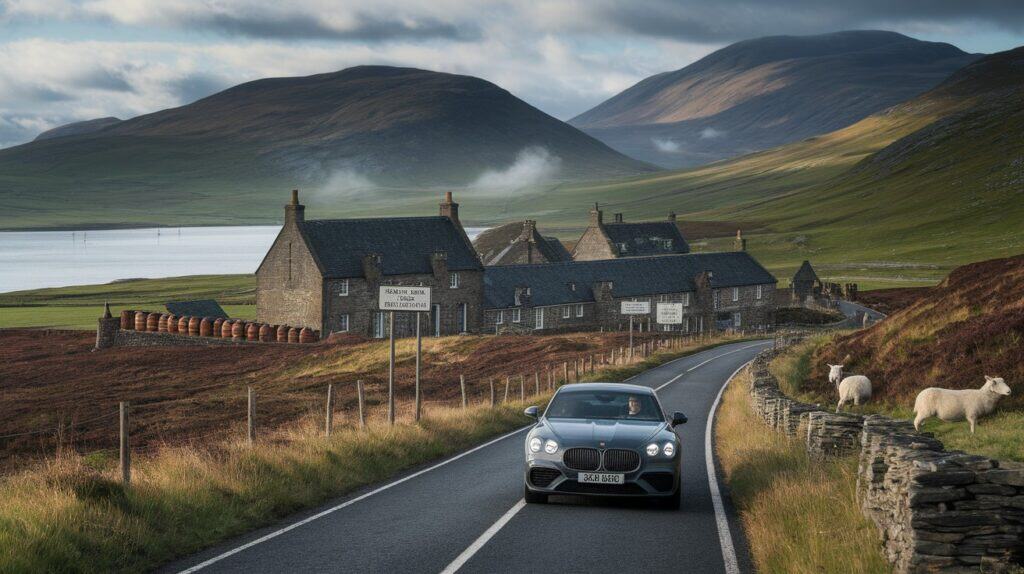
A luxury car drives along Scotland’s scenic Whisky Trail on a narrow rural road past stone cottages, with rolling hills, a lake, and grazing sheep under a cloudy blue sky. Road signs and a stack of barrels are visible near the houses.

Whisky Trail Driving in Scotland: A Timeless Adventure

Whisky Trail Driving in Scotland by RentaCar24.org, Compare Rental Cars at Airport & City Locations
Supporting readers across the world.
RentaCar24.org provides expert guidance on Whisky Trail driving based on in-depth research and analysis.

Explore the Rich History of Whisky Trail Driving

Discover the Origins of Whisky Trail Driving

The origins of whisky trail driving can be traced back centuries, weaving a rich tapestry of tradition and heritage that has shaped the contemporary experience. The journey through Scotland’s breathtaking landscapes to its iconic distilleries emerged in the 19th century, coinciding with a growing fascination with whisky production. As the number of distilleries increased, enthusiasts became eager to visit them, leading to the establishment of organized trails. This practice quickly transformed into a cultural phenomenon, with whisky connoisseurs traveling considerable distances to appreciate the craftsmanship behind their beloved spirits.

The appeal of whisky trail driving is deeply rooted in its connection to Scotland’s geography and historical significance. Each distillery shares a distinctive narrative, embodying the local environment, traditional methodologies, and innovative approaches in the production process. For many, this experience becomes a pilgrimage that merges the appreciation of whisky with the stunning beauty of Scotland’s landscapes—where rolling hills, tranquil glens, and shimmering lochs create mesmerizing backdrops for the journey.

A silver luxury car drives along Scotland’s Whisky Trail, winding past stone cottages, green hills, and grazing sheep by a lake. Soft sunlight casts long shadows over the dramatic landscape, evoking the spirit of a classic countryside driving adventure.

Understand the Evolution of the Whisky Trail

Delve into how the whisky trail has transformed over time, adapting to shifts in technology, culture, and consumer preferences. Significant milestones in this evolution illustrate the dynamic nature of whisky production and consumption, as well as the increasing interest in experiential tourism.

  • The inauguration of the first commercial distilleries during the 19th century.
  • The founding of the Scotch Whisky Association in 1908.
  • The surge in global interest in Scotch whisky during the 1980s.
  • The emergence of whisky festivals and events throughout the 1990s.
  • The introduction of digital technology, enhancing visitor experiences.
  • The creation of themed whisky trails, such as the renowned Speyside Whisky Trail.
  • The rising focus on sustainable and local production methods.
  • The proliferation of craft distilleries in the 21st century.

Each of these milestones signifies a crucial transformation in how whisky is perceived and enjoyed. The shift from small-scale production to a vast global market has required distilleries to adapt their operations and how consumers interact with whisky culture. Presently, visitors are not merely passive consumers; they actively engage in a vibrant community celebrating craftsmanship and heritage.

What Influence Does Whisky Trail Driving Have on Culture?

Whisky trail driving profoundly influences cultural practices, fostering a sense of community and tradition among both enthusiasts and newcomers. This phenomenon transcends mere tourism; it cultivates an appreciation for a craft that intertwines storytelling with flavor. The interactions between visitors and local distilleries create a rich tapestry of shared experiences, memories, and cultural exchanges.

Local communities often reap the benefits from the influx of visitors, which helps sustain traditional practices, including family-operated distilleries and local festivals. These connections nurture pride and identity, as communities celebrate their unique contributions to whisky heritage. The traditions surrounding whisky production are not only preserved but revitalized through the engagement of a global audience eager to experience authentic cultural practices.

Gain Insights from Experts on Scotland Whisky Trail Driving

Maximize Your Whisky Trail Experience with Proven Techniques

Mastering the art of whisky trail driving requires an understanding of the nuances at each stop, significantly enhancing your appreciation of the journey. Real-world examples of effective whisky trail driving techniques can elevate your overall experience. One useful strategy is to interact directly with the distillers, asking them about their methods and philosophies. This personal connection enriches your understanding and appreciation of the whisky.

Additionally, joining guided tastings can provide insights into the subtleties of flavor profiles. Many distilleries offer expert-led sessions that explore the intricacies of their products. Another technique is to pace your visits; allowing ample time at each distillery enables deeper exploration of the surroundings, including the historic architecture and natural beauty that envelop each location.

  • Engage with distillers during tastings for firsthand insights.
  • Seek out guided tours for expert perspectives.
  • Pace your visits to absorb the atmosphere and beauty.
  • Document your tasting notes for future reflection.
  • Explore local food pairings to enrich your experience.
  • Participate in distillery events or festivals for deeper immersion.
  • Join whisky clubs or online forums for community support.
  • Consider transportation options for safety and convenience.

These techniques not only enhance your tasting experience but also deepen your appreciation for the artistry involved in whisky production. Actively engaging with the whisky trail transforms a simple road trip into a comprehensive cultural and educational journey.

What Makes a Whisky Trail Memorable?

Several factors contribute to a memorable whisky trail driving experience, from the ambiance to the selection of whiskies. A key element is the diversity of distilleries you visit; each offers a unique perspective on the whisky-making process. Engaging environments—whether a quaint, family-owned distillery or a large, modern facility—can provide varied insights into both traditional and contemporary practices.

The quality of the whiskies sampled is vital. Memorable trails often feature access to exclusive releases or limited-edition bottlings that are not available elsewhere. Furthermore, the overall atmosphere—comprising the warmth of the distillery staff, the scenic views, and the historical significance of the locations—plays a crucial role in creating lasting impressions.

  • Diversity of distilleries visited for varied insights.
  • Quality and exclusivity of whiskies sampled.
  • Engaging and knowledgeable staff that enhance the experience.
  • Scenic and picturesque surroundings that enrich the journey.
  • Historical significance of locations that add depth.
  • Availability of unique experiences or events that create excitement.
  • Opportunities for local food pairings to complement whisky.
  • Personal connections made during the journey that foster community.

When these factors align, they create not just a trip but a tapestry of experiences that linger long after the journey has concluded, solidifying the whisky trail as a cherished adventure in the hearts of enthusiasts.

How to Choose the Right Whisky Trail?

Selecting the ideal whisky trail can seem overwhelming; understanding how to align your preferences with the right experience can simplify the process. Key considerations when choosing a whisky trail encompass your personal tastes, the types of whiskies you enjoy, and the specific regions that intrigue you.

For example, if you have a taste for peaty whiskies, the Islay region, known for its robust, smoky offerings, may be perfect for you. Conversely, if you prefer lighter, fruitier profiles, the Lowlands or Speyside may offer better options. The duration of your trip and the number of distilleries you wish to visit also play a crucial role in your planning.

  • Your personal whisky preferences (e.g., peaty, fruity, etc.).
  • Desired length of the trip.
  • Specific regions of interest (Islay, Speyside, etc.).
  • Types of distilleries (large vs. small, traditional vs. modern).
  • Availability of unique experiences or tastings.
  • Transportation options and logistical considerations.
  • Accommodations along the route that fit your needs.
  • Recommendations from fellow enthusiasts or guides to enhance your journey.

By thoughtfully considering these factors, you can curate a whisky trail that not only aligns with your palate but also provides an enriching and unforgettable experience. The right trail can transform your understanding of whisky while immersing you in the culture and history surrounding this beloved spirit.

A silver sports car drives on a narrow rural road past stone cottages with chimneys, as if embarking on a Timeless Adventure. Rolling green hills, grazing sheep, and misty mountains capture the spirit of driving in Scotland's scenic landscapes.

Master the Art of Whisky Tasting on the Trail

Essential Techniques for Whisky Tasting

Mastering whisky tasting involves understanding flavor profiles and aromas, which enhance your appreciation of each sip. Key techniques for whisky tasting encompass various elements, from the initial visual inspection to the final assessment of flavor. Begin by examining the whisky’s color; this can provide clues about its age and the type of cask used for maturation.

Next, gently swirl the whisky in the glass to release its aromas. Take a moment to inhale deeply, allowing the scents to inform your expectations. Tasting should be a deliberate process—take small sips, letting the liquid coat your palate. This approach allows you to discern the complex flavors that unfold over time.

  • Observe the color for insights into age and cask selection.
  • Swirl the whisky to release its delightful aromas.
  • Engage your sense of smell before savoring the taste.
  • Taste in small sips to appreciate the complexity of flavors.
  • Consider the finish and aftertaste after each sip.
  • Document your impressions for future reference and reflection.
  • Pair with water or food to explore different flavor profiles.
  • Engage in discussions with others for diverse perspectives on tasting.

These techniques create a focused experience, deepening your understanding and enjoyment of the whisky. Developing a systematic approach to tasting transforms it from a casual activity into a refined art form that celebrates the nuances of each unique expression.

Enhance Your Trail Experience by Pairing Whisky with Food

Discovering the art of pairing whisky with food can elevate your trail experience through complementary flavors. The right pairing enhances both the whisky and the meal, creating a holistic experience that tantalizes the senses. For instance, a rich, peaty Islay whisky can be beautifully complemented by smoked salmon, where the flavors of the whisky and the fish harmonize seamlessly.

Similarly, a sweet, sherried whisky from Speyside can pair excellently with chocolate desserts, with the lush flavors of the whisky enhancing the richness of the chocolate. It is essential to consider the weight and flavor profiles of both the whisky and the food; lighter whiskies generally pair best with delicate dishes, while bolder whiskies can stand up to heartier meals.

  • Match flavors (smoky whisky with smoked dishes for harmony).
  • Consider the richness of both the whisky and food for balance.
  • Experiment with sweet and savory combinations for depth.
  • Pay attention to texture (smooth whiskies with creamy dishes).
  • Look for local dishes to create a regional and immersive experience.
  • Engage with distillery suggestions for ideal pairings.
  • Participate in food and whisky pairing events for hands-on learning.
  • Document successful pairings for future reference and enjoyment.

By thoughtfully considering food pairings, whisky trail enthusiasts can create richer, more immersive experiences that deepen their appreciation for both the spirit and culinary arts. This approach transforms each tasting into a multifaceted exploration of flavor.

What Are the Best Practices for Whisky Tasting?

Essential steps for an optimal whisky tasting experience on the trail include preparation and mindfulness. Begin by choosing the right environment; a calm, quiet setting allows for better focus on the flavors and aromas. Having the appropriate glassware—a tulip-shaped glass enhances the tasting experience by concentrating aromas—is also crucial.

Mindfulness during the tasting process enhances enjoyment and understanding. Pay close attention to the colors, aromas, and flavors that unfold with each sip. Taking notes throughout the tasting is beneficial; this practice reinforces your impressions and makes for a more engaging overall experience.

  • Choose a calm, distraction-free environment for tasting.
  • Use proper glassware to enhance the tasting experience.
  • Engage with the visual aspects before tasting for better focus.
  • Take notes on aromas and flavors for future reflection.
  • Practice mindfulness during the tasting process for deeper engagement.
  • Allow the whisky to breathe before tasting to enhance flavors.
  • Experiment with water or ice to explore different profiles.
  • Share your experiences with fellow enthusiasts for richer discussions.

Following these best practices enables a balanced and enjoyable tasting session, deepening your engagement with the whisky. This intentional approach transforms the tasting into not just an act of consumption but into a meaningful exploration of craftsmanship and flavor.

Selecting the Ideal Whisky for Trail Tasting

Choosing whiskies that are perfect for tasting on the trail involves considering several factors, including portability, flavor intensity, and environmental conditions. First, select whiskies that are easy to transport; smaller bottles or those with secure closures are ideal for a road trip.

Flavor intensity is also critical; a range of expressions—spanning from light and floral to rich and peaty—will provide a well-rounded experience for your palate. Additionally, consider the environmental conditions; whiskies that can withstand temperature fluctuations are preferable for a journey that includes outdoor elements.

  • Opt for smaller, portable bottles to ensure easy transport.
  • Include a diverse range of flavor intensities for variety.
  • Choose whiskies that can withstand temperature changes during travel.
  • Consider region-specific whiskies to create a local experience.
  • Engage with distillery recommendations for optimal selections.
  • Document your choices for future reference.
  • Factor in personal taste preferences for a tailored tasting experience.
  • Participate in tastings that highlight unique profiles and expressions.

By thoughtfully selecting whiskies for the trail, enthusiasts can enhance their tasting experience, ensuring a diverse and enjoyable exploration of flavors. The right choices can significantly enrich your journey, making each stop an opportunity for discovery.

Plan Your Whisky Trail Driving Adventure

How to Prepare for Your Whisky Trail Journey?

Preparation is vital for a successful whisky trail driving adventure; understanding what to pack, plan, and anticipate can streamline your experience. Essential items to bring on your whisky trail journey include a reliable GPS or map, ensuring you can navigate the winding roads of Scotland’s countryside with ease. Comfortable clothing and shoes are crucial for long days of exploration, particularly when visiting distilleries that may require some walking.

Additionally, consider packing a notebook or a tasting journal. This allows you to document your impressions of each whisky, making it easier to recall your favorites later. It’s also wise to bring a designated driver or arrange safe transport options if you plan to indulge in tastings.

  • Reliable GPS or maps for efficient navigation.
  • Comfortable clothing and shoes for an enjoyable exploration.
  • A notebook or tasting journal for documenting experiences and impressions.
  • Snacks and water to stay refreshed during your journey.
  • Designated driver or transport arrangements for safety.
  • Camera for capturing memories along the way.
  • Local currency for purchases at distilleries and local shops.
  • Emergency kit for unexpected situations on the road.

By meticulously planning your whisky trail journey, you ensure a seamless experience that allows you to focus on the enjoyment of the whisky and the beauty of the surroundings. Preparation transforms the adventure into a well-organized exploration of flavors and culture.

Budgeting for Your Whisky Trail Experience

Understanding the costs associated with whisky trail driving and how to effectively plan your budget is essential for an enjoyable experience. Factors that influence your budget include accommodation choices, transportation costs, and tasting fees at various distilleries. It’s wise to research distillery entry fees in advance, as many offer tours and tastings that may come at different pricing tiers.

Accommodation can vary significantly, from cozy bed-and-breakfasts to luxury hotels; planning your stay based on your budget and proximity to distilleries can optimize your experience. Additionally, consider budgeting for meals, especially if you plan to savor local cuisine that pairs well with your whisky selections.

  • Research distillery entry fees and tasting costs for informed budgeting.
  • Plan accommodations based on your budget and location preferences.
  • Include transportation costs in your overall budget for accuracy.
  • Allocate funds for meals and local dining experiences for a complete journey.
  • Consider purchasing souvenir whiskies for home to commemorate your experience.
  • Factor in additional activities or excursions you wish to enjoy.
  • Review and adjust your budget according to personal preferences.
  • Set aside emergency funds for any unexpected expenses.

By effectively budgeting for your whisky trail experience, you can ensure a fulfilling journey without the stress of financial constraints. A well-planned budget allows for spontaneity and enjoyment, enriching your exploration of whisky culture.

Essential Safety Tips for Whisky Trail Driving

Ensuring a safe and enjoyable experience is paramount when embarking on a whisky trail driving adventure. Essential safety tips for whisky trail driving include always having a designated driver. If you plan to taste various whiskies, it’s critical to arrange transportation that prioritizes safety, whether it’s a sober friend or a hired service.

Stay informed about local laws regarding alcohol consumption and driving. Be aware of road conditions, particularly in rural areas where weather can affect travel. It’s also wise to plan your itinerary to avoid long stretches of driving after tastings.

  • Designate a sober driver or arrange for reliable transport.
  • Familiarize yourself with local alcohol laws to ensure compliance.
  • Monitor road conditions and plan your route accordingly.
  • Stay hydrated and take breaks during the drive for safety.
  • Communicate your itinerary with someone for added safety.
  • Carry an emergency kit in your vehicle for unforeseen situations.
  • Know the location of nearby accommodations in case of need.
  • Be mindful of your limits and pace your tastings for enjoyment.

Prioritizing safety ensures that your whisky trail driving adventure remains enjoyable and memorable. By taking precautionary measures, you can fully immerse yourself in the experience without compromising your well-being.

Research-Backed Benefits of Scotland Whisky Trail Driving

Psychological Benefits of Whisky Trail Driving

Engaging in whisky trail driving can provide psychological benefits, such as relaxation and stress relief. The combination of stunning landscapes and the enjoyment of whisky creates a restorative environment conducive to mental well-being. To maximize these psychological benefits, consider structuring your journey to include ample downtime, where you can reflect and enjoy the scenery without a strict timetable.

Mindfulness practices, such as savoring the flavors of each whisky and allowing time for contemplation, can elevate your experience. Additionally, connecting with fellow travelers and sharing stories fosters social connections that enhance your overall enjoyment.

  • Incorporate downtime into your itinerary for relaxation.
  • Practice mindfulness during tastings to enhance enjoyment.
  • Engage with fellow travelers for shared experiences and insights.
  • Take time to reflect on your surroundings for deeper appreciation.
  • Document your journey for personal insight and reflection.
  • Seek out tranquil spots for relaxation and contemplation.
  • Participate in guided tours for a more profound connection to the experience.
  • Use the journey as a form of escape from daily stresses.

By being intentional about your experience, whisky trail driving can serve as a rejuvenating journey that nurtures both mental health and emotional well-being.

Social Benefits of Whisky Trail Driving

Whisky trail driving fosters social connections, creating lasting memories and friendships. Participating in tastings and tours allows enthusiasts to meet like-minded individuals who share a passion for whisky. These interactions often lead to deep conversations about preferences, experiences, and the craft of whisky-making itself.

Group tours or events can enhance the experience, fostering camaraderie among participants. Sharing discoveries and tasting notes can lead to friendships that extend beyond the journey. Engaging with local distillers also fosters connections, as their passion and stories resonate with visitors, creating a sense of community.

  • Engage with fellow enthusiasts during tastings for shared insights.
  • Participate in group tours for collaborative experiences.
  • Share tasting notes and preferences with others to enhance enjoyment.
  • Attend local events or festivals to meet new people and connect.
  • Establish connections with distillers and industry professionals for deeper engagement.
  • Join whisky clubs or online communities post-journey for ongoing discussions.
  • Document shared experiences to reminisce later.
  • Encourage discussions about different flavor profiles for broader perspectives.

These connections enrich the overall whisky trail experience, transforming a solitary pursuit into a collaborative journey of discovery and appreciation.

Health Benefits of Moderate Whisky Consumption

Moderate whisky consumption can offer health benefits, contributing to a balanced lifestyle. Research suggests that moderate alcohol intake, including whisky, may have cardiovascular benefits, potentially lowering the risk of heart disease. The antioxidants present in whisky, particularly those derived from the grains and the aging process in wood barrels, can also contribute to overall health.

To ensure you experience the health benefits while avoiding the risks associated with excessive consumption, it’s essential to recognize what constitutes moderation. Guidelines generally recommend limiting intake to one standard drink per day for women and two for men.

  • Understand what constitutes moderate consumption for health benefits.
  • Explore the antioxidant properties of whisky for overall wellness.
  • Consider the social aspects of whisky enjoyment as part of a balanced lifestyle.
  • Combine whisky with a balanced diet for optimal health advantages.
  • Stay informed about research on alcohol and health for better understanding.
  • Engage in physical activity to complement consumption for a healthier lifestyle.
  • Pay attention to personal health conditions and guidelines for responsible drinking.
  • Seek professional advice if uncertain about alcohol consumption.

By embracing moderation, whisky enthusiasts can enjoy their passion while reaping potential health benefits, all while maintaining a mindful approach to consumption.

Economic Benefits of Whisky Trail Tourism

Whisky trail driving boosts local economies by supporting distilleries and related businesses, creating jobs and enhancing regional development. The influx of tourism to distillery locations leads to increased spending on local products, accommodations, and dining, significantly contributing to the economic vitality of the regions involved.

Each distillery has the potential to generate substantial revenue, which can be reinvested in the community. Additionally, the rising popularity of whisky tourism has led to the development of supporting industries, such as transportation services, guided tours, and hospitality, creating further economic opportunities.

  • Increased visitor spending at distilleries and local businesses enhances the economy.
  • Job creation in the hospitality and tourism sectors boosts local employment.
  • Support for local agricultural practices related to whisky production sustains communities.
  • Investment in infrastructure to accommodate tourism fosters regional development.
  • Development of partnerships between distilleries and local businesses enriches the community.
  • Economic revitalization of rural communities through increased tourism.
  • Promotion of local cultural heritage through tourism enhances community pride.
  • Long-term sustainability for distilleries and related industries ensures ongoing success.

Overall, whisky trail driving presents a unique opportunity for economic growth while celebrating and preserving the cultural heritage associated with this beloved spirit. The synergy between tourism and local economies creates a sustainable framework for development that benefits all stakeholders involved.


A luxury sports car drives on a winding rural road in Scotland past stone cottages and grazing sheep, with green hills, a lake, and misty mountains in the background. A blue road sign ahead reads “Travel Safely, Check Cars.” The scene is calm and picturesque.

Experience Unique Moments on the Whisky Trail

Exclusive Whisky Tastings: A Deeper Dive

Accessing exclusive whisky tastings offers a deeper understanding of the craft and history behind each bottle. Distilleries often host special events where limited releases or unique blends are available for tasting. These exclusive sessions provide insights into the production process, allowing participants to appreciate the artistry involved.

Many distilleries also offer private tours or tastings customized for small groups interested in a more intimate experience. This access not only enhances the tasting experience but also allows for engaging conversations with distillers, who can share anecdotes and details about their techniques often not available in larger group settings.

  • Attend special distillery events for limited releases and unique expressions.
  • Seek out private tours for personalized experiences tailored to your interests.
  • Engage with distillers during exclusive tastings for in-depth insights.
  • Explore behind-the-scenes production aspects during intimate tours.
  • Document exclusive experiences for future reference and enjoyment.
  • Join tasting clubs focused on unique expressions for ongoing exploration.
  • Participate in virtual tastings for remote access to exclusive events.
  • Follow distilleries on social media for updates on exclusive offerings.

These opportunities create memorable experiences that enrich your understanding of whisky and leave lasting impressions of the journey.

What Are the Most Unique Stops on the Whisky Trail?

Uncovering the most unique stops along the whisky trail can significantly enhance your experience, as each location offers a distinct perspective on whisky production. Distilleries such as the Dalmore in the Highlands provide a blend of traditional craftsmanship and modern innovation, featuring opulent surroundings and premium expressions that captivate visitors.

The small, family-run distilleries often found on the smaller trails offer intimate experiences that showcase local traditions and techniques. Consider visiting places like the Springbank Distillery in Campbeltown, where the production methods remain largely unchanged, offering a glimpse into the past.

  • The Dalmore Distillery for luxurious tastings with a modern twist.
  • Springbank Distillery for traditional methods and a historical experience.
  • Islay Distilleries for distinctive peaty expressions that define the region.
  • Glenfiddich for a comprehensive whisky experience showcasing their range.
  • Balblair Distillery for unique vintage offerings that tell a story.
  • Benromach for artisan production techniques that highlight craftsmanship.
  • Highland Park for a taste of their Viking heritage in every sip.
  • Ardbeg for innovative cask experimentation and bold flavors.

These unique stops not only highlight the diversity of whisky production but also provide an enriching context for your journey, deepening your appreciation for the craft.

Engage with Local Communities Along the Whisky Trail

Immersing yourself in local culture and traditions by engaging with the communities along the whisky trail enhances the overall experience. Distilleries often maintain strong ties to their local areas, and many host events that celebrate regional heritage, such as food festivals or cultural showcases.

Connecting with local residents can provide valuable insights into the history and significance of whisky production in the area. Participating in community events or workshops can create lasting memories, as well as foster relationships that enrich your understanding of the culture surrounding whisky.

  • Attend local festivals that celebrate whisky and food for a complete experience.
  • Participate in workshops on traditional whisky production for hands-on learning.
  • Engage with residents for personal stories and insights about the region.
  • Explore local crafts and products related to the whisky industry for a unique perspective.
  • Join community tours that highlight cultural heritage and traditions.
  • Document your interactions for a personal touch to your journey.
  • Support local businesses by purchasing regional goods to help sustain the community.
  • Encourage distilleries to collaborate with local artists or chefs for creative events.

By actively engaging with local communities, visitors can experience a richer, more authentic connection to whisky culture, making the journey far more rewarding.

Envision the Future of Whisky Trail Driving

Innovations Shaping Whisky Trail Driving

Exploring the latest innovations in whisky trail driving reveals exciting advancements that enhance the journey. Technology plays a pivotal role in creating more immersive experiences, from virtual reality tours of distilleries to mobile apps that provide detailed information about each stop on the trail.

These innovations not only simplify planning but also allow for more personalized experiences. Distilleries are increasingly adopting interactive elements, such as tasting stations that allow visitors to select their preferred styles, enhancing engagement and education.

  • Virtual reality tours for a digital exploration of distilleries and their processes.
  • Mobile apps for itinerary planning and comprehensive information.
  • Interactive tasting stations for personalized experiences tailored to your palate.
  • Online forums and communities for sharing experiences and tips.
  • Integration of social media for real-time updates and engagement.
  • Augmented reality labels for informative tastings and education.
  • Collaborations with tech companies for innovative visitor experiences.
  • Utilization of data analytics for tailored visitor experiences based on preferences.

These innovations create dynamic interactions that appeal to both seasoned enthusiasts and newcomers, ensuring that the whisky trail remains a vibrant and evolving adventure.

Embracing Sustainability in Whisky Trail Driving

Understanding how sustainability practices are being integrated into whisky trail driving ensures a responsible and eco-friendly experience. Many distilleries now focus on sustainable production methods, employing organic farming techniques for their ingredients and utilizing renewable energy sources in their operations.

Moreover, eco-friendly tourism initiatives are gaining traction, with distilleries promoting local conservation efforts and responsible visitor guidelines. This commitment to sustainability not only benefits the environment but also enhances the overall experience for visitors, who increasingly value eco-conscious practices.

  • Support distilleries that prioritize sustainable practices for a greener future.
  • Engage in eco-friendly transportation options during your journey.
  • Participate in local conservation efforts to give back to the community.
  • Inquire about organic ingredients used in production for informed choices.
  • Explore initiatives that reduce carbon footprints in distillery operations.
  • Encourage distilleries to adopt green technologies for sustainable practices.
  • Educate fellow travelers on sustainability in whisky tourism for broader awareness.
  • Document sustainable practices for future reference and inspiration.

By embracing sustainability, whisky trail driving can continue to thrive while minimizing its impact on the environment, ensuring this cherished tradition can be enjoyed by future generations.

What Trends Will Shape the Future of Whisky Trail Driving?

Emerging trends are likely to influence the future of whisky trail driving, from consumer preferences to industry developments. Increasing interest in craft and artisanal distilleries is shaping the landscape, as consumers seek authentic experiences that reflect local flavors and traditions. This trend encourages distilleries to innovate while maintaining a connection to their roots.

Moreover, the rise of experiential tourism means that visitors are looking for more than just tastings; they desire immersive experiences that educate and engage. Consequently, distilleries are responding by offering unique events, workshops, and collaborations with local artisans, further enriching the journey.

  • Growing interest in craft and artisanal distilleries for authentic experiences.
  • Demand for immersive and educational experiences that engage visitors.
  • Increased focus on local and organic ingredients for transparency.
  • Expansion of themed whisky trails for diverse exploration.
  • Integration of technology for enhanced visitor engagement and education.
  • Collaborations with local artisans and chefs for creative events.
  • Development of sustainability-focused practices to ensure responsible tourism.
  • Emphasis on storytelling and heritage in marketing to connect with consumers.

By staying attuned to these trends, whisky enthusiasts can navigate the evolving landscape of the whisky trail, ensuring that their journeys remain fresh, exciting, and aligned with contemporary preferences.

Frequently Asked Questions About Whisky Trail Driving

What is the Whisky Trail in Scotland?

The Whisky Trail in Scotland is a scenic route that connects various distilleries, allowing enthusiasts to explore and taste different whiskies while enjoying the breathtaking landscapes of the region.

How long does it take to drive the Whisky Trail?

The duration of the Whisky Trail can vary; a typical itinerary might take several days to a week, depending on the number of distilleries and stops included in your plans.

Can you visit distilleries without a reservation?

While some distilleries welcome walk-ins, it is often advisable to make a reservation, especially for tours and tastings to ensure availability and enhance your experience.

What should I bring on a Whisky Trail trip?

Essential items include comfortable clothing, a reliable GPS, a notebook for tasting notes, and a designated driver for safety throughout your journey.

Are there any age restrictions for visiting distilleries?

Yes, most distilleries have age restrictions, typically requiring visitors to be at least 18 years old to participate in tastings and tours.

What types of whiskies can I expect to taste on the trail?

Expect a diverse selection, including single malts, blended whiskies, and unique local expressions from various distilleries that showcase the region’s rich heritage.

How can I find the best distilleries to visit?

Researching online reviews, seeking recommendations from whisky communities, and consulting travel guides can help identify the best distilleries to include in your personalized itinerary.

Is it safe to drive after whisky tastings?

Driving after tastings is not safe. Always designate a sober driver or arrange for alternative transportation if you plan to sample whiskies during your journey.

What is the best time of year to visit the Whisky Trail?

The best time to visit the Whisky Trail is during spring or autumn, when the weather is mild, and the landscapes are particularly beautiful, enriching your experience.

Are there any special events on the Whisky Trail?

Yes, many distilleries host special events, festivals, and tastings throughout the year, making it worthwhile to check their calendars before planning your visit for unique experiences.

Connect with us on Facebook for more whisky trail insights!

See also: Car Rental Toronto.

See also: Rent a Car Toronto.

27 thoughts on “Whisky Trail Driving in Scotland: A Timeless Adventure”

  1. I found your exploration of the Whisky Trail driving experiences in Scotland truly captivating! There’s something so unique about how whisky production is deeply intertwined with Scotland’s culture and heritage. The way you described its origins, dating back to the 19th century, really highlights the evolution of whisky from more than just a beverage to a significant part of national pride and identity.

    1. Lewis Martinez

      I’m glad you found the exploration of the Whisky Trail so captivating. There really is something special about how whisky production is woven into the fabric of Scottish culture; it’s like a living history. That evolution from the 19th century, when it was first commercialized, to the global phenomenon it is today, showcases not just a beverage but an entire lifestyle and tradition.

  2. The exploration of Scotland’s Whisky Trail certainly taps into an intriguing confluence of culture, history, and craftsmanship. What stands out to me is how this journey not only celebrates the distillation process but also encapsulates the spirit of the Scottish Highlands themselves. The breathtaking landscapes serve as a backdrop that enhances the overall experience of whisky tasting.

  3. Aleah Okeremute

    It’s fascinating to think about how the Whisky Trail has evolved into such an integral part of Scotland’s cultural heritage. As someone who has traveled a few of these routes, I can attest that it’s not just about the whisky itself, but the stories behind each distillery that make the experience unforgettable. From the lush landscapes to the passionate craftsmanship, every visit feels like walking through history.

  4. What a fascinating exploration of the Whisky Trail! I’ve always been intrigued by how travel is so intricately linked with the cultural legacies of a region, and the history behind Scotland’s Whisky Trail is a prime example. The way you described the evolution from a singular interest in whisky production to the creation of organized driving routes illustrates how deeply intertwined our past can be with our present pursuits.

  5. The exploration of the Whisky Trail is such a fascinating journey not only through Scotland’s stunning landscapes but also into its rich traditions. It’s interesting to think about how whisky has evolved from a local craft to a global phenomenon, drawing enthusiasts from all corners of the world.

    1. It’s true; the Whisky Trail really does weave together a beautiful narrative of Scotland’s landscapes and heritage. Each distillery has its own story, reflecting not just the traditional methods of whisky-making but also the influence of local culture. I find it fascinating how the craftsmanship has transformed over the years, with some distilleries maintaining century-old practices while others embrace modern technology to innovate new flavors and experiences.

  6. Leonardo Durojaiye

    It’s fascinating to read about the historical foundations of whisky trail driving in Scotland, particularly how it evolved alongside the growth of distilleries in the 19th century. This period was pivotal not only for the whisky industry but also for Scotland’s cultural identity as a whole. The journey to the distilleries is more than just a scenic drive; it symbolizes a deep-rooted connection between the land and its traditions.

    1. Franklin Hidalgo

      I completely agree with you about the profound significance of the whisky trail in Scotland. It’s interesting to consider how the rise of distilleries not only shaped the economy but also helped forge a unique cultural identity for the region. The very act of driving through the Scottish landscape to these distilleries feels like a pilgrimage of sorts, connecting us to the history and craftsmanship that define this spirit.

  7. I really enjoyed reading about the origins of whisky trail driving! It’s fascinating to think how something that started centuries ago has evolved into such a vibrant cultural experience for whisky enthusiasts today. I’ve always been intrigued by the connection between the landscapes of Scotland and the craftsmanship of its distilleries. There’s just something magical about driving through those rolling hills and rugged terrain while uncovering the stories behind each distillery.

  8. Your exploration of the whisky trail driving in Scotland is captivating and sheds light on a tradition that often gets overlooked in discussions about the country’s rich cultural landscape. It’s interesting to consider how whisky tourism has evolved not just as a niche hobby, but as a significant part of Scotland’s economic and social fabric.

  9. The exploration of whisky trail driving certainly highlights a fascinating intersection of culture and commerce in Scotland. However, it raises questions about the sustainability of this burgeoning tourism trend. While it’s clear that these organized trails boost local economies and promote appreciation for traditional craftsmanship, they may also dilute the intimate experience of visiting smaller, lesser-known distilleries.

  10. I love the way you’ve captured the essence of whisky trail driving! It’s fascinating how this tradition has deep roots in Scotland’s culture, and it really shows how interwoven whisky is with the Scottish identity. The idea of driving through those stunning landscapes to visit distilleries feels like a journey through history as much as it is about tasting whisky.

  11. The origins of whisky trail driving highlight a fascinating intersection of culture and commerce in Scotland. While it’s intriguing to consider how the rise of distilleries sparked tourism, I wonder how much today’s whisky tourism reflects the larger societal shift toward experiential consumption. In an era where craft spirits are gaining emphasis, it’s interesting to think about how similar trends are affecting other traditional industries. Additionally, as these trails gain popularity, do you think they could alter the landscape of local communities—both positively and negatively? For instance, increased traffic can benefit distilleries and local shops, but might also strain small towns that were not originally designed to handle such numbers of visitors. Would love to hear others’ thoughts on balancing heritage with modern demands!

  12. The journey along the Whisky Trail is more than just a drive through captivating landscapes; it’s an exploration of Scotland’s cultural heritage and the craftsmanship behind its iconic spirits. I’ve always found it fascinating how the production of whisky has shaped not just local economies, but also social interactions and identities within Scottish communities.

  13. It’s fascinating to see how the whisky trail has evolved from a simple journey to an organized cultural experience. The intersection of heritage and craft in whisky production really highlights Scotland’s commitment to preserving traditional methods while catering to modern enthusiasts. Have you ever experienced the trail firsthand? I found that visiting distilleries not only enriches one’s appreciation of whisky but also unveils the stories of the families and communities behind each brand. It’s a testament to how deeply intertwined whisky is with Scottish culture. I would love to hear more about your insights on how technology has influenced whisky production and tourism as well!

  14. The historical connection between whisky and Scotland is indeed fascinating and speaks volumes about the country’s cultural identity. I remember driving through the Speyside region a few years back, visiting some of the famed distilleries like Glenfiddich and Macallan. Each stop was not just about tasting whisky, but also about uncovering stories of craftsmanship and generations of tradition.

  15. Armani Matovu

    What a fascinating overview of whisky trail driving in Scotland! Your exploration of its historical roots truly highlights how intertwined the heritage of whisky production is with the identity of the Scottish landscape. It’s interesting to consider how the passion for whisky has spurred not just a tourism trend but also communal storytelling, where visitors absorb the rich narratives behind each distillery and the craftsmanship involved.

  16. It’s fascinating to delve into the history of whisky trail driving in Scotland, particularly how it has evolved into such a culturally rich experience over the centuries. The 19th century marked a pivotal time for whisky, not just as a beverage but as a significant cultural artifact that reflects the identity and heritage of Scotland. The growing interest in whisky production certainly played a role in the establishment of these trails, but I’d argue that it also speaks to a deeper human connection with the land and craftsmanship.

  17. Daleyza McIntosh

    It’s fascinating how whisky trail driving has evolved into such a significant cultural experience in Scotland. The blend of rich history and stunning landscapes not only enhances appreciation for whisky but also deepens our connection to Scotland’s heritage. I remember taking a trip along the Speyside Whisky Trail a few years ago, where the warm hospitality of the distillery staff and the stories behind each bottle added layers to the tasting experience.

  18. Emmeline Young

    This examination of whisky trail driving truly highlights how the appreciation for whisky in Scotland is interwoven with its cultural and historical tapestry. Your mention of the organized trails emerging in the 19th century prompts me to reflect on the evolution of tourism and how it shapes our understanding of local traditions.

  19. It’s fascinating to see how whisky trail driving blends both culture and history! The connection to Scotland’s breathtaking landscapes truly enhances the experience of visiting the distilleries. I remember my own trip along the Speyside Way, where each stop not only introduced me to unique whisky profiles but also to the stories of the people behind them.

  20. It’s fascinating to see how the tradition of whisky trail driving has evolved over the centuries and how it continues to attract enthusiasts from all corners of the globe. The connection between the craft of distilling and the beautiful Scottish landscapes is something that truly enriches the experience.

  21. I love how you highlighted the historical roots of whisky trail driving! It’s fascinating to think about how the craft of whisky-making has evolved alongside the journeys enthusiasts have taken. I remember my own trip along the Speyside Way, where the distilleries almost felt like little landmarks of tradition scattered through stunning landscapes. It’s amazing how these trails not only allow us to appreciate whisky but also immerse us in Scotland’s rich culture and breathtaking scenery. Have you noticed if modern travelers are more interested in the artisanal side of distilling or just tasting the final product? It seems like there’s a growing appreciation for the stories behind each bottle, which adds even more depth to the journey. Would love to hear others’ experiences on the trail!

  22. Cordelia McKenzie

    Your exploration of the Whisky Trail driving experience really brings to light the blend of history and culture that makes Scotland so enchanting. I’ve always been fascinated by how such regional traditions can evolve into modern tourism experiences. The roots you describe, stretching back to the 19th century, highlight an interesting intersection of industrial growth and cultural appreciation.

  23. The whisky trail truly represents a fascinating intersection of culture, history, and craftsmanship. It’s intriguing to consider how the growth of whisky production in the 19th century not only shaped the landscape of Scotland but also fostered a sense of community among enthusiasts. I can only imagine the excitement of those early travelers forging their paths to distilleries, eager to learn and taste—a practice that remains vibrant today.

  24. Exploring the Whisky Trail sounds like such an enriching experience! I love how the origins of whisky trail driving reflect both the passion for whisky and the stunning Scottish landscapes. It’s fascinating to think about how a simple desire to enjoy whisky has evolved into a cultural and social phenomenon, bringing together people from all walks of life.

Comments are closed.

Scroll to Top