
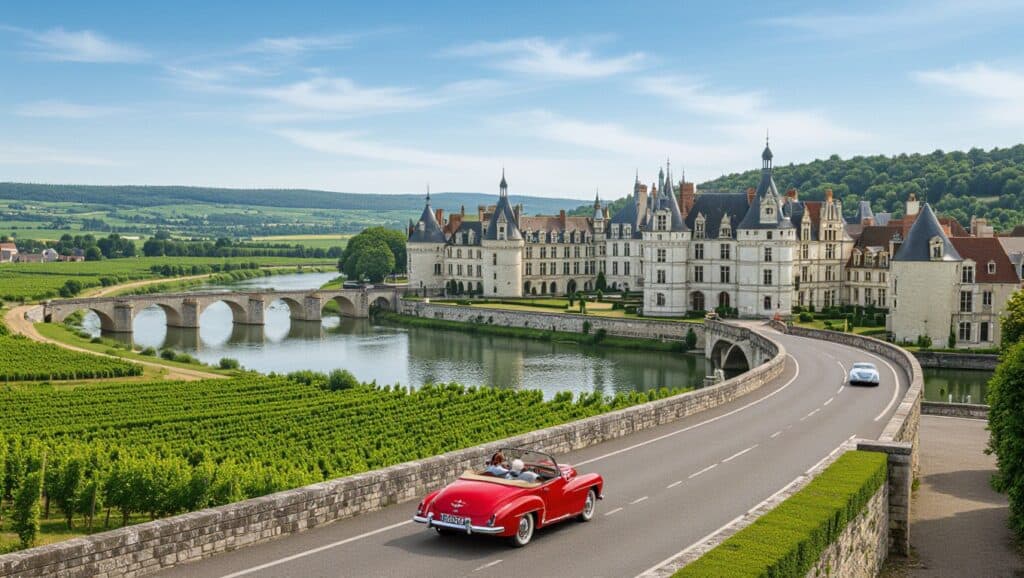
A Loire Valley châteaux drive is one of France’s easiest ways to combine scenic roads, grand architecture, and flexible sightseeing in a single trip. It works especially well for first-time visitors who want a route that feels rewarding without demanding complicated planning.
If you’re building a France road trip, start by pairing this route with practical France road trip planning so the drive order, base city, and booking timing all line up.
Quick Route Decision
If you want the simplest version of the trip, focus on Chambord, Chenonceau, and Amboise, then add Villandry if you have an extra half-day. Those stops give you the strongest mix of scale, history, gardens, and easy driving between sites.
Why This Drive Is Worth Planning Carefully
The Loire Valley is not just a cluster of famous castles; it is a road trip region where the route itself matters. Distances are manageable, the scenery changes often, and the best days usually come from choosing a few châteaux well rather than trying to see everything.
That is also why this page works best as a supporting guide for France travel planning rather than as a generic heritage article. The useful question is not only what the castles are, but how to drive between them, where to base yourself, and when to reserve tickets before the busiest dates.
For route timing, driving rules, and rental-day expectations, it helps to check driving in France essentials before you build your itinerary.
The Best Châteaux To Build Around
Château De Chambord
The largest and most dramatic stop in the region, Chambord is the best anchor for travelers who want a landmark castle that feels instantly recognizable. Its scale, rooftop silhouette, and wooded setting make it a strong first stop on a drive from Blois or a nearby base.
Château De Chenonceau
Chenonceau is the most graceful stop for many visitors, especially if you want a castle that looks and feels different from the larger fortress-style estates. The setting over the river makes it one of the most photogenic and memorable châteaux on the route.
Château Royal D’amboise
Amboise works well as a history-heavy stop with a lively town nearby, so it is useful if you want lunch, walking streets, and one castle visit in the same half day. It fits neatly into a route that ends with a slower evening in town.
Château De Villandry
Villandry is the smart add-on if gardens matter to you. It gives the itinerary a different rhythm from the larger palaces and is easy to combine with Tours or a short countryside loop.
If you are choosing only three stops, use Chambord for scale, Chenonceau for elegance, and Amboise for town atmosphere. If you have more time, Villandry is the most natural fourth stop because it adds gardens without making the route feel repetitive.
A Practical Route Order
The simplest Loire Valley drive is to stay in one central base and move outward in short legs. That reduces backtracking and gives you time for lunches, garden walks, and occasional village detours.
Sample 3-Day Route
- Day 1 Arrive in Tours or Blois, then visit a nearby castle and settle into the region.
- Day 2 Drive Chambord and Chenonceau, leaving room for one relaxed lunch stop.
- Day 3 Add Amboise or Villandry, depending on whether you prefer history or gardens.
A 2-day trip works if you only want two or three châteaux and one base. A 4-day trip is better if you want to add wine tasting, a village walk, or slower photography stops without watching the clock.
If you are still deciding whether to self-drive or arrange everything around one region, seasonal France trip guidance can help you match the route to the month you are traveling.
When To Go And When To Book
Seasonality changes the experience a lot. Spring brings gardens and softer light, early autumn brings warm colors and easier crowd levels, while midsummer can be busy enough that your day feels better if you reserve the major châteaux in advance.
If your trip falls in the busy season, pairing the route with France weather and seasonal travel tips is an easy way to decide whether your day should lean toward gardens, interiors, or shorter driving legs.
How To Make The Trip Smoother
Start Early
Early departures help you beat crowds at the most famous castles and make parking easier. They also leave more room for relaxed lunches and unplanned stops.
Choose One Base
Tours and Blois are both strong bases because they keep your daily drive short. That matters more than trying to change hotels every night.
Mix Castle Types
Combine a grand estate, a river château, and a garden stop so the day feels varied instead of repetitive. The Loire Valley is more memorable when each stop has a different mood.
For a longer France itinerary, this route fits neatly into a broader trip pattern. If you want to extend beyond the Loire, France road trip itineraries can help you decide whether the Loire is your main focus or one stop in a larger loop.
Plan The Drive With A France-Friendly Rental Setup
The Loire Valley is easiest to enjoy when your rental, pickup point, and route length match the trip you actually want to take. A compact or midsize car is usually enough for castle roads, while the bigger decision is where to start and how many days to allow.
If you are building the trip from the ground up, use the France travel planning page to coordinate the route with your car choice, pickup timing, and overall itinerary.
Frequently Asked Questions
Which Château Is Best In The Loire Valley?
For a first visit, Chambord is the strongest all-round icon, while Chenonceau is often the most beautiful and Amboise adds a lively town setting. The best choice depends on whether you want scale, elegance, or a better all-day stop.
What Are The 5 Most Beautiful Châteaux In France?
Beauty is subjective, but Chambord, Chenonceau, Versailles, Amboise, and Villandry are among the names most travelers return to because they each offer a very different kind of grandeur.
What Is The Prettiest Village In The Loire Valley?
Many travelers favor villages such as Amboise or nearby river towns because they add atmosphere, dining, and walking streets to the castle route without requiring a long detour.
What Is The 5 To 7 Rule In France?
It usually refers to the informal dining rhythm in some French contexts, where service or social timing may run later than many visitors expect. For a château drive, the practical takeaway is to plan lunch and dinner a little later than you might at home.

Matthew Thompson is an accomplished author specializing in topics related to budget travel and cheap car rental options. With a keen eye for detail and a passion for helping travelers save money, he shares valuable insights on navigating the complexities of online car rental services. Matthew’s work not only provides practical tips but also empowers readers to make informed decisions, ensuring they enjoy memorable journeys without breaking the bank.


The Loire Valley truly is a treasure trove of history and artistry. I remember my visit to Château de Chenonceau—walking through its gardens was like stepping into a painting. The way it spans the River Cher emphasizes how architecture can harmoniously integrate with nature. It’s fascinating to consider how each château not only reflects the era it was built in but also the stories of the people who lived there. This area has such a rich cultural tapestry that extends beyond the châteaux, influencing French art and society. Have any readers explored the local food and wine scene during their visits? I imagine the flavors of the Loire region would add another layer to the experience!
You’ve painted such a vivid picture of the Loire Valley châteaux! It’s fascinating to think about how each château holds its own unique story, as you noted. The rich tapestry of history that surrounds places like Château de Chambord and Château de Chenonceau really does feel like a journey through time.
The Loire Valley truly captivates not just with its architectural beauty, but also with the rich tapestry of history and culture it represents. I have always found that the châteaux are more than mere buildings; they embody the stories of the people who inhabited them and the historical events that unfolded in their shadow. For instance, Château de Chenonceau, often referred to as the “Ladies’ Château,” owes much of its fame to the strong women who influenced its design and history, including Diane de Poitiers and Catherine de Medici. This château serves as a reminder of the roles women played in shaping not just the estates, but the social fabric of their time.
Ah, the Loire Valley châteaux—a true feast for the eyes and an excellent excuse to consume vast quantities of baguettes and cheese while pretending to be part of a royal court! I love how each château seems to whisper its own story, like an over-excited relative at a family reunion.
What a captivating exploration of the Loire Valley Chateaux! As someone who has always been fascinated by history and architecture, your description of these remarkable estates resonates deeply with me. Each chateau you mention holds not just architectural beauty, but also a wealth of stories waiting to be uncovered.
I completely relate to what you’re saying about the Loire Valley chateaux. They really are like living museums, each telling a different chapter of French history through their architecture and the lives that once unfolded within their walls. It’s fascinating to think about the intrigues and events that have shaped these estates over centuries—from royal gatherings to artistic salons.
Your exploration of the Loire Valley châteaux truly captures their allure and significance. I remember visiting Château de Chambord a few years ago and being struck not just by its architectural beauty but also by the history that seems to echo through every corridor. The grand staircases designed by Leonardo da Vinci exemplify how art and engineering intersect in this remarkable region.
What a lovely exploration of the Loire Valley’s châteaux! I visited the region last year and was truly amazed by the unique stories each château tells. For example, at Château de Chenonceau, not only was I captured by its beautiful arches and gardens, but I was also fascinated by its storied past, including its role during the French Wars of Religion. It’s incredible how these architectural marvels are not just structures, but living narratives that encapsulate the rich history of France.
Your exploration of the Loire Valley châteaux really captures the essence of why these historical sites are so mesmerizing. I remember visiting Château de Chambord a few years ago; standing under its grand rooflines felt like stepping back in time. The way the architecture mirrors the era’s cultural ambition is fascinating—it’s not just about the aesthetic but also about the stories those walls could tell.
Your exploration of the Loire Valley châteaux truly resonates with me. The rich tapestry of history and culture woven into these architectural marvels is something that continually captures my imagination. Each château seems to whisper tales of nobility, art, and even the very heart of the French Renaissance. For instance, Château de Chambord, with its remarkable double helix staircase that is rumored to have been designed by Leonardo da Vinci, is a perfect illustration of how these structures are not just residences but symbols of an era marked by innovation and artistic exploration.
What an evocative exploration of the Loire Valley and its majestic châteaux! The way the blog highlights the intricate balance between artistry and engineering resonates deeply with me, particularly in today’s fast-paced world, where such craftsmanship can feel increasingly rare. I often marvel at how these historic estates not only serve as eye-catching landmarks but also act as vital storytellers of France’s rich cultural tapestry.
I completely resonate with your perspective on the Loire Valley and its châteaux. There’s something uniquely captivating about how these structures marry artistry and engineering, especially when you consider the time and dedication that went into their creation. It’s a reminder that craftsmanship involves patience and a deep understanding of materials—qualities that can feel overshadowed in today’s instant-gratification culture.
If you found the blend of artistry and history in the Loire Valley captivating, you might enjoy exploring the enchanting realms of Bavarian castles, where each stone echoes tales of a vibrant cultural legacy.
‘Bavarian Castles Drive: Uncover Enchanting Adventures in Germany’
https://online.rentacar24.org/bavarian-castles-drive-uncover-enchanting-adventures-in-germany/.
I’m glad you connected with the piece on the Loire Valley! It’s fascinating how these châteaux are more than just beautiful structures; they’re like living museums, holding so many stories within their walls. It’s easy to lose track of time wandering through those grand halls, thinking about the people who walked there centuries ago.
The Loire Valley truly feels like stepping back in time, doesn’t it? I’ve always been fascinated by how each château not only displays stunning architecture but also reflects the historical context of its era. For example, the story behind Château de Chenonceau, often called the “Ladies’ Château,” highlights the influence of the women who shaped it—like Catherine de Medici. It makes me wonder how many other untold stories reside within those walls!
Your exploration of the Loire Valley châteaux beautifully highlights not just their architectural splendor but also the stories and histories interwoven within their walls. As someone who has travelled through this magnificent region, I can attest to the feeling of stepping into a living history book when visiting places like Château de Amboise, where Leonardo da Vinci once resided.
I love how you’ve captured the essence of the Loire Valley châteaux! Each time I visit, I’m struck not only by their architectural beauty but also by the stories each one holds. For example, Château de Chenonceau really feels alive with its history—especially the tales of the women who shaped its legacy. It makes you wonder how these spaces have witnessed centuries of change, don’t you think?
I completely relate to what you’re saying about the Loire Valley châteaux. Each visit really feels like stepping into a living history book. Chateau de Chenonceau, in particular, has such compelling stories woven into its architecture—it’s fascinating how the influence of the women who lived there has shaped its legacy. I often find myself reflecting on how much the cultural context of a place adds depth to the experience.
Your insights into the Loire Valley châteaux beautifully capture their architectural brilliance and cultural significance. Having visited a few of these magnificent estates myself, I was particularly struck by how each château not only showcases unique artistry but also serves as a reflection of the historical period in which it was built. For instance, the intricate details of the gardens at Château de Villandry offer a fascinating contrast to the more rustic charm of Château d’Amboise, which has deep ties to Leonardo da Vinci.
Your exploration of the Loire Valley’s châteaux brings up an interesting perspective on how architecture can encapsulate the history and culture of a region. As you noted, places like Château de Chambord and Château de Chenonceau are not only examples of architectural brilliance but also serve as reflections of the political and social dynamics of their respective eras. It makes one ponder how these magnificent structures would tell tales of the lives once lived within their walls, overshadowed by the passing of time yet preserved within their intricacies.
Your exploration of the Loire Valley châteaux brought back wonderful memories of my own journey through this enchanting region. Each château not only showcases extraordinary architectural finesse but also offers a poignant glimpse into the complexities of France’s history and culture. As I wandered through the expansive grounds of Château de Chambord, I found myself captivated not just by its striking façade but also by the innovative spirit of its design—particularly the double-helix staircase thought to be influenced by Leonardo da Vinci himself. This blending of art and ingenuity reflects a time when creativity was the very essence of nobility.
Your exploration of the Loire Valley’s châteaux brings to light the region’s profound cultural and historical significance. As I read about the architectural wonders like Château de Chambord and Château de Chenonceau, I couldn’t help but reflect on how these structures not only embody the artistry of their time but also the stories of the people who lived and worked within their walls.
Ah, the Loire Valley—where “château” is a firm reminder that I’ll never own a castle and must instead settle for a two-bedroom apartment! I love how each estate has its own saga, much like my attempts at cooking French cuisine: grand ambitions, a dash of chaos, and always a little too much wine involved.
Your exploration of the Loire Valley châteaux brought back wonderful memories of my own journey through this enchanting region. I distinctly recall standing before the intricate renaissance details of Château de Chambord, feeling as though I had stepped into another era. The scale and artistry of the architecture, particularly its soaring roofs and elaborate embellishments, evoke a sense of wonder about the ambitions and lives of those who inhabited these spaces centuries ago.
Your memories of Château de Chambord resonate deeply. There’s something almost surreal about standing in the presence of such architectural masterpieces, isn’t there? The intricate details you mentioned really do transport you back in time. It makes you ponder not only the lives of the kings and queens who walked those halls but also the artisans who poured their craftsmanship and dreams into those walls.
The description of the châteaux in the Loire Valley certainly captures their architectural brilliance and historical significance. However, I find it interesting how these structures not only represent artistic achievements but also reflect the societal values and power dynamics of their time. For instance, the grandeur of Château de Chambord is striking, but it also symbolizes the excesses of the French monarchy, built during a time when the monarchy was asserting its dominance.
I must say, every time I hear about the Loire Valley and its châteaux, I can’t help but imagine myself gallivanting around like a time-traveling noble, complete with a feathered quill and an over-the-top hat. The architectural details of Château de Chambord alone could keep a whole team of architects awake for weeks, poring over those perfect proportions while imagining the soirée they’d host there. But let’s be honest, if I ever set foot in one of those grand halls, I’d probably just end up behind a magnificent fireplace, trying to figure out how to make the best mug of hot chocolate without causing a 17th-century tragedy!
I love the way you captured the charm of the Loire Valley’s châteaux! Each one really does feel like a piece of living history. I recently visited Château de Amboise, and I was struck not only by the stunning architecture but also by the sense of connection to figures like Leonardo da Vinci, who spent his final years there. It really brought the Renaissance era to life for me.
Your exploration of the Loire Valley’s châteaux truly captures the essence of what makes these estates so captivating. As someone who recently traveled through the region, I was struck by how each château not only reflects architectural grandeur but also tells profound stories of their historical context. For instance, the Château de Amboise, with its ties to Leonardo da Vinci, illustrates the rich interplay between art and history.