
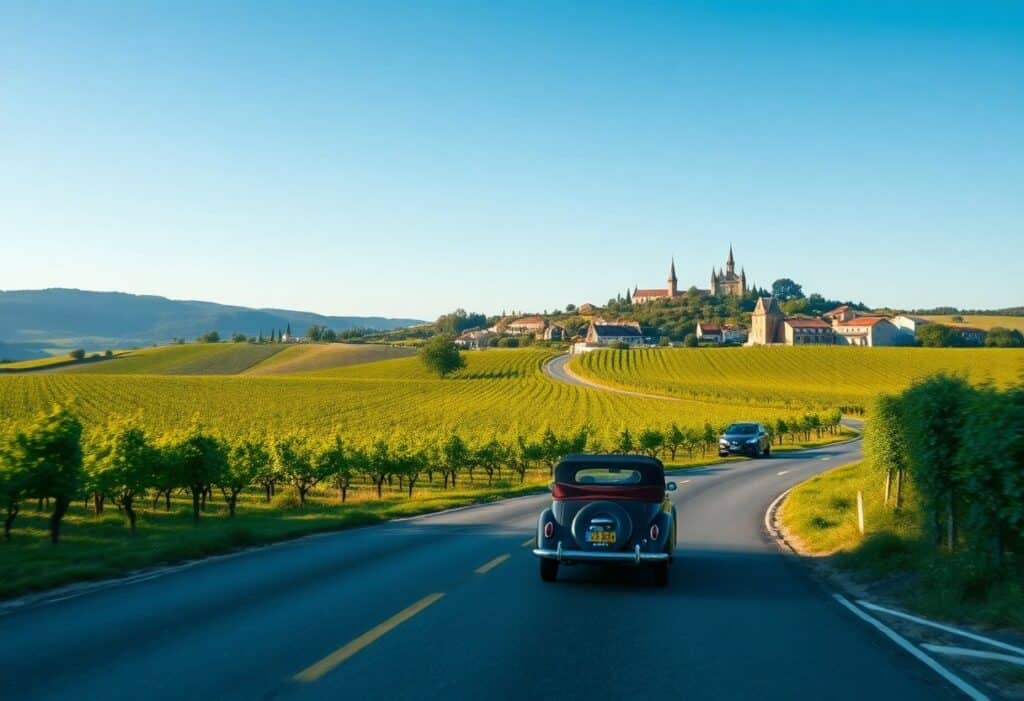
France is one of Europe’s easiest countries to turn into a memorable road trip, but the best plan depends on how much time you have and which region you want to prioritize. If you want a smoother start, read the France driving guide alongside this itinerary plan so you can match the route to the road rules.
Best fit at a glance
| Trip length | Best route style | Pace | Typical budget feel |
|---|---|---|---|
| 5 days | Paris + one region, such as the Loire Valley or Burgundy | Focused and compact | Lower lodging spend, fewer tolls and fuel stops |
| 7 days | Paris + Loire Valley + one wine or coast base | Balanced | Mid-range, good value if you book early |
| 10 days | South of France, Provence, and the Côte d’Azur | Comfortable with some longer drives | Higher hotel costs in peak season and coastal towns |
| 14 days | A wider loop covering cities, wine country, and one coast | Relaxed and flexible | Best for mixing splurges with lower-cost countryside stays |
If you are still deciding when to go, the seasonal overview in the seasonal guide to visiting France is a useful companion, especially if you want to balance weather, crowds, and hotel prices.
Choosing The Right France Road Trip
A France road trip works best when the route matches the length of your trip instead of trying to cover the entire country at once. The sweet spot for most travelers is 7 to 10 days, because that gives you time for a city arrival, a regional loop, and a few slower stops without spending the whole trip on the motorway.
For a short trip, base yourself in one region and keep hotel changes to a minimum. For a longer trip, build a simple loop: city arrival, countryside or wine country, then a coast or mountain segment before heading back. That structure keeps driving realistic and makes it easier to choose hotels near parking, since many central French towns are better experienced on foot once you arrive.
France Road Trip Timing: When To Go And When To Book
Timing matters as much as the route. Spring and autumn are the easiest seasons for a self-drive holiday because temperatures are comfortable, roads are generally less crowded, and countryside stops feel more relaxed. Summer gives you the longest days and the best beach weather, but it also pushes up hotel prices in Provence, the Riviera, and popular coastal towns. Winter can be rewarding if you want Christmas markets, city breaks, or ski access, but you should plan for shorter daylight hours and possible mountain driving conditions.
| Season | Best for | Booking note |
|---|---|---|
| Spring | Loire Valley, Burgundy, flower-filled countryside routes | Book 4 to 8 weeks ahead for the best selection |
| Summer | Provence, the south coast, Brittany beaches | Book early, especially coastal hotels and family rooms |
| Autumn | Burgundy, Dordogne, wine routes, harvest-time stops | A flexible window often gets better rates than summer |
| Winter | Paris, Strasbourg, the Alps, Christmas market routes | Check weather and road conditions if you are heading into the mountains |
If you are traveling in colder months, the broader weather guidance in traveling to France seasonal weather tips can help you decide whether to favor city stays, coastlines, or alpine driving.
The Strongest France Road Trip Routes
The original article was strongest when it suggested seasonal variety, but the France-specific plan improves when the route choices are more concrete. Instead of treating the country as one long trip, think in regional pairings that reduce wasted mileage and make hotel planning easier.
5 Days: Paris And One Region
If you only have five days, keep the route compact. Paris plus the Loire Valley is a classic first France road trip because it combines castles, easy countryside driving, and straightforward hotel bases. Paris plus Burgundy also works well if you prefer wine villages, slower lunches, and shorter daily drives.
7 Days: North To Center With One Main Base Shift
A seven-day plan gives you enough room for Paris, the Loire Valley, and one extra base such as Burgundy, Normandy, or the Atlantic coast. This is a strong option if you want a varied trip without changing hotels every night. It also keeps the budget more predictable because you can split the trip between one city stay and a few countryside nights.
10 Days: South Of France Loop
Ten days is ideal for Provence and the south coast because you can absorb the longer drives and still enjoy time in places like Marseille, Cassis, Aix-en-Provence, Nice, and the surrounding hill towns. This style works especially well if you like scenic roads, late dinners, and a more relaxed hotel rhythm.
14 Days: A Broader France Sampler
Two weeks lets you combine city energy with countryside and coast. A balanced version might include Paris, the Loire Valley, Burgundy, Provence, and one final coastal stretch. That is the right length if you want a true France sampler and do not mind adding a few motorway legs between regions.
Budget, Hotels, And Driving Costs
The original budget numbers were useful, but they work better when placed into a more realistic planning frame. A France road trip can be cost-effective if you book early and avoid over-committing to Paris nights, where lodging is usually the biggest single expense. In general, a rental car gives you flexibility, but toll roads, parking, and premium summer hotels can quickly add up.
Typical Planning Ranges From The Original Article around €532 for a 7-day car hire, about €75 for fuel over roughly 229 miles, and around €250 per night for a mid-range double hotel room in Paris. A hostel can be cheaper, while a mid-range hotel in Marseille was noted at about €129 per night.
Those figures are a good starting point, but the real cost depends on your route. Long coastal drives may lower your fuel spend if you keep distances short, while a route that includes several city centers can increase parking costs. If you want better value, consider staying just outside the main center in places with easy parking, then using the car only for intercity transfers and day trips.
How To Save Without Making The Trip Feel Cheap
- Book the car early, especially for summer or school-holiday departures.
- Keep your route compact so you are not paying for unnecessary fuel and tolls.
- Choose hotel bases with parking included or clearly priced in advance.
- Mix one nicer stay with simpler countryside or chain hotels to balance the budget.
- Use local markets, bakeries, and simple cafés for some meals instead of eating every meal in a mid-range restaurant.
The article’s original food estimate of about €15–25 per meal at a mid-range restaurant is still a sensible planning number. If you want to keep the trip flexible, build in a small daily buffer for coffee stops, parking, and spontaneous tastings, then use the savings from advance booking to cover the nicer dinners.
Getting The Right Car And Handling The Roads
For France, the right car is usually the one that fits your route rather than the one that looks best in photos. An economy or compact car is easiest for city parking and short regional loops. A sedan or SUV makes more sense if you are carrying several bags, planning long motorway stretches, or heading into more rural areas. If your route focuses on scenic coast roads and you want a more relaxed drive, a convertible can be fun, but it is not the most practical choice for luggage or unpredictable weather.
GPS is still one of the most useful features for a France road trip, especially in rural areas where road names and small roundabouts can appear quickly. It is worth checking the car features before you book, because not every rental includes navigation as standard. If you prefer a broader comparison of rental choices, the site’s guide to choosing the right rental car for your journey can help you match size, comfort, and fuel use to your itinerary.
France roads are generally easy to manage once you understand the basics, but narrow lanes, roundabouts, and motorway tolls are part of the experience. The safest approach is to keep your daily drive lengths realistic, avoid arriving at a new town too late in the day, and leave time for breaks. If you want a supporting practical checklist, essential road trip snacks for your adventure is a useful read for longer driving days.
A Simple Way To Build Your Itinerary
The easiest France road trip plan starts with three choices: your arrival city, your main region, and your final overnight base before departure. Once those are set, the rest of the trip falls into place much more easily than trying to add every famous stop at once.
- Choose one arrival point, usually Paris, Lyon, Marseille, Nice, Bordeaux, Nantes, or Strasbourg.
- Select one core region that fits your trip length, such as the Loire Valley, Burgundy, Provence, Brittany, or the Dordogne.
- Decide whether you want a coast, wine country, or mountain finish.
- Book hotels around easy parking and a realistic drive day, not just the most photogenic address.
- Leave one flexible block in the schedule for a slow lunch, a market stop, or a scenic detour.
That method also reduces trip stress because you are not constantly recalculating distances. If you are traveling during a holiday week or school break, book both the car and the first two or three nights early. For lower-friction planning, the France driving guide is the best place to confirm local road rules, while this article should remain your route and budgeting reference.
Plan your route before you book the rest
If you already know your dates, lock in the route length first, then choose your hotel bases and rental car around that plan. For route details and road rules, see driving in France: essential tips and rules, then use the seasonal guide if you are still deciding between spring, summer, autumn, or winter travel.
Faqs About France Road Trips
What Is The Best Time Of Year For A France Road Trip?
Spring and autumn are usually the most comfortable seasons because the weather is milder and roads are less crowded. Summer is best if you want beach weather and long daylight hours, while winter works better for city breaks, Christmas markets, or ski access.
How Much Does A 7-Day Road Trip In France Cost?
The original guide estimated about €1,510 for two people, including seven nights in a double hotel room, car hire, and fuel. That is a sensible planning number for a mid-range trip, but your actual total can move up or down depending on the season, hotel location, and how much driving you do.
Should I Start In Paris Or Another French City?
Paris is the easiest starting point for many first-time travelers, but it is not the only good option. Lyon works well for food and central access, Marseille and Nice suit southern itineraries, Bordeaux fits wine-country routes, and Nantes is a useful launch point for the west coast.
What Car Should I Rent For France?
A compact car is usually the safest choice for city parking and standard road trips, while a sedan or SUV is better if you want extra comfort, more luggage space, or rural driving ease. Whatever you choose, make sure it has navigation or a clear plan for GPS use.

Samantha Price is a dedicated author and travel enthusiast who specializes in writing about affordable car rental options online. With a keen eye for detail and a passion for helping readers save money, she provides insightful tips and practical advice on navigating the world of cheap car rentals. Through her engaging content, Samantha empowers travelers to explore new destinations without breaking the bank, making their journeys both enjoyable and budget-friendly.


What a beautifully evocative post about the potential of a road trip through France! Your vivid descriptions of the diverse landscapes and cultural treasures make me quite nostalgic for my own experiences traveling through this magnificent country. I recall my last trip during the autumn season, where the vineyards of Burgundy appeared like a painter’s palette, each hue more vibrant than the last. The cool, crisp air and the smell of freshly harvested grapes created an indescribable atmosphere that was both celebratory and contemplative.
It’s a pleasure to hear your reflections on your autumn trip through Burgundy—your memories paint a vivid picture that resonates deeply. The experience of traveling through that region during harvest time really is unique, isn’t it? The vibrant colors of the vineyards create a visual feast that seems to celebrate the labor and artistry that goes into each bottle of wine produced there.
Your reflection on your experience in Burgundy really resonates with me, especially as I think about the magic of the autumn season there. The way you describe the vineyards is spot-on; they really do transform into a vibrant tapestry of color. There’s something about that time of year—when the days grow shorter and the air gets that refreshing bite—that seems to amplify everything around you.
This guide to France road trips beautifully captures the essence of what makes traveling through France so enchanting. Each season offers its own unique charm, which can truly transform the experience of exploring this diverse country. I’ve had the pleasure of witnessing the Loire Valley in spring, and the blooming landscapes along the châteaux never fail to spark a sense of wonder.
It’s fascinating how each season in France offers a unique lens through which to experience the country. I particularly appreciate the idea of an autumn road trip; the vibrant colors of fall not only enhance the landscapes but also align beautifully with the harvest season, making it a perfect time to explore the vineyards of Burgundy.
You’re touching on something truly special about France and how each season shapes our experience there. The autumnal palette of golds, oranges, and deep reds does transform the landscape, doesn’t it? When you’re driving through the vineyards of Burgundy during this time, the scenery almost feels like a painting—a living canvas that shifts with every glance.
You really captured the essence of autumn in France. There’s something almost meditative about driving through those rolling vineyards, especially when the light hits just right, making the colors seem to glow. It’s interesting how nature, in its cyclic way, not only transforms the landscape but also influences how we feel and connect with our surroundings.
You’re so right about the unique beauty each season brings to France. Autumn truly does transform the landscapes, and the vineyards in Burgundy are breathtaking with their hues of red, gold, and orange. There’s something so serene about driving through those winding country roads during harvest time, especially when you can stop at local markets for fresh produce and regional cheeses.
This guide beautifully encapsulates the magic of a road trip through France, a country rich with history and culture. I recently took a short trip through the Provence region during autumn, when the vineyards were in full harvest. The vibrant colors and the scent of ripe grapes in the air were unforgettable. It made me appreciate not just the landscape but also the deep-rooted traditions behind the wine-making process.
Experiencing Provence during the harvest season must have been quite special. The way those vibrant colors come alive in autumn really transforms the landscape. It’s interesting how those seemingly simple elements—like the scent of grapes—can evoke such a strong connection to the local culture and traditions.
Your experience in Provence sounds absolutely enchanting. Autumn really does have a way of transforming the landscape, doesn’t it? The vibrant colors and ripe grapes must have created a remarkable tapestry of sights and scents. I’ve always found that the act of wine-making is deeply intertwined with the culture and history of a region. Each bottle tells a story, tied to the land and the traditions of the people who craft it.
The allure of a road trip through France resonates deeply with many, particularly as each season offers a unique lens through which to experience the country’s rich tapestry of history and culture. Your breakdown of seasonal itineraries is particularly insightful, as it highlights how the changing landscapes and flavors can shape one’s journey.
I love the idea of exploring France through different seasons—the unique charms of each are hard to resist! I’ve always fantasized about a spring road trip through the Loire Valley, where the blooming flowers create a picturesque backdrop for châteaux visits and wine tastings.
Exploring France through its seasons is a lovely way to truly appreciate its beauty, and the Loire Valley in spring is nothing short of magical. You’ve captured the essence perfectly with the blooming flowers. Picture yourself meandering along the banks of the Loire, surrounded by vibrant hues and that fresh, fragrant air filled with the promise of new beginnings.
Exploring France through its seasons does have a special allure, doesn’t it? Spring in the Loire Valley sounds like a dream. There’s something magical about the way everything bursts into life—the vineyards coming alive with fresh buds and the gardens blooming with colors. Have you thought about which châteaux you’d want to visit? Each one has its own story, and many are tied to fascinating historical figures, which adds so much depth to the experience.
There really is something enchanting about the Loire Valley in spring. I love the idea of wandering through the vineyards and seeing them wake up after the winter. It’s fascinating how the seasons can connect us to nature and enrich our well-being.
What an inspiring overview of road tripping through France! I love how you highlighted the seasonal experiences that each itinerary offers. Traveling in the spring through the Loire Valley sounds particularly enchanting with the blooming flowers and mild weather, perfect for those stunning châteaux visits.