
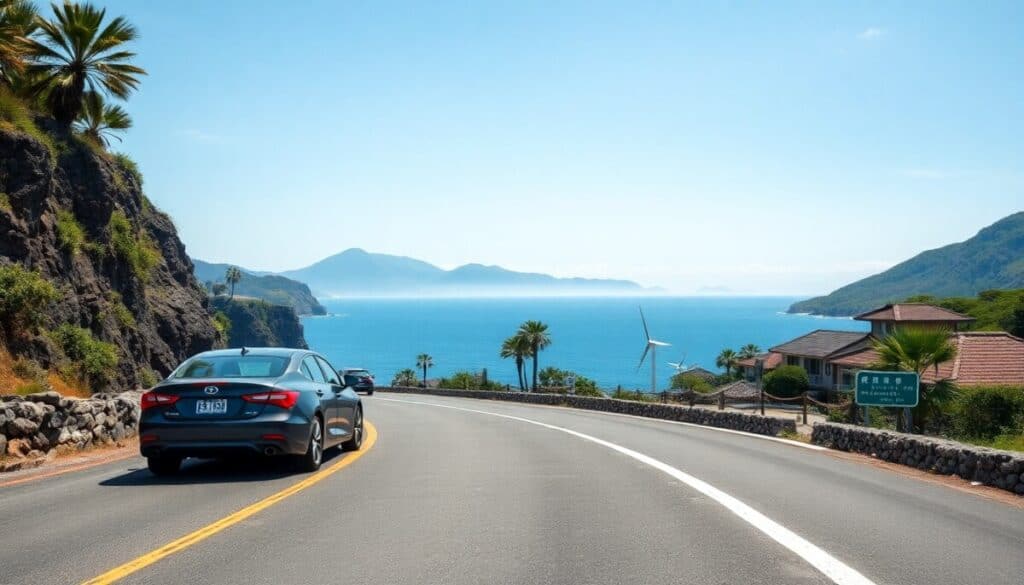
Jeju Island is one of South Korea’s easiest and most rewarding places for a self-drive trip. The island’s roads make a loop-friendly route possible, but the best experience comes from planning around season, parking, weather, and how much ground you want to cover each day.
If you are deciding whether a car is worth it, it helps to start with a broader planning view such as this island-getaway rental guide, then narrow your Jeju route to match your pace and the season.
What a Jeju Island driving tour is, and why it works so well
A Jeju Island driving tour is a flexible road trip built around scenic coastal roads, volcanic landmarks, waterfalls, local food stops, and short hikes that are easy to fit between drives. For many travelers, it is the simplest way to see the island without relying on a fixed tour schedule or trying to combine too many attractions in a single taxi day.
It is especially useful if you want to visit multiple parts of the island in one trip: sunrise viewpoints in the east, food and café stops in the center, and coastal scenery on the west or south side. The island is compact enough to make a road trip feel efficient, but diverse enough that a car quickly becomes more than a convenience—it shapes what you can actually see.
The main question is not whether you can drive Jeju. It is how to plan the route, when to go, and what kind of vehicle and itinerary will make the trip relaxed instead of rushed.
How long to stay in Jeju, and which driving plan fits best
For most first-time visitors, Jeju works best as a short self-drive holiday rather than a one-day sprint. You can circle the island in a day, but that leaves little room for beaches, meals, museum stops, or unexpected weather. The sweet spot is usually three or four days, with enough flexibility to choose between scenery, food, and hiking without feeling that every stop is a compromise.
| Trip length | Best for | What you can realistically do | Trade-off |
|---|---|---|---|
| 1 day | Layover travelers or very tight schedules | One coast, a few major highlights, quick food stop | Feels rushed and weather-sensitive |
| 3 days | First-timers who want a balanced road trip | East, south, and west-side highlights with one scenic loop segment | You will still need to choose carefully |
| 4 days | Travelers who want a fuller island experience | More time for Hallasan, food stops, museums, and slower coastal driving | Still needs route discipline to avoid backtracking |
| 7 days | Slow travelers, photographers, hikers, and repeat visitors | Multiple base areas, a relaxed pace, and time for weather changes | More planning, but much less pressure |
Timing matters more than many first-time visitors expect
The audit recommendation for this page is clear: the guide needs stronger seasonal guidance, because Jeju changes noticeably by month. Spring and autumn remain the most comfortable seasons for a self-drive trip. Spring is especially attractive if you want flower viewing, clear air, and moderate temperatures. Autumn brings calmer weather, crisp light, and vivid landscapes that make road photography easier.
Summer is still possible, but traffic, humidity, and rain can make the trip feel less relaxed. It is the season when you are more likely to notice crowds around popular beaches and scenic viewpoints. Winter is quieter and can be beautiful, especially if you want a more dramatic volcanic landscape, but you need to expect colder temperatures and a greater chance of weather disruption on the higher roads.
If your dates are flexible, book with the season in mind rather than only chasing the cheapest flight or room. On Jeju, timing changes the value of the whole trip: roads feel different, parking pressure changes, and even simple sightseeing can become smoother when you avoid peak congestion.
Best month to avoid?
There is no single “bad” month for everyone, but the less comfortable period is usually the hottest, most humid part of summer if you dislike crowds and sudden weather shifts. If your goal is easy driving and more predictable sightseeing, spring and autumn remain the safest bets.
Driving logistics that actually affect the trip
Jeju is relatively easy to explore by car, but “easy” does not mean “no planning required.” The island’s appeal comes from spreading your time across coastal roads, beaches, museums, and inland scenery, so the practical details—parking, navigation, weather, and fuel stops—matter more than they would on a simple city visit.
Start by deciding how much driving you want each day. If you are only after a scenic loop, a single long day can work. If you want the island to feel like a vacation rather than a checklist, shorter daily drives are much better. That usually means choosing one area as your base or planning a clockwise/counterclockwise circuit with overnight stops that limit backtracking.
Navigation is straightforward in principle, but offline maps are useful because weather, road closures, and spotty signal in rural stretches can still interrupt the flow. Parking is another overlooked issue: popular beaches, sunrise points, and cafes can fill up quickly, especially on weekends and holidays. On a Jeju road trip, a good itinerary is not just about distance. It is also about how easily you can stop, eat, walk, and resume driving without stress.
Roads
Main roads are comfortable and suitable for most drivers, while rural stretches and scenic side roads reward slower pacing and attention.
Parking
Popular sights can be busy, so a plan that pairs nearby stops is more efficient than trying to cross the island multiple times in one day.
Weather
Fog, rain, and seasonal wind can reshape the day, so leave enough flexibility to switch beaches, hikes, and viewpoints if conditions change.
How to choose the right vehicle for Jeju
Vehicle choice on Jeju is less about looking adventurous and more about matching the road trip to the way you actually travel. A compact car is usually enough for solo travelers or couples with light luggage, especially if most of the trip is a coastal drive with straightforward stops. Families, photographers with more gear, or travelers planning longer rural loops may prefer something roomier.
The most useful factors are fuel efficiency, luggage space, seat comfort, and how easy the vehicle feels in parking areas. If you expect to visit a mix of beaches, viewpoint roads, and inland attractions, comfort usually matters more than raw size. A bigger vehicle can be helpful, but a car that is too large for your confidence level may make tight lots and narrow turns less enjoyable.
This is also the point where rental planning becomes practical instead of abstract. If you want a deeper look at how island trips influence car choice, the broader island car rental guide is a useful companion read before you finalize Jeju pickup details.
If you are comparing a compact car with an SUV, ask yourself which inconvenience will affect the trip more: the tighter feel of a smaller car, or the parking and maneuvering burden of a larger one. On Jeju, the answer depends on your itinerary. Short scenic loops and market stops usually favor compact vehicles. Multi-day family road trips with luggage and hiking gear usually favor something larger.
License and booking basics you should sort out early
One of the most common planning questions is whether a foreign visitor can drive in Korea. In practice, many travelers can, but the exact requirements depend on nationality and documentation, so you should confirm your eligibility before you lock in a rental. Do not leave this step until the night before pickup. The right answer depends on the license format you hold, whether an international driving permit is needed, and whether your rental company accepts your documents as presented.
The safest approach is to treat the licensing step as part of your trip planning, not as a last-minute detail. Once that is settled, compare pickup locations, insurance, mileage, and fuel rules in the same way you would for any other road trip. If you want a broader overview of rental policy, it is worth reviewing how to avoid hidden fees when renting a car so the practical side of the trip stays as simple as the scenic side.
For Jeju specifically, booking early is smart during spring, autumn, holiday periods, and weekends. Those windows are when the island’s most photogenic roads and most popular attractions get busier, and rental inventory can tighten faster than many visitors expect.
A more realistic packing list for a Jeju driving tour
The original draft had the right instinct about packing essentials, but the advice needed to be more Jeju-specific. You are not preparing for a generic highway trip; you are preparing for a coastal island road trip with variable weather, several outdoor stops, and a mix of scenic and practical needs.
Start with the basics you will actually use in the car: a phone charger, offline navigation access, sunglasses, and enough water for short hikes and beach walks. If you are planning sunrise stops, an early start also means snacks and a light jacket become more important than many travelers think. The island can feel mild at noon and breezy before sunrise.
Walking shoes are essential because Jeju is best experienced with both driving and short active stops. Even an itinerary centered on scenic drives usually includes steps to a viewpoint, a café with a look-out, a market stroll, or a short trail near a waterfall. A compact day bag is useful so you do not need to unpack the whole car every time you stop.
- Phone charger, power bank, and offline map access.
- Water bottle and easy snacks for long scenic stretches.
- Walking shoes with enough grip for short hikes and wet paths.
- Light rain layer or windbreaker, especially in shoulder seasons.
- Sunscreen, hat, and sunglasses for coastal exposure.
- Small daypack for camera gear, tickets, and essentials.
If you enjoy photography, Jeju rewards simple preparation more than expensive gear. A camera is useful, but so is a stable phone setup and a little patience at viewpoints. Sunrise at Seongsan Ilchulbong, ocean light on the east coast, and cloudy afternoon landscapes near the volcanic areas can all produce great images if you are not rushing from one stop to the next.
The best routes for a scenic drive around Jeju
There is no single correct way to drive Jeju, but a few route patterns are consistently useful. The coastal road is the most obvious scenic choice if you want open ocean views, photo stops, and a feeling of movement between attractions. It is the route style most travelers picture when they imagine a Jeju road trip.
The east side is especially strong for sunrise energy, crater landscapes, and major signature stops. The south coast is often better for a calmer pace, waterfall detours, and a mix of beaches and café breaks. The west side tends to work well if you want food, sunsets, and a slightly less frantic feel than the most famous east-side stops.
A full ring-road loop can be satisfying, but it is not the same thing as a good itinerary. A loop is efficient; a good trip is balanced. If your schedule is short, use the loop concept only to connect a few meaningful stops instead of forcing yourself to drive in a circle just to say you covered the island.
For readers who like road-trip structure in general, the broader scenic-route approach in this scenic driving tour guide is a helpful comparison point. Jeju is a different destination, but the same principle applies: the best trip is the one that chooses a route for scenery and pacing, not just for mileage.
Sample route logic for first-time visitors
If you have three days, pair east-side sunrise scenery with one central or west-side day and one south-coast segment. If you have four days, add a slower cultural stop or a hiking day so the trip does not become just a succession of drive-and-go stops.
If you have only one day, choose a single theme: sunrise and coastal viewpoints, food and cultural stops, or waterfalls and relaxed ocean roads. That choice will make the day feel intentional rather than compressed.
Must-see stops that earn a place on the route
Jeju has more than enough attractions for a long stay, but the strongest self-drive itinerary usually favors a few well-spaced anchors rather than a long list of rushed stops. The original article already named many of the right places, and those are worth keeping because they represent the island’s core variety: volcanic landscapes, waterfalls, traditional culture, beach scenery, and food.
A practical Jeju driving tour might include Seongsan Ilchulbong for its sunrise and crater views, Hallasan for hiking or mountain scenery, Manjanggul Lava Tube for geology, Jeongbang Waterfall or Cheonjiyeon Waterfall for classic island scenery, and a food stop such as Dongmun Traditional Market or O’sulloc Tea Museum for a culture-and-snack break. The mix matters. The island feels richer when each day has one or two headline attractions and enough time left for a café, market, or coastal detour.
- Seongsan Ilchulbong: best for sunrise and a dramatic volcanic setting.
- Hallasan National Park: best for hikers and travelers who want an inland anchor.
- Manjanggul Lava Tube: ideal if geology and unique formations interest you.
- Jeongbang Waterfall: one of the signature photogenic stops on the island.
- Hyeopjae Beach: useful for a lighter day with coast time and relaxed walking.
- O’sulloc Tea Museum: a comfortable cultural stop that breaks up driving nicely.
- Dongmun Traditional Market: best for snacks, local produce, and easy food access.
Not every visitor needs every stop. A better trip often comes from choosing a handful of sights that match your energy level. If you prefer beaches and cafés, do not force yourself into a mountain-heavy day. If you are here for hiking and landscapes, do not overload the route with too many shopping or museum pauses.
Food is part of the route, not just an extra stop
Jeju’s driving appeal is stronger when you think about meals as part of the itinerary. The island is known for black pork barbecue, fresh seafood, abalone dishes, tangerines, hallabong citrus, and market snacks that make it easy to keep a full day moving without unnecessary detours. For many travelers, food stops become the memory that ties the road trip together.
Dongmun Traditional Market is a strong choice if you want straightforward access to local dishes and quick bites. Smaller roadside restaurants can be just as memorable, particularly when you are driving between coastal stops and want something relaxed rather than formal. The key is to match the meal to the day. A sunrise-heavy itinerary may need a late breakfast. A beach-and-sunset day might work better with a late lunch and an early dinner.
- Black pork barbecue: the classic Jeju meal for a proper sit-down stop.
- Fresh seafood and stews: useful when you want something local and warming.
- Abalone porridge: a lighter option for breakfast or brunch.
- Tangerines and citrus desserts: easy snacks to keep in the car or buy on the move.
If your route is long, plan food so it supports the drive rather than disrupting it. A good Jeju day trip often feels smooth because the meals are placed where they naturally fit into the drive, not because the itinerary tries to force a restaurant visit at the worst possible time.
Safety and emergencies without overcomplicating the trip
The original draft correctly emphasized safety, and that part should stay. Jeju is generally comfortable for self-driving, but safety is best handled through preparation rather than caution alone. Wear seatbelts, drive within local limits, and give yourself a little more time than you would in a familiar city. The island is scenic enough that distractions are common, especially near coastal roads and viewpoints.
Keep your phone charged, carry a backup cable or power bank, and know how to reach roadside assistance through your rental provider. If you are driving into rural or mountainous areas, check road conditions before leaving. Weather can change the feel of a route more quickly than many visitors expect, and a small adjustment in timing can save a surprising amount of stress.
If a vehicle problem happens, the best response is simple: move to a safe place if you can, use hazard lights, and call for help with your location ready. A basic emergency kit is useful, but calm decision-making is even more important. That is especially true on an island trip, where being organized matters more than being adventurous in the wrong moment.
Where to go next if you are ready to compare cars
Once your route is taking shape, the rental decision becomes much easier. Think in this order: license documents first, trip length second, luggage and passenger count third, and price only after the practical fit is clear. That sequence keeps the rental from driving the itinerary instead of supporting it.
If you need a more general rental comparison before booking for Jeju, the broader island rental resource is the best place to start. If you are comparing Jeju against other scenic road-trip destinations, the planning logic in this scenic route guide can help you think about how day-by-day pacing changes the choice of vehicle and stop pattern.
For Jeju itself, the best booking window is early enough to secure a vehicle type you like during spring, autumn, and holiday weeks. Waiting until the last minute can leave you with fewer choices, especially if you want a compact automatic, a family-sized vehicle, or a pickup aligned with your flight time.
A practical sample plan for three or four days
For a three-day trip, a strong structure is east coast on day one, a central or indoor-friendly day two, and the south or west coast on day three. That keeps each day distinct and reduces the temptation to cross the island repeatedly for single attractions. It also gives you room to respond to weather: if clouds arrive on your planned beach day, swap it with a museum or market day.
A four-day plan is even better because it lets you add one slower half-day for hiking, a second food-and-café day, or a more relaxed drive through one of the coastal segments. This is the version most travelers remember positively because it gives the island space to breathe. You are no longer simply collecting places; you are moving through the landscape with enough margin to stop when something catches your attention.
A seven-day self-drive trip is ideal if you enjoy unhurried travel, photography, or multiple hiking and food stops. It also makes the weather backup plan easier, because you can shift a sight to another day without sacrificing the whole route. If you stay that long, consider using two bases rather than one, especially if you want to reduce repeated cross-island drives.
What to remember before you book
Jeju is a destination where preparation pays off quickly. The roads are not the hard part; the planning is. Once you have the right documents, a vehicle that fits your group, and a route that respects season and parking realities, the trip becomes wonderfully straightforward. That is why Jeju works so well for self-drive travel: it offers enough scenery to feel adventurous, but enough road structure to stay manageable.
If you want the simplest possible decision, choose spring or autumn, book early, keep the route to a manageable daily radius, and build the itinerary around a few major stops rather than every famous place at once. That approach gives you the best chance of experiencing Jeju as a road trip rather than as a checklist.
A simple planning note before pickup
Confirm your license eligibility, decide whether you want a compact or larger vehicle, and make sure the pickup time matches your arrival plan. If your trip is in a busy season, finalize the booking early enough to avoid settling for whatever remains.
Frequently asked questions
How long does it take to drive all the way around Jeju Island?
A full loop can usually be driven in a day, but once you add scenic stops, food breaks, and parking time, it becomes much more useful to think of the route as a one- to four-day road trip rather than a single drive.
How easy is it to drive on Jeju Island?
Jeju is generally easy to drive compared with many international road-trip destinations, especially if you are comfortable with route planning, parking, and following local traffic rules.
Can I drive in Korea with a US license?
Many visitors can drive with the proper documentation, but the exact requirement depends on the visitor’s license format and nationality, so it is important to verify the rules before booking.
How many days in Jeju is enough?
Three to four days is a strong first-trip range for most travelers, while one day is better suited to a compressed sightseeing plan and seven days suits a slower, more flexible road trip.
Which month should I avoid for a Jeju driving trip?
If you want the most comfortable driving weather and fewer trip disruptions, avoid the hottest and most humid peak-summer stretch if possible; spring and autumn are the most reliable choices.

Jessica Malone is a passionate writer and travel enthusiast, specializing in affordable car rental solutions. With a keen eye for detail, she explores various aspects of cheap car rentals, offering readers practical tips and insights to maximize their travel experiences. Through her engaging articles, Jessica aims to empower travelers to make informed decisions and navigate the world of online car rental services with ease.



It’s exciting to read about planning a driving tour around Jeju Island! Your tips point to a great balance of practicality and enjoyment. As someone who loves road trips, I can’t stress enough how essential good planning is to ensure everything goes smoothly, especially in a place as beautiful and diverse as Jeju.
I really enjoyed reading your take on planning a driving tour in Jeju Island. It’s a place I’ve always wanted to explore, especially with all those picturesque landscapes you mentioned. The idea of mapping out a route with a reliable GPS and having a physical map as backup is a smart move. It’s kind of nostalgic, don’t you think? There’s something about actually holding a map in your hands and planning your journey the old-school way.
I appreciate your insights on planning a driving tour around Jeju Island. It’s interesting how preparation can really make or break a travel experience. I’ve found that having a solid plan for navigating the island not only helps in getting from one spot to another but also enhances the overall adventure— you can take spontaneous detours to check out hidden gems along the way.
I completely agree with you about the importance of preparation on a driving tour, especially in a place as beautiful as Jeju Island. It’s fascinating how a well-thought-out plan sets the stage for those spontaneous moments that often become the highlights of the trip. I remember driving around the coastline and stumbling upon a small, unmarked beach that didn’t show up on any maps. It ended up being one of the most memorable spots—just me, the sound of waves, and the breathtaking landscape.
I appreciate your thoughts on the balance between preparation and spontaneity in travel. It’s true; having a basic plan can create space for those unexpected discoveries that really make a trip stand out. Jeju Island is particularly full of hidden gems, like that unmarked beach you stumbled upon. Those moments are what remind us why we travel in the first place—it’s about connection with the landscape and the freedom to explore.
It’s true how much of a difference a solid plan can make when traveling, especially on an island like Jeju. I remember my last trip there; having a rough itinerary helped us decide on the must-see spots, but it was those spontaneous detours that ended up being the highlight of the day. We stumbled upon a small local café tucked away in the hills, where the owner shared his family’s stories about the island’s history over a cup of the best coffee I’ve ever had.
It’s great to hear your thoughts on planning a driving tour around Jeju Island. I completely agree that a solid navigation plan can really enhance the experience. When I explored the island, having a basic route mapped out allowed me to dive deeper into the local culture—finding those off-the-beaten-path cafes and stunning viewpoints that aren’t always highlighted in travel guides.
I really appreciate the emphasis you’ve placed on planning and preparation for a driving tour around Jeju Island. Having taken a road trip there myself not too long ago, I can completely resonate with the significance of being well-equipped for the journey.
It’s great to hear that you had your own adventure in Jeju Island! There’s something truly special about hitting the road, especially in a place known for its stunning landscapes and unique culture. Planning plays a huge role in enjoying that experience fully. When you’re armed with a solid itinerary, it helps to alleviate the stress of being on the move, allowing you to soak in everything that comes your way—those unexpected detours can lead to some of the most memorable experiences.
It’s interesting to read about planning a driving tour around Jeju Island, a destination that has always fascinated me with its natural beauty and rich culture. Your emphasis on the importance of packing essentials resonates deeply, as I’ve found that preparation can truly make or break a journey.
Oh, the thrill of a driving tour! It almost feels like stepping into a romantic comedy where the protagonist always manages to find the most picturesque roads, local snacks, and a mysteriously convenient parking spot right by the beach. I mean, Jeju Island sounds like the perfect set for such a film!
You’ve really captured the essence of a driving tour. It’s that mix of spontaneity and discovery that makes it feel almost cinematic. The great thing about places like Jeju Island is that it can shift from serene to strikingly dramatic in just a few turns. One moment you’re cruising along cliffs overlooking the ocean, and the next you’re surrounded by lush greenery or volcanic landscapes.
I really appreciate the practical approach you’ve outlined for planning a driving tour around Jeju Island! The emphasis on preparation is spot on. Having visited Jeju a couple of years ago, I can attest to the island’s stunning landscapes and the importance of having a reliable GPS. The winding roads can be quite an adventure, and it’s easy to miss some of the hidden gems if you’re not well-prepared.
Ah, Jeju Island—the place where the roads twist as beautifully as the sunsets over Hallasan Mountain! I couldn’t agree more about packing those essential snacks. Honestly, I once found myself 20 minutes into a drive, starving and regretting my life choices, all because I forgot the golden rule: “No road trip is complete without tangerines!” They’re like nature’s candy, and who knew they double as a hydration and energy booster?
I really appreciate the emphasis on packing essentials for a driving tour around Jeju Island. It’s true that a reliable GPS is a must, especially when navigating the island’s beautiful yet winding roads. I also love the idea of bringing local snacks—there’s something special about enjoying tangerines while taking in those stunning views!
Ah, Jeju Island – the land where the tangerines are sweeter than your favorite childhood memory! Your emphasis on packing snacks is spot on; nothing says “adventure” like munching on seaweed chips while driving past stunning cliffs. Although, let’s be real, half of us might just end up with a car full of crumbs instead of picturesque views, right?
Your outline for planning a driving tour around Jeju Island resonates with the common experiences of travelers who want to immerse themselves in local culture while navigating the unique landscapes. However, it might be worth diving deeper into the aspects of how these preparations can significantly enhance not just convenience, but also the overall experience of a trip.
I really enjoyed reading about your driving tour tips for Jeju Island! The way you’ve highlighted the importance of packing essentials resonates with me, especially since I’ve done a few road trips where I learned the hard way about being unprepared. Maps and a good GPS are a must—last summer during a road trip down the Oregon coast, I relied heavily on my GPS, but it’s also crucial to have physical maps as backups, just in case signal drops in those remote areas.
Your insights on planning a driving tour around Jeju Island resonate deeply with those of us who appreciate the beauty of road trips. The emphasis on packing efficiently particularly stands out. For me, the experience of traveling isn’t just about the destination; it’s very much about the journey itself—something that can be significantly enhanced with proper preparation.
The journey truly is what makes each trip memorable, isn’t it? There’s such a unique freedom that comes with the open road, especially on an island like Jeju, where the scenery can shift from lush coastlines to volcanic landscapes in no time. I’ve found that when you take the time to plan and pack smartly, it opens up so many possibilities.
I really enjoyed how your post emphasizes the importance of planning and packing for a driving tour around Jeju Island. It’s such a beautiful place, and having everything sorted out makes the experience even more memorable. I remember my first trip there, and one of the highlights was definitely snagging some local treats, like those sweet tangerines you mentioned. They’re just so refreshing when you’re exploring.
Your insights on planning a driving tour around Jeju Island are incredibly helpful! The emphasis on packing efficiently resonates with me, especially given Jeju’s unique blend of natural beauty and cultural experiences. I remember my own road trip around the island, and I found that having a good map in addition to a GPS was invaluable, particularly in more remote areas where the signal could be spotty.
This guide to planning a driving tour around Jeju Island really resonates with me, especially the emphasis on packing efficiently. It’s those little things, like having local snacks on hand, that can elevate the travel experience. I remember my own trip to Jeju a couple of years ago—picking up a stash of sweet tangerines and crispy seaweed chips really added a touch of authenticity to my journey.
I’m glad the guide resonated with you! Those local snacks really do enhance the travel vibe, don’t they? Sweet tangerines from Jeju are such a treat; they have that perfect blend of sweetness and zest. And crispy seaweed chips—a classic choice! They add a nice crunch while soaking in the scenery.
I truly appreciate the attention to detail in your guide for planning a driving tour around Jeju Island. Your emphasis on the importance of packing the right essentials resonates with my own experiences on road trips, particularly in places where navigation can sometimes be a challenge due to winding roads and diverse terrains.
I love how you highlighted the importance of packing efficiently! During my last trip to Jeju, I realized how crucial it is to have local snacks on hand. Those tangerines really hit the spot while we were exploring Seongsan Ilchulbong! Also, a good camera is a must; each viewpoint offers a unique perspective of the island’s stunning landscapes. I’m curious, do you have any favorite spots on Jeju for taking photos? I found that the sunrise views are simply unforgettable!
As I read through the essential steps for planning a driving tour on Jeju Island, I couldn’t help but reminisce about my own experience exploring the island’s stunning landscapes. There’s something incredibly liberating about hitting the road, especially in a place where every corner reveals a new breathtaking view or hidden gem. Your mention of bringing maps or a GPS is spot on; having the right tools can transform your journey from stressful to serene. I remember getting slightly lost while trying to find Seongsan Ilchulbong (Sunrise Peak) at dawn. The early morning mist clinging to the hills, the thrill of discovery, and the eventual reward of that spectacular sunrise made for a truly unforgettable experience.
It sounds like you had an amazing experience on Jeju Island. The way you describe that early morning mist at Seongsan Ilchulbong really brings the moment to life. There’s something so special about witnessing a sunrise in such a tranquil setting, isn’t there? It almost feels like nature is taking a breath, and you’re just part of that serenity for a brief moment.
It sounds like you had a truly magical experience on Jeju Island. I can relate to that feeling of liberation you mentioned. There’s something special about being on the open road, especially in a place where nature is so breathtakingly diverse. I remember my own trip to Jeju, the way the landscape changed; one moment you’re by the coast, and the next, you’re surrounded by lush green hills.
Your insights on planning a driving tour around Jeju Island really resonate with me, especially the emphasis on packing the right items. I remember my own road trip there; having a high-quality GPS saved us from getting lost on those beautiful, yet winding roads. I’d add that downloading offline maps could be a game-changer in case you find yourself in areas with spotty signal.
I love the idea of a driving tour around Jeju Island! It’s such a beautiful place with so much to explore. I completely agree about the snacks—those tangerines are a must! I also think it’s important to have some local music on hand; it really enhances the experience while driving through those scenic spots. Have you ever thought about incorporating some stops at local markets or food stalls along the way? They can offer some really unique tastes and help you connect with the culture even more. And speaking of packing, what do you think about bringing along a portable charger? With all the pictures you’ll want to snap, keeping your devices powered up can be a game changer. What’s everyone else’s must-bring item for a trip like this?
This is such a helpful guide for anyone planning a driving tour around Jeju Island! I love the idea of packing local snacks like tangerines and seaweed chips—they’re not only delicious but also give you a taste of the culture while you’re on the road. On my last trip to Jeju, I found a simple roadside stand selling fresh tangerines, and it felt like a delightful little adventure to stop and enjoy them.
I must say, the idea of embarking on a driving tour of Jeju Island has me daydreaming about balmy breezes and breathtaking vistas! Last summer, I took a road trip in a different part of the world where my biggest worry was if the GPS would lead me straight into a farmer’s field instead of my next destination. Spoiler alert: it did, and my only snack was a slightly squished granola bar. Yet, I digress!