
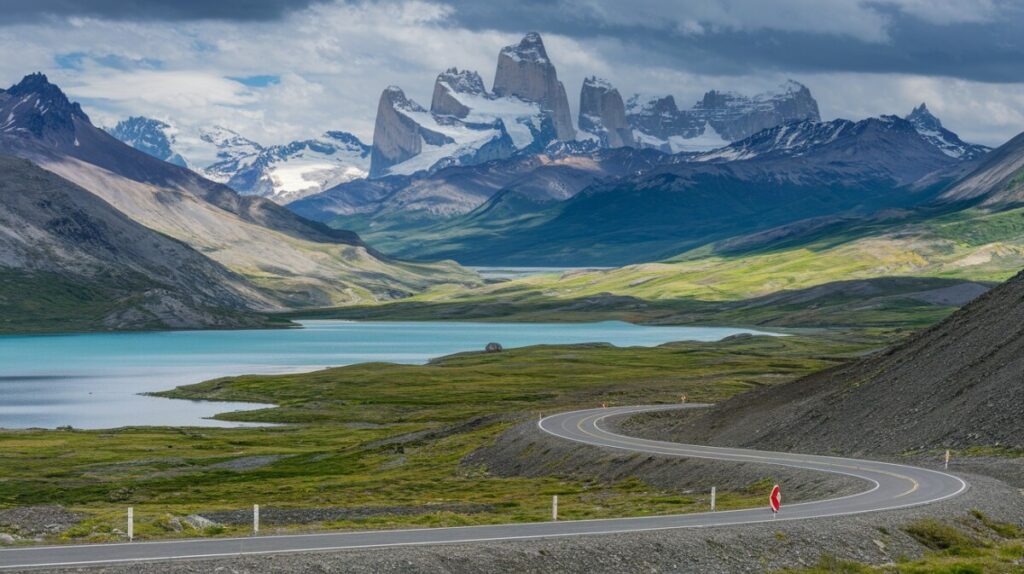
Chile Patagonia rewards travelers who plan with the road in mind, not just the destination. The best routes depend on season, vehicle choice, border crossings, fuel range, and how much gravel you’re willing to drive.
Best Fit In One Glance if you want the easiest scenic drive, choose a short loop with paved roads and predictable stops; if you want Patagonia’s classic adventure, plan for the Carretera Austral or a Chile-Argentina border crossing with extra buffer time.
For broader trip-planning context, it helps to compare this route guide with a wider road-trip planning guide so you can separate destination-specific decisions from general rental and itinerary choices.
How To Choose A Patagonia Driving Route
The strongest Patagonia routes are the ones that match your time, vehicle, and comfort level. Some travelers want a straightforward scenic drive with frequent services; others want remote roads, bigger distances, and a trip that feels more like an expedition. Patagonia can deliver both, but the region’s weather and road surfaces make route selection more important than usual.
| Route type | Best for | Road conditions | Trip length | Key watch-outs |
|---|---|---|---|---|
| Carretera Austral section drive | Travelers who want classic Patagonia scenery and flexibility | Mix of paved and gravel stretches | 4–10+ days | Fuel spacing, washboard gravel, weather delays |
| Torres del Paine access drive | First-time visitors focused on major park highlights | Usually more straightforward, but conditions still change quickly | 1–3 days | Park entry rules, strong winds, crowded peak-season access |
| Chile-Argentina crossing route | Road trippers combining both sides of Patagonia | Varies by border and approach roads | 5–14 days | Border documents, timing at crossings, one-way rental limits |
| Short scenic loop from a base town | Travelers with limited time who still want Patagonian scenery | Often the easiest driving | Half-day to 2 days | Less remote, so less dramatic—but simpler to manage |
A useful rule of thumb
Choose the road that gives you margin. In Patagonia, a shorter route with safe daylight driving often beats a longer plan that depends on perfect weather and too many moving parts.
Patagonia Road Conditions, Seasons, And Timing
Timing changes everything here. Summer brings the most usable daylight and the best chance of open roads, but it also draws the highest demand for rentals, lodging, and park access. Shoulder season can be quieter and cheaper, yet weather shifts faster and some services run on limited schedules.
| When to go | What you gain | What to watch |
|---|---|---|
| December to March | Longest days, more stable touring conditions, better access to remote routes | Peak demand, weather can still turn quickly, booking windows narrow fast |
| October to November | Fewer crowds and a strong balance of daylight and availability | Some attractions or services may still be ramping up |
| April to May | Quieter roads and a slower pace | Shorter days, greater weather variability, more reason to keep routes simple |
If your route depends on park access or a border crossing, check timing before you commit. The practical risk in Patagonia is not just rain or wind; it is losing hours to a closure, a delayed crossing, or a road surface that slows you more than expected.
What Matters Most Before You Start Driving
The original draft correctly emphasized preparation, but Patagonia needs more specific planning than a generic scenic route. The most important checks are practical: road surface, fuel range, weather exposure, and whether your rental or cross-border plan actually matches the route you want to drive.
Vehicle choice
A standard car can suit paved sections, but gravel-heavy or remote routes are easier with more clearance and stronger tires.
Fuel range
Do not assume the next station is close. In remote areas, fill up early and keep some buffer in your schedule.
Weather margin
Wind, rain, and sudden cold snaps can reshape your day. Build extra time into every long drive.
Permits and borders
If your route crosses into Argentina or involves park rules, confirm documents and rental permissions before departure.
For related road-trip comparison ideas, you can also look at a coastal road-trip guide or a northern scenic journey to see how route structure changes when weather, distance, and road quality matter as much as scenery.
A Practical Packing And Safety Checklist
The original article’s general packing advice still applies, but in Patagonia the list should be focused on self-reliance. A comfortable route can become stressful fast if you are missing basic items or if you underestimated the distance between services.
- Offline maps or downloaded navigation in case mobile coverage drops
- Water, snacks, and layers for temperature swings
- First-aid kit, flashlight, and roadside basics
- Sun protection and wind protection for long outdoor stops
- Phone charger and backup battery
- Vehicle documents, rental paperwork, and border-related permissions if needed
These are not luxury extras. On longer routes, they reduce the chance that a simple delay turns into a trip disruption.
Where To Go Next If You Are Still Deciding
If you already know you want Patagonia, the next decision is usually whether your trip should be a short scenic loop, a one-region park trip, or a longer multi-border drive. If you are comparing destinations and route styles, the broader road-trip examples in Britain’s national parks road trip can help you think about pacing, while this Ireland road trip guide is useful for understanding how a flexible route changes when roads, stops, and timing all need to work together.
Plan your route before you book the trip around it
Because Patagonia rewards early planning, confirm the route type you want first, then match the vehicle, dates, and border permissions to it. That simple order prevents a lot of avoidable compromise.
If you are building a wider itinerary, the dominant road-trip planning guide is the better place to compare rental choices, trip structure, and general booking strategy; this page is the Patagonia-specific route filter.
Frequently Asked Questions
What Are The Best Scenic Driving Routes In Chile Patagonia?
The Carretera Austral, Torres del Paine access roads, and Chile-Argentina crossing routes are among the most popular options, depending on whether you want remote scenery, park access, or a cross-border loop.
Do I Need A 4X4 For Patagonia?
Not always, but a higher-clearance vehicle is often more comfortable on gravel sections and remote routes. The right vehicle depends on the exact roads you plan to drive, not just the region name.
When Is The Best Time To Drive In Chile Patagonia?
December through March usually offers the most usable daylight and the best overall road-trip conditions, while spring and autumn can work well if you want fewer crowds and can accept more weather uncertainty.
What Should I Check Before Crossing Between Chile And Argentina?
Confirm rental permission, border documents, and opening hours for the crossing you plan to use. Build in extra time because border delays can change the day’s driving plan.

Jessica Malone is a passionate writer and travel enthusiast, specializing in affordable car rental solutions. With a keen eye for detail, she explores various aspects of cheap car rentals, offering readers practical tips and insights to maximize their travel experiences. Through her engaging articles, Jessica aims to empower travelers to make informed decisions and navigate the world of online car rental services with ease.




I really resonate with your view on what defines a scenic route. It’s not just about the pretty views; it’s about the journey and the experiences along the way. I remember taking a road trip along the Pacific Coast Highway in California, where every twist and turn unveiled awe-inspiring coastal cliffs and hidden beaches. It’s those unexpected discoveries—like stumbling upon a quaint little town or a food truck with killer fish tacos—that truly make the trip memorable.
I completely resonate with your thoughts on scenic routes! Driving through picturesque landscapes truly transforms a journey into an adventure. During my last trip through the rolling hills of Tuscany, I experienced firsthand how a meandering road can lead to unexpected gems, like quaint vineyards or hidden waterfalls.
Your emphasis on preparation truly resonates, especially when exploring the stunning yet challenging landscapes of Patagonia. I recently drove through parts of the region, and I found that having a flexible itinerary allowed me to embrace unexpected detours—some of the most picturesque moments were unplanned.
Ah, the allure of the open road! You’ve touched on something truly enchanting when it comes to the scenic routes in Chile’s Patagonia. I completely agree that a journey is just as much about the experience as it is about the destination. After all, who doesn’t love a good detour to take in some breathtaking views or stumble upon a hidden gem of a village?
You’ve captured the essence of travel beautifully. In Patagonia, the journey really unfolds in unexpected ways. Each turn in the road can lead to a stunning vista or a chance encounter with the locals, who often have incredible stories to share about their way of life.
Your musings on the essence of scenic routes resonate deeply with me, particularly as they offer both a literal and metaphorical journey for travelers. I have often found that the pursuit of breathtaking vistas is as much about the experience of traveling itself as it is about the destination.
I completely agree with your perspective on scenic routes being both a literal and metaphorical journey. There’s something profound about taking the time to appreciate the spaces in between, isn’t there? I’ve often found that while the destination might be striking in its own right, the memories forged during the journey—the laughs shared, the unexpected stops, or even the moments of solitude as you take in the landscape—are what linger long after.
Ah, the allure of scenic routes! It brings back fond memories of that time I set out on what I thought was a straightforward drive through the mountains. Armed with a half-eaten granola bar, a playlist magnificently curated for road trip vibes, and the naive belief that I could “wing it,” I accidentally ended up on a winding path that could best be described as the world’s longest driveway—complete with curious llamas and an exceptionally stubborn goat who clearly didn’t care for my agenda.
Your insights on scenic routes really hit home! There’s something magical about the journey being just as captivating as the destination, isn’t there? I once drove the Pacific Coast Highway in California, and I felt like a character in a movie—curving around cliffs with the ocean crashing below made for a borderline spiritual experience.
It’s great to hear that you connected so deeply with the idea of scenic routes! The Pacific Coast Highway really does have a way of turning a drive into something special. Those cliffs and ocean views can definitely make you feel like you’re part of a story much larger than yourself.
Absolutely agree with your take on scenic routes being about more than just the destination. I had a memorable experience driving along the Pacific Coast Highway. The mix of cliffs, ocean views, and quirky little towns really made the journey just as rewarding as the end point.
Your insights on the driving routes in Chile Patagonia resonate deeply, particularly the emphasis on preparation and the inherent beauty of scenic drives. The notion that a scenic route is not merely about the destination but the journey itself is crucial for any traveler looking to immerse themselves in the local environment.
I totally resonate with your thoughts on scenic routes! There’s something so thrilling about a drive that’s about more than just getting from point A to point B. One of my favorite drives was through the Lakes District in Chile—those changing landscapes are just mesmerizing. You hit the nail on the head with the importance of preparation; a good checklist (especially for those permits) can make or break the experience.
I appreciate how your post highlights the importance of preparation when considering driving routes, especially in a stunningly varied landscape like Chilean Patagonia. It’s fascinating to think about how much our travel experiences can be shaped by the simple act of doing a little homework ahead of time. The region’s allure lies not just in its dramatic scenery, but in the journey itself—the winding roads that beckon with promises of the unexpected are often as memorable as the destinations.
I love your insights on planning routes in Chile Patagonia! It’s so true that the journey there is as essential as the destination. Last summer, I took a trip along the Carretera Austral, and the experience was all about the in-between moments—the small riverside stops and the unexpected encounters with locals really made the drive memorable.
Your exploration of road-tripping in Chilean Patagonia highlights the intricacies of travel planning in a region where the journey can often be as enchanting as the destination. It’s interesting to consider how factors like seasonal conditions or vehicle capabilities can drastically alter not just the trip experience but the choices we make in the planning stages. For instance, during the wetter months, opting for a more rugged vehicle could become a necessity rather than a luxury, transforming a casual drive into an adventure-filled challenge.
Your insights on planning a road trip in Chile Patagonia really resonate with me! It’s such a unique place where the journey truly feels as important as the destination. I remember driving the Carretera Austral and how the changing landscapes really kept every moment exciting. It’s so true that the season can make or break your experience – I went during spring, and the blooming flowers were a delightful surprise.
I love how you emphasize the importance of planning for the journey itself, not just the destination when exploring Chile’s Patagonia. This part of the world truly transforms the concept of a “road trip” into an adventure of discovery. It’s fascinating how each season can shift the experience completely, isn’t it?
Your insights on road travel in Chile Patagonia resonate deeply with me, especially the emphasis on planning with the journey in mind rather than just the destination. Having taken a couple of road trips in various regions, I fully appreciate how the route can dramatically transform the overall experience. It’s true that in places like Patagonia, the landscape is vastly different depending on your choices—be it the season or the type of vehicle you’re driving.
Ah, the beauty of planning a road trip through Patagonia! It’s like setting out for an epic adventure but with the added layer of potential chaos—are we feeling bold or slightly insane? I love that you can choose between a cozy paved loop or the classic, gravelly “let’s-see-what-happens” approach on the Carretera Austral. Seriously, it’s like deciding whether to pack a gourmet sandwich or a handful of trail mix for a trek through the wilderness!
I appreciate your insights on planning a road trip through Chile Patagonia—it’s such a unique region that encourages a deep connection with both nature and the journey itself! I remember my own trip there, where I spent hours marveling at the dramatic landscapes that unfolded with each turn, almost as if Mother Nature had painted them just for us. You’re right; the experience is not just about reaching a destination but about savoring the moments in between.
Your insights into the nuances of road-tripping through Chile Patagonia really resonate with me, particularly the emphasis on strategic planning rather than simply focusing on the destination. The idea that the journey itself, with all its variable landscapes and challenges, can be as rewarding as the final stop is something that many travelers might overlook, especially those with an itinerary-driven mindset.
Your insights on the importance of planning routes in Chile Patagonia resonate deeply, especially considering the diverse landscapes and unpredictable conditions this region offers. It’s not just about getting from one point to another; the journey itself can be transformative when approached with intention.
I completely resonate with the idea that the journey through Chilean Patagonia is as rewarding, if not more so, than the destination itself. My experience planning a road trip in this breathtaking region really brought this concept to life. I vividly remember spending hours poring over maps and forums, intrigued not just by the stunning sights but by the unique routes that offered differing perspectives on each landscape.
I totally resonate with your emphasis on planning for the journey in Patagonia, not just the destination. Last year, I took a pretty spontaneous trip there, aiming for the highlights but quickly learned that the real magic is along the routes—the landscapes change so dramatically along the way. I remember being on a gravel road, surrounded by towering peaks, and realizing how much I would have missed if I just zoomed in on the main sights.
This post brings up some critical points that resonate with me deeply, especially about the importance of careful planning when it comes to exploring the wild and remote regions of Chile Patagonia. I recently had the opportunity to drive through parts of Patagonia, and it was truly a transformative experience. What stood out to me was the sheer unpredictability of the landscape and how it demanded not just an itinerary, but also adaptability and foresight.