
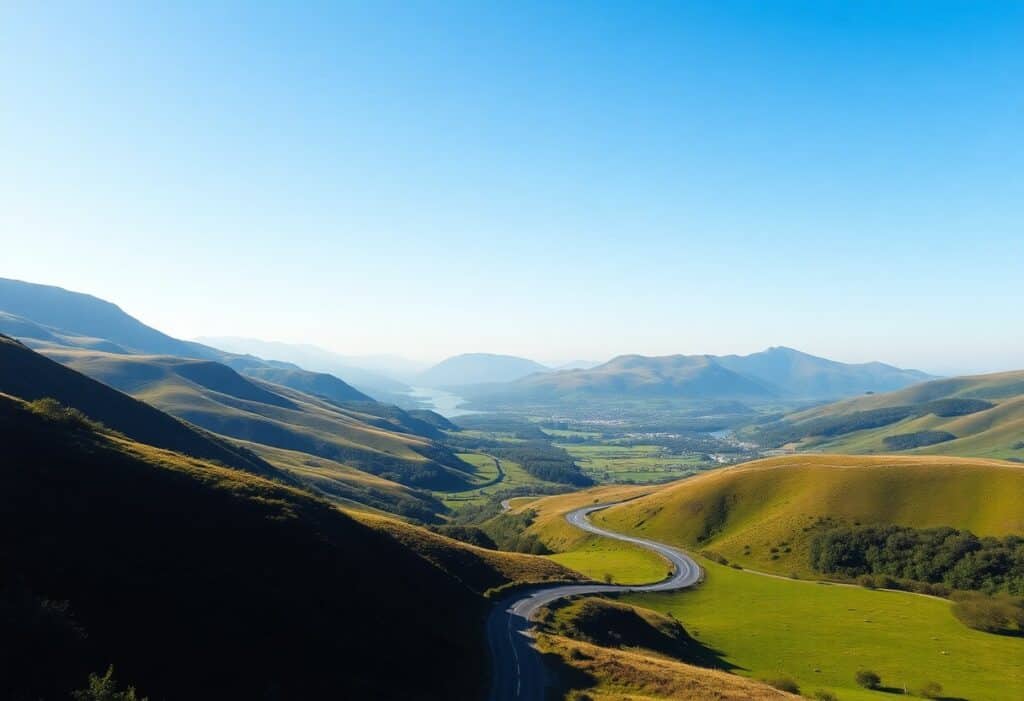
A UK road trip becomes much more rewarding when you narrow the plan to Britain’s national parks. That sharper focus helps you choose the right route, the right season, and the right rental car without wasting time on detours that do not fit the trip.
Best fit in one glance
If you want scenic drives, easy planning, and a trip that stays clearly different from a generic UK itinerary, build the journey around the Lake District, Yorkshire Dales, the Peak District, and—if you have more time—Brecon Beacons or South Wales routes.
- Best for a first UK national parks road trip: Lake District + Yorkshire Dales
- Best for dramatic driving and walking: Peak District + North Wales Or South Wales
- Best travel windows: May — June and September — October
- Best car type: Compact Suv or a comfortable fuel-efficient car
If you are still comparing broader UK routes, the Scotland road trip guide is the better choice for a coastline-led itinerary, while this page stays focused on national parks and the driving decisions that make them work.
Planning Checklist For A UK National Parks Road Trip
The original post had the right ingredients—timing, budget, car choice, and route ideas—but they needed to be tied to one clear purpose. For this trip, the main task is simple: choose a small set of parks, pair them with realistic driving distances, and book a car that suits narrow lanes, luggage space, and weather that can change quickly.
Vehicle
A compact SUV or regular-sized car with good fuel economy is the most practical match for park roads and mixed weather.
Season
Late spring and early autumn usually give the best balance of daylight, scenery, and manageable crowds.
Budget
A 7-night trip can run from roughly £670 To £840 Per Person depending on stays, meals, and the car you choose.
For booking the car itself, it helps to keep the planning flow tied to the trip rather than the rental. The most useful rental advice for a UK parks drive is still the same: choose the right rental car for the journey, compare fuel economy, and make sure the vehicle is comfortable enough for longer days on rural roads.
When To Go And When To Book
The article already pointed to late spring and early autumn, and that advice is still the most useful timing guidance. In Britain’s national parks, those shoulder seasons usually give you a better balance of daylight, scenery, and road comfort than midsummer, when popular routes can feel crowded and parking can be tighter.
Park-By-Park Routing That Actually Helps
To keep this page distinct from broader road-trip guides, it helps to think in park-specific combinations rather than “the UK” as one huge loop. The strongest route ideas in the original draft were the Lake District, Yorkshire Dales, Peak District, Brecon Beacons, South Wales, and the Cotswolds. Those still form the most useful routing choices here, but the goal is to pick the best pairing for your driving style.
Lake District
Best for a classic first trip: lakes, mountain viewpoints, literary history, and straightforward base-to-base driving. Weather can be rainy and windy, so a stable, comfortable car matters more than style.
Yorkshire Dales
Good for a quieter, scenery-led loop with pretty villages and strong walking options. The roads can be hilly, so plan shorter segments and avoid overloading the day with too many stops.
Brecon Beacons And South Wales
Best when you want dramatic scenery, historic stops, and more adventurous roads. The Black Mountain Pass adds driving interest, but it rewards a car that feels composed on bends and climbs.
Cotswolds
More village-focused than wilderness-focused, but still a useful add-on if you want scenic lanes, classic English architecture, and easy day-by-day routing. It is popular and can be pricier than other park-style routes.
If your trip leans beyond Britain and you are using the parks as one stop inside a larger journey, the broader Europe road trip guide is the better follow-on page. It gives you a wider planning frame, while this article stays narrow enough to help you choose the right UK park route.
Car Choice, Rental Tips, And Driving Reality On UK Park Roads
The original advice about booking in advance, reading the rental agreement, checking for damage, and comparing insurance still belongs here, but it matters most when connected to how these routes feel on the road. A national parks trip is not usually about covering huge distances quickly. It is about enough comfort, enough luggage space, and enough confidence on narrow lanes, bends, and weather-changed surfaces.
- Book Early if you are travelling in May, June, or September, when scenic routes are popular.
- Check The Car On Pickup, especially the wheels, bumper, and windshield, before leaving the lot.
- Read The Agreement Carefully so mileage, fuel policy, and insurance are clear.
- Prefer Fuel Efficiency for longer northern loops where fuel costs can add up.
- Choose Comfort Over Size unless you genuinely need extra luggage room or higher ride height.
If you want a deeper look at rental details, the page on how to rent a car without hidden fees fits naturally with this trip because it supports the same decision stage: choosing a practical car without adding avoidable costs.
Booking tip
For a UK national parks trip, book your car as soon as your route is set, ideally before your accommodation is locked in. That gives you more choice on automatic vs. manual, boot space, and fuel economy—three details that matter more on park roads than on city breaks.
What The Budget Usually Covers
The original draft gave a useful cost range, and it still works when framed as a planning baseline rather than a hard promise. A seven-night UK road trip can cost roughly £670 To £840 Per Person, depending on the kind of accommodation you choose and how many meals you eat out. In London, the average car rental rate cited in the source was £60 Per Day, and fuel was listed at £1.51 Per Litre.
That said, a national parks route may feel different from a city-heavy trip. You may spend a little less on daily urban parking and more on fuel, rural accommodation, and occasional meals in village pubs or mid-range restaurants. If you stay flexible with dates, you can often keep the trip within a reasonable range without cutting the scenic parts that make it worthwhile.
A Simple Route Structure For 5, 7, Or 10 Days
Search intent around UK road trips often comes down to time. Rather than trying to cover everything, build the route around the length of your break.
Ready to start planning?
If your goal is a scenic UK national parks road trip, start with the park pair you want most, then choose the car and dates around that route.
Frequently Asked Questions
What Is The Best Road Trip In The UK?
For a national parks-focused trip, the strongest all-round choice is usually the Lake District and Yorkshire Dales combination because it balances scenery, drive time, and variety.
How Many Days Are Needed For A UK Trip?
For a national parks road trip, five days is enough for one park, seven days works well for two parks, and ten days gives you room for a more relaxed multi-region route.
Is A UK Road Trip Worth It?
Yes, especially if you want compact driving distances, strong scenery, and a mix of villages, walking routes, and historic landmarks in the same trip.
Which Month Is Best To Visit The UK?
May, June, September, and October are usually the best months for a road trip because they offer a strong balance of daylight, scenery, and manageable crowds.

Matthew Thompson is an accomplished author specializing in topics related to budget travel and cheap car rental options. With a keen eye for detail and a passion for helping travelers save money, he shares valuable insights on navigating the complexities of online car rental services. Matthew’s work not only provides practical tips but also empowers readers to make informed decisions, ensuring they enjoy memorable journeys without breaking the bank.




What a delightful guide for planning a UK road trip! When I think of driving through the UK, I picture myself zig-zagging along the coast, stopping in chocolate-box villages, and inevitably getting lost in a roundabout or two (because who doesn’t enjoy a little adventure, right?).
Your insights on planning a UK road trip resonate with me. The emphasis on careful preparation really hits home, especially since my last trip was a spontaneous one that left us scrambling for accommodations and maps. I agree that choosing the right type of vehicle is crucial; a compact SUV can really be the sweet spot for comfort and fuel efficiency while navigating narrow village roads.
I totally get where you’re coming from. Spontaneity has its charm, but it can really throw a wrench in plans if you’re not ready for it. Having a solid plan can make all the difference, especially when you’re on those winding village roads.
I can really appreciate that perspective. The charm of spontaneity is hard to deny, but it does seem to come with its fair share of potential pitfalls. I remember a road trip I took a while back that was meant to be a spontaneous getaway, but we hit a few unexpected detours that turned a fun trip into a logistical puzzle. Sometimes, having a plan feels like a safety net, especially when you’re navigating those winding village roads where getting lost can lead to more than just a few wrong turns.
I completely get where you’re coming from. I’ve had my fair share of trips that seemed like they were going to be carefree and spontaneous, only to end up turning into a real test of patience and navigation skills. It’s intriguing how some of those unexpected detours can transform a seemingly simple journey into a logistical puzzle, isn’t it?
I totally get what you mean about spontaneity having its challenges—it’s worth taking a look at some insights about Las Vegas that could help you map out your next adventure with a bit of backup while still keeping it fun.
‘Learn About Las Vegas,Nevada’
https://online.rentacar24.org/rent-a-car-us/rent-a-car-nevada/rent-a-car-las-vegas/learn-about-las-vegasnevada/.
I completely agree with you about the balance between spontaneity and planning. There’s something really special about the unexpected moments, especially when you stumble upon a charming little café or an art gallery while wandering those village roads. But I’ve also learned that having a solid plan can act almost like a safety net, allowing you to enjoy those spontaneous moments without the stress of uncertainty looming over you.
Planning a UK road trip truly is a wonderful experience that blends nature, history, and culture. I remember my own trip along the coast of Cornwall, where the dramatic cliffs and quaint fishing villages felt like stepping into a different era. It’s interesting how the choice of vehicle can impact the journey. I opted for a compact car, which was perfect for navigating those narrow coastal roads, but I’ve heard that a small SUV can provide extra comfort, particularly for families.
I completely agree with you about a UK road trip being such a rich blend of experiences. Cornwall is stunning; those rugged cliffs and cozy villages can feel quite timeless. I remember visiting St Ives and getting lost in the local art scene—it’s amazing how the landscape influences creativity and the sense of community there.
Your insights on planning a UK road trip resonate deeply with me. I recently embarked on a similar adventure, and it truly transformed the way I see travel. The thrill of driving through the quaint countryside, with sheep grazing on rolling hills, reminded me that sometimes the journey is just as important as the destination.
I appreciate your thoughts on the road trip experience. It really is fascinating how driving through those landscapes can shift our perspective on travel. There’s something special about the simplicity of cruising along narrow roads, the soft glow of sunlight filtering through the trees, and the occasional sight of a curious sheep peeking over a wall. Those moments can remind us to embrace not just where we’re going, but also the joy of the journey itself.
I love the idea of a UK road trip! I did one last year, and it really opened my eyes to how breathtaking the countryside is. The rolling hills of the Cotswolds were definitely a highlight for me; I stumbled upon such charming little villages and cozy pubs.
It sounds like you had such a wonderful experience on your road trip! The Cotswolds really do feel like stepping into a painting, don’t they? It’s amazing how each village has its own character, from the honey-colored stone cottages to the inviting local pubs.
Your insights on planning a UK road trip resonate with me deeply, as I recently embarked on a similar journey. The experience of driving through Britain’s charming villages and stunning coastlines is unlike any other, and I couldn’t agree more about the importance of careful planning.
It’s great to hear that you recently went on a UK road trip. There’s something magical about those winding roads that lead to quaint villages and breathtaking coastal views, isn’t there? I remember my own journey through the Cotswolds—each village felt like stepping into a postcard.