
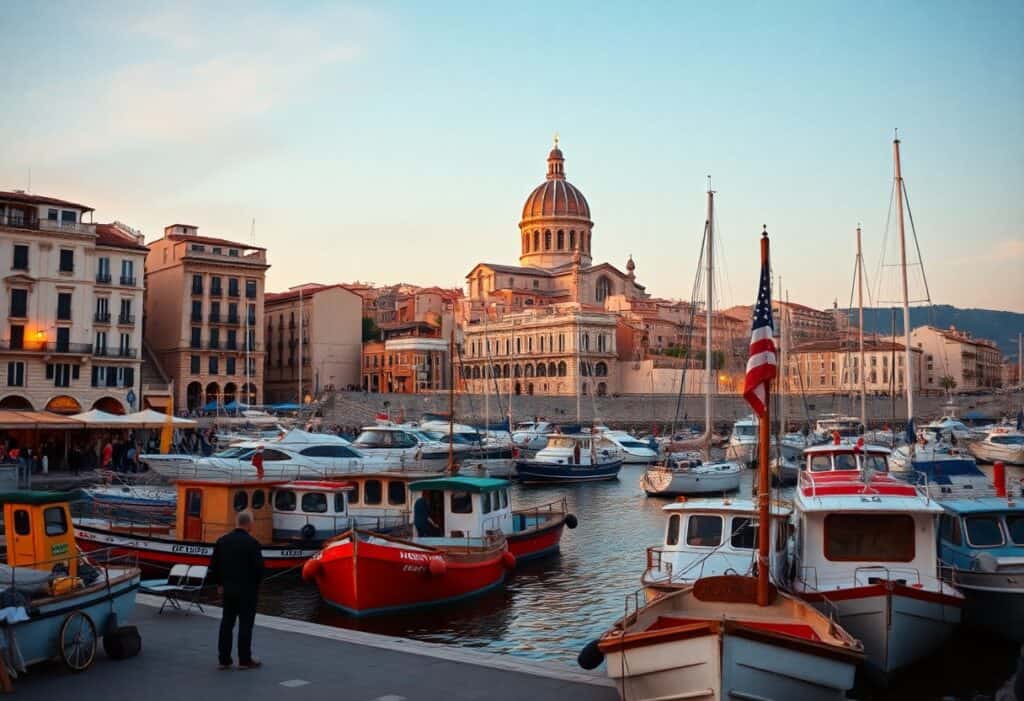
Marseille rewards slow exploration: a port city with ancient roots, bold neighborhoods, and coastal scenery that changes the pace of every day. If you’re planning a Marseille stop on a wider French or Europe road trip, start with the city’s core highlights and build outward from there.
For broader trip planning beyond the city, the Europe road trip guide is the best companion page, while this guide stays focused on Marseille itself.
A good Marseille day plan
Start at the Old Port, head up to Notre-Dame de la Garde, then spend the afternoon in Le Panier or MuCEM. If you have extra time, add the Corniche or a Calanques outing for the city’s coastal side.

Start With The City’s Essential Sights
The best things to do in Marseille are the ones that connect its harbor, hillside viewpoints, and old neighborhoods into one route. You do not need to rush across the city to understand it; a well-planned day around the Old Port, Le Panier, and Notre-Dame de la Garde gives you a strong feel for Marseille’s identity.
Vieux-Port: Where Marseille Begins
The 2,600-year-old Vieux-Port is still the city’s most useful starting point. It is where you can watch the harbor move, browse the morning fish market at Quai des Belges, and pause at a café before moving into the older parts of town. In summer, boat traffic and sunset cruises add to the atmosphere, while year-round waterfront walks make the area an easy first stop.
If you want to pair the port with a broader city plan, this is also where the narrow historic streets of Le Panier and the MuCEM district connect naturally, making it simple to keep the day compact without sacrificing variety.
Le Panier: Marseille’s Oldest Quarter
Le Panier is the city’s most atmospheric neighborhood for wandering. The steep lanes, stairways, hidden squares, and street art create a lived-in feel that is very different from the polished waterfront. This is where Marseille’s history is easiest to see in everyday life, from small artisan shops to painted shutters and café terraces tucked into quiet corners.
A few hours here is enough for a rewarding visit. Shops often close over lunch, so the best time to browse is late morning or early afternoon, when the district feels lively but not too crowded.
Notre-Dame De La Garde: The Classic View
No Marseille itinerary feels complete without the basilica on the hill. Notre-Dame de la Garde rises above the city and gives you wide views over the harbor, the Frioul Islands, and the coastline. You can reach it by bus or on foot if you want a more active route, and the reward is one of the most recognizable panoramas in southern France.
Inside, the mosaics, ex-voto offerings, and Neo-Byzantine details tell a very different story from the port below. It is a useful contrast: Marseille feels maritime at street level, then almost monumental from above.
For travelers building a multi-city trip, this kind of city landmark works especially well as a short stop in a larger France route, which is why the Europe road trip guide pairs well with Marseille’s more local itinerary value.
Culture, Food, And Modern Marseille
Marseille’s appeal is not limited to its historic core. Some of the city’s most useful stops bring together museums, architecture, and food, so you can balance sightseeing with slower time in cafés, markets, or seaside promenades.
Mucem And Fort Saint-Jean
MuCEM is one of the best modern additions to the city’s visitor map. Its exhibits focus on Mediterranean civilization, migration, crafts, and daily life, while the building itself is a strong visual counterpoint to the historic harbor. The footbridge to Fort Saint-Jean makes the visit even better, since you can move from contemporary galleries to fortress walls and gardens without breaking the flow of the day.
The rooftop and terraces are particularly useful if you want a break with a view. Together, MuCEM and Fort Saint-Jean make an efficient culture block, especially on a hot day when you want indoor space without losing the sea setting.
Bouillabaisse And The City’s Food Culture
Bouillabaisse is the most famous Marseille dish for a reason. It is tied to the city’s fishing heritage and still works best when you treat it as a sit-down meal, not a quick lunch. The traditional service comes in stages: broth, rouille, bread, and then the fish selection. If you want the full experience, book ahead and choose a restaurant that follows the Bouillabaisse Charter or another clearly authentic preparation style.
Noailles Market is another strong food stop if you want a more everyday version of Marseille’s culinary mix. It is lively, multicultural, and excellent for spices, pastries, and local shopping, though it is best approached in the morning when stalls are most active and the market feels at its most energetic.
La Canebière, Cours Julien, And La Friche
La Canebière gives you the classic commercial boulevard, while Cours Julien shows the city’s creative side with murals, cafés, and independent shops. La Friche la Belle de Mai extends that mood into a larger cultural space with exhibitions, performances, and a rooftop that is worth the detour if you like contemporary art or informal city energy.
These areas are useful if you are deciding how to spend a second or third day in Marseille. The port and old quarter show the city’s history; these neighborhoods show how Marseille still feels current.
Coastal Views, Beaches, And Timing That Matters
Marseille’s coastline changes the shape of the trip. If you want more than monuments and museums, the Corniche Kennedy, the Frioul Archipelago, and the Calanques show why the city is so closely tied to the sea.
When To Go For The Best Experience
For the Calanques, timing matters more than almost anywhere else on this list. Early morning and late afternoon are the best windows if you want fewer people, lighter heat, and better trail comfort. The same applies to the Corniche: sunset is beautiful, but it is also when the area is busiest.
Calanques, Frioul, And The Corniche
The Calanques National Park is the natural highlight for visitors who want to leave the city behind for a few hours. Its limestone cliffs, turquoise water, and hiking routes are the most dramatic scenery near Marseille, but they do require planning. Bring water, proper shoes, and sun protection, especially if you plan to swim or hike in summer.
The Frioul Archipelago offers a slightly easier island escape. Ferries from the Old Port make it a straightforward half-day trip, and the islands combine trails, beaches, old fortifications, and clear water. If you want an easy scenic close to the city, the Corniche Kennedy is the simplest option: a long waterfront promenade with room to walk, pause, and look across to the islands.
A Simple Marseille Itinerary
One day
Vieux-Port in the morning, Le Panier after lunch, and Notre-Dame de la Garde late in the day for the best views.
Two days
Add MuCEM, Fort Saint-Jean, a proper bouillabaisse dinner, and either the Corniche or Cours Julien.
Three days or more
Use a full day for the Calanques or Frioul, then keep one slower day for markets, cafés, and hidden neighborhoods like Vallon des Auffes.
That structure works because Marseille is best when you mix iconic views with everyday city life. A tightly packed morning of landmarks, a slower afternoon in a neighborhood, and one coastal outing usually gives you more value than trying to see everything in one rush.
Planning Marseille as part of a wider road trip?
Use Marseille as a strong city stop rather than a drive-through city. If you are building a France or Europe route, the broader Europe road trip guide helps with the larger sequence, while Marseille gives you the culture, food, and coastal sightseeing.
For the city itself, book bouillabaisse in advance, reach the Calanques early, and leave sunset for the Corniche or the basilica viewpoint when you want the best light.
A Few Useful Details Before You Go
Marseille is very walkable in the central areas, but it is still a large city, so energy management matters. Use public transport or taxis when you are linking the port, hillside, and outer coastal areas in one day. Keep an eye on opening hours in smaller districts, and remember that lunch closures are common in artisan shops and some neighborhood businesses.
If you are visiting the Old Port, the cathedral, and MuCEM together, that cluster works best as a half-day walking route. If you choose the Calanques, treat them as a separate excursion so you do not dilute the city experience with too much transit time.
Frequently Asked Questions
Marseille works best when you mix its famous viewpoints with one or two deeper neighborhood experiences. That balance gives you the city’s history, culture, and coast without turning the trip into a checklist.

Samantha Price is a dedicated author and travel enthusiast who specializes in writing about affordable car rental options online. With a keen eye for detail and a passion for helping readers save money, she provides insightful tips and practical advice on navigating the world of cheap car rentals. Through her engaging content, Samantha empowers travelers to explore new destinations without breaking the bank, making their journeys both enjoyable and budget-friendly.




Your detailed account of Marseille beautifully captures the essence of both its historical richness and modern vibrancy. I find it particularly interesting how you highlight the dual nature of the city—its ancient landmarks like the Vieux-Port and the contemporary lifestyle that thrives around them. Beyond the scenic beauty and historical aspects, Marseille possesses an intriguing cultural mosaic, shaped by diverse influences due to its status as a significant Mediterranean port.
You’ve touched on something really important about Marseille’s identity. The way history and modern life blend together is part of what makes the city so fascinating. Walking through the Vieux-Port, you can almost hear the whispers of the past while still being surrounded by the lively energy of today’s cafes and shops.
I completely agree; Marseille has this incredible ability to intertwine its rich tapestry of history with modern life. There’s something special about strolling around the Vieux-Port, where you can sit at a café and imagine the sailors from centuries ago coming in and out, trading goods and stories. It’s like the city carries those echoes in its streets, all while bustling with today’s vibrant life.
You’ve captured that essence of Marseille beautifully. Walking around the Vieux-Port is like stepping into a living museum. It’s interesting how those old stones, with their stories etched into them, still resonate in today’s life. When you sit there and watch the fishermen unload their catch or see the tourists weaving through the bustling markets, it feels like the past is alive, doesn’t it?
I really appreciate how you captured the essence of Marseille’s dual nature. It’s fascinating to explore how the ancient landmarks coexist with the bustling modern life surrounding them. I think that contrast is one of the things that makes the city so intriguing. The Vieux-Port, for instance, isn’t just a historical site but a lively hub where you can sense the pulse of the city—local fishermen still bring in their catch, and cafes overflow with people enjoying a moment of leisure amidst the beautiful backdrop.
I came across this insightful piece on car rentals in Albany that mirrors the same rich tapestry of history and modern life you admire in Marseille, offering a practical perspective to explore the area’s unique cultural landscape.
‘Rent a Car Albany’
https://rentacar24.org/rent-a-car-albany/.
You’ve picked up on something really special about Marseille. The way ancient landmarks punctuate the energetic vibe of modern life creates a distinctive atmosphere, doesn’t it? The Vieux-Port isn’t just a setting for tourists; it’s a living space, a blend of history and daily life where locals gather, and it signals the heart of the city’s culture.
You’re so right about that unique atmosphere in Marseille. There’s something captivating about how the ancient landmarks seem to tell stories that harmonize with the hustle and bustle of everyday life. The Vieux-Port, in particular, feels like a living organism; it’s not just history standing still but rather a vibrant space where the past meets the present.
I found your insights about Marseille to be incredibly resonant, especially the way you highlighted the city’s blend of ancient and modern elements. As someone who has traveled there, I can attest that the Vieux-Port truly encapsulates what makes Marseille so special. The atmosphere is electric, with fishermen selling their fresh catches right alongside modern eateries. It’s a poignant reminder of the city’s rich maritime heritage and the people who have called this vibrant place home throughout history.
Your portrayal of Marseille captures the complexity and vibrancy of a city that often feels overshadowed by its more glamorous counterparts like Paris. I appreciate how you’ve highlighted the blend of historical significance and contemporary culture, particularly around the Old Port and Notre-Dame de la Garde. These sites not only serve as tourist magnets but also reflect the city’s layered identity.
You’ve touched on something really important—the way Marseille often gets lost in the shadow of cities like Paris, despite its unique character and rich tapestry of history. The Old Port and Notre-Dame de la Garde aren’t just landmarks; they tell such vivid stories about the city and its people.
I appreciate the detailed overview of Marseille, as it truly is a city that embodies a delightful blend of history and contemporary vibrancy. Having visited Marseille a few years ago, I can wholeheartedly attest to how the city captivates you from the moment you arrive.
Ah, Marseille—where the Mediterranean sun hits your face faster than your waiter can say “bouillabaisse”! It seems like every corner of this city has a history lesson to dish out, often served with a side of fresh seafood. Since we’re on the subject of places to drop your bags and start exploring, I’m curious: do you think you need to pack your museum pass, or is it enough just to snack your way through historical sites?
Marseille certainly has a way of inviting you in with its sun-soaked streets and tempting aromas wafting from every bistro. I totally get what you’re saying about the historical tapestry that blankets the city. There’s something enchanting about strolling past centuries-old buildings while munching on a fresh, flaky pastry—it feels like a true merging of taste and culture.
As I read through your exploration of Marseille, I find myself reminiscing about my own travels to this vibrant city. The Old Port, or Vieux-Port, truly is a magnificent starting point. I remember strolling along the waterfront, soaking in the lively atmosphere filled with sailors and vendors. It has this extraordinary blend of history and contemporary life, where you can spot fishermen selling their catch alongside modern cafés bustling with visitors.
I’ve always been fascinated by how Marseille blends its ancient history with vibrant contemporary life. The Old Port, in particular, feels like a living museum where every corner tells a story—from the fishermen selling their daily catches to the lively cafés that buzz with locals and tourists alike.
I completely get what you mean about Marseille. The Old Port really does feel like a tapestry of history and daily life woven together. I remember wandering through the markets there and just soaking in the atmosphere—the mix of languages, the aroma of fresh seafood, and the sound of waves lapping against the boats. It’s fascinating how that space serves both as a historical anchor and a bustling center for modern life.
I completely relate to that feeling you described. The Old Port really does feel like it’s alive with so many stories just waiting to be uncovered. I remember my own experience there, wandering through those vibrant markets where you can almost taste the sea in the air. It’s one of those places where you can see the blend of old and new right before your eyes.
It’s heartening to hear that you resonate with that feeling because the Old Port really does have a unique energy, doesn’t it? Your description of wandering through the markets is spot on; there’s something about the bustling ambiance that just invites exploration. It’s like every corner holds a fragment of history ready to be woven into your own experience.
I recently had the chance to explore Marseille, and reading this post brings back so many fond memories! The vibe of the Vieux-Port is truly something special; it feels like a living picture of history bumping shoulders with modern life. I remember standing by the water, watching fishermen sell their catch right on the docks—there’s something so intimate about experiencing a place where daily life is so intertwined with a city’s heritage.
It’s great to hear that you had such a memorable experience in Marseille! The Vieux-Port really does have a unique charm, doesn’t it? There’s something remarkable about how the city’s history and everyday life come together right there by the water.
Your description of Marseille beautifully captures the essence of its vibrant history and culture. I’ve always been drawn to cities that blend the old with the new, and Marseille seems to embody this challenge perfectly. The mention of the Old Port truly resonates with my experiences from my own travels; it’s such a pivotal part of the city’s character, showcasing its maritime heritage while also serving as a lively gathering place for both locals and tourists.
Marseille truly is a captivating blend of history and modern life. I remember my first stroll around the Old Port, where the vibrant atmosphere, coupled with the scent of fresh seafood, made me feel completely alive. It’s fascinating how this ancient city has managed to retain its charm while embracing contemporary culture.
You really captured the essence of Marseille with your description of the Old Port. It’s one of those places where you can almost feel the weight of history while soaking in the sounds and flavors of modern life. I remember wandering through the narrow streets near the port and stumbling upon little cafés filled with locals, each offering their unique take on bouillabaisse. It’s such a vibrant intersection of cultures, which makes each visit feel like a new adventure.
Speaking of captivating cities, navigating the vibrant streets of San Francisco can be just as memorable, and I came across some great tips for renting a car there that really helped me make the most of my time exploring.
‘Best Tips For Renting a Car in San Francisco’
https://online.rentacar24.org/top-tips-for-renting-a-car-in-sf/.
You really highlighted something special about Marseille—it’s that blend of history and contemporary life that makes it so unique. The Old Port is such a dynamic space, isn’t it? I can almost smell the sea air mixed with the aroma of fresh bouillabaisse you described. Each café has its own character, and the conversations among locals often feel like they’re telling stories that go back generations.
I can relate to that feeling of being alive in Marseille. The Old Port really does have a unique energy, doesn’t it? I remember exploring the narrow streets nearby, where the mix of historic architecture and vibrant street art creates such a dynamic environment. It’s interesting how the city’s history as a significant trading port has shaped its culture—there’s a richness in the diversity you see in neighborhoods like Le Panier.
Speaking of captivating experiences, I recently came across some great insights on navigating car rentals in Las Vegas—perfect for keeping the adventures rolling smoothly while exploring the city’s dynamic scene.
‘Best Tips For Renting a Car in Las Vegas in 2024-2025 Season’
https://online.rentacar24.org/top-car-rental-tips-for-las-vegas-20242025/.
Your exploration of Marseille captures the city’s allure and rich tapestry of history quite eloquently. However, while the Old Port is undoubtedly a focal point, I think it’s crucial to also consider its complex socio-economic landscape, especially as tourism continues to shape local culture. The juxtap of the bustling harbor with the everyday lives of residents presents a narrative that goes beyond sightseeing.
I find Marseille to be such a fascinating city, not just because of its historical significance but also due to its vibrant cultural tapestry woven from many influences that reflect the port city’s role as a crossroads of the Mediterranean. The juxtaposition between the ancient and the modern is particularly compelling to me; it’s one of the few places where you can literally feel history all around you while still embracing contemporary life.
You’ve hit the nail on the head with your observations about Marseille. It’s a city that truly wears its history like a well-loved scarf—frayed at the edges but boasting vibrant patterns that tell stories of sailors, merchants, and artists who have passed through over centuries. Walking through the streets feels like meandering through a giant, open-air museum where one moment you’re in front of an ancient church, and the next you’re gazing at sleek new cafes that serve coffee so good you might just forget about your to-do list for the day.
Marseille genuinely captures the essence of the Mediterranean spirit! I remember wandering through the narrow streets of Le Panier, where every corner revealed colorful street art and charming little cafés. The mix of cultures in Marseille is fascinating, reflecting its historical role as a melting pot, and it’s incredibly evident in the local cuisine.
Le Panier really does have that unique charm, doesn’t it? I love how every street feels like a little gallery, showcasing such a vibrant blend of cultures. It’s interesting how the art and food in Marseille tell stories of its history and the mix of influences over the centuries.
You’ve painted a lovely picture of Le Panier. That neighborhood really showcases the heartbeat of Marseille, doesn’t it? Walking through those winding streets is like exploring a living canvas, where every mural tells a story of the city’s diverse influences.
I really appreciate this guide to Marseille! It’s funny how sometimes the oldest cities can feel the most alive, and Marseille is definitely one of those places. When I think about the Old Port, I’m reminded of my trip there a few years ago, where I spent hours just wandering around, watching the fishermen bring in their catch and the local vendors setting up their stalls. There’s something so invigorating about being surrounded by that mix of history and everyday life, especially with the beautiful backdrop of the sea.
It’s great to hear about your memories of Marseille. The Old Port really does have a special energy, doesn’t it? That rhythm of the fishermen bringing in their daily catch alongside the vibrant exchanges of the local vendors creates a unique atmosphere that feels both timeless and immediate.
It’s interesting you mention that feeling of vibrancy in such an ancient place. Marseille really does have a unique pulse, unlike many other cities that wear their history with a sense of solemnity. The Old Port is a perfect example of this blend; it’s a space where the past and present shuffle comfortably side by side. Watching the fishermen and vendors go about their day is a reminder that life here carries on much as it has for centuries, which adds a layer of authenticity to your experience.
Marseille seems to capture the essence of both history and modernity in such a captivating way. As someone who has visited the city, I found the juxtaposition of the ancient architecture against the vibrant street life particularly fascinating. The Old Port is truly the lifeblood of the city, and I remember enjoying fresh seafood right at the water’s edge while soaking in the atmosphere.
Your experience truly captures the heartbeat of Marseille. There’s something about standing along the Vieux Port, surrounded by centuries of history while the present buzzes all around you. The Old Port does more than just serve as a picturesque backdrop; it embodies the city’s soul. Fresh seafood at one of those waterfront restaurants has this way of grounding you in the moment, doesn’t it? The flavors, the sound of the waves, and the chatter of locals blend to create a sensory tapestry that feels both familiar and invigorating.
Your description of Marseille captures the essence of this vibrant city beautifully. As someone who has ventured through its streets and soaked up its atmosphere, I can genuinely attest to the enchanting blend of history and modernity that permeates every corner. The mention of Vieux-Port as a starting point for exploration resonates deeply with me; it indeed feels like the heart and soul of Marseille, where the past meets the present.