
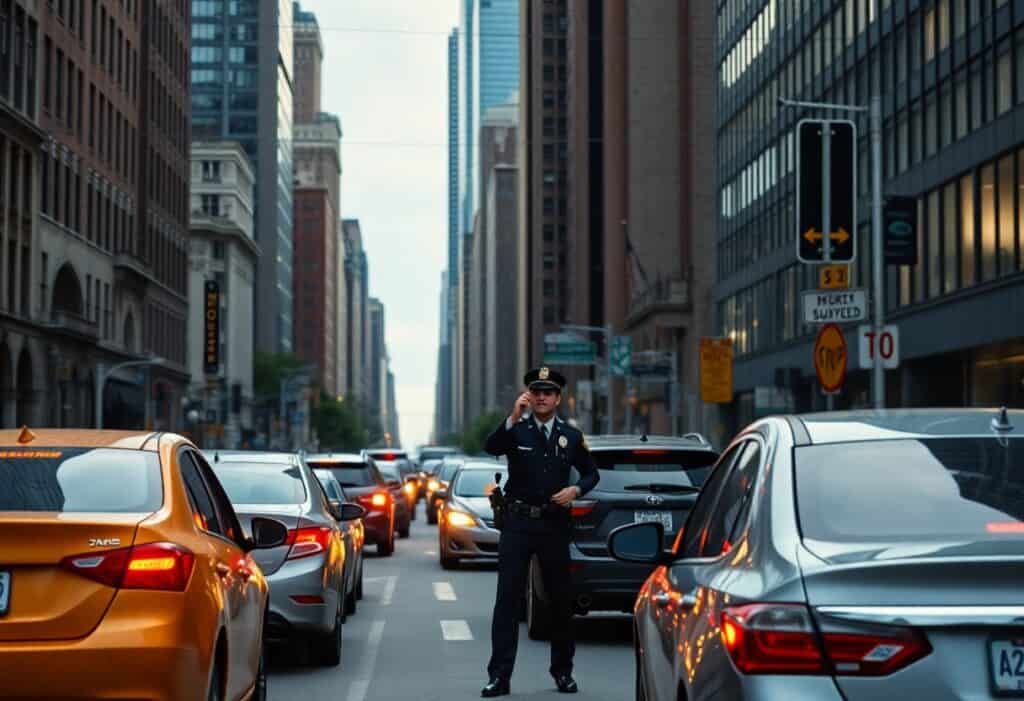
Driving in New York is manageable once you know where the rules tighten up. The biggest surprises are usually in New York City, where traffic, cameras, pedestrian priority, and parking enforcement are far stricter than many visitors expect.
What matters most before you drive
- You can drive with a valid out-of-state or foreign license if it is valid for your visit.
- New York City is much stricter than upstate New York on speed, turning, parking, and enforcement.
- Yield to pedestrians in crosswalks, obey school-zone limits, and avoid handheld phone use.
- If you are renting, check insurance, tolls, parking rules, and vehicle paperwork before you leave the lot.
If you are planning a longer U.S. itinerary, start with essential U.S. road-trip rules and tips so New York fits cleanly into the rest of your trip.
| Topic | New York City | New York State |
|---|---|---|
| Default speed | 25 mph is the common default unless posted otherwise. | Limits vary by road type; highways are typically higher. |
| Turn on red | Generally prohibited unless a sign allows it. | Allowed only when posted or when state law and signage permit it. |
| Pedestrians | Strict enforcement, especially at crosswalks and school zones. | Pedestrians still have priority at crossings and in marked crosswalks. |
| Parking risk | High: alternate-side parking, meters, hydrants, tow zones, and heavy tickets. | Rules are local but still tightly enforced in cities, towns, and villages. |
| Traffic cameras | Common at intersections, school zones, and speed-enforcement points. | Present in some areas, especially where local enforcement is active. |
Can You Drive In New York As A Visitor?
Yes, most travelers can drive in New York with a valid license from their home state or country, as long as the license is current and matches the type of vehicle they are operating. International visitors should carry a valid foreign license and, where appropriate, an International Driving Permit.
The main question is not whether you can drive, but whether New York is the right place to drive for your trip. Manhattan is often slow, expensive, and frustrating for first-time visitors, while upstate areas are much easier to handle. If your plans include a broader state route, these New York to Niagara Falls road trip tips are a useful next read.
Good fit for driving:
You want flexibility outside Manhattan, you are comfortable with dense traffic, and you have already checked parking and tolls.
Documents, Insurance, And Vehicle Basics
Before you set off, make sure your documents are in order. New York drivers need a valid license, current registration, and insurance that meets state minimums. Rental-car drivers should also keep the rental agreement handy, especially if police, toll systems, or parking enforcement ask for proof of use.
The original article’s core vehicle points still matter: working headlights, taillights, brake lights, turn signals, mirrors, windshield wipers, horn, and safe tires are not optional. Annual inspection rules also apply to registered vehicles, and a car that is poorly maintained can quickly become a safety issue in New York’s stop-and-go traffic.
License
Keep a valid license that matches your driving status and vehicle class.
Insurance
Make sure your coverage is active and appropriate for the vehicle you are using.
Rental papers
Carry the rental contract and know what happens with tolls, extra drivers, and roadside help.
New York Rules Travelers Get Wrong Most Often
A few rules cause the most trouble for visitors. First, New York City is not a relaxed driving environment: right turns on red are usually off-limits, traffic cameras are common, and blocking a crosswalk can lead to a ticket. Second, pedestrians have strong protection, and you should never assume that a person stepping off the curb will wait for you.
Third, handheld phone use is prohibited while driving. Even short glances can create costly violations. Fourth, parking is often more difficult than the drive itself, especially in neighborhoods with alternate-side parking, hydrant restrictions, or residential permit rules. Finally, school zones and work zones are places where speed and attention matter most because fines can rise quickly.
- Do Not assume a red light means you can turn right in NYC.
- Do stop for pedestrians fully crossing the street.
- Do read every parking sign, even if the curb looks open.
- Do slow down early in school zones and construction areas.
Parking, Tolls, And Nyc Driving Pressure
For many visitors, the hardest part of driving in New York is not the highway—it is the last mile into the city. Parking can be expensive, tight, and heavily regulated, and you should expect meter rules, towing risk near hydrants or intersections, and frequent enforcement in residential areas.
Tolls are another practical cost to plan for. Rental-car travelers should confirm how toll charges are handled so they do not return home to surprise fees. If you are comparing a drive versus a broader U.S. road trip, the broader planning advice in the U.S. road-trip rules guide can help you decide whether to keep the car for the whole trip or only for the New York segment.
Planning to rent in New York?
If your trip starts in the city, choose a vehicle you can park easily, keep the paperwork with you, and confirm how tolls, additional drivers, and insurance will work before pickup.
A Simple Traveler Checklist
- License, registration, and insurance are current.
- You know whether your route is mostly NYC or mostly upstate.
- You understand red-light turns, pedestrian priority, and phone restrictions.
- You have a parking plan before entering Manhattan or other dense districts.
- You know how tolls and rental-car fees will be billed.
Faqs
How Easy Is It To Drive In New York?
Upstate New York is usually straightforward, but New York City is challenging because of traffic, parking pressure, and strict enforcement. The experience gets much easier if you avoid rush hour and plan parking in advance.
Is It Okay To Drive In New York City As A Tourist?
Yes, but only if you are comfortable with dense traffic and high parking costs. Many tourists find that transit, walking, or a short rental outside Manhattan is less stressful than bringing a car into the city center.
What Do You Need To Drive In New York?
You need a valid driver’s license, proper vehicle registration, and active insurance. Visitors should also carry rental paperwork if they are driving a rental car, along with any required international driving documents.
Should I Drive In Nyc As A Tourist?
Only if your trip truly needs a car. For most short city stays, driving adds parking stress and cost without much benefit. If your plans include day trips or New York State road travel, a car can make more sense.

Matthew Thompson is an accomplished author specializing in topics related to budget travel and cheap car rental options. With a keen eye for detail and a passion for helping travelers save money, he shares valuable insights on navigating the complexities of online car rental services. Matthew’s work not only provides practical tips but also empowers readers to make informed decisions, ensuring they enjoy memorable journeys without breaking the bank.


Your analysis of the driving landscape in New York City is quite insightful, particularly regarding the unique challenges posed by its bustling streets. Having recently navigated the chaos of Manhattan myself, I can attest to the complexity of adapting to such an environment. The strict traffic regulations you mentioned are not just there for enforcement; they truly serve as essential guidelines for ensuring the safety of both drivers and pedestrians.
Navigating Manhattan’s streets can feel like stepping into a live-action puzzle, right? The blend of honking horns, throngs of pedestrians, and cyclists zipping past creates a real test of adaptability. What’s fascinating is how those strict traffic regulations shape not just order, but also a sense of community. They encourage drivers to remain alert and considerate, fostering an environment where everyone—drivers, pedestrians, and cyclists—shares responsibility for each other’s safety.
You’ve captured an essential aspect of navigating NYC’s tableau of traffic—the inherent chaos that often feels more like a dance than a commute. The strict regulations are a double-edged sword; they aim for safety but can sometimes feel overly complicated for those on the ground. It’s fascinating how what seems like mere rules are, in reality, unwritten codes that locals learn to navigate with instinct.
You’ve really captured that chaotic ballet of NYC traffic in a way that resonates with anyone who’s spent time navigating the streets. It’s true; sometimes it feels like you’re part of a living, breathing system where every cyclist, pedestrian, and driver is playing their own role in a grand performance. Those unwritten codes definitely come into play. I remember when I first started commuting in the city—there was a steep learning curve. The more intuitive cues, like knowing when to merge or how quickly to flow with the crowd, really do feel instinctual after a while.
You’ve articulated that chaotic ballet of NYC traffic so well. It really does feel like a performance at times, doesn’t it? I remember when I first started commuting too; it was like being thrown into the deep end of a pool. The unwritten codes you mentioned are fascinating—it’s like a dance that everyone knows the steps to, but we all learn them in our own way.
You’ve really hit the nail on the head with that description of NYC traffic as a chaotic ballet. It’s fascinating how, over time, we start to read the subtle cues that guide us through the dance of the streets. I remember when I first biked through the city—it felt like stepping into the deep end without knowing how to swim. The unwritten codes you mentioned, like sensing when to slow down or when to push forward, really come into play as we become more attuned to the ebb and flow of the city.
Your experience of biking through NYC really captures the essence of what it’s like to navigate the city. That initial plunge into the chaos can feel overwhelming, but it also sparks something fascinating, doesn’t it? Learning how to read those subtle cues, like when to pull back or push ahead, becomes almost instinctual.
It’s so true—biking in this city really is like jumping into the deep end. I remember my first few rides, feeling like I was in this whirlwind of sounds and movement where everyone seems to know the routine. Those unwritten codes you talk about are such a big part of it, right? It’s like a shared language that all of us navigate eventually, even if it doesn’t come naturally at first.
You’ve nailed it with that feeling of being thrown into the deep end. It’s such an intense experience at first—kind of like trying to dance in a crowded room where everyone else seems to know the moves. Those unwritten codes really create this unique rhythm, don’t they? Learning this “language” can feel a bit daunting, but once it clicks, it’s like you’ve found this unspoken community.
You’ve captured that feeling of biking through the city perfectly. It really does feel like a rite of passage, doesn’t it? I remember my first time navigating those streets too. I was so nervous, but once I found my rhythm, it turned into this exhilarating experience where you almost become part of the city’s pulse. There’s something about the interactions—seeing a cyclist giving a nod before merging, a pedestrian anticipating a car’s movement—that shifts your perspective on not just traffic, but the whole urban experience.
You’ve captured that initial biking experience perfectly—it’s a mix of exhilaration and uncertainty. Those unwritten codes really do form a kind of language among cyclists and drivers that only comes with time and practice. I remember my own first ride, how I was glued to the handlebars, feeling every bump and sway, trying to decipher the rhythm of the streets.
It’s interesting how you describe that initial biking experience. Feeling glued to the handlebars, every bump echoed as both a challenge and a thrill—it’s such a vivid way to capture that moment. I can relate; I remember my first ride too. It was a bit like learning a new dance. You start out clumsy, overly focused on don’t-fall-off, but eventually, you start to find your rhythm with the world around you.
You’ve really touched on something interesting about that instinctual understanding of the city’s rhythm. It does feel like a dance, doesn’t it? I remember those first few weeks when I was cycling through the chaotic streets; every intersection felt like a mini crisis waiting to happen. But as the weeks turned into months, it became a sort of second nature—like learning a new language.
You’ve captured a key aspect of city life perfectly. The initial chaos can feel overwhelming, especially when you’re navigating a bike through the hustle and bustle. But that transition from panic to familiarity is fascinating. It says a lot about our ability to adapt. It becomes less about mastering routes and more about syncing with the surrounding energy.
You make such an interesting point about that initial chaos. I remember when I first started biking in the city; it felt like I was stepping into a whirlwind of noise and movement. At first, I was hyper-focused on every little detail—traffic lights, pedestrians darting in and out, other cyclists weaving around me. But over time, as you mentioned, I found that rhythm. It was almost like learning to dance with the city.
I can really relate to that feeling of stepping into a whirlwind. When I first began biking in the city, I vividly remember the sensory overload—the sounds of honking horns, the sight of bright lights, and the constant movement of people all around. It’s mesmerizing, but also a bit overwhelming at first.
You’ve touched on something really profound with that transition from panic to familiarity. I think it’s a reflection of how resilient we can be in new environments. I remember the first time I rode my bike in a busy city; it felt chaotic and almost overwhelming at times. But as I kept at it, navigating through the throngs of people and cars became a rhythm. It’s almost like you tune into the pulse of the city—the honks, the chatter, and the whirl of movement all start to feel like part of the experience rather than distractions.
It really does feel like a dance. There’s something captivating about how every street, every cyclist, and even every pedestrian contributes to this living choreography of the city. I remember those early days too; the adrenaline was almost intoxicating as I navigated the bustling intersections, each one feeling like a test of instinct. It’s funny how our bodies adapt, isn’t it? It’s like our muscles and minds begin to sync with the city’s pulse over time, making those once-daunting rides feel almost meditative.
I totally get what you mean about that feeling of being in sync with the city. It’s like you start to notice the little rhythms—the way a cyclist might dart in and out, how pedestrians seem to flow around each other, and even how the streets have their own unique vibe at different times of the day. There’s almost a language to it, isn’t there? Every turn and stop feels like a conversation with the environment.
I really resonate with what you said about that feeling of being in sync with the city. There’s definitely a certain rhythm that emerges when you start to take notice of those little details. It’s fascinating how cyclists, pedestrians, and even the occasional street performer contribute to this living tapestry.
It’s so true how that chaotic ballet of NYC traffic can feel like an intricate dance where everyone is following these unspoken rules. It’s almost like a rite of passage to navigate the city, right? I remember my own steep learning curve; it’s almost like you have to develop a sixth sense for the rhythms of the streets.
Navigating the streets of Manhattan can certainly feel like stepping into a very different world, can’t it? Your firsthand experience captures that chaotic energy perfectly. There’s this rhythm to it all—cars weaving in and out, pedestrians darting across, and the ever-present hum of the city that seems to push everyone forward, each with their own destination in mind.
Navigating the streets of Manhattan definitely feels like an experience unlike any other. That chaotic energy you describe is almost intoxicating. I often find myself getting lost in that rhythm—like breathing in sync with the pulse of the city. It’s fascinating how each person you see is on their own mission, creating this dynamic tapestry of lives intersecting for just a moment.
Navigating Manhattan can really feel like diving into a whirlwind, can’t it? The energy is palpable, and every corner seems to have its own rhythm. You’re spot on about those traffic regulations—they might feel limiting at times, but they play a crucial role in managing that energetic chaos. I’ve found that those rules not only enhance safety but also encourage a certain etiquette on the road, which is key in a city where everyone is in a rush.
Navigating New York’s streets really does require a unique set of skills and awareness. It’s fascinating how the hustle and bustle of city life can affect not only driving habits but also our overall experience of the city. I remember my first time driving in Manhattan—what a challenge! The traffic, the pedestrians, the cyclists, and the ever-present yellow cabs all seemed to have their own rhythm.
You’ve hit the nail on the head about the chaos of driving in Manhattan. It’s like a dance, right? Everyone has their own steps—pedestrians darting in and out, cyclists weaving through traffic, and those iconic yellow cabs zooming around with their own sense of urgency. I remember my first drive through the city too. It felt like an obstacle course where you had to predict what everyone else was going to do.
You really captured the essence of driving in Manhattan. It’s a unique dance, isn’t it? Each honk of a horn or wave of a hand becomes part of an unspoken language that only those who navigate the streets understand. It’s almost like you learn to read the city—its rhythms, moods, and even the unspoken rules that govern how we move together.
Navigating the streets of New York can indeed feel like a daunting task at times, especially with its blend of frenetic energy and strict regulations. Having driven through the city several times, I wholeheartedly resonate with your emphasis on understanding local driving laws. It’s more than just a checklist for avoiding tickets—it’s about cultivating a mindset that prioritizes safety and awareness in such a sprawling urban landscape.
I completely get where you’re coming from. The pace of New York can be overwhelming, especially if you’re not familiar with the layout and the driving customs. What’s interesting is how driving in the city can really reflect broader themes of urban life; it’s like a microcosm of modern society. There’s this constant push and pull between the rush of daily living and the need for safety and mindfulness.
You’ve hit the nail on the head. New York driving feels like a high-stakes game of chess where the pieces are swerving between honking taxis and steadfast cyclists. It’s like a ballet, but with more yelling and significantly fewer tutus. The rush creates its own rhythm, but how quickly we forget that it’s all connected—a seamless dance of human experience.
You hit the nail on the head! It’s like navigating a circus while riding a unicycle—full of chaos but oddly fascinating. The driving customs? A dance of instinct and nerve, while pedestrians look like they’re auditioning for a part in a superhero movie with all the dodging they do.
Navigating the chaos of urban driving really does feel like an acrobatic performance, doesn’t it? It’s fascinating how instinct and adaptability play such a huge role in that dance. In many ways, it mirrors the unpredictability of daily life itself—whether it’s in city streets or our personal routines.
You’ve captured that chaotic energy perfectly! It really does feel like a performance out there. Each driver plays their part with such instinct—like they’ve rehearsed the script a thousand times. The way pedestrians weave through traffic feels like a high-stakes game of Frogger, doesn’t it?
You’ve put your finger on something really intriguing. New York isn’t just a city; it’s a living organism, constantly buzzing with life, each element contributing to its unique rhythm. When you’re behind the wheel navigating through the streets, you start to notice that every honk and every stoplight can tell you a story about the people around you.
You’ve really captured the essence of New York as this dynamic organism that thrives on the energy of its inhabitants. It’s interesting to think about how every honk and stoplight reflects the lives of countless people. I often find myself lost in thought about the stories hidden in the faces I pass by on the street. Each person is carrying their own experiences, challenges, and dreams, and it’s fascinating to consider how they all weave together to create the city’s pulse.
I completely agree with you. The streets of New York can be overwhelming, but there’s something captivating about that energy too, right? It’s like the city has its own pulse, and if you’re not in tune with it—especially while driving—it can lead to a pretty chaotic experience. I’ve had my share of close calls, and those moments really drive home the importance of awareness on the road.
I can definitely relate to that feeling. New York does have this unique energy that you rarely find anywhere else, and that pulse you mentioned really influences how we interact with the city. It’s almost like you have to anticipate the rhythm of the streets—whether it’s dodging cyclists, navigating pedestrians, or just getting used to the honking horns.
Your insights into the specific driving regulations in New York are crucial, especially for those unfamiliar with the city’s chaotic environment. The strict laws regarding speed limits and handheld devices highlight the state’s commitment to road safety.
I completely agree that understanding the specific driving regulations in New York is essential, especially when navigating its unique urban landscape. The strict laws about speed limits and handheld devices aren’t just about following rules; they reflect a broader commitment to protecting public safety in a place that’s often buzzing with activity.
You bring up a great point about public safety. It’s interesting how the hustle and bustle of city life can sometimes make people forget that the rules are really there for everyone’s protection. With so many pedestrians and cyclists in the mix, those speed limits and restrictions on devices play a huge role in keeping things running smoothly.
You make a really good point about those regulations reflecting a commitment to public safety. Living in such a dynamic environment, like New York City, definitely adds complexity to driving. The combination of pedestrians, cyclists, and constant construction makes it essential to stay alert and informed.
You’ve captured the essence of navigating NYC perfectly. The driving environment here can shift like the weather, especially with all the moving parts like pedestrians darting across streets, cyclists weaving in and out, and the ever-present construction projects. It requires an acute awareness that goes beyond just knowing the road rules.
You’ve raised an important point about the driving regulations in New York, particularly regarding how they serve a broader purpose. The city’s streets can feel chaotic, with pedestrians, cyclists, and vehicles all competing for space. This bustling dynamic makes adherence to laws like speed limits and restrictions on handheld device use crucial not only for individual drivers but for everyone around them.
You’ve touched on a key aspect of urban life that often gets overlooked. With so many people moving through the city—whether on foot, bike, or in a car—it really does require a collective effort to keep everyone safe. The chaotic energy we love about New York can easily turn dangerous if we’re not all on the same page about the rules of the road.
You make a great point about that chaotic energy in New York. It’s part of the city’s charm, but it also highlights how essential it is for everyone to be aware of their surroundings. I’ve noticed that the vibrant mix of pedestrians, cyclists, and drivers can sometimes feel like an unspoken dance, but it’s clear that not everyone knows the steps.
You’ve hit on something that many people overlook when they think about driving regulations. The streets of New York are a living, breathing mix of hustle and bustle, where each faction—pedestrians, cyclists, and drivers—plays a unique role in keeping the system moving, albeit sometimes chaotically.
You’ve raised an important point about the driving regulations in New York, particularly regarding how they serve a broader purpose. I often find myself reflecting on how the city feels like a living organism, with its own rhythms and rules that everyone, whether on foot, on a bike, or in a car, must adapt to.
I came across some helpful guidelines for renting a car online, especially for those under 25, which really ties into your point about navigating urban chaos safely and responsibly.
‘Essential Guidelines for Renting a Car Online for Drivers Under 25’
https://online.rentacar24.org/essential-guidelines-for-renting-a-car-online-for-drivers-under-25/.
You raise an important point about the regulations in New York and their role in maintaining public safety, especially in such a vibrant and dynamic urban environment. It’s interesting to consider how these laws can sometimes feel like they’re at odds with the fast-paced lifestyle the city promotes. For many, the daily hustle can make it easy to overlook the finer details of traffic regulations, like speed limits and the restrictions on handheld devices.
You bring up a really valid observation about the balance between regulations and the fast-paced lifestyle in New York. It’s true that this vibrant city thrives on its energy, and yet, that very dynamism can sometimes lead to a disconnect with the rules designed to keep us all safe. I often find myself caught up in the rush, juggling my phone, coffee, and maybe even a book because there’s just so much to do and see.
You’ve touched on a really pivotal aspect of life in New York. The city’s energy can sometimes draw us into a whirlwind where the daily grind overshadows important details, like adhering to traffic laws. It’s a curious tension—on one hand, the city thrives on this frenetic pace, but on the other, that same hustle can lead to risks that undermine public safety.
You raise some really important points about driving regulations in New York. The unique urban landscape does indeed demand a different level of awareness and responsibility from drivers. I remember when I first navigated through Manhattan; it was both exhilarating and nerve-wracking with all the cyclists and pedestrians everywhere.
It’s great to hear that you found the insights helpful. Navigating New York can feel like a real challenge, especially with its mix of pedestrians, cyclists, and those iconic yellow cabs weaving in and out. The strict laws about speed limits and handheld devices really reflect how important it is to keep everyone safe, especially in such a bustling city.
You know, New York’s driving scene could easily be the backdrop for a reality show, called “Survivor: Gridlock Edition.” With pedestrians darting across the street like they’re training for the next Olympic sprint and taxis zooming around like they’re auditioning for the Fast and Furious series, it’s a whole different ball game. And you’re right—those strict laws about speed limits and handheld devices? They’re like the city’s version of a referee blowing the whistle before someone crashes into a hot dog cart.
You nailed it with “Survivor: Gridlock Edition.” Just navigating the streets of New York can feel like a survival test sometimes. It’s fascinating how the city becomes this living, breathing entity, where every person and vehicle seems to be in an intricate dance. Pedestrians really do have a sixth sense about timing their moves, almost like they’re channeling their inner parkour athletes.
Navigating the streets of NYC is wild enough, so if you’re under 25 and thinking about renting a car, you might want some insider tips to help you avoid a gridlock disaster.
‘Essential Guidelines for Renting a Car Online for Drivers Under 25’
https://online.rentacar24.org/essential-guidelines-for-renting-a-car-online-for-drivers-under-25/.
I really appreciate this breakdown of the driving landscape in New York. Having spent a fair amount of time driving in and around the city, I can attest to how critical it is to be aware of the specific challenges that come with it. The traffic can be maddening, especially during rush hour. I always find myself planning my travel times around it. I remember one time I underestimated the congestion while heading to a meeting in Midtown. What should have been a 20-minute drive turned into a near hour-long ordeal. It really highlights the importance of not just knowing the rules of the road but also planning ahead.
It’s interesting to hear your experience navigating through the labyrinth of New York traffic. You’re touching on a point that anyone who’s driven in the city knows too well: the unpredictability that can turn a straightforward trip into a marathon. Midtown is its own special beast during peak hours. It brings to mind how essential it is to not only be aware of traffic conditions but also to have a mental map of alternative routes and, dare I say, patience.
It’s refreshing to hear about your firsthand experiences navigating the chaotic streets of New York. Your mention of planning around traffic really resonates. The city has its own rhythm that can be tough to get in sync with. Those rush hour surges can feel less like a commute and more like an endurance test some days.
Your exploration of driving in New York highlights not only the practical regulations but also the underlying complexities that come from maneuvering through such an energetic urban landscape. Having lived in New York City for several years, I can personally attest to the unique challenges drivers face—particularly the overwhelming combination of heavy traffic, ambitious cyclists, and unpredictable pedestrians.
Navigating New York’s chaotic streets truly is an art form! I remember my first time driving in Manhattan; it felt like an exhilarating yet overwhelming puzzle with all the honking and flashing lights. The 25 mph speed limit might seem slow, but it makes total sense considering the urban density. Adapting to that pace and the constant need to stay vigilant transformed my driving skills in ways I never expected.
Navigating New York City’s streets can indeed feel like an overwhelming undertaking for many, especially for those who aren’t familiar with its unique rhythms and rules. As you highlighted, adapting to the hustle and bustle is crucial, but so is understanding the underlying cultural mindset that influences driving behaviors in such a dynamic urban environment.
Navigating the complexities of New York’s roads is indeed an endeavor that requires both patience and preparation. Having spent some time driving through the bustling streets of Manhattan and further afield into upstate New York, I’ve found that the unique driving culture here can be both exhilarating and daunting. The contrast in driving experiences between urban areas and the quieter, more scenic routes is striking, and it often underscores the importance of adapting one’s approach to each environment.