
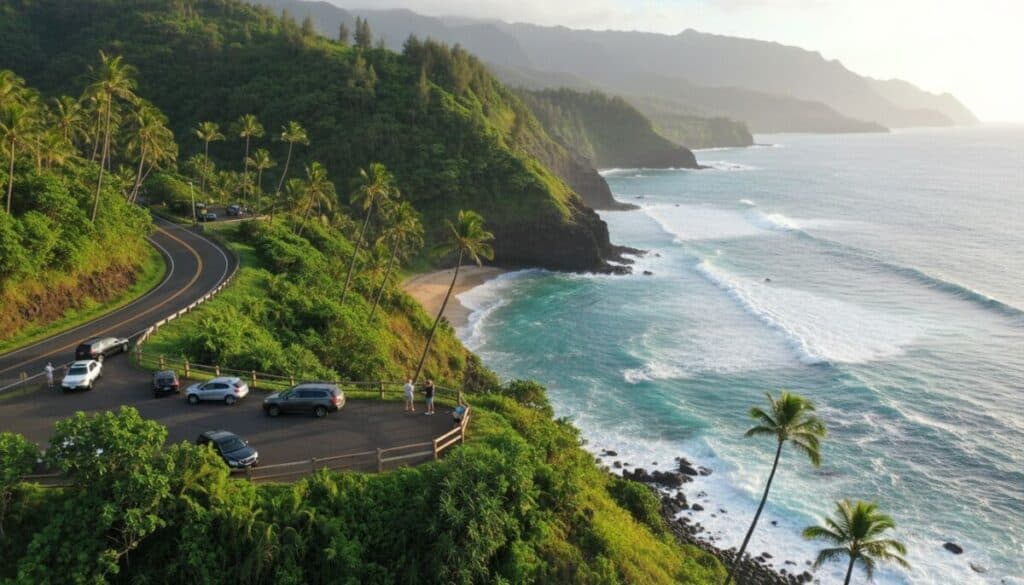
Kauai’s coast rewards slow driving, frequent pauses, and a little timing strategy. The best stops are the ones that match your direction of travel, weather window, and how much time you actually have.
If you’re planning the broader route network too, start with the USA scenic-routes guide and then narrow your Kauai day around the viewpoints that fit your pace.
- Best For Short Drives Kapaʻa to Kilauea Lighthouse and nearby overlooks
- Best For Classic Scenery Hanalei Bay, Tunnel of Trees, and North Shore lookouts
- Best For Flexible Itineraries choose one or two major stops, not every pullout
- Best For Smooth Planning check road conditions, surf, and rainfall before you leave
Which Kauai Coastal Stops Are Worth Your Time?
The strongest Kauai stops are the ones that give you a clear payoff without turning the drive into a marathon. On the North Shore, that usually means a mix of sweeping bay views, roadside pullouts, and a single signature destination such as a lighthouse or beach access point.
The island’s scenic driving pages work best when they stay specific. If you want more road-trip ideas after this, this coastal-adventure rental guide is the most relevant place to compare trip-ready vehicle options before you commit.
The Kauai Route Plan That Avoids Wasted Stops
Kauai’s north and northeast coastal stretches are the easiest places to build a scenic drive around real viewpoints rather than random pullovers. The practical move is to choose a direction first, then stack your stops in a way that limits U-turns, parking hassles, and backtracking.
Driving North
If you’re heading toward Hanalei or Kilauea, start with the easier roadside overlooks and save the larger destination stop for when you have time to park, walk, and linger.
When To Go, And When To Book Around It
Timing matters more on Kauai than many visitors expect. Weather, surf, and local traffic patterns can change the quality of a scenic stop, and some of the most photographed viewpoints are best early in the day when parking is easier and light is softer.
What To Check Before You Leave
The most useful Kauai planning habits are simple: verify weather, watch for road notices, and avoid assuming every viewpoint will be equally easy to reach. The island can be beautiful and still inconvenient if you ignore closures, parking limits, or rough conditions.
- Check rainfall and cloud cover before committing to exposed cliff viewpoints.
- Look for advisories about road work, erosion, or temporary access changes.
- Leave extra time for parking, especially near popular North Shore stops.
- Carry water, sun protection, and a backup stop in case one area is crowded.
- Keep your route short enough that you can enjoy the stops instead of rushing them.
For broader trip preparation, compare your timing and vehicle choices with the Florida Keys scenic-drive guide or browse the Taiwan coast route article if you’re comparing different coastal-drive styles.
Plan The Drive Before You Pick The Car
A scenic Kauai route is easier when your vehicle, timing, and stop list work together. If you need a route-ready rental, start with scenic-coastal rental options and then build your day around the viewpoints you actually want to see.
That keeps the trip focused on the coastline instead of turning the day into a logistics exercise.
A Simple Kauai Stop Sequence That Works
If you want a dependable order, use a short chain: one quick roadside pullout, one signature bay view, and one destination stop with a place to walk. That rhythm keeps the day scenic without becoming repetitive.
- Start easy viewpoint or roadside overlook
- Middle the main photo stop, such as Hanalei Bay or a lighthouse area
- Finish a town lunch break, beach walk, or short lookout before heading back
That structure is the simplest way to avoid the common mistake on scenic drives: stopping too often and spending too little time anywhere that matters.
Frequently Asked Questions
What Is The Best Part Of Kauai For Scenic Highway Stops?
The North Shore is usually the strongest choice because it combines signature viewpoints, good photo stops, and a route that naturally supports a slow drive.
How Much Time Should I Allow For Kauai Coastal Stops?
Plan at least half a day if you want more than one meaningful stop, and longer if you want to walk, eat, and photograph without rushing.
Should I Worry About Weather Before Driving The Coast?
Yes. Rain, surf spray, and reduced visibility can change the value of a stop quickly, so it is smart to check conditions before you build the day around exposed viewpoints.

Jessica Malone is a passionate writer and travel enthusiast, specializing in affordable car rental solutions. With a keen eye for detail, she explores various aspects of cheap car rentals, offering readers practical tips and insights to maximize their travel experiences. Through her engaging articles, Jessica aims to empower travelers to make informed decisions and navigate the world of online car rental services with ease.




The emphasis on coastal highway stops as key travel destinations truly resonates with me. Whenever I plan a road trip along a scenic route, I find that the journey isn’t merely about reaching the destination but about the experiences along the way. Coastal highways offer not just stunning vistas but also the chance to connect with local culture and natural beauty in a way that enriches our understanding of the places we visit.
The concept of coastal highway stops really resonates with me, as these locations truly embody the essence of travel—a chance to connect with nature and make lasting memories. There’s something profoundly calming about the rhythm of the waves and the expansive views that linger in our minds long after the trip ends. For instance, during my last journey along the Pacific Coast Highway, each stop revealed hidden gems, from quaint seaside towns to breathtaking overlooks that demanded a moment of reflection.
You’ve captured the magic of coastal highway stops beautifully. There’s a certain serenity that comes from being so close to the ocean, and I think those moments of reflection are crucial, especially in our fast-paced lives. When I traveled along the Pacific Coast Highway, I also found myself enchanted by those quiet little towns and stunning viewpoints. It’s interesting how nature has a way of grounding us, isn’t it?
Ah, the joys of coastal highway stops! They’re like the podcast episodes of road trips – you never know which one will turn out to be a game-changer or a snooze-fest. I recently took a drive along the Pacific Coast Highway and made a spontaneous stop at a quirky roadside stand that sold everything from fresh coconuts to the world’s largest collection of rubber ducks. It was a delightful detour that added a splash of color to my otherwise beige route!
I appreciate your emphasis on the importance of planning for coastal highway stops. They truly can transform a trip from ordinary to extraordinary by providing unique experiences—a scenic overlook, a local eatery, or a hidden beach can create memories that last a lifetime. I recently took a drive along the Pacific Coast Highway and discovered some fantastic spots that weren’t on my original itinerary. It really underscored how the journey can be just as rewarding as the destination.
Coastal highway stops certainly play a crucial role in enhancing our travel experiences, and your emphasis on their natural beauty and recreational opportunities is spot on. I often think about how these stops can also serve as cultural hubs, reflecting the local heritage and lifestyle. For example, while driving along the Pacific Coast Highway in California, stops like the coastal towns of Carmel and Santa Barbara not only offer stunning views but also rich histories and unique culinary experiences.
You’ve brought up a great point about coastal highway stops acting as cultural hubs. I completely agree that they do a lot more than just provide beautiful views. Those towns often have a unique character that reflects the local lifestyle, arts, and food. I love how places like Carmel have this blend of nature and creativity—it’s inspiring to see artists and chefs drawing from their surroundings.
I really appreciate how you’ve highlighted the importance of taking a leisurely approach to driving along Kauai’s coast. It’s so true that the beauty of the journey often gets overlooked when we rush from one point to another. I remember my own trip along the North Shore, where I found myself making spontaneous stops at little scenic pullouts. Those brief pauses turned into some of my favorite moments, especially when I stumbled upon hidden beaches or local vendors with fresh fruit.
I completely get what you’re saying about those spontaneous stops! It’s something special to stumble upon a hidden beach or find a vendor selling fresh fruit – those little discoveries really capture the spirit of Kauai. It reminds me of the time I pulled over near Hanalei Bay and found a small art market with some incredible local crafts; chatting with the artists and hearing their stories added a whole new layer to the experience.
I love how you emphasize the importance of taking it slow on Kauai’s coast. When I did the drive, I found that some of the best moments came from spontaneous stops—like that amazing little food truck in Kapaʻa with the freshest poke! It’s a great reminder that the journey is just as beautiful as the destination.
It’s fascinating how the Kauai Coastal Highway can transform a simple car rental into an adventurous journey filled with rich experiences. The way you highlight the importance of considering various factors, like weather and timing, really resonates with me. A drive along that stunning coast is not just about the destination, but the joy of the journey itself.
I really appreciate how you emphasized the importance of taking your time along Kauai’s coast. It’s so true that the journey itself can be just as rewarding as the destination. A few years back, I did a similar drive and made a point to stop often at those little overlooks you mentioned. Each time, it felt like uncovering a hidden gem. The views were breathtaking, and some of those stops led to spontaneous conversations with locals that really enriched my experience.
I love how you emphasize the importance of taking it slow on Kauai’s coastal highways. It really resonates with me because the journey is just as beautiful as the destination. Last summer, I drove along the North Shore and found that the unexpected stops—like a hidden viewpoint or a quaint beach—were the highlights of my trip. Plus, I learned that sometimes flexibility is key; I was able to wait for a stunning sunset that I would have missed if I had stuck to a strict schedule. Your mention of checking weather conditions beforehand is crucial too; it can change the whole experience. Have you found any specific viewpoints that are must-see, even if slightly off the typical route? I’m always curious to hear about hidden gems!
Your insights on navigating Kauai’s coastal highway offer a refreshing perspective on how to approach the island’s stunning scenery without feeling rushed. As someone who has explored various scenic routes, I can relate to the value of slowing down to soak in the beauty around you. The notion of matching your travel stops with both time and weather is particularly astute, as it ensures that you not only see the sights but also experience them in the best conditions possible.
This is such a thoughtful approach to planning a coastal drive on Kauai! I love how you emphasize the importance of taking your time and being aware of the weather. It really highlights the beauty of embracing spontaneity during travel. Last year, I experienced something similar on the Pacific Coast Highway—those unplanned stops often led to the most memorable moments, like discovering a hidden beach or an unexpected viewpoint.
I really appreciate your insights on planning a coastal drive around Kauai. It resonates with my own experiences; I found that the journey is often just as rewarding as the destination. When I drove along the North Shore, I made a point to stop at some lesser-known viewpoints that were absolutely breathtaking. It’s fascinating how slowing down can really enhance the experience—each pause revealed a different aspect of the island’s beauty.
Your insights on planning a coastal drive in Kauai are quite useful, especially regarding the importance of adapting to the local conditions and timing. I’ve found that some of the most memorable experiences while traveling come from those unplanned stops—taking a moment to enjoy the scenery or a quiet beach can really enhance the journey.
I love how you emphasize the joy of taking it slow along Kauai’s coastal highways! It’s such a perfect reminder that sometimes the journey is just as important as the destination, especially in places as breathtaking as Hawaii. I remember my own experience driving along the North Shore—stopping at secret beaches, taking a moment to breathe in the ocean air, and even chatting with locals who shared insights about the area’s hidden gems.
This is solid advice for navigating Kauai’s coastal gems! I remember my first drive along the North Shore—pulled over so many times to take in the views that my friends started charging me parking fees. It’s so true that the best parts are often the unplanned stops where you can soak in the scenery and maybe even spot a sea turtle or two (or at least that’s what we told ourselves to justify all the pauses!).
I really appreciate the way you’ve broken down the driving experience along Kauai’s coast. It’s so true that this kind of journey is all about savoring the sights and taking those spontaneous detours! Last time I went, I felt like I was constantly stopping just to soak it all in—whether it was a hidden beach or a stunning overlook.
I totally hear you about that journey along Kauai’s coast. It really is one of those experiences where the road seems to invite you to take a moment and just breathe it all in. There’s something transformative about driving with the ocean on one side and lush mountains on the other—it kind of pulls you into the moment.
Your insights on Kauai’s coastal drive truly resonate with me. The emphasis on slow driving and frequent stops is spot-on, especially when exploring such a picturesque location. During my last visit to Kauai, I found that allowing for spontaneous stops not only enhanced the experience but also led to some of the most memorable moments—like stumbling upon a secluded beach after taking a leisurely turn off the main road.
Your insights on Kauai’s coastal drive and the practical considerations before embarking on such an adventure bring to light some critical aspects that many travelers often overlook. I appreciate how you emphasized the importance of reviewing not just the logistics—like pricing and permits—but also environmental conditions, which can significantly impact one’s experience. The idea of strategy in timing and weather seems particularly crucial when navigating Kauai’s stunning yet unpredictable landscape.
I totally agree with the idea of taking your time on the Kauai Coastal Highway. Those slow drives with frequent stops can really help you soak in all the beauty and hidden gems. I remember my last trip, where we stumbled upon a little café with the best acai bowls at one of those unexpected overlooks—definitely a highlight!
I really appreciate your emphasis on the importance of timing and planning for a coastal drive in Kauai. Having visited the island a few years ago, I found that the unplanned stops often turned out to be the most memorable—like stumbling upon a local market or a hidden viewpoint. It’s also interesting how the weather can dramatically shift your plans. I remember one morning we had to wait out a rain shower at a scenic pullout, which surprisingly gave us a chance to chat with other travelers and share recommendations.
It’s fascinating how Kauai’s coastal drives encourage a more mindful approach to travel. The emphasis on taking your time and enjoying the journey rather than just focusing on the destination really resonates with me. I remember my last trip, where I discovered hidden beaches and local eateries simply because I allowed myself to be spontaneous and take unplanned detours.
Your insights on navigating Kauai’s coastal drives are quite illuminating and serve as a valuable guide for anyone seeking to fully appreciate the island’s stunning scenery. The emphasis on slow driving and taking frequent pauses resonates particularly well; it’s a reminder that the journey often holds as much beauty as the destination.
I appreciate the thoughtful approach you’ve taken to navigating the breathtaking landscapes of Kauai’s coastal highway. It’s true that the journey itself—frequent pauses, careful planning, and adapting to variable weather—adds so much to the experience. This kind of mindful travel resonates with a broader philosophy that emphasizes quality over quantity, especially when exploring nature.
Your insights on the Kauai Coastal Highway and the strategic approach to its stops are quite compelling, particularly the emphasis on slowing down to truly experience the scenery. It raises a valuable point about the often-overlooked pacing of road trips, especially in a setting as picturesque as Kauai. Though we’ve all seen the breathtaking photos shared on social media, they rarely convey the essence of what it means to actually engage with the landscape.
Your insights into planning a coastal drive along Kauai are quite valuable, especially given the island’s unique topography and the variety of experiences it offers. The notion of balancing the immediate route with flexibility based on weather conditions and time constraints is a practical approach that often gets overlooked in travel planning. Having embarked on a similar journey in Maui, I can attest to the importance of allowing for spontaneous stops along the way. There’s something profoundly enriching about taking the time to appreciate lesser-known vistas or local spots that might not appear on the usual tourist itineraries.
The emphasis on strategic stops along Kauai’s coast really resonates with me. I’ve found that the journey itself can be just as rewarding as the destination—especially in a place as breathtaking as Kauai. When I visited, I made a spontaneous decision to take a detour to Hanalei Bay, which turned out to be one of the highlights of my trip. The slow pace you mentioned is crucial; it allows for those unexpected moments of discovery.
Your insights into navigating the Kauai Coastal Highway are quite valuable, especially for those unfamiliar with the local terrain. The emphasis on taking it slow to enjoy the scenery hits home. On my last trip to Kauai, I learned firsthand that rushing through the picturesque landscapes often results in missing out on the little hidden gems. For instance, I stumbled upon a stunning lookout point that wasn’t even marked on the map, simply because we decided to take an unscheduled pause along the North Shore.
I appreciate the emphasis on a thoughtful approach to planning a trip along Kauai’s coast. It’s interesting to think about how slow driving and making frequent stops enrich the experience, allowing travelers to soak in the stunning views and local culture. I once drove the Pacific Coast Highway in California and found that the unplanned stops at local eateries and scenic overlooks were some of the highlights of the journey.
Ah, the scenic allure of Kauai—where even a drive feels like an invitation to slow down and soak in the magic of the coast! My first experience on the Kauai Coastal Highway was a blend of equal parts excitement and sheer bewilderment. I vividly remember being caught between the mindset of “this is gorgeous, I need to stop” and “oh no, will I be late for my next stop?” Talk about a mental tug-of-war!