
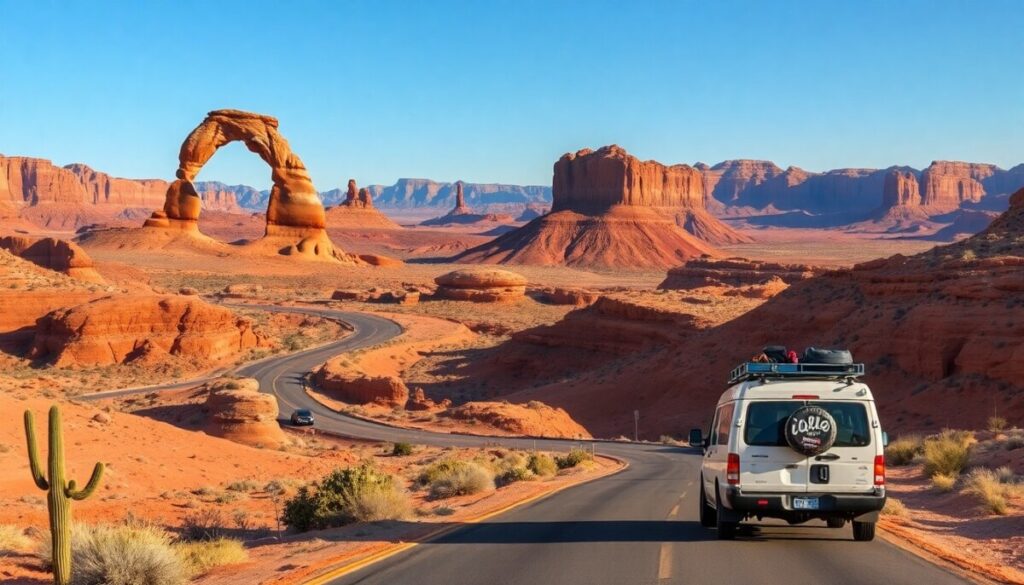
A Desert Southwest national monuments road trip works best when you plan around heat, access rules, and the distance between stops. If you want the broader scenic-drive context first, pair this guide with the main Southwest desert drive guide.
Plan This Trip Around The Practical Checks First
The strongest itinerary is the one that fits the season, road conditions, and monument rules before it chases scenery. Check opening hours, fee or permit requirements, long driving gaps, and weather advisories before you finalize your route.
What This Road Trip Actually Requires
A national-monuments-focused route is less about stacking landmarks and more about handling logistics well. The best trips keep driving days realistic, leave room for visitor-center stops, and account for the fact that many desert monuments sit far from fuel, food, and cell service.
If you are still shaping the full route, browse these broader USA road trip route ideas for structure, then narrow the plan to the monuments you can reach comfortably in daylight.
When To Go And When To Book
Timing makes the biggest difference on this route. Spring and fall usually offer the most comfortable conditions, while midsummer heat can turn short hikes and long scenic drives into a serious endurance test. Winter can be excellent in lower elevations, but some higher or more exposed roads may be cold, icy, or less predictable.
For a rental-first trip, book the vehicle once your route is stable enough to confirm pickup and mileage needs. If your plan includes long distances, remote roads, or a border of paved and unpaved sections, review the basics in these essential US road-trip rules and tips before you lock in the car.
Gear, Safety, And Route Readiness
The original gear and safety advice still matters, but it becomes more useful when tied to desert-monument conditions. Pack for sun exposure, temperature swings, and self-reliance rather than for comfort alone. A good checklist usually includes water, high-energy snacks, sun protection, sturdy shoes, a first-aid kit, and a paper map or offline navigation backup.
- Bring more water than you expect to use, especially for hikes and long scenic sections.
- Carry layers so early mornings and sunset stops stay comfortable.
- Check road conditions and visitor-center alerts before each driving day.
- Tell someone your rough itinerary if you plan to spend time on remote roads.
- Stay on marked trails and respect all monument rules and closures.
Weather is the main variable that can change your day quickly. Heat, monsoon storms, and sudden flooding can force detours, while winter cold can make sunrise and evening stops less forgiving than they look in photos. Build in margin so you can skip a stop without losing the whole trip.
Why Monuments Deserve A Different Kind Of Planning
National monuments often reward slower, more deliberate travel than a standard point-to-point road trip. Their value comes from a mix of scenery, geology, and cultural history, so the best itinerary leaves time for interpretive trails, visitor centers, and context instead of trying to rush through every stop.
That slower pace also helps with access. Some monuments are easy to reach from major highways, while others ask for careful timing, a higher-clearance vehicle, or simply a willingness to drive farther between reliable services. Treat each stop as its own mini-logistics check, not just a photo opportunity.
Book The Trip With The Right Vehicle And The Right Expectations
If your monument list includes remote roads, long hot stretches, or multiple days outside major towns, choose a rental that fits the route rather than the cheapest category on the page. A comfortable, reliable car matters more than extra styling on this kind of drive.
Once the route is set, confirm the details that affect the drive itself: mileage limits, pickup timing, insurance, and any out-of-state or long-distance rules. Then use a natural next step like rental requirements and trip basics to keep the booking clean and predictable.
If you want more route inspiration after this planning layer, you can also compare the wider set of US road-trip rules and practical tips with the narrower monument plan you are building here.
A Few Trip Habits That Improve The Experience
The most memorable desert trips usually share the same habits: early starts, unhurried driving, and enough time to notice the landscape between the major viewpoints. That also gives you better light for photography and more flexibility if a closure or storm reroutes your day.
For memories, keep it simple. Take a few anchor photos, write down the names of the stops you visited, and note what surprised you about each monument. That makes the trip easier to remember later than collecting hundreds of nearly identical images.
Frequently Asked Questions
What Is The Best Season For A Desert Southwest National Monuments Road Trip?
Spring and fall are usually the most comfortable because temperatures are milder and outdoor stops are easier to manage. Summer can work if you plan early starts and short hikes, while winter is best for lower-elevation routes and flexible schedules.
Do I Need Permits For Every Monument?
No, but you should check each stop individually because fees, timed entry, parking rules, and special access requirements can differ by monument and season.
What Should I Confirm Before I Leave Town?
Confirm road status, fuel availability, weather advisories, and any current closures or permit rules, then make sure your rental, navigation, and water supply all match the distance you plan to cover.

Megan Hartley is a dedicated writer and travel enthusiast specializing in affordable car rental solutions. With a passion for helping travelers navigate the complexities of securing budget-friendly transportation, she shares insightful tips and engaging content on her platform. Megan’s expertise extends to exploring the latest trends in the car rental industry, ensuring her readers make informed choices for their journeys. Through her work, she inspires others to explore the world without breaking the bank.




Your observations about the Desert Southwest National Monuments Drive resonate deeply with anyone who appreciates the intersection of nature and culture. There’s something inherently compelling about embarking on a journey where every turn reveals a new geological marvel or a story etched into the landscape over millennia. The way you’ve highlighted the importance of doing a bit of homework before setting off—checking the weather, understanding regulations, and preparing for potential closures—really speaks to the nuances of responsible travel. It’s easy to romanticize road trips, but the meticulous planning often makes the experience not only smoother but richer.
Your insights about the USA Desert Southwest National Monuments Drive truly resonate with anyone who appreciates the intersection of natural beauty and cultural heritage. I’ve embarked on similar road trips, and I often find that the journey itself—complete with spontaneous stops and exploration—adds immeasurable value to the experience.
I couldn’t agree more about the allure of the Desert Southwest National Monuments Drive. It’s fascinating how the region’s unique landscapes tell a story that intertwines natural beauty with the rich tapestry of cultural history. When I traveled through this area last summer, I was struck by the juxtaposition of the rugged terrain and the remnants of ancient civilizations; it felt like walking through a living museum.
I really appreciate you highlighting the essence of the Desert Southwest National Monuments Drive! It’s a journey that not only showcases some of the most stunning landscapes in the U.S., but also invites us to delve into the rich tapestry of cultural history that spans centuries. I remember taking a road trip through that area a couple of years back, and I was blown away by how each stop felt like a chapter in a story—not just about nature, but also about the people who have lived there and their unique histories.
I couldn’t agree more with your insights about the Desert Southwest National Monuments Drive! The sheer diversity of landscapes, from towering red rock formations to serene desert expanses, really does offer a visual feast. I remember visiting Canyon de Chelly and being captivated by its cultural significance and the ancient cliff dwellings. It truly adds a deeper layer to the experience beyond just the natural beauty.
While your emphasis on planning and awareness of permits is spot-on, I think there’s a deeper layer to the experience of the Desert Southwest National Monuments Drive that deserves attention. The region is not just about geological wonders; it’s also a site of significant cultural intersection, where Native American history and contemporary environmental issues meet.
The USA Desert Southwest National Monuments Drive truly offers a profound way to connect with both nature and culture. I remember taking a similar road trip last year and was struck by how each stop told a different story—like the petroglyphs at Saguaro National Park that reflect ancient civilizations. It’s fascinating how these landscapes not only showcase stunning visuals but also hold deep historical significance.
I completely agree with you on the unique appeal of the Desert Southwest! There’s something so captivating about those dramatic landscapes – I vividly remember watching the sunset over Monument Valley; it felt like stepping into a painting. The blend of natural beauty and cultural history really enriches the experience. I also found that planning ahead, like looking into permits for places like Antelope Canyon, made all the difference in my trip. It’s fascinating how a little prep can lead to deeper connections with the places we visit. Have you explored any lesser-known monuments in the area? I’m always on the lookout for hidden gems!
I love the idea of taking a road trip through the Desert Southwest National Monuments! It’s fascinating how these landscapes not only offer stunning beauty but also tell a rich story about the cultural history of the area. I remember visiting Monument Valley a couple of years ago, and the combination of the towering rock formations and the history of the Navajo Nation really left a lasting impression on me.
The Desert Southwest is indeed a captivating destination, offering such a rich tapestry of history and stunning vistas. I recently took a similar road trip and found that each national monument had its own unique story to tell, from the ancient petroglyphs at Petroglyph National Monument to the breathtaking views at Monument Valley.
I totally agree that the USA Desert Southwest National Monuments Drive is a fantastic way to experience the intersection of nature and history. I recently visited a few of the monuments, and it’s incredible how each stop feels like stepping into a different world—like the contrast between the red rocks of Arches and the ancient petroglyphs at Canyon de Chelly.
What a beautifully structured approach to planning a road trip through the Desert Southwest! Your focus on practical checks resonates deeply with me. As someone who has navigated similar adventures, I can attest to how vital it is to harmonize our itinerary with both nature’s rhythms and the logistical realities we face.
I appreciate the focus on practical planning for a road trip through the Desert Southwest. It’s so easy to get swept away by the allure of the stunning landscapes and charming towns, but as you rightly point out, ensuring that all the logistics are taken care of enhances the experience and keeps stress at bay.
I appreciate how you’ve emphasized the importance of planning around practicalities for a Desert Southwest road trip. It’s so easy to get caught up in the excitement of the scenery that we might overlook crucial details like weather and permit requirements. I remember a trip to Arches National Park where we underestimated the heat and ended up cutting our hiking plans short—definitely a lesson learned!
I really appreciate how you emphasize the importance of planning ahead for a Desert Southwest road trip. It’s so easy to get caught up in the excitement of scenic views and must-see monuments, but ignoring the practical side can lead to some unpleasant surprises. Like when my friends and I tried to visit the Petrified Forest during peak summer without checking the weather or hours—let’s just say, we learned the hard way that planning ahead is key!
You make an essential point about the importance of practical checks when planning a road trip in the Desert Southwest. I’ve found that overlooking the nitty-gritty details can lead to unexpected challenges. For instance, on a recent trip to the region, we underestimated the impact of heat on our daily drives, which shifted our schedule significantly. It really emphasizes the balance between adventure and careful planning—ensuring that you don’t miss out on the incredible scenery while still prioritizing safety and enjoyment.
What a compelling exploration of planning a road trip through the Desert Southwest! It brings to mind the importance not just of the destination but of the journey itself, especially in such a vast and stunning landscape. The emphasis on practical checks like weather, permits, and access rules is so essential. Too often, we get swept up in the allure of breathtaking scenery and forget the importance of doing our homework to ensure a smooth and safe experience.
You’ve touched on something really important—the journey often holds more memorable moments than the destination itself, especially in places like the Desert Southwest. I’ve found that those long stretches of open road can provide a space for reflection that we often overlook in our day-to-day lives. There’s a certain freedom that comes from disconnecting and immersing yourself in such a vast and stunning landscape.
I must admit, your insights on planning a road trip through the Desert Southwest national monuments resonated with me, especially the part about avoiding overthinking. I’m the type who’s been known to meticulously plot every trip – right down to the snacks. I mean, who wants to hit a five-hour drive with nothing but stale granola bars for company? But in the spirit of your advice, I might just let myself enjoy the open road a bit more next time.
I really appreciate your focus on the practical aspects of planning a road trip through the Desert Southwest. It’s so easy to get caught up in the excitement of the scenery that we forget about the practicalities like weather conditions and permits. When I planned a similar trip last summer, I found that factoring in the heat was crucial. It made a huge difference in how enjoyable the trip was—especially when we visited places like Monument Valley, where the sun can be relentless.
I love how you’ve broken down the essentials for planning a road trip through those stunning but scorching landscapes! It reminds me of my epic fail last summer when I thought I could just “wing it” on a trip through Death Valley. Spoiler alert: allowing for heat and access rules is definitely more effective than hoping for a spontaneous miracle!
I really appreciate how you’ve laid out the essential points to consider when planning a road trip through the Desert Southwest. The emphasis on practical checks—like understanding weather conditions and the rules around permits—resonates with my own experiences traveling in similar environments.
It’s refreshing to see a focus on the practical aspects of planning a road trip through the Desert Southwest, particularly given the often romanticized view of such adventures. Many travelers overlook the importance of understanding the environmental challenges and logistical constraints that can arise, especially in a region known for its extreme conditions and unique regulations.
I love the focus on planning around practical checks! It reminds me of my own road trip through the Southwest a couple of years ago. I learned the hard way about checking for permits when I tried to visit Antelope Canyon—most of my day was spent trying to navigate last-minute rules.