
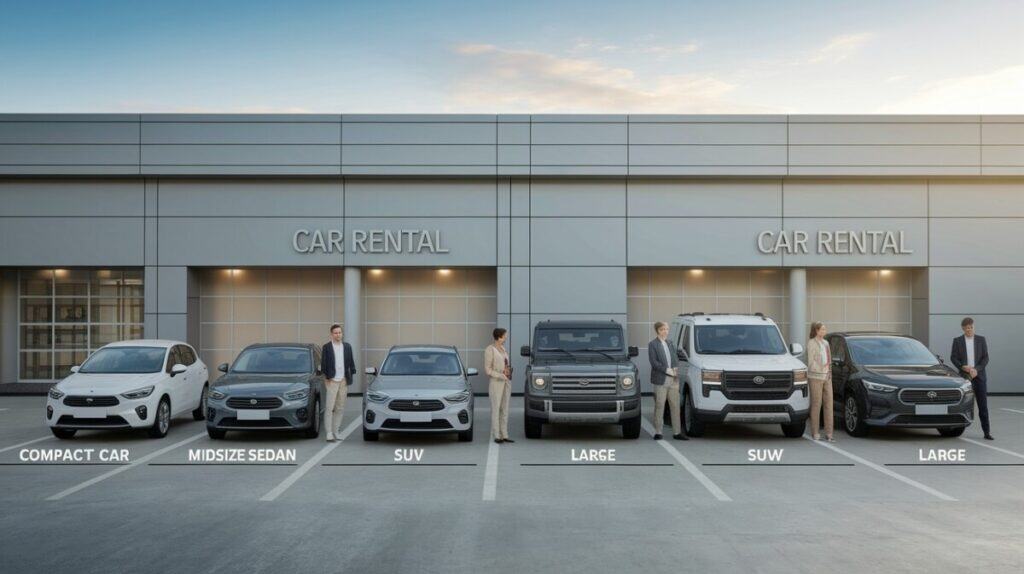
Choosing the right rental car size is less about labels and more about how you actually travel. The best choice depends on how many people are riding, how much luggage you have, where you’re driving, and how long you’ll be on the road.
Fast Recommendation choose a Compact for city driving and one or two travelers with light luggage, a Midsize for a balanced everyday trip, a Full-Size for extra rear-seat room, an Suv for families or rougher routes, and a Minivan when passenger capacity and cargo space matter most.
If your trip involves airport pickup, insurance choices, or broader vehicle selection, it helps to pair this page with the broader journey-planning guide so you can compare the size decision with the rest of the rental decision in one pass.
Quick Size Comparison
| Vehicle size | Best for | Passenger feel | Cargo comfort | When to choose it |
|---|---|---|---|---|
| Compact | Solo travelers, couples, city breaks | Easy to park and maneuver | Light luggage only | Urban driving, short trips, budget focus |
| Midsize | Small families, mixed city/highway use | Balanced room without feeling oversized | Moderate luggage | Most travelers who want a safe middle ground |
| Full-Size | Longer drives, adults in back seats | More legroom and road comfort | Better trunk space than compact models | Road trips where comfort matters more than size alone |
| Suv | Families, gear-heavy trips, mixed terrain | Higher seating position, sturdy feel | Good for suitcases, sports gear, strollers | Outdoor trips, winter travel, rougher roads |
| Minivan | Larger families, group travel, maximum practicality | Most flexible seating and space | Best overall cargo capacity | Airport pickups, family vacations, multi-bag trips |
That broad comparison is useful, but the real decision is usually smaller and more practical: will your group fit without sacrificing comfort, will your luggage fit without forcing bags into laps, and will the car still feel easy to drive where you are going? The answer changes depending on city streets, highway mileage, mountain roads, weather, and whether you are traveling with children, friends, coworkers, or sports gear.
How To Choose The Right Size Without Overthinking It
The simplest way to choose a rental car size is to work through four questions in order: how many passengers are traveling, how much luggage you have, how much driving you will do, and what kind of roads you will face. That order matters because a vehicle that looks affordable on paper can become a poor fit if it is cramped, hard to park, or too small for the amount of gear you are carrying.
Decision Box
- Choose Compact if you are mostly driving in a city, parking is tight, and you only have light baggage.
- Choose Midsize if you want a safer all-round option for two to four people and normal luggage.
- Choose Full-Size if comfort on longer drives matters more than the lowest daily rate.
- Choose Suv if you need more cabin height, more cargo room, or a better match for weather and rough roads.
- Choose Minivan if your group is large enough that seat access, cargo space, and flexibility are all priorities at once.
If you are planning around family needs specifically, the narrower family travel guide can help you translate the size choice into child-seat space, strollers, and the kind of cabin layout that keeps everyone comfortable.
What Each Vehicle Class Does Best
Rental car companies often group vehicles by class rather than by a perfectly universal list of dimensions, so it is better to think in terms of practical fit. The names are useful, but the real value comes from how each class performs in daily travel. A compact car is not just smaller; it is easier to place in a tight parking garage, less tiring in dense traffic, and often better for travelers who care most about cost efficiency. A full-size car is not just “bigger”; it tends to offer a calmer driving feel on long stretches of highway and more breathing room in the back seat.
Compact Cars
Best when you want simple parking, easy maneuvering, and lower running costs. They suit short city trips, airport transfers, and travelers with just a couple of bags.
Midsize Cars
A balanced pick for travelers who do not want to guess too hard. They are often the easiest class to recommend when the trip is normal in length and the group is not too large.
Full-Size Cars
A better fit when adults are spending time in the back seat or when a road trip calls for extra comfort. They are a practical step up if a midsize model feels too tight.
Suvs
Useful for families, travelers with large bags, and trips that include hills, weather changes, or varied road conditions. The higher seating position can also make some drivers feel more confident.
Minivans
The practical answer for larger families or group travel where sliding doors, flexible seating, and maximum cargo room are more important than style or compact size.
A good way to think about the difference between an SUV and a minivan is this: the SUV is often chosen for feel and versatility, while the minivan is chosen for efficiency of space. If you are moving people and luggage around town and want a strong balance of ride height and cargo room, an SUV can be ideal. If your top concern is making sure everyone and everything fits with as little compromise as possible, the minivan usually wins.
Passenger Count Matters More Than Most People Expect
The rental industry often talks about seats, but the real-world experience is about usable seats. A five-seat car can be fine for five adults on a short trip, yet feel much less comfortable if those same five people are sharing bags, coats, snacks, and a long drive. If your group includes children, the amount of usable space drops even faster because car seats, boosters, and family gear take up room in ways that basic passenger numbers do not show.
For one or two travelers, compact and midsize cars are usually enough unless luggage is unusually large. For three or four travelers, a midsize or full-size car generally creates a more comfortable split between pricing and comfort. For five or more travelers, especially when the trip starts at an airport and everyone has luggage, an SUV with a large cargo area or a minivan becomes more practical than trying to maximize a smaller category.

Cargo Space Is The Hidden Deal-Breaker
Many travelers focus on how many seats a car has and forget to account for how those seats affect trunk space. That mistake can be expensive in a practical sense, even if the daily rate looked good. If luggage spills into the back seat, comfort drops immediately. If the trunk barely fits your bags, loading and unloading become a hassle. And if you are carrying gear like foldable strollers, golf clubs, skis, camping equipment, or trade-show materials, the numbers matter even more.
This is where vehicle class matters more than brand names. Some full-size sedans have surprisingly generous trunks, while some compact SUVs provide more flexible room than expected because their cargo area is boxier. Still, the broad pattern is reliable: compact cars are best for light cargo, midsize cars offer a little more breathing room, full-size cars improve trunk comfort, SUVs are stronger on mixed passenger-and-baggage trips, and minivans usually offer the most straightforward cargo solution.
Pack Test
Ask yourself whether your luggage will fit without forcing anyone to sit with a backpack on their knees. If the answer is no, move up a class.
That one question solves a large share of bad rental decisions, especially for family travel and airport pickups.
Comfort, Handling, And Fuel Economy: The Trade-Offs That Actually Matter
Size affects more than space. It also changes how the car drives, how much fuel it is likely to use, and how relaxed passengers feel after a few hours on the road. Smaller cars are usually easier to steer through traffic, easier to park, and easier on fuel. Larger vehicles usually ride more comfortably over longer distances and can reduce the feeling of being boxed in. The right answer depends on which of those benefits you care about most.
For many travelers, fuel efficiency is one of the strongest arguments for staying smaller. A compact car can be a smart choice if your route is mostly urban or if you expect modest mileage. That matters not only for the rental budget, but also for the way the trip feels day to day. You spend less time thinking about fuel stops, and the lower running cost can leave more of your budget for meals, attractions, or upgraded accommodation.
Larger vehicles, however, often justify their extra cost when the trip is long, the group is full, or the route is demanding. A full-size car can feel less tiring on a motorway than a tiny hatchback. An SUV can feel more stable when weather is poor or road surfaces are inconsistent. A minivan can reduce the daily friction of family travel by giving every passenger a little more breathing room and making loading and unloading easier.
If you want the broader rental decision to include coverage choices as well as vehicle size, the insurance overview is the most useful next read. It helps you separate the class decision from the protection decision so you do not mix the two when comparing rates.
Driving Conditions Can Change The Right Answer
A car size that looks sensible on a shopping list may not be the best fit for the roads you will actually drive. Dense urban centers reward smaller cars because parking is tight, lanes are narrow, and traffic is frustrating enough without adding size anxiety. Mountain roads, snowy routes, or long rural drives often reward vehicles with more confidence and stability, which is why SUVs and larger cars are often preferred outside city centers.
You do not always need all-wheel drive, but you should at least think about the environment you are entering. If your trip includes steep climbs, frequent weather changes, or road shoulders that are less forgiving, moving up a class may improve both comfort and confidence. On the other hand, if you are visiting a city where parking garages are narrow and hotel lots are tight, a smaller category may save more stress than a bigger vehicle would save time.
Timing And Booking Window: When Car Size Should Shape Your Reservation
Size decisions are easier when you book with enough lead time to still have several classes available. That is especially true during holidays, school breaks, summer road-trip season, and major event weekends, when larger vehicles often sell out first. If you already know you need an SUV or minivan, waiting too long can leave you with a smaller option that looks cheaper but is functionally wrong for your trip.
| Trip timing | How it affects size choice | What to do |
|---|---|---|
| Peak Holiday Periods | Popular larger vehicles disappear earliest. | Reserve earlier than you think you need to, especially for SUVs and minivans. |
| Summer Road Trips | Comfort and cargo demand increase. | Compare trunk room carefully and avoid booking only by price. |
| City Weekends | Parking and traffic often matter more than cargo volume. | Compact or midsize usually wins unless the group is large. |
| Airport Arrivals | Flight times and luggage counts make room important. | Book a class that handles your bags comfortably, not just one that fits the passenger count. |
| Winter Travel | Weather and road conditions can justify a more stable-feeling vehicle. | Consider an SUV or similar class if the route is less predictable. |
Timing also affects price. A larger vehicle may not look dramatically more expensive when demand is low, but the gap can widen quickly during busy periods. That makes early planning valuable: you are not just improving your odds of finding the right class, you are also keeping more options open on terms and pickup times. If your booking is tied to specific documents, payment methods, or age-related conditions, the requirements and payment guide is the natural companion page.
Choosing The Right Size For Common Trip Types
There is no single “best” rental car size because each trip type creates a different balance of needs. A city break with one traveler and a carry-on bag is not the same as a family beach trip with coolers, strollers, and sand gear. The more you map your trip to the vehicle, the less likely you are to pay for space you do not use or end up squeezed into a vehicle that is too small.
Solo Travel And Short City Breaks
A compact car is usually the cleanest fit here. It keeps costs down, makes parking easier, and feels less intimidating in a busy downtown area. If you are traveling light and expect mostly short drives between hotels, restaurants, and attractions, there is little reason to move up in size unless you strongly prefer more room.
Couples And Two-Person Road Trips
A compact or midsize car usually works well, but the correct answer depends on how much luggage you have and how many hours you plan to drive each day. A compact car can feel perfect for a quick urban getaway. A midsize model can feel better if the trip includes longer highway stretches or checked bags that need more trunk room.
Families With Children
Families usually benefit from stepping up one class sooner than they expect. Child seats change how usable a vehicle feels, and families tend to carry more baggage than a simple passenger count suggests. A midsize car can be enough for a small family on a short trip, but a full-size car, SUV, or minivan often makes the day-to-day experience easier once strollers, snacks, and bags are added. For a more family-focused angle, it is worth revisiting the family travel article when you are deciding between an SUV and a minivan.
Group Travel And Event Trips
When several adults are traveling together, the risk of choosing too small a vehicle goes up fast. Even if a sedan technically seats the group, it may not leave enough room for luggage or give everyone a comfortable ride. That is why SUVs and minivans become more attractive for festivals, weddings, sports weekends, and business travel with shared baggage. A larger class can turn a trip from “just barely manageable” into something smoother and less tiring.
Outdoor And Gear-Heavy Trips
If you are taking skis, camping gear, hiking equipment, or similar items, think about shape as well as volume. Gear does not always stack neatly, and awkward items can reduce usable seating space. This is one of the clearest cases for choosing an SUV or minivan even if a smaller vehicle looks cheaper. You are not just paying for extra room; you are paying for a trip that is easier to organize.

Common Mistakes That Lead To The Wrong Size
The easiest way to make a bad choice is to judge by price alone. The second easiest is to count seats without counting bags. A cheaper vehicle that creates daily stress is not really cheaper once you factor in the inconvenience. The same is true for choosing a vehicle that sounds impressive but is unnecessarily large for city parking, narrow streets, or a short itinerary.
Ignoring Luggage
This is the most common sizing error. A car may fit everyone in theory but still feel too small once bags, strollers, and day-trip items are added.
Underestimating Passenger Comfort
A car that technically seats the group may still be the wrong size if people need elbow room, back-seat space, or a less crowded ride.
Forgetting Future Needs
If your plans may change mid-trip, size up a little so you are not forced into a last-minute upgrade or an awkward rearrangement.
When you want a practical safeguard against sizing errors, use a simple rule: choose the smallest class that still leaves a margin for comfort. That approach keeps the trip efficient without making it cramped. It also helps you avoid the trap of treating every extra seat as a reason to book smaller than you should. If you need to verify pickup condition, the pickup inspection checklist is a smart final read before you drive away.
What To Do When You Are Unsure
If you are stuck between two classes, the safer choice is usually the slightly larger one, especially if the price difference is modest. The reason is simple: a vehicle that is a touch too large can usually still work, but a vehicle that is too small can create daily friction. That said, if your route is mostly urban and you know parking is difficult, there is no reason to blindly overbook size just in case.
Rental staff can often clarify which model shapes tend to be roomy and which ones run small for their category. That is useful because two vehicles in the same class can feel noticeably different. Still, the broad class decision should be made before you book. Use the class, luggage, and route to narrow the choice, then use the exact model details to finalize it.
When To Book Next
If your trip needs a specific vehicle class, book while the inventory is still broad, not after you have already committed to flights or hotel nonrefundable dates. This is especially helpful for SUVs and minivans, which can become limited quickly in busy seasons.
If you are comparing broader trip options rather than just size, revisit the journey-selection guide and use it to confirm whether size, route, or budget should drive the final choice.
A Practical Final Rule
If your trip is simple, keep the car simple. If your trip is crowded, long, or gear-heavy, move up a class. That rule works because rental car size is really a comfort-and-fit problem disguised as a category label. The right car is the one that makes your trip easier from the first pickup moment to the last drop-off, without forcing you to think about every bag and seat position along the way.
The strongest choice is rarely the biggest or the cheapest. It is the one that matches the way you travel, the roads you will use, and the amount of space you genuinely need.
Plan The Rest Of Your Rental With The Right-Size Vehicle In Mind
Once you know the class you need, the next step is to compare terms, insurance, and pickup conditions so the vehicle choice stays aligned with the booking details.
Review the booking requirements before you reserve, and use the trip-level guide if you need help deciding between classes for a broader itinerary.
Frequently Asked Questions About Rental Car Sizes
What Are The Sizes Of Rental Cars?
The most common sizes are compact, midsize, full-size, SUV, and minivan, with some companies also offering luxury, convertible, pickup, and specialty categories.
What Are Considered Full-Size Rental Cars?
Full-size rental cars are typically larger sedans that offer more rear-seat room and trunk space than compact or midsize models, making them a better choice for longer drives or adult passengers in back seats.
Is A Toyota Camry Considered A Full-Size Car?
It is often treated as a midsize sedan in many rental and consumer contexts, though exact categorization can vary by company and market, so the class label on the booking matters more than the model name alone.
What Should I Choose If I Am Unsure About Luggage Space?
If the bags look even slightly tight in a smaller class, move up one size so you do not have to compromise comfort during the trip.
What Matters More, Passenger Count Or Luggage?
Both matter, but luggage often reveals the real limit first because a car can technically seat people while still failing to hold their bags comfortably.
How Far In Advance Should I Book A Larger Rental Car?
Book as early as possible when you know you need an SUV or minivan, especially during busy travel periods when those classes are limited first.

Matthew Thompson is an accomplished author specializing in topics related to budget travel and cheap car rental options. With a keen eye for detail and a passion for helping travelers save money, he shares valuable insights on navigating the complexities of online car rental services. Matthew’s work not only provides practical tips but also empowers readers to make informed decisions, ensuring they enjoy memorable journeys without breaking the bank.




This breakdown of rental car sizes is really helpful for anyone planning a trip! I’ve often found that my choice of vehicle significantly impacts my travel experience. For instance, during my last road trip, opting for a midsize SUV made navigating through mountainous areas much more enjoyable, not to mention the extra legroom for my family.
This guide on rental car sizes really resonates with the intricacies of planning an adventure. It’s so true that understanding the various categories can fundamentally change the experience of a trip. I remember my last road trip, where we opted for a midsize SUV thinking it would perfectly accommodate our family and luggage. However, what we didn’t foresee was how the additional space would provide a buffer against the typical squabbles of long-distance travel—especially with kids in the back seat. That extra room allowed for a more comfortable ride, where they could stretch out and even bring along a few travel games, transforming our journey into a cherished bonding experience.
Your experience really highlights how the choice of vehicle can significantly impact the travel experience, especially with kids. I remember a similar road trip we took a few years back, where we opted for a compact car—not realizing how cramped it would become after just a couple of hours. The squabbles started almost immediately, and the space definitely played a role in our overall enjoyment.
Understanding the various categories of rental cars is indeed essential for travelers, as it aligns with the specific needs of a trip. For instance, I often find that choosing between a compact and a midsize car can hinge on the number of passengers and luggage. On a recent road trip, opting for a midsize vehicle allowed for better comfort and space without feeling cramped, especially during long drives.
Choosing the right rental car size definitely makes a big difference in travel! I remember the first time I rented a car for a road trip, I opted for a compact car thinking it would save gas, but it ended up feeling cramped with all our luggage. Now, I often go for midsize vehicles, especially when traveling with family. Plus, those extra legroom and storage options really make highway drives more enjoyable!
I really appreciate how you’ve broken down the rental car selection process into manageable steps. It’s surprising how often people overlook the little details that can cause frustration down the road. For example, I recently rented a car for a weekend trip, and I thought I’d chosen what I needed until I started going through the pickup rules. The first rental place had limited hours that didn’t align with my flight, leading to a last-minute scramble to find another option. So, I can definitely relate to the importance of considering those aspects before making a reservation.
I really appreciate how you broke down the importance of understanding rental car sizes. It’s something that can easily get overlooked, but it makes such a difference in the travel experience. I recall a trip where I booked a compact car thinking it would be perfect just for me, but then I went to pick it up and realized I had way more luggage than I anticipated. It turned into a whole ordeal trying to rearrange things!
It’s so true how easy it is to overlook the specifics when booking a rental car. Your experience really resonates with me—I remember one time I thought a midsize car would be just enough for a weekend getaway, only to find myself cramming bags in every available nook and cranny. It’s funny how quickly what seems like a small detail can turn into a significant headache.
This post highlights some vital aspects of the rental car selection process, particularly the importance of understanding and evaluating car sizes. However, while the bullet-point format is clear, I think it might be helpful to delve a bit deeper into why these size categories matter beyond just comfort or capacity.
I really appreciate the breakdown of rental car sizes! When I traveled last summer, I opted for a midsize car, thinking it would be a good balance between space and fuel efficiency. I ended up feeling a bit cramped during a long road trip with friends. It’s interesting how the size really impacts comfort on those longer journeys.
I appreciate the effort you’ve put into detailing the nuances of choosing a rental car size. It’s certainly a practical guide for anyone looking to streamline their travel plans. The point about understanding the sizing categories resonates deeply with me, as I’ve had my fair share of experiences where a hasty choice ended up complicating things, rather than simplifying my travel.
Choosing the right size for a rental car can really make or break a trip, can’t it? Your experiences highlight a common issue many travelers face—sometimes, in our rush to make decisions, we overlook important details that can simplify our journey.
Your insights into the importance of selecting the right rental car size are particularly relevant, especially for travelers looking to optimize both their experience and budget. I’ve often found that the choice of vehicle can significantly affect not only comfort during the journey but also the practicality of navigating unfamiliar areas, especially if you’re planning to explore off-the-beaten-path locations.
This guide to rental car sizes resonates with me, especially as I recently planned a road trip that required some serious thought about vehicle choice. It’s fascinating how the rental car experience can vary tremendously based on the size and type of vehicle selected. For instance, I made the mistake once of opting for a compact car without thoroughly considering how many bags I had. What seemed like a suitable choice turned into a cramped affair that made for an uncomfortable journey.
It’s interesting how rental car size can drastically change the travel experience! I remember when I rented a compact car for a solo road trip last summer. It was perfect for navigating winding mountain roads and squeezing into tight parking spots. However, when I rented a midsize car for a family vacation, it offered way more comfort and space for luggage.
You make a solid point about how the size of a rental car can really shape your travel experience. There’s something about a compact car that feels freeing, especially on those narrow, twisting roads where you can zip around without worrying about getting stuck in tight spots. It’s like the car becomes an extension of your adventurous spirit.
This post offers a solid foundation for understanding the rental car selection process, but I’m struck by how often travelers overlook the implications of size categories beyond just fitting their luggage. For instance, choosing between a compact and a midsize vehicle can dramatically affect comfort on long drives or contribute to fuel efficiency, which is increasingly relevant with fluctuating gas prices and environmental concerns.
You bring up a really important point about how size categories can impact the overall driving experience. I remember a long road trip I took a couple of years ago in a compact car. While it was easy to maneuver and park, I really felt the discomfort after a few hours on the road. Some of the physical strain from being cramped in the front seat made me realize that comfort is more than just fitting luggage; it’s about the entire journey.
This post provides a valuable primer on the nuances of selecting the right rental car size, which can significantly impact the travel experience. Understanding how categories like compact, midsize, or even SUVs fit various needs is essential for any traveler. For instance, those planning a family road trip might prioritize spaciousness and comfort over fuel efficiency, whereas solo travelers might benefit from the agility and economy of a compact car.
This post really highlights an important consideration for anyone planning a trip—choosing the right rental car size can significantly impact both the journey and budget. I remember a trip where I opted for a compact car, thinking it would save me money and be easier to navigate through city traffic. However, it turned out to be cramped for my family of four with all our luggage, and the experience was less enjoyable than anticipated.
Choosing the right rental car size can truly shape your travel experience, and I appreciate how your post highlights this critical aspect. I’ve often found myself caught in the dilemma of whether to opt for a compact vehicle for my solo trips or a larger midsize car when traveling with family. It’s interesting how the choice often goes beyond just space; it can affect fuel efficiency, comfort, and even ease of parking in crowded areas.
It’s always interesting to see how much thought can go into choosing the right rental car, especially when it seems like such a straightforward decision at first glance. I’ve had my fair share of experiences where I thought I was getting a great deal, only to find out later that the pickup fees were sky-high or that I had limited insurance coverage, which could have been a real headache if something went wrong.
Ah, the eternal struggle of picking a rental car—it’s like trying to find a soulmate, but with more horsepower and less emotional baggage! I’ve totally been there, wrestling over whether to go compact for the solo trip or midsize for when Uncle Bob decides to tag along (who knew he’d bring that massive suitcase?).
This guide on rental car sizes is very timely, especially as my friends and I are planning a road trip next month. I appreciate the emphasis on the importance of understanding the different categories, as it can greatly affect both comfort and cost. Beyond just size, I think it’s also worth considering how the choice of vehicle can impact the overall travel experience. For example, choosing a compact car may make city driving easier and more economical, but for more rugged terrains, a larger SUV might be necessary for comfort and safety.
Your insights on the importance of understanding rental car sizes and pricing terms resonate deeply with me, particularly as someone who values thorough preparation for travel. The way you emphasize the need to familiarize oneself with different car categories is indeed crucial not just for convenience, but for tailoring the vehicle to specific travel needs. For instance, on a recent trip, I opted for a midsize SUV, believing my family of four could benefit from the extra space. It turned out to be a wise decision, especially given the luggage and the room we needed to accommodate our comfort on long drives.
This guide really highlights how important it is to understand rental car categories and the fine print involved in renting. I once made the mistake of assuming a midsize would be spacious enough for a family road trip, only to be cramped in an unexpected way. Having a clear overview of categories can save those headaches!
This post highlights a critical aspect of the travel experience that often gets overlooked: the importance of choosing the right rental car size. As someone who frequently travels for both business and leisure, I have come to appreciate how the right vehicle can significantly enhance the overall journey.
It’s interesting how the choice of rental car size can significantly influence the travel experience. For example, when I traveled to a national park recently, I opted for a compact car, which was perfect for navigating the narrow, winding roads. However, I can see how a midsize or SUV would be preferable for families or groups needing more space for luggage or passengers.
This is such an insightful guide on choosing the right rental car size! Evaluating options step by step makes the whole process seem much less daunting. I’m especially drawn to the emphasis on understanding pricing terms and insurance coverage, which are often overlooked. I once had a rather frustrating experience at an airport rental location, where I didn’t anticipate the extra fees for convenience. It turned out to be quite a surprise that added a significant amount to my budget.
The breakdown of rental car sizes you provided is really practical, especially in considering the varied needs of travelers. I’ve often found that the choice of vehicle significantly impacts the overall travel experience. For instance, on a recent trip to a bustling city, I opted for a Compact car as you recommended. The ease of parking and maneuverability not only saved time but also reduced the stress of navigating tight streets.
I really appreciate how you highlighted the importance of choosing a rental car size based on personal travel habits rather than simply going by labels. It’s fascinating how the right car can really enhance the travel experience, especially considering all the variables at play—like the number of passengers, luggage, and driving conditions.
This breakdown of rental car sizes really resonates with me, especially the emphasis on matching vehicle choice to travel needs rather than sticking to labels. I recently took a road trip with friends and opted for a midsize SUV to accommodate our luggage and provide extra comfort for those long stretches on the highway. It’s interesting how the right vehicle can significantly enhance the travel experience; the added space made it easier for us to navigate our route, and we ended up spending more time enjoying detours rather than just focusing on getting from point A to B.
Choosing the right car rental size is kind of like picking the right pizza size for a party—it depends on how many friends (or strangers) you’re willing to squeeze in and how many toppings (or bags) you’ve got. Last summer, I rented a Compact for a solo road trip and found myself really wishing I could expand my snack collection. Those tiny backseats didn’t quite accommodate my ambitious cooler plans!
I really appreciate how you broke down the considerations for choosing the right rental car size – it’s so true that the choice extends far beyond just the label on the vehicle! I recently took a road trip with friends, and we debated for ages between a midsize and an SUV. Ultimately, we went with the midsize for the fuel efficiency, but I really felt the squeeze when we loaded up our gear. Your tips definitely resonate, especially regarding how the driving conditions and passenger comfort can shape the experience.