
A quick inspection before you drive away can save you from safety issues, surprise charges, and awkward disputes later. The goal is simple: confirm the car is road-ready, document anything questionable, and leave with confidence.
If you want broader trip-prep advice after the inspection, see these Miami rental tips, which cover planning details that sit outside the pickup check itself.
What To Check Before You Leave The Lot
Use this as a practical pickup routine. Start outside the vehicle, then move to lights, mechanical basics, and the cabin, so nothing gets missed when you are in a hurry.
| What to inspect | Why it matters | If something looks off |
|---|---|---|
| Tires and wheels | Affects grip, braking, fuel use, and blowout risk | Ask for another car or a documented correction |
| Lights and signals | Keeps you visible and avoids traffic misunderstandings | Test every light before leaving |
| Body damage and glass | Protects you from claims about pre-existing damage | Photograph it and report it immediately |
| Fluids, fuel, and warning lights | Reduces breakdown risk on the road | Do not accept the car without clarification |
| Mirrors, belts, seats, and controls | Improves comfort and prevents avoidable distractions | Adjust them before pulling out |
Exterior Checks That Should Happen First
The outside of the car tells you a lot before you ever turn the key. Walk around slowly and look at the tires, lights, body panels, bumpers, windows, and door edges, because exterior issues are the easiest ones to document right away.
Tires, Tread, And Visible Damage
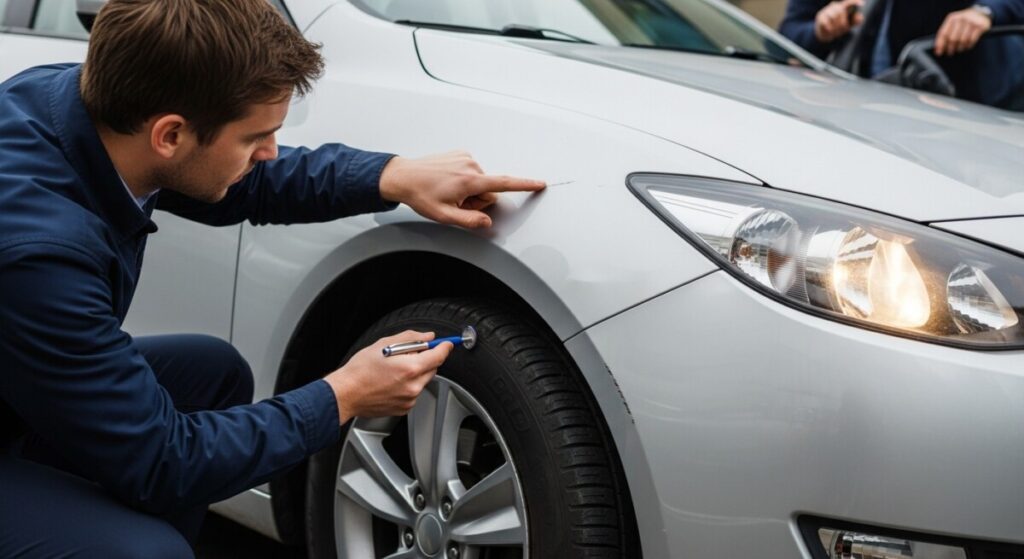
Examining The Tires is one of the most important steps in any rental car inspection. Check that the pressure looks normal and that the sidewalls are free from cuts, bulges, or obvious wear. Low pressure can hurt fuel economy and handling, while damaged sidewalls can create a blowout risk that is easy to avoid if you catch it before departure.
If you have a gauge, confirm the pressure against the recommended figure on the driver-side door jamb or in the owner information. For tread, the penny test is still a useful quick check: insert a penny into the tread groove, and if Lincoln’s head is clearly visible, the tread may be too worn for confident wet-road driving.
- Check tire pressure with a gauge if one is available.
- Use the penny test to judge tread depth.
- Look for cuts, bulges, or uneven wear.
Body Panels, Glass, And Photos
Inspect the doors, bumpers, fenders, hood, roofline, and mirrors for dents, scratches, cracks, or signs of misalignment. Even small scuffs matter if they were already there when you picked up the vehicle, because documentation is what keeps a later dispute from becoming your problem.
Take clear photos of any blemish you notice, including close-ups and one wider shot that shows the location on the car. If the vehicle has windshield chips, deep scratches, broken trim, or loose panels, point them out before you sign off. That is especially important if you are reading a broader rental guide such as these car rental safety tips, because the best safety routine begins with a clean pickup record.
Also confirm that the trunk, hood, fuel door, and every passenger door open and close smoothly. A door that sticks or a panel that sits unevenly can signal prior damage or a latch issue worth reporting immediately.
Lights, Warning Signals, And Controls
The next step is to verify that the car can communicate clearly with other drivers and give you the information you need once you are on the road. A few minutes spent testing lights and dashboard signals is far easier than discovering a fault after dark or in bad weather.
Headlights, Brake Lights, And Turn Signals
Check the headlights, taillights, brake lights, turn signals, fog lights, and license plate lights. You do not need a technical test for this; you need a reliable visual check and, if possible, a quick walk-around while someone presses the pedals and activates the indicators.
- Headlights and high beams
- Taillights and brake lights
- Left and right turn signals
- Fog lights, if fitted
- License plate lights
Cloudy lenses, cracked housings, or dim bulbs should be flagged before you leave. Good lighting is not just about visibility; it is also about showing other drivers what you plan to do.
Dashboard Warnings, Battery Signs, And Steering Feel
Once the engine is running, glance at the dashboard. Warning lights for the engine, battery, oil, tire pressure, or brakes should not be ignored, even if the vehicle still seems to drive normally. A rental that starts with a warning light deserves clarification before you accept responsibility for it.
Listen for unusual sounds, and pay attention to steering feel. A wheel that feels loose, too stiff, or off-center may point to alignment or suspension issues. If the steering response is odd while the car is stationary or during the first slow roll, stop and report it rather than hoping it will improve.
The battery is worth a quick look as well. Visible corrosion around the terminals, loose connections, or signs of weak starting can become a trip interruption later, especially in hot or cold weather.
Mechanical Basics Worth Confirming
A rental inspection is not a full service appointment, but a few basic checks can prevent avoidable problems. Focus on the items that most directly affect road safety and the chance of getting stranded.
Brakes And Fluid Levels
Brakes should feel firm and predictable. If the pedal sinks too far, feels spongy, or produces grinding or squeaking, ask for another car or request immediate attention from the rental staff. You do not want to discover a brake issue in traffic, on a hill, or during a sudden stop.
For fluids, you are not expected to perform a workshop-level inspection, but you should still make sure there are no obvious leaks and that the car does not appear to be running low on the basics. Engine oil, coolant, brake fluid, power steering fluid, and windshield washer fluid all support normal operation. If the car looks underfilled, dirty around caps, or shows warning messages, pause and get clarity.
That same caution applies to the exhaust. A loud rattle, exhaust smell, or visible leak under the car is not something to brush off, because it can affect performance and cabin comfort. If you notice it, mention it before you sign the handover.
Mirrors, Seats, Belts, And Climate Controls
Before driving off, adjust the rearview and side mirrors so you can see clearly without leaning or straining. Cracked mirror glass, loose housings, or major blind spots should be corrected right away. The same goes for seat position: make sure you can reach the pedals comfortably and sit upright enough for safe visibility.
Seat belts should retract smoothly and lock properly when tugged. That is a basic safety requirement, not an optional detail. Then check the climate controls, because a working heater, fan, and air conditioning system make the vehicle easier to drive safely, especially in extreme heat or cold.
If the infotainment system or Bluetooth connection matters to your trip, set it up while parked. A quick test now is better than trying to pair a phone while pulling into traffic later.
Documents, Fuel, And The Last-Minute Handoff
A solid inspection also includes the paperwork and any details that affect how the car should be returned. This is where small oversights can become expensive if you are not careful.
Fuel Level, Return Expectations, And Keys
Confirm the fuel level before you pull away and make sure it matches what the contract says. If the tank is supposed to be full and it is not, say so immediately. A quick photo of the gauge is a smart backup.
Ask where the vehicle should be returned, what fuel policy applies, and whether there are any special notes about tolls, late returns, or mileage. Those issues are not part of the physical inspection, but they are part of the handoff conversation that keeps the trip smooth.
If you want a broader overview of what happens after pickup, the rental car pickup inspection checklist is the closest companion piece to this guide and fits naturally once you are comparing vehicles at the counter.
What To Do If You Find A Problem
Do not assume the rental company already knows about the issue. Pause, photograph the problem, and have it noted on the agreement or in the vehicle handoff record before you drive away.
- Take a clear photo or short video of the concern.
- Ask for a different car if the issue affects safety.
- Make sure the staff documents the defect in writing.
- Keep a copy of the agreement and photos together.
Timing Matters At Pickup, Even If The Inspection Is The Priority
There is no special booking window for a pre-drive inspection, but the time of day affects how easy it is to spot problems. Picking up in daylight makes tire wear, body damage, cracked glass, and fluid leaks much easier to see. If you must collect the car after dark, use your phone light carefully and take extra photos before leaving.
If you know your trip will involve a long drive, bad weather, or unfamiliar roads, give yourself a few extra minutes at pickup so you are not forced to rush the inspection. That is the simplest way to turn a checklist into a real safety margin.
Want A Smoother Rental Experience Overall?
Once the inspection is done, it helps to compare safety and booking advice with the broader guidance on rental car safety tips or return to the Miami guide for city-specific planning. The right next page depends on whether you need trip prep, city driving, or pickup issue handling.
If you are still comparing options before booking, the broader Miami rental guide is the best place to continue because it covers the bigger decision context this checklist supports.
A Compact Pre-Drive Checklist
- Walk around the car and photograph existing damage.
- Check tires, pressure, tread, and visible sidewall damage.
- Test headlights, brake lights, indicators, and fog lights.
- Look for warning lights on the dashboard after startup.
- Confirm brake feel, steering response, and mirror adjustment.
- Make sure seats, belts, climate controls, and fuel level are acceptable.
- Get any issue documented before you leave.
Frequently Asked Questions
What Should I Check Before Renting A Car?
Focus on the exterior, tires, lights, mirrors, dashboard warnings, brakes, fuel level, and interior controls. Those are the checks most likely to prevent a bad pickup from becoming your problem later.
How Can I Tell If The Tires Are Safe To Drive On?
Look for proper inflation, enough tread, and no visible damage such as bulges or cuts. If the tires look unevenly worn or obviously soft, ask for a different vehicle.
What Fluids Should I Check In A Rental Car?
You are mainly looking for obvious issues: low oil, low coolant, brake-fluid problems, power-steering issues, or an empty washer reservoir. If anything seems off, report it instead of assuming it is normal.
Why Is Testing The Brakes Important?
Brakes are essential for emergency stops, downhill driving, and everyday traffic control. A spongy pedal, strange noise, or delayed response is a reason to stop and request another car or a documented fix.
What Warning Signs Should I Look For On The Dashboard?
Any warning light tied to the engine, battery, oil, tires, or brakes deserves attention. If a light appears when you start the car, ask staff to explain it before you drive away.
How Do I Check The Mirrors For Safety?
Set all mirrors to your driving position before moving the car. You want a clear view of traffic without having to twist or lean, and you should replace or report any cracked mirror glass.
Should I Check The Battery During A Rental Car Inspection?
Yes. Corrosion, loose terminals, or weak starting can point to a battery problem that may leave you stuck later. It is a quick visual check that can save time and stress.
See also: Rent a Car US, Europe, Canada.

Megan Hartley is a dedicated writer and travel enthusiast specializing in affordable car rental solutions. With a passion for helping travelers navigate the complexities of securing budget-friendly transportation, she shares insightful tips and engaging content on her platform. Megan’s expertise extends to exploring the latest trends in the car rental industry, ensuring her readers make informed choices for their journeys. Through her work, she inspires others to explore the world without breaking the bank.




Your insights on the essential checks for rental cars are incredibly practical and timely, especially as road trips become a more popular way to explore. I’ve found that taking the time to thoroughly inspect the rental can transform the experience from merely functional to genuinely enjoyable. The tire checks resonate with me particularly; I once had a nearly disastrous trip due to under-inflated tires that I overlooked. After that episode, I realized that these small details can have a huge impact on safety and comfort.
I really appreciate the focus on safety and practical checks before hitting the road. I’ve had my share of rental experiences, and I’ve learned the hard way how crucial tire inspections can be. One time, I rented a car that had some seriously worn-out tires, and it made for a nerve-wracking drive on slick roads. I never really gave much thought to tire pressure until I faced some unexpected weather conditions on a trip.
I appreciate how you’ve highlighted the crucial steps for ensuring a rental car is safe and ready for the road. I remember a trip where I neglected the tire inspection initially, thinking that it was just a quick pick-up. During a long drive, I ended up feeling the car steering less effectively, which made me realize how important those checks really are, especially under varying conditions.
Your breakdown of the essential checks before hitting the road is quite enlightening. I’ve encountered situations where overlooking tire conditions led to unexpected complications, especially during long road trips. A few months back, I rented a vehicle for a cross-country journey and made the mistake of not checking tire pressure initially. Halfway through, I noticed a drop in handling and had to pull over to assess the situation. It turned out I was significantly under-inflated, which not only impacted performance but also my fuel efficiency.
It’s interesting how something as simple as tire pressure can really change the dynamics of a road trip. I totally relate to that experience—I’ve had my fair share of incidents where overlooking basic vehicle upkeep has thrown a wrench in my plans.
I really appreciate how you highlighted the importance of tire inspections in your post. It’s such a crucial part of ensuring safety on the road, yet it’s often overlooked. I remember when I rented a car for a road trip last summer, and I almost skipped checking the tire pressure. Fortunately, I took your advice to heart and checked it, discovering that two of the tires were a bit low. It really made me think about how a simple check can prevent accidents and save money on fuel.
Your focus on the essential checks for rental cars is spot on, especially the detailed attention to tire inspections. I’ve had my fair share of experiences renting cars, and it’s alarming how often I see inadequate tire care being overlooked. Just last summer, I rented a vehicle for a road trip and decided to check the tires based on tips I had read. I found that one tire was significantly under-inflated, which could have easily led to handling issues on curvy mountain roads.
I really appreciate the detailed perspective you’ve laid out on the essential checks for rental cars. It’s easy to overlook safety inspections when we’re excited about a trip, but your reminders about checking the tires and overall condition really resonate. I once rented a car for a road trip and completely skipped tire checks in my rush to get on the road. I noticed later that the pressure was low, and it made me really uneasy about driving, especially when we faced some rainy weather. It taught me a valuable lesson about taking a moment to ensure that everything is up to par before hitting the road.
I appreciate your detailed breakdown of the essential checks for rental cars. It’s surprising how many people overlook these simple yet crucial steps before hitting the road. Just last summer, I rented a car for a road trip, and I spent a little extra time inspecting the tires and noticed one was significantly under-inflated. I yielded to the urge to check tire pressure before I drove off, and it turned out to be a good call—definitely a save on gas and a boost in safety.
I really appreciate the detailed inspection checklist you’ve provided! Taking a few moments to go through these steps before leaving the rental lot isn’t just about ensuring the vehicle is road-ready; it’s also about fostering a sense of peace before embarking on a journey, which can significantly impact our overall travel experience. I remember a time when I hurriedly picked up a rental car without much inspection, and it turned into quite an adventure when I discovered a tire issue halfway through my trip. The drive was less enjoyable and filled with anxiety—something that could have easily been avoided with a simple check.
I appreciate the emphasis on the importance of performing a thorough inspection before driving away. It’s such a simple yet vital step that can truly set the tone for the entire trip. I’ve found that taking just a few extra minutes to check those essential elements not only boosts confidence but also enhances the overall travel experience.
This post really highlights an often overlooked aspect of driving—a solid pre-trip inspection can make all the difference. I remember a time I rented a car and didn’t check the tire pressure before hitting the road. About an hour later, I got a warning light that sent my heart racing! It’s so true that taking a few extra minutes to inspect not just the tires, but also the lights and any potential body damage, can save a lot of hassle down the line.
Your approach to ensuring a safe and hassle-free rental experience resonates with me. I’ve had my share of uneasy moments at car rental lots where I rushed through the pickup process, only to find surprises down the road. Your checklist is a practical reminder of how a few extra moments spent inspecting the vehicle can save a lot of stress later.
I completely agree with the importance of a thorough inspection before driving off in a rental car. It’s such a simple step that can save you from a lot of hassle down the road. I remember the last time I rented a car; I did a quick check of the tires and lights, and I noticed a small dent that the rental company hadn’t mentioned. By documenting it right then and there, it saved me from potential charges later on.
Your insights on the importance of a thorough inspection before driving off the rental lot resonate with me. It’s so easy to overlook these details, especially when you’re eager to hit the road. I remember the last time I rented a car; I was so focused on getting to my destination that I almost skipped the inspection altogether. Thankfully, a friend urged me to take those few extra minutes, and it made all the difference.
This is such a practical reminder! I always find myself rushing through the car pickup process, but taking a moment to inspect everything can make a world of difference. Just a couple of weeks ago, I rented a vehicle for a weekend trip and noticed a small dent that wasn’t mentioned in the paperwork. I ended up taking photos and reporting it, and thankfully, it protected me from potential disputes later on.
I really appreciate how you’ve broken down the essential steps for inspecting a rental car before hitting the road. It’s surprising how many people overlook these quick checks, but they can truly make a difference. I remember a time when I picked up a rental with a nearly flat tire, which I didn’t notice until I was on the highway. The added stress of worrying about safety took away from what should have been a fun trip!
This is such an important checklist! I’ve had my fair share of rushed pickups, and let me tell you, a little inspection goes a long way. I remember once driving off only to discover a slow leak in one of the tires—it was such a hassle to deal with later! Those pre-existing damages can linger on your rental history if not documented properly.
This checklist is such a crucial reminder of the importance of a thorough inspection before hitting the road. It’s fascinating how something as simple as checking tire pressure or ensuring all lights function properly can have such a profound impact on safety and peace of mind. I remember a road trip where I overlooked a tiny crack in the windshield; it escalated into a much larger issue halfway through the journey.
You’ve nailed the importance of that pre-drive check! I remember a friend of mine rented a car for a road trip and skipped that quick inspection, thinking it was just a hassle. Midway through the trip, he discovered a weird noise coming from the engine and ended up stranded on the side of the road. The whole experience not only added stress to the trip but also cost him extra for roadside assistance. Now, he’s a firm believer in your advice!
Ah, the dreaded rental car pickup! It’s like a first date with wheels—lots of potential but a chance for things to go sideways. Nothing screams “bad road trip” quite like discovering that your rental car is more beat up than a high school locker that’s seen better days. I wholeheartedly agree that a bit of pre-departure inspection is not just a good idea; it’s practically a rite of passage for any self-respecting traveler.
The emphasis on a thorough inspection before hitting the road is spot on, especially when you consider the rising costs associated with rental cars. I remember a time when I didn’t check the tire pressure, and it caused issues that led to a frustrating delay. It’s not just about personal safety; it’s also about avoiding the hassle of disputes over damages that might not have been your fault.
You make a great point about the importance of a thorough inspection before driving off. I’ve picked up rental cars a number of times, and I’ve found that taking just a few minutes to check everything can make a significant difference. Once, I noticed a small dent on a car that the rental agent insisted was ‘pre-existing.’ Thankfully, I had documented it, which saved me from a dispute later.
I can’t help but chuckle at the thought of the scenes that could unfold if we all took a moment to thoroughly inspect our rental cars before hitting the open road! Picture this: you waltz out of the rental lot like you own the place, only to realize that your vehicle resembles a relic from a post-apocalyptic movie! One flat tire later, you’d be thinking this was the most memorable part of your trip—just not for the right reasons.
Your insights into the importance of a thorough pre-drive inspection resonate deeply with my experiences when renting cars. Over the years, I’ve encountered varying levels of diligence from rental companies, which often made me appreciate the keen eye necessary to ensure a safe and smooth journey.
This is such an essential reminder about the importance of a thorough vehicle inspection before hitting the road. I can relate to the anxiety that comes with second-guessing if everything was in order after leaving a rental lot. I once had a rental car with a tire that looked fine at pickup but ended up causing pressure issues a few days into my trip, leading to an unexpected detour and some unnecessary stress.
This is a crucial and often overlooked topic when it comes to renting cars. I’ve had my fair share of experiences where a quick inspection saved the day, especially in unfamiliar places. For instance, during a road trip across the Southwest, I noticed a small dent that I might have missed if I hadn’t checked carefully. Documenting that pre-existing damage not only spared me from a surprise charge but also provided peace of mind as I traversed those wide-open landscapes.
Ah, the joys of car rental! Nothing like a quick pre-drive inspection to make sure you’re not cruising in a potential roadside drama. I once rented a car that looked pristine, only to discover the headlights were dimmer than my coffee on Monday morning. Talk about a surprise!
You make a really important point about the value of a thorough pre-drive inspection. I’ve had my fair share of rental car mishaps, and a quick check has often saved me from some stressful situations. For instance, I once noticed a tire was significantly underinflated right before a long drive. That small check not only saved me from a potential blowout but also gave me peace of mind during the trip.
This is such an important reminder for anyone renting a car! I remember a trip where I neglected the inspection because I was in a hurry, and it turned into quite the headache later. The tires were worn down more than I thought, which affected handling more than I expected. Not having checked that led to some nerve-wracking moments on the highway.
That sounds like quite the experience. It’s interesting how something as simple as a quick inspection can have such a major impact on our safety and peace of mind. It makes you think about how often we rush through little things in life that can turn into bigger issues later on. When I rented a car for a road trip last summer, I made sure to take the time to check the tires and the overall condition before hitting the road. It felt like a crucial step, especially since we were covering a lot of ground.
Your insights on the importance of a thorough pre-drive inspection resonate with me, especially as I’ve had my share of nicks and surprises when renting vehicles. It’s astonishing how often people overlook the small but crucial details before hitting the road.
I really appreciate this comprehensive breakdown of what to check before driving off in a rental car. It’s such a simple step, yet so often overlooked. I’ve had my fair share of rental car experiences, and I can’t stress enough how crucial it is to be diligent during that pickup process. A couple of years ago, I rented a vehicle for a weekend road trip, and I noticed some scuffs and scratches on the body that weren’t documented. I took a few pictures and alerted the rental staff, and it was a good thing I did! It saved me from a potentially frustrating dispute when I returned the car.
Ah, the thrilling pre-drive dance – a ritual I like to call “Inspect and Reflect.” It’s much like preparing for a first date: you want to look appealing, but you must also consider what lurks beneath the shiny surface.