
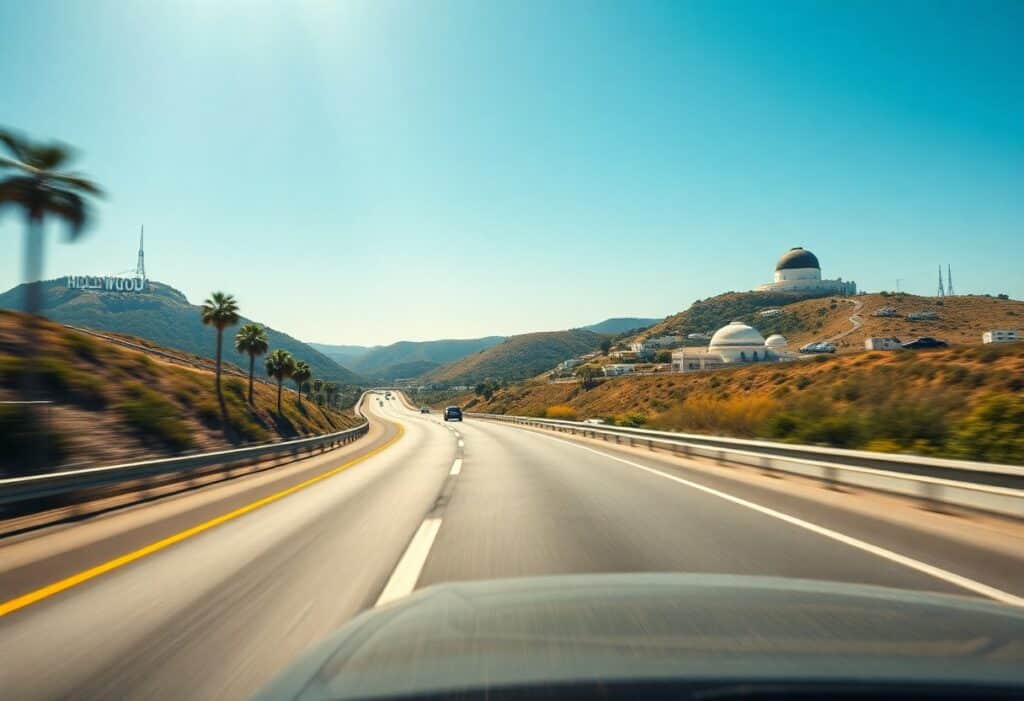
Los Angeles is easier to enjoy when you plan it as a route, not a checklist. This 3-day coastal road trip keeps the driving sensible while still covering Santa Monica, Venice Beach, Hollywood, and a few worthwhile detours.
Best For travelers who want a car-friendly Los Angeles itinerary built around the coast first, with Hollywood and central LA folded in without wasting time in traffic.
If you want the broader city version, pair this with the main Los Angeles itinerary guide. For smarter route planning, the practical tips in this road trip planning guide are a useful companion.
Quick Plan For A 3-Day Coastal La Trip
The biggest win in Los Angeles is sequencing. Beach areas, Hollywood, and downtown all make sense on their own, but the trip becomes smoother when you group nearby stops and keep freeway crossings to a minimum.
When To Go And When To Book
Los Angeles works year-round, but shoulder season gives you the best balance of weather, driving conditions, and hotel pricing. March to May and September to November are the easiest months for this kind of itinerary because the beaches are still pleasant and the crowds are usually lighter.
Book Your Rental Car At Least Two Weeks Ahead if your trip falls in spring break, summer, or any holiday weekend. LA traffic never disappears, but booking early usually improves car choice and price.
If you are still comparing car options, the advice in affordable car rental tips can help you keep the trip practical without overpaying.
Day 1: The Coast From Santa Monica To Venice
Start on the west side while the roads are still calm. This gives you the most relaxed version of Los Angeles and keeps your day anchored around short drives, walkable stretches, and easy parking structures.
Santa Monica Pier And Beach Time
Santa Monica works well as an opening stop because it combines the pier, beach, shopping, and a simple place to park. If you want the classic coastal photo stop, arrive early, walk the pier before midday, and keep your lunch flexible so you can move on when the area gets busier.
Venice Beach And The Canals
Venice Beach adds the lively side of the coast: the boardwalk, Muscle Beach, street performers, and the canal district. The canals are the best break from the busier promenade, and they are worth timing for a slower afternoon walk if you want a quieter contrast.
Sunset Strip After Dark
End the first day on the Sunset Strip if you want dinner and nightlife without forcing a long cross-city drive after sunset. It is a clean transition from beach day to evening plans, and it keeps the route in one general corridor instead of bouncing across LA.
Day 2: Hollywood Landmarks Without The Backtracking
Day 2 shifts inland, where the goal is to combine the most recognizable LA sights in a way that respects traffic. Start early, because the difference between a smooth morning and a frustrating one is often just a couple of hours.
Hollywood Sign And The Walk Of Fame
For the sign, Lake Hollywood Park remains one of the simplest viewing choices because you can drive close enough to avoid a hike while still getting a strong view. After that, move to Hollywood Boulevard and the Walk of Fame before the area gets crowded. Arriving before 11 a.m. gives you a much better chance of seeing the sidewalk without the heaviest pedestrian traffic.
Beverly Hills, The Grove, And Griffith Observatory
Beverly Hills and The Grove fit naturally together because they share the same shopping-and-dining rhythm. Griffith Observatory then closes the day with one of the best city views in Los Angeles and an easy free-admission stop. If you reach the observatory near sunset, you get the skyline at its most photogenic.
For parking strategy, keep an eye on the signs, use parking apps when needed, and avoid assuming that a busy area has simple curbside parking. That matters especially if you plan to extend the evening on Hollywood Boulevard or around the observatory.
Day 3: Culture, Food, And A Calmer Finish
The last day works best as a lower-pressure finish, which helps if you are checking out of a hotel or want to avoid another high-traffic crossing. This is the day for museums, markets, and neighborhoods that reward slower wandering.
Museums And Downtown Highlights
The Broad and LACMA are strong anchors if you want a culture-heavy day. The Broad is especially easy to fit into a compact route because it can pair with downtown lunch, while LACMA works well if you want a broader museum stop with more time to browse.
Grand Central Market, Little Tokyo, And The Arts District
Grand Central Market is the easiest food stop if you want options in one place, while Little Tokyo and Koreatown are better if you want one focused meal and a neighborhood feel. If you still have energy after lunch, the Arts District gives the trip a creative finish with galleries, breweries, and a more local tone than the typical tourist core.
What This Route Does Well
- It reduces zigzag driving by keeping the coast together on Day 1.
- It groups Hollywood and Beverly Hills into one inland day.
- It reserves downtown and museum stops for a slower finish.
- It works best with a rental car, GPS, and realistic traffic buffers.
Budget, Parking, And Traffic Realities
A moderate 3-day Los Angeles trip usually lands in the range of $150 to $300 per day depending on hotel choice, parking, and how many attractions you pay for. That can move up quickly if you add major-ticket venues, but the good news is that several of the best-known stops are free.
If you are driving during rush hour, plan around the major freeway bottlenecks rather than fighting them. Waze or Google Maps helps, but the real advantage is leaving enough room in the schedule to absorb unexpected slowdowns.
Where To Go Next
If this coastal route is the version of Los Angeles you want, use it as your west-side and Hollywood plan, then switch to the broader city overview for more neighborhoods and attraction options. The main Los Angeles itinerary page is the right next stop when you want to expand beyond the coastal arc.
For the car booking side of the trip, the broader tips in ultimate road trip planning tips can help you lock in timing, pickup, and route prep before you travel.
Frequently Asked Questions
What Is The Best Way To Get Around Los Angeles During A 3-Day Trip?
A rental car is the most practical choice for this itinerary because the coast, Hollywood, and downtown are spread out. It gives you enough flexibility to cluster sights, leave early, and avoid expensive ride-hailing between every stop.
Which Spots Can I Visit On The First Day Of The Los Angeles Trip?
A strong first day is Santa Monica Pier, Venice Beach, Venice Canals, and Sunset Strip for the evening. That route stays mostly on the west side, which makes it one of the easiest ways to start a short trip.
What Are The Best Viewing Spots For The Hollywood Sign?
Lake Hollywood Park is one of the most convenient and reliable viewing points. Griffith Observatory also gives a classic view from farther away, while the Walk of Fame and Mulholland Drive offer more city-context views than close-up access.
See also: Car Rental Las Vegas.
See also: Rent a Car Las Vegas.

Megan Hartley is a dedicated writer and travel enthusiast specializing in affordable car rental solutions. With a passion for helping travelers navigate the complexities of securing budget-friendly transportation, she shares insightful tips and engaging content on her platform. Megan’s expertise extends to exploring the latest trends in the car rental industry, ensuring her readers make informed choices for their journeys. Through her work, she inspires others to explore the world without breaking the bank.


I love how you’ve broken down the essentials of a 3-day itinerary for LA—it’s so easy to feel overwhelmed in such a vast city! Having a rental car is crucial, especially when you’re trying to make the most of your time. I remember my last trip there; I focused on clustering attractions like you suggested, which really helped me dodge some of that infamous traffic.
I completely agree with you about the importance of clustering attractions in LA; it can really change the whole experience. You’re right that the layout of the city can feel a bit daunting, especially when you’re trying to fit everything in over just a few days. I found that having a rental car not only gave me the flexibility to explore those diverse neighborhoods but also made it easier to sneak in those spontaneous stops along the way.
I completely relate to that feeling of wanting to maximize every moment when visiting LA. The city’s spread can definitely be overwhelming, but clustering attractions really helps. The different neighborhoods offer such a unique vibe, and I agree that having a rental car can open up those spontaneous moments that make a trip memorable.
This guide is a fantastic resource for navigating LA’s vastness! I particularly appreciate the emphasis on clustering attractions; it’s so true that minimizing driving can significantly enhance your experience, especially in a city known for its notorious traffic.
I completely agree with you about the importance of clustering attractions in LA. It really can transform the experience, especially when you consider how daunting the traffic can be. One of my favorite methods is to spend a whole day exploring a particular neighborhood. For instance, taking a day to roam around Silver Lake, enjoying the local coffee shops, art galleries, and maybe ending with a sunset at a park could be so rewarding.
Your itinerary planning guide for Los Angeles highlights some essential tips that many travelers often overlook. I completely agree that having a rental car is crucial to navigating the city efficiently, especially considering how spread out the attractions are. During my last visit, I found that adjusting my schedule to cluster nearby sites not only saved time but also allowed for spontaneous discoveries at less-frequented spots along the way.
You’re spot on about the rental car—it’s like a golden ticket to the LA theme park of life. Without it, you’d be left playing a game of hopscotch between attractions, and believe me, wandering around on foot can quickly turn into a quest for the nearest bus stop and possibly a whole afternoon you weren’t planning on.
You really captured the essence of navigating LA. It does feel like a game sometimes, doesn’t it? Having a rental car makes such a difference—like having the power to transform a long day of waiting for buses into spontaneous adventures. I remember one time I decided to visit a few attractions and ended up diverting to the Getty Center instead. That would have taken ages on public transport.
It really does feel like a game sometimes, doesn’t it? I think navigating LA can feel like both a challenge and an adventure. Having a rental car definitely changes the dynamic—there’s something liberating about being able to hop from one spot to another on a whim. It’s funny how a spontaneous decision can lead to discovering hidden gems, like your detour to the Getty Center. It’s one of those places that can really spark inspiration, whether you’re into art or just enjoying the architecture and gardens.
You’re so right about how a rental car can change the whole experience of navigating LA. It really does feel like that golden ticket. It’s funny how much we take for granted the convenience of being able to jump in a car and zoom over to the next attraction, especially in a sprawling city like that. I remember my last trip there, I had a rental, and being able to decide on a whim to check out a cool little café or a hidden beach made the whole trip feel more spontaneous and adventurous.
I completely agree with you about the impact a rental car can have on exploring LA. It really does feel like that golden ticket, doesn’t it? The freedom to navigate the city at your own pace can make such a difference. I remember my last trip there too; I was so grateful to have a car. I stumbled upon this charming little bakery in Silver Lake that I likely wouldn’t have found without the convenience of my wheels.
Navigating Los Angeles with a rental car really does open up a whole new layer to the experience, doesn’t it? It’s interesting how that freedom can shift your perspective on a city that’s so often characterized by its sprawl and traffic. The option to explore on your own terms allows for those spontaneous decisions—the kind of moments that create lasting memories.
You’re totally right about that rental car being the VIP pass in LA’s theme park. It’s almost like those rides that come with a height requirement—you need it just to get in the game. Sure, depending on how adventurous you are, walking around can feel a bit like a scavenger hunt with a blindfold on. Not to mention that navigating public transit can sometimes feel like a crash course in urban survival strategies. I once spent what felt like an eternity finding the right bus, only to end up in a part of town that had clearly forgotten what a coffee shop looked like.
It’s interesting how clustering sites can lead to those unexpected gems. I’ve had a few experiences where I stumbled upon amazing local cafes or street art just by being flexible with my plans. It really changes the way you experience a city when you allow for those spontaneous moments instead of sticking too rigidly to an itinerary.
I really appreciate how your guide emphasizes the importance of planning when visiting Los Angeles. The city’s vastness can definitely feel overwhelming, especially for first-time visitors. I remember my first trip there; I spent far too much time stuck in traffic trying to navigate between attractions.
Your guide to navigating Los Angeles is both practical and inspiring—it’s a wonderful reminder of how deeply rich and diverse this city is. Los Angeles has so many layers, from the sun-soaked beaches to the vibrant cultural tapestry found in its neighborhoods. As someone who has spent time there, I’ve learned that even within a short three days, it’s possible to create unforgettable memories if you approach the city with an open mind and a sense of adventure.
You’ve captured the essence of Los Angeles beautifully. Every corner of the city tells its own story, and there’s something special about the way the neighborhoods blend together, offering a glimpse into diverse traditions and lifestyles. I love how you mentioned creating unforgettable memories in just three days. It’s fascinating how a simple walk on the beach or a spontaneous detour into a local market can lead to unexpected discoveries.
You’ve touched on something that often goes overlooked in the hustle and bustle of Los Angeles—the profound stories woven into the fabric of its neighborhoods. Each community has its own rhythm and character, and it’s those subtle differences that often leave a lasting impression.
You’re right—the vibe in each neighborhood can really tell a story. I’ve always been struck by how places like Echo Park convey a sense of community that feels both nostalgic and contemporary at the same time. It’s fascinating to see how arts and culture thrive there, almost as though they’re entwined with the very pulse of its streets.
This guide really highlights the diversity and excitement of LA! I remember my own trip, where I thought I could walk everywhere, only to discover how expansive the city truly is. The suggestion to rent a car is spot on; it allowed me to dive into the different neighborhoods, like the artsy vibe of Silver Lake after spending the day at Venice Beach.
It’s great to hear about your experience exploring LA. It really is a city where every neighborhood feels like its own world. Silver Lake’s artsy vibe contrasts so nicely with the laid-back atmosphere of Venice Beach, showcasing how varied the city can be. One thing I found fascinating is how each area has its own local eateries and shops that reflect their unique culture. Have you checked out any of the murals in Silver Lake? They add so much character to the streets. Plus, driving around really opens up opportunities to discover hidden gems that you might miss if you were just walking. Did you stumble upon any favorite spots during your trip?
You’ve captured the essence of LA perfectly. Each neighborhood really does feel like it has its own distinct flavor. Silver Lake definitely stands out with its vibrant street art; I found myself wandering for hours, just soaking in the murals. It’s amazing how they contribute to the identity of the area. One of my favorites was the giant rainbow mural on Sunset Boulevard—such a great representation of the inclusivity and creative spirit of the community.
I completely agree; LA really does feel like a collection of distinct worlds. Each neighborhood has its own vibrancy and charm that keeps things fresh and exciting. Silver Lake is a personal favorite of mine, especially for the murals. They’re such a telling reflection of the local culture and creativity. I remember spending an afternoon wandering the streets, snapping photos of the artwork, and feeling like each mural had its own story to tell.
You’ve captured the essence of Silver Lake beautifully. The murals do serve as a vibrant narrative of the culture and diversity found in the area. Each piece often reflects the thoughts and experiences of the artists, connecting viewers to the local community in ways that are both personal and universal.
It’s interesting you mention the murals as a vibrant narrative of culture and diversity. I often find that art in public spaces like Silver Lake not only tells stories but also fosters conversations among strangers. I love how each mural reflects not just the artists’ perspectives but also the community’s collective memory.
You’ve hit on something really powerful about public art, especially in a place like Silver Lake. Those murals are like living narratives that shift and evolve with the community. Each brush stroke carries stories not only from the artists but also from the people who pass by every day, creating a unique tapestry of experiences and memories.
It really is fascinating how each neighborhood in LA has its own personality, isn’t it? Silver Lake, in particular, has such a creative vibe. Those murals truly tell a story—it’s like walking through an outdoor gallery that reflects the pulse of the community. I love how art can transform public spaces and bring people together; it almost feels like a dialogue between the artists and the audience.
It sounds like you had an amazing experience exploring LA. I totally get what you mean about the city’s vastness. It’s funny how it looks so manageable on a map, but once you’re there, the distances really hit you. Renting a car definitely opens up so many possibilities.
You hit the nail on the head with that observation about the map versus reality. It’s like LA is playing some kind of elaborate game of hide-and-seek. One minute you’re checking out a coffee shop in Silver Lake, feeling all smug about your hipster credentials, and the next, you’re stuck in what feels like eternal traffic on the 405 just to get to Santa Monica. I swear, those ten miles can turn into a saga worthy of its own Netflix series.
Walking everywhere in LA can definitely be an adventure in itself, but it’s so true how expansive the city is. Each neighborhood feels like its own little world, and renting a car really opens up the experience. Silver Lake has such a unique vibe with its murals, indie shops, and coffee spots—it’s a great contrast to the laid-back feel of Venice Beach.
I really appreciate how you’ve laid out the essentials for a trip to Los Angeles! The idea of clustering attractions is spot on, especially given the notorious traffic. I remember on my last visit, I tried to pack too much into one day, and it turned out to be a bit chaotic. It’s definitely smarter to focus on one area at a time, like spending an entire day in Santa Monica and Venice Beach to truly soak up that laid-back vibe.
I completely relate to your experience of trying to cram too much into one day in L.A. The city has a way of enticing you with its endless options, but that notorious traffic can really put a damper on spontaneity. Focusing on one area at a time does make for a more enjoyable experience—I can still remember a day I spent wandering around Santa Monica and eventually ending up at Venice Beach. It felt refreshing to just take it all in without the stress of racing from spot to spot.
Ah, the eternal quest to conquer Los Angeles in just three days! It’s like trying to eat a whole pizza in one sitting—enticing but potentially overwhelming. I love how your guide paints a vivid picture of the essential hotspots, and I can practically hear the seagulls squawking over Santa Monica Pier already.
You make a great point about the challenge of soaking in all that L.A. has to offer in just three days. It’s a sprawling city with so many layers, much like that whole pizza—you can end up with way more than you bargained for.
Your post about itinerary planning for Los Angeles resonates with me on so many levels! It’s refreshing to see such a well-structured guide, especially when LA can feel overwhelming with its endless array of attractions. I love how you’ve highlighted the importance of clustering nearby spots; it’s a smart strategy that really lets you soak up the experience rather than just rush from one highlight to another.