
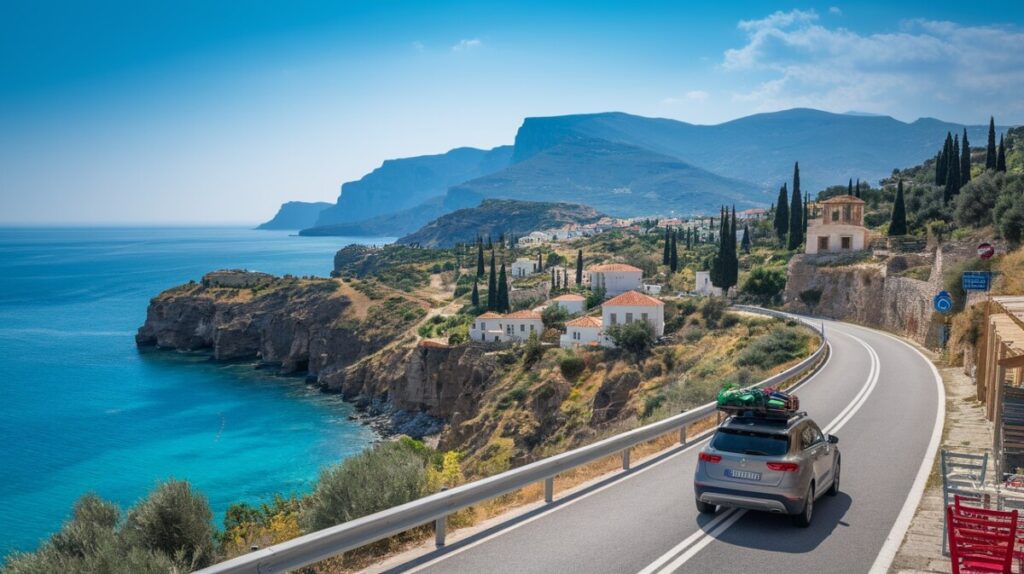
A Peloponnese road trip is one of the easiest ways to link Greece’s ancient sites, mountain roads, and coastal stops in a single itinerary. It works especially well for travelers who want flexibility, a slower pace, and enough time to move beyond the usual city-to-city route.
If you are choosing a vehicle or comparing trip setups, start with the broader Greece car rental options and then narrow the plan around the roads, season, and driving style you actually need.
Trip planning at a glance
| Best trip length | 4–7 days for a balanced first trip; 10–14 days if you want slower coastal detours and inland villages. |
| Best season | Late spring and early autumn for comfortable temperatures, clearer driving conditions, and fewer crowds. |
| Road conditions | Expect a mix of highways, winding mountain roads, narrow village streets, and occasional long stretches between fuel stops. |
| Best vehicle fit | A compact car suits couples and solo travelers; an SUV or larger vehicle is better for families, luggage, and rural routes. |
Planning The Route Without Overpacking The Day
The Peloponnese rewards a simple route with enough breathing room to enjoy the drives between stops. Rather than trying to cover every landmark, build around a few anchor destinations such as Ancient Olympia, Epidaurus, Mycenae, and Nafplio, then leave space for beaches, viewpoints, and meals that appear along the way.
For readers who want a lighter first stop, a snack and break strategy helps more than a packed schedule. The practical advice in essential road trip snacks is especially useful on longer stretches where a quick stop is better than searching for a full meal.
- Keep one base town for two nights when possible so you are not unpacking every day.
- Mix one major cultural stop with one scenic drive each day instead of stacking several long visits.
- Use scenic coastal sections for relaxed afternoons and inland sections for earlier departures.
A useful booking window
If you are traveling in May, June, September, or early October, book accommodation and your rental car earlier than you would for a loose off-season trip. These months bring the best balance of weather and drivability, so compact vehicles and automatic transmissions can sell out first in the most popular pickup locations.
What To Expect From The Roads And Driving Rules
The Peloponnese is not difficult to drive, but it does ask for patience. Winding roads, blind curves, and occasional village traffic are part of the experience, so daytime driving is easier than arriving late after a long sightseeing day. Plan extra time for inland sections and keep your fuel level higher than you might on a city break.
Local driving habits can feel more relaxed than a typical highway trip, but that is not a reason to skip preparation. For general cross-border and overseas driving context, the road trip rules and safety basics page is a helpful reminder of the kind of details worth checking before departure, especially if you are used to a different road system.
- Check speed limits, phone-use rules, and seatbelt requirements before you start.
- Expect some tighter village streets and plan parking on the edge of older towns when needed.
- Build in daylight driving for unfamiliar mountain or coastal sections.
Choosing The Right Car For The Trip
Vehicle choice changes the whole trip. A compact car is usually enough if you are staying on main roads, visiting larger towns, and keeping luggage light. It is easier to park in Nafplio, simpler on narrow streets, and often cheaper to run. Families, mixed groups, or travelers planning more remote stops may prefer an SUV or a slightly larger car for comfort and road confidence.
If you are still comparing trip styles, it is worth reviewing the broader budget-friendly rental choices before deciding whether the lower daily rate of a compact car really fits your route, insurance needs, and luggage load.
- Choose compact for city stops, light luggage, and easier parking.
- Choose SUV or larger for families, longer drives, or rougher access roads.
- Ask for a vehicle with reliable air conditioning if you are traveling in summer.
Best timing by travel style
| When | Why it works | Best for |
|---|---|---|
| May to early June | Warm weather, green scenery, and manageable traffic. | First-time visitors and photographers. |
| July to August | Long daylight, but the hottest roads and busiest destinations. | Travelers who can start early and handle heat. |
| September to October | Excellent balance of temperature, sea conditions, and crowd levels. | Most road-trippers, especially couples and families. |
Packing, Fuel, And Budget Essentials
Your original packing list is already heading in the right direction, but it helps to think in terms of comfort and resilience rather than just convenience. Bring snacks, water, a first-aid kit, a physical map or offline navigation backup, sunglasses, and anything you need for long, sunny driving days. The route can feel simple when you are near major towns, then suddenly more remote once you head inland.
- Pack protein-rich snacks and water for longer stretches between stops.
- Carry a basic first-aid kit and any personal medication you may need.
- Bring a power bank, offline maps, and a paper backup if service drops.
Budgeting is straightforward if you break it into fuel, lodging, meals, and admissions. Fuel costs depend on your exact route and vehicle size, while accommodations can vary widely between a simple overnight stop and a highly scenic base such as Nafplio. The busiest months can also push prices up, so timing matters as much as the daily driving distance.
A Simple Way To Make The Trip Better
The best Peloponnese itineraries are rarely the most crowded ones. Leave room for an unplanned lunch, a short beach stop, or a local festival if you happen to pass one. That flexibility is exactly why a road trip works here better than a fixed transfer-only holiday.
If you want to move from planning to booking, the most practical next step is to compare vehicles and pickup points on Greece rental options, then choose the car that fits your route instead of the other way around.
Plan the trip with the right vehicle
For the Peloponnese, the smartest rental choice is the one that matches your pace, your luggage, and the roads you expect to use most.
Common Mistakes To Avoid
- Do not over-schedule the trip; the Peloponnese is better when the driving feels unrushed.
- Do not assume every road is an easy highway section; some of the most beautiful drives are also the narrowest.
- Do not leave car choice until the last minute if you need an automatic or a larger vehicle.
- Do not skip breaks, especially on hot days or long inland stretches.
Frequently Asked Questions
How Many Days Do You Need For A Peloponnese Road Trip?
Four to seven days is enough for a strong first trip, while 10 to 14 days lets you move more slowly and add beaches, inland villages, and extra archaeological sites.
What Is The Best Time Of Year To Drive It?
Late spring and early autumn are the best overall windows because the weather is milder, the roads are easier to manage, and the major stops are less crowded.
Is A Small Car Enough?
Yes, for many travelers a compact car is enough, especially if your route stays close to major towns and paved roads; families or travelers carrying more gear may prefer a larger vehicle.

Samantha Price is a dedicated author and travel enthusiast who specializes in writing about affordable car rental options online. With a keen eye for detail and a passion for helping readers save money, she provides insightful tips and practical advice on navigating the world of cheap car rentals. Through her engaging content, Samantha empowers travelers to explore new destinations without breaking the bank, making their journeys both enjoyable and budget-friendly.




It’s fascinating to read about the intricacies of planning a road trip, especially in a beautiful region like the Peloponnese. Having recently returned from a road trip myself, I can relate to the importance of thorough preparation when it comes to ensuring a smooth journey. Checking for weather windows, potential closures, and local regulations definitely makes a significant difference in how much you enjoy your adventure.
I really appreciate how you highlighted the importance of planning and checking for things like weather and permits before hitting the road, especially in a diverse region like the Peloponnese. It’s so true that a little preparation can save a lot of headaches later on. Last summer, I went on a road trip along the coast, and I learned that lesson the hard way. We encountered a road closure that set us back hours because we hadn’t checked the updates!
It’s great to hear your experience with road closures; those unexpected hiccups can really throw off your plans. It sounds like that trip along the coast was quite an adventure, even if it didn’t go exactly as planned. I’ve found that checking local forums or social media pages can sometimes give you real-time updates about road conditions, which might help avoid those surprise delays. Have you thought about trying that for future trips? It can add a layer of peace of mind, especially in areas where road conditions can change quickly. Plus, sometimes those detours lead to unexpected discoveries, which can be a nice silver lining.
It sounds like your road trip had its fair share of surprises. Those unexpected hurdles can be frustrating, especially when you’re trying to enjoy the beauty of a place like the Peloponnese. I can relate—on a recent trip, we didn’t check for local events or road conditions either and ended up stuck behind a big parade in a small town. It reminded me how important it is to stay flexible and be prepared for anything, even on vacation.
Your insights into the essential preparations for a road trip, especially through regions like the Peloponnese, are quite timely. It’s fascinating how travel planning has evolved with technology, making it more accessible for individuals with varied interests, from leisurely drives to adventurous explorations.
Your insights into preparing for a road trip, especially when it comes to navigating the Peloponnese, are spot on. The emphasis on weather considerations, closures, and necessary permits is crucial; it’s the kind of groundwork that often distinguishes a smooth journey from a stressful one. As someone who recently embarked on a similar adventure, I can attest to the importance of these preparations.
Your insights on preparing for a road trip in the Peloponnese struck a chord with me. It’s fascinating how planning can significantly shape our travel experiences, especially in regions rich in history and natural beauty. The mention of checking for weather windows and local regulations really underscores the importance of being well-informed, particularly in areas where conditions can change rapidly or where permits are required for specific activities.
It’s interesting to see how RentaCar24.org emphasizes the need for thorough preparation before embarking on a road trip, especially in a region as beautiful and diverse as the Peloponnese. I’ve found that checking local regulations and weather conditions can truly enhance the travel experience. On my last road trip, ensuring I had the right permits saved me a lot of time and potential hassle, allowing me to focus on enjoying my journey.
Ah, the Peloponnese Road Trip – where the sun shines as brightly as your dreams of escaping the daily grind! It’s intriguing that you highlight the importance of preparation when hitting the road. I once embarked on a road trip with friends to a festival, and let’s just say our lack of planning turned a highly anticipated adventure into a comedic saga of missed exits and questionable roadside diners. If only I had checked the closures and advisories back then! I vividly recall us pulling up to a “gas station” that turned out to be a rural art installation, complete with a coffee-dispensing cow statue — needless to say, fuel was in short supply, and caffeinated ceramic cows do not a road trip make.
I completely agree that planning and preparation can make all the difference in a road trip’s success. The Peloponnese is such a breathtaking region, and it’s essential to check local advisories or rules before hitting the road. Beyond permits, I’ve found that understanding local driving customs can also enrich the experience.
I really appreciate the insights shared in this post about planning a Peloponnese road trip. It’s so true that preparation is key when embarking on an adventure, especially in areas as stunning and diverse as the Peloponnese. The mention of checking for weather conditions and potential road closures really resonates with me. A couple of years ago, I went on a road trip through the region, and I remember how important it was to stay updated on the local weather. I had to change my plans last minute because of unexpected rain and ended up discovering a beautiful, lesser-known village that I might have missed otherwise. It’s those spontaneous moments that can turn an okay trip into an unforgettable experience!
I really resonate with the emphasis on preparing for road trips, especially in stunning places like the Peloponnese. It’s so true that understanding the local weather and any required permits can shape your experience. On my last road trip, I overlooked checking for road closures related to some seasonal festivals, which added unexpected detours that were both frustrating and enlightening.
This blog has me itching to hit the road in Greece! I love the idea of taking a slow-paced journey through the Peloponnese. It’s tempting to just rush from one ancient ruin to the next, but those coastal stops and quaint villages sound like the real gems. Plus, the thought of getting lost on those mountain roads with nothing but the sound of Greek music playing and the wind in my hair? Pure bliss!
I love the idea of a road trip through the Peloponnese! It really does allow for a unique blend of Greece’s rich history and stunning landscapes. I recently did a similar trip, and I still remember the breathtaking coastal views while navigating those winding mountain roads. Plus, the flexibility to stop at quaint villages along the way was a highlight—each place had its own charm and local delicacies to discover!
This blog post presents a fantastic overview of planning a road trip through the Peloponnese, and I appreciate the emphasis on flexibility and the importance of considering permits and rules in advance. As someone who recently explored this fascinating region, I can attest to the value of taking a more leisurely approach rather than rushing from one city to another.
This is such a timely reminder about the importance of planning when it comes to a Peloponnese road trip! I’ve always found that having a flexible itinerary not only allows for spontaneous detours but also leads to some of the best travel experiences. Last summer, I took a trip through the region and stumbled upon the charming village of Nafplio—all thanks to a last-minute decision to veer off the main road. There’s something magical about those hidden spots that you can’t find in guidebooks.
Your insights on planning a road trip through the Peloponnese resonate deeply with me. The beauty of such travel lies not just in the destinations but in the freedom to explore at one’s own pace, discovering hidden gems along the way. There’s something magical about winding mountain roads that lead to ancient ruins and picturesque coastal villages, each turn telling a new story of Greece’s rich tapestry.
It’s so true that a road trip through the Peloponnese offers a unique blend of history and stunning landscapes. I recently did a similar trip and found that having a flexible itinerary made all the difference. One of my favorite stops was the little coastal town of Nafplio, where I stumbled upon a local festival and experienced the vibrant culture first-hand.
The Peloponnese road trip truly offers a unique lens to explore Greece’s rich tapestry of history and natural beauty. When I traveled there last summer, I was amazed by the freedom a rental car provided. It allowed me to stop at lesser-known sites like ancient Corinth and secluded beaches that you wouldn’t find in typical itineraries.
The Peloponnese really offers a stunning tapestry of history and scenery, making it a perfect canvas for a road trip. I love how your post emphasizes the importance of planning around permits and road conditions. During my own journey there, I found that setting aside a couple of extra days to explore hidden gems—like small coastal villages or local tavernas—made all the difference.
I really appreciate the insights you’ve shared about planning a road trip in the Peloponnese! It’s such a fascinating region with so much to explore. I completely agree that having the flexibility of a rental car makes a world of difference in how you experience Greece. It’s easy to focus on the iconic spots, but there’s something special about wandering off the beaten path, discovering hidden villages, and enjoying spontaneous pauses by the coast.