
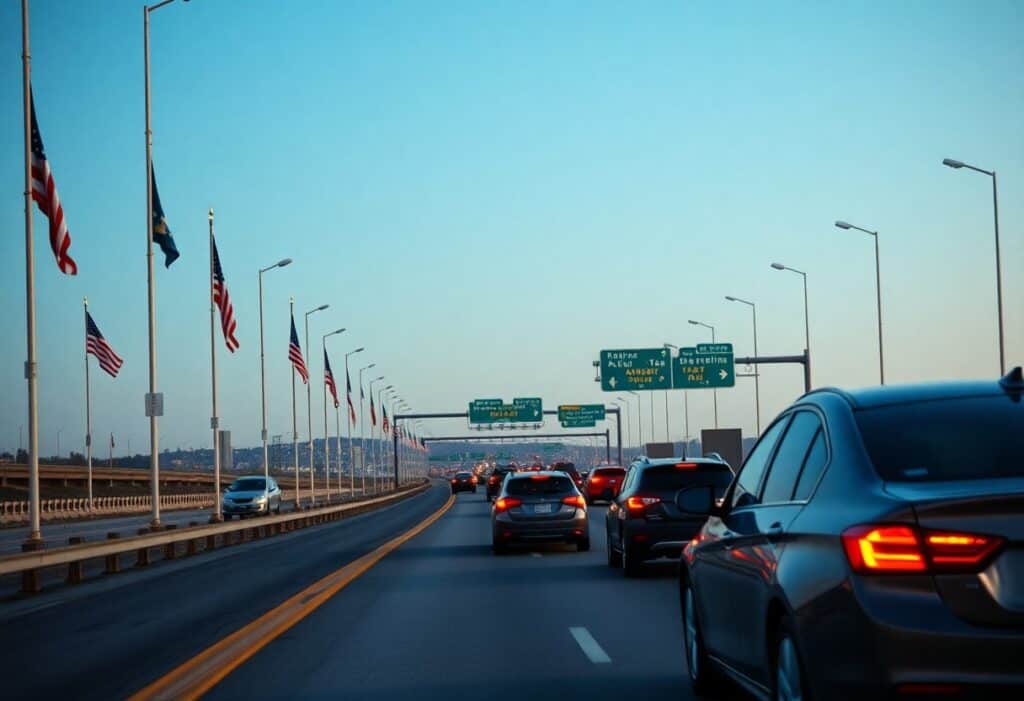
Americans drive on the right because the rule grew out of wagon-era practicality, post-Revolution identity, and the way early cars were built. What started as a transport habit became a national standard, and it still shapes U.S. roads today.
If you want the practical side of that choice for trip planning, it helps to pair this history with basic U.S. road-trip rules and driving tips before you get behind the wheel.
Why the U.S. settled on the right side
- Wagon drivers sat and worked in ways that made right-side travel more practical.
- After independence, Americans increasingly separated from British left-side customs.
- Early state laws and vehicle design made the rule harder to reverse.
- By the automotive era, right-side driving was the safer, simpler national norm.
The medieval habit behind the split
The earliest road customs long predate the United States. In parts of Europe, travelers generally kept left because most people were right-handed and needed their sword arm or defensive arm closest to an approaching rider. That logic made sense on narrow roads where personal safety mattered more than lane discipline. Over time, those habits influenced regional traffic customs, and the world eventually split between left-side and right-side systems.
Why France matters to the American story
France and Britain ended up on different sides of the road, and that split mattered as colonial influence spread. Britain formalized left-hand traffic, while revolutionary France moved toward right-hand driving. In North America, French and British customs both shaped the environment, but the eventual American choice leaned toward the right as freight movement, state regulation, and national identity pushed the same way. That is why the U.S. road system does not simply mirror Britain’s older pattern.
How Wagon Travel Pushed America To The Right
The strongest practical reason for right-side driving in the United States came from freight and wagon transport. Long before standardized automobiles, large wagons were common on American roads, especially in growing commercial regions. Drivers needed to manage multiple horses, see traffic clearly, and keep a safe distance from oncoming wagons. Sitting and working from a position that favored the right side made those tasks easier.
That is why the history of American driving is not just about politics or symbolism. It is also about the everyday realities of hauling goods, guiding teams of horses, and avoiding collisions on narrow roads. The practical advantage of right-side travel proved useful enough that it became embedded in early road behavior before anyone had to think about modern traffic lanes.
This is also where the U.S. story becomes more distinct than a general world traffic-history lesson. The question is not simply why some countries drive on one side or the other; it is why American roads, laws, and vehicles converged on the right. The answer lies in a mix of freight efficiency and habit, not one single decree.
From Colonial Custom To State Law
After independence, Americans had reason to separate their customs from Britain’s wherever it was practical to do so. Driving on the right was not adopted because of a dramatic single moment; it became more common because it fit the country’s transportation patterns and because states gradually made it official. By the early 1800s, right-side rules were already appearing in places such as New York, New Jersey, and Pennsylvania.
That gradual adoption matters. Once a road system starts to normalize one side, it becomes self-reinforcing. Signs, habits, road widths, intersections, and enforcement all start to assume the same pattern. In other words, a traffic rule is easy to start questioning but hard to unwind once the rest of the system is built around it.
For travelers who want to compare how that U.S. standard differs from the rest of the world, the practical follow-up is straightforward: if you are driving outside the United States, especially in left-hand-drive countries, review safe and fun left-hand-drive road trip tips before you book or pick up a car.
How Cars Made The Rule Permanent
The arrival of the automobile turned a strong custom into a fixed national standard. Early manufacturers had to choose driver placement, steering layout, and visibility assumptions that matched the roads people were already using. Henry Ford’s Model T played a major role in that process. With the driver seated on the left, the vehicle was well suited to right-side travel because it improved the driver’s view of oncoming traffic and made passing more intuitive.
As automobile ownership expanded, the rule became even more entrenched. Once many of the best-selling cars were built for right-side roads, there was little reason to reconsider the national pattern. Traffic safety also became more important as speeds increased. A consistent system reduced confusion, and reduced confusion meant fewer avoidable mistakes.
That is why the U.S. situation is different from countries that later changed sides. In America, there was no strong need for a mass switch after the auto era began, because the right-side pattern had already been reinforced by road use and vehicle design.
What This Means For Modern Driving In The U.s.
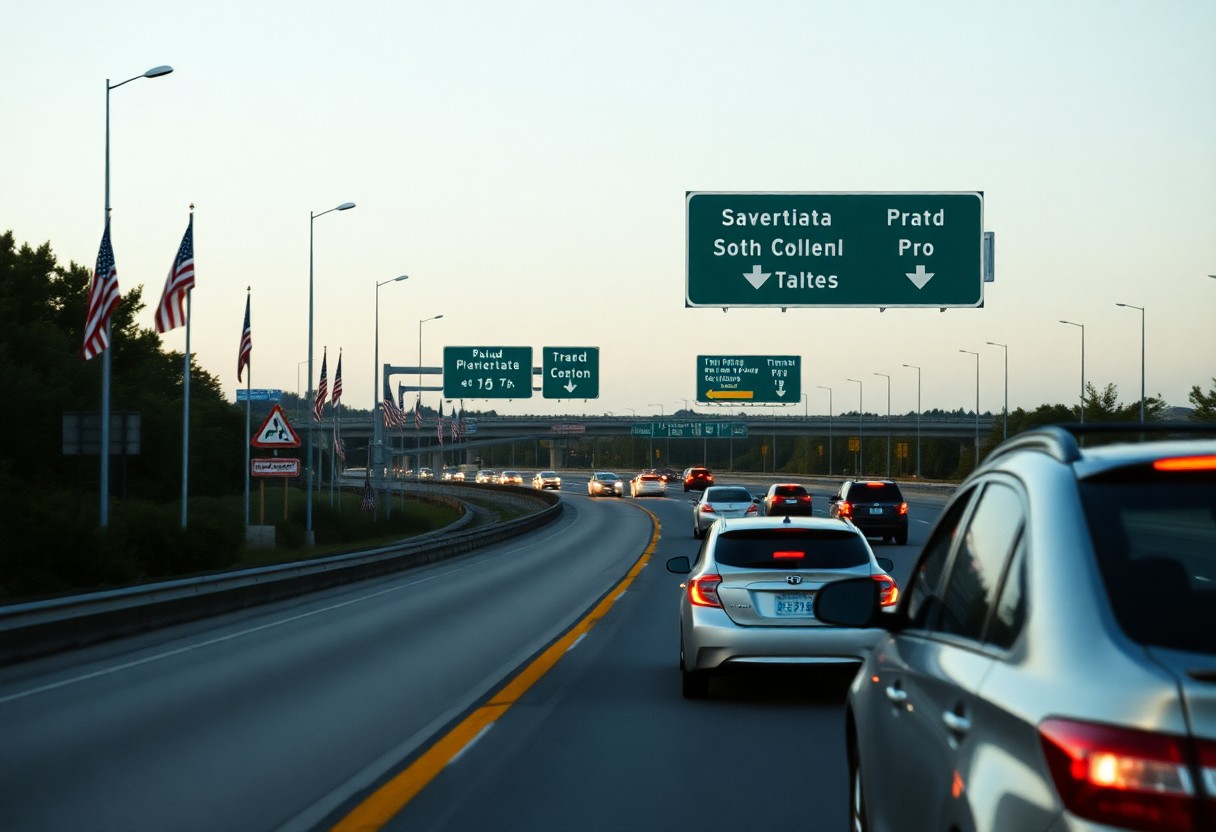
Today, right-side driving is not just a historical curiosity. It affects where the driver sits, how intersections are designed, how highway merges work, and how Americans learn to judge lane position from the start. If you are renting a car or driving in the United States for the first time, the rule is simple: keep to the right, pass on the left, and pay attention to local signage and lane markings.
For trip planning, that makes the U.S. easier than a mixed system in which some roads or regions follow opposite conventions. You still need to account for highway speed, turn rules, and unfamiliar city traffic, but the right-side standard removes one major layer of uncertainty. That is one reason U.S. road-trip basics are worth reviewing even if you already know the history.
Planning to drive in the U.S. or abroad?
If you are staying in the United States, the key is learning the local rules, road markings, and rental-car basics. If your trip extends to countries with the opposite traffic pattern, review the driving habits that matter before you go so the transition feels natural.
For the practical next step, the most useful companion guide is safe and fun left-hand-drive road trip advice, which pairs well with this history article when you are comparing road rules across countries.
A Few Related Facts People Often Ask About
About 65% of the world’s population drives on the right, so the American system is part of a much larger global pattern. Even so, a sizable number of countries still use left-side driving because colonial history and national tradition kept those rules in place. That is why international travel can feel disorienting at first: the road itself may look familiar, but the driver’s position and traffic expectations can be the opposite of what you use at home.
Countries can switch sides, but it is a major public-safety project rather than a casual change. Sweden’s 1967 shift to right-side driving is the famous example because it was carefully planned and executed nationwide. The U.S. never needed that kind of switch because the right-side pattern had already taken hold before modern traffic systems were fully standardized.
Frequently Asked Questions

Megan Hartley is a dedicated writer and travel enthusiast specializing in affordable car rental solutions. With a passion for helping travelers navigate the complexities of securing budget-friendly transportation, she shares insightful tips and engaging content on her platform. Megan’s expertise extends to exploring the latest trends in the car rental industry, ensuring her readers make informed choices for their journeys. Through her work, she inspires others to explore the world without breaking the bank.




It’s fascinating to delve into the historical nuances that shape something as routine as our driving habits. The transition from left to right-side driving is such an insightful reflection of broader societal shifts and needs. I think it’s particularly intriguing how practical requirements—like safety in freight transport—played a crucial role in this change, rather than a mere whim or fashion statement. This historical perspective not only helps us understand the ‘why’ behind our current practices but also encourages a deeper appreciation for the evolution of societal norms.
You’ve touched on an important aspect of our driving habits that often goes unnoticed. The shift from left to right-side driving didn’t happen overnight or purely for reasons of convenience; it’s interwoven with the fabric of society’s development and practical needs.
You’re spot on about how the shift from left to right-side driving is more like an intricate dance than a simple switcheroo. It’s easy to forget the historical context behind such decisions, but it really does echo the development of society in ways we might not always appreciate.
You’re tapping into something really valuable here. The way our driving habits have evolved doesn’t just point to how we maneuver our vehicles; it mirrors larger societal changes that play out over decades and centuries. When you break it down, our decisions about which side of the road to drive on speak volumes about our collective priorities and preferences at different points in history.
I really resonate with your perspective on how driving habits reflect broader societal shifts. It’s fascinating to think about how something as mundane as which side of the road we drive on can encapsulate historical context and collective psychology.
I really appreciate your perspective on how driving habits reflect broader societal shifts. It’s interesting to consider how the way we navigate our physical spaces can tell us so much about the collective history and mindset of a culture. For instance, the choice of which side of the road to drive on isn’t just a matter of practicality; it often has deep-seated historical ties.
You raise such an interesting point about driving habits reflecting broader societal shifts. It’s so true that something as seemingly simple as which side of the road we drive on carries so much historical baggage. When I think about it, it really speaks to how culture evolves over time, often influenced by factors like colonization, trade routes, and even wars. For example, the switch from left-hand to right-hand driving in places like France and its ripple effect across Europe and beyond is a fascinating case study in collective psychology and identity.
It’s interesting how something seemingly simple, like driving habits, can open up a window into our historical and cultural psyche. I often think about how the side of the road we choose to drive on can reflect deeper values—like the British tradition of left-hand driving, which has roots in feudalism and jousting, versus right-hand driving cultures that evolved through different historical paths.
You’ve touched on something really profound—how our driving habits are so deeply intertwined with societal shifts. It’s interesting to think about how decisions like which side of the road we drive on can reflect broader cultural values. For example, in the UK and other countries that drive on the left, it’s said to be a remnant from the days of horseback riding, where you’d want to keep your right hand free for shaking hands or wielding a sword. It’s fascinating how something so seemingly mundane is etched in our history.
It’s such an interesting point you raise about how our driving habits reflect deeper cultural contexts. The connection you made to horseback riding is an example of how our practices can carry historical significance that might seem irrelevant today. I often wonder about how many daily habits we have, whether it’s driving on a particular side of the road or the way we navigate urban landscapes, are tied to traditions that have evolved over time.
You bring up such a fascinating aspect of driving habits and their ties to cultural histories. When you mentioned horseback riding, it made me think about how our relationship with transportation in general can be so deeply rooted in tradition. For instance, the fact that some countries drive on the left while others drive on the right often reflects historical interactions and influences that might not even be relevant anymore. It’s intriguing to consider how these small choices in our daily routines can tell stories of our past.
You’ve brought up some really intriguing points about driving habits and their deeper societal implications. It’s true that the side of the road we drive on often feels like a simple matter of practicality, but it reveals so much about our history and cultural evolution.
You’ve brought up an intriguing point about how driving habits can reflect deeper cultural values. The historical context of driving on different sides of the road really does highlight how our customs evolve from practical needs into lasting societal norms. It’s interesting to consider how those customs extend beyond just driving; they can dictate everything from urban planning to the design of public spaces.
It’s intriguing how driving on the left ties back to history, and if you’re planning a road trip in one of those countries, I found some practical tips that could make the experience both safe and enjoyable.
‘How To Drive Safely In Left-Hand Traffic Countries When Renting A Car’
https://online.rentacar24.org/tips-for-safe-and-fun-lefthand-drive-road-trips/.
You bring up a fascinating perspective on driving habits and their societal implications. It’s true that the choice of which side of the road to drive on is more than just a practical consideration; it reflects a range of historical, cultural, and even political factors. For instance, many countries adopted driving on the left due to historical military practices, where soldiers would keep their right arm free to wield a sword.
You’ve touched on an intriguing point that often gets overlooked. The historical quirks behind driving habits can tell us a lot about a country’s character. The military angle you mentioned plays an interesting role, especially when we think about how societies evolved.
You’ve brought up a fascinating angle on driving habits and their broader implications. It’s easy to overlook how something as seemingly straightforward as which side of the road we drive on can be tied to deeper societal currents. The choices we make on the road often reflect broader values and priorities that have been shaped by a variety of historical contexts.
You hit the nail on the head with how driving habits are intertwined with historical context. It’s wild to think about how something we now consider routine—like choosing which side of the road to drive on—reflects deeper societal shifts over centuries.
You’ve touched on something that many people might overlook when considering how something as commonplace as driving gets shaped by history. It’s fascinating how the evolution of our driving habits mirrors broader societal shifts, isn’t it? The fact that practical needs, such as safety in freight transport, were pivotal in deciding which side of the road to drive on really speaks to how our habits grow out of necessity rather than just trend.
It’s fascinating to think about how our driving habits are linked to historical practices and cultural shifts! I hadn’t really considered how much our modern rules on the road stem from earlier transportation methods, like horse-drawn wagons. It’s a clear example of how practical necessities shape not just the way we drive but also our societal norms.
You know, it’s wild when you really dive into how much our day-to-day lives are infused with whispers from the past. I mean, imagine the first guy who decided he was done riding horses and said, “Hey, let’s toss a couple of iron wheels on some wood and see what happens.” We’ve come a long way from “Whoa, Bessie!” to texting while waiting at a red light. But it’s those subtle links back to horse-drawn days that really get me thinking.
It really is fascinating when you start to connect those dots between past and present. The leap from horse-drawn carriages to the cars we rely on today certainly shows how innovation often builds on earlier ideas. It makes me think about the people behind those inventions—the trial and error, the resilience to push through when something didn’t work as planned. Can you imagine the look on the face of that first engineer realizing they could move faster than a horse could gallop? It must have felt like pure magic.
It’s great to hear your thoughts on this! The evolution of driving habits offers such a rich tapestry of history. Think about it: the way we navigate our streets today reflects centuries of innovation and adaptation. Those horse-drawn wagons not only shaped our roads but also influenced concepts like turning radius and safety protocols, as we transitioned into the motorized age.
You bring up such a fascinating point about the interplay between our driving habits and the historical evolution of transportation. It’s interesting to think about how those horse-drawn wagons laid the groundwork for modern infrastructure—not just in terms of roads, but also in how we prioritize urban planning today around vehicle movement, safety, and accessibility.
You’ve hit the nail on the head with that observation! Those horse-drawn wagons were not just a way to haul goods. They were the OG road influencers, paving the way for everything from street width to traffic light timing. It’s wild to think how the slow trot of a horse laid the foundation for today’s rush hour meltdowns.
It’s fascinating how the choice of which side of the road to drive on is rooted in such deep historical and cultural contexts. I never really thought about how the shift from left to right in America wasn’t just a random decision but rather shaped by practical needs and social influences.
It’s great to hear that you found the historical context behind driving sides intriguing! The shift from left to right in the U.S. really was multifaceted, influenced by everything from the practicality of wagon design to the need for safer passing. It’s fascinating how these choices can reflect deeper cultural values and social dynamics at play.
It’s fascinating to think about how our driving habits are intertwined with a long lineage of culture and practicality. The idea that driving on the right side of the road is rooted in historical necessities rather than arbitrary decisions gives a richer context to our day-to-day lives. It made me reflect on how many other aspects of our routine, from urban planning to even cycling practices, might have similar historical foundations that we often overlook.
It’s intriguing to consider how deeply our daily habits, including something as routine as driving, are influenced by historical contexts. The way we navigate our roads, for instance, directly reflects the evolution of societal needs and norms. Driving on the right side, as you’ve pointed out, emerged from various practical decisions made centuries ago, shaped by the interactions and practices of those who came before us.
It’s fascinating how something as mundane as driving can open up a window into the complexities of our society’s history. When I think about how driving on the right side evolved, I can’t help but reflect on other daily habits that we take for granted. For instance, our choice of transportation ties back not only to convenience but also to changes in our infrastructure and urban planning that reflect broader societal shifts.
You bring up a compelling point about the history embedded in our driving habits. It’s intriguing how something so simple can reveal deeper societal narratives. Take driving on the right side, for instance—it’s not just a matter of driver comfort but a reflection of historical decisions and cultural exchanges.
You bring up a fascinating point about how our driving habits are intertwined with historical contexts. It’s interesting to think about how something that feels so routine today was influenced by the practical needs of people centuries ago. The choice to drive on one side or another isn’t just about order on the roads; it’s linked to broader cultural practices and even social dynamics of the time.
It’s true that our driving habits, like so many elements of our everyday life, are shaped by history in ways we often don’t consider. When we think about driving on the right, it makes you wonder about all the other norms we follow that originate from practical needs. For example, bike lanes – why are they on the right in some cities but not in others? Often, it’s about the evolution of space and safety, reflecting local history and culture.
I found your exploration of the historical roots of driving habits truly fascinating! It’s intriguing how our everyday actions, like driving, are influenced by a complex tapestry of history and societal evolution. The shift from left to right-side driving is a perfect example of how practical needs—like safety and efficiency in freight transport—can shape cultural norms.
Your exploration of the historical roots of our driving habits really resonates with me. It’s fascinating to think that something as everyday as driving serves as a reflection of our societal evolution and choices. The fact that our preference for driving on the right side stems not just from practicality, but also from a quest to carve out an identity distinct from British customs, is a powerful reminder of how culture shapes even our most mundane activities.
It’s great to see how deeply you resonate with the historical angle of driving habits. The shift to driving on the right is such an interesting example of how culture can weave into something that seems utterly practical but actually carries layers of meaning. The decisions we make around something like driving create a narrative that connects us to identity, heritage, and even rebellion against the norms set by previous powers.
You’ve really captured something important about the interplay between culture and driving. It’s fascinating to think about how something as everyday as choosing which side of the road to drive on can carry so much weight in terms of identity and history.
Your exploration of the historical roots of driving habits in America highlights an underappreciated aspect of our daily lives. It’s intriguing to consider how something as mundane as driving can be steeped in history and influenced by various social and economic changes. The decision to drive on the right side of the road, which seems so natural today, actually stems from a complex interplay of practicality and cultural identity.
It’s fascinating to think about the historical roots of something as commonplace as driving. I don’t often reflect on why we drive on the right side of the road, but reading your post has opened up a whole new perspective for me. The connection between early freight transport and our current driving norms makes a lot of sense. It’s almost like a form of cultural evolution where practical needs and social changes intertwine to shape our daily lives.
It really is striking how something we take for granted, like driving, has deep historical roots woven into our daily lives. The fact that many of our driving norms stem from practical needs in early freight transport adds a layer of richness to our understanding of modern life. I often find myself pondering how much of our culture is shaped by similar historical contexts—like how fashion trends can be influenced by practical needs (think about how business attire down the years has evolved from functional wear to sometimes impractical styles).
You’ve hit the nail on the head! Driving norms are like the great-grandchildren of ancient freight routes, which feels both significant and slightly absurd when I picture a horse and cart trying to navigate today’s traffic jams. And when you mention fashion, it’s wild how we went from sensible to, well, whatever those oversized shoulder pads were about. It makes me wonder if that impractical stuff is just our way of rebelling against our ancestors’ practical choices. Maybe wearing a three-piece suit while working from home is the modern equivalent of clinging to the aesthetics of a bygone era—a little nod to the past while we all enjoy the comforts of sweatpants. It’s all a big tapestry, isn’t it? Each thread woven from necessity, yet somehow, we circle back to chaos and creativity.
Ah, the age-old debate of right vs. left side driving—who thought we’d be diving deep into the historical underpinnings of our daily commute? It’s fascinating to think that while we’re all zipping around, tapping our steering wheels to the latest hits, we’re actually carrying forth a tradition that stretches back to the days of horse-drawn wagons. Picture this: Jebediah and his wagon, maneuvering through bumpy roads, dodging the occasional errant hoof, insisting that he had the right to drive on the right. Makes you wonder if that’s where the phrase “getting the right of way” really comes from!
You bring up such an interesting point about the historical context of driving conventions. There’s really something profound about how our everyday habits have roots in the past. The imagery of Jebediah navigating those early roads is quite vivid, and it does make you think about the implications of such traditions. It’s almost a social compact we all enter into when we choose a side of the road, as simple as that may seem.
It’s intriguing how something as mundane as driving can connect us to these historical roots. The way mobility has evolved is a reflection of how society has shifted over the centuries. Jebediah with his wagon dodging hooves does spark a vivid image, and it makes you think about how decisions made long ago can still influence our daily lives.
Your points about the historical roots of American driving habits are fascinating and reveal how deeply intertwined our behaviors are with social evolution and practical needs. It’s intriguing to think about how something as commonplace as driving can serve as a lens for viewing broader societal shifts.
It’s interesting you mention the historical roots of American driving habits. It really does reflect a lot more about our society than we might realize at first glance. For example, when you think about post-World War II suburban expansion, it’s astonishing how the rise of the automobile changed not just our commuting patterns, but also our notions of community and space. The convenience of driving shaped where people chose to live, which in turn influenced everything from local economies to social interactions.
You bring up such an interesting point about the historical roots of driving habits! It’s fascinating to consider how something as mundane as which side of the road we drive on is deeply entrenched in historical context. I often think about the cultural implications of these choices and how they reflect broader societal values. For instance, the desire to differentiate from British customs not only shaped our driving practices but also played a part in crafting a distinctly American identity following independence.
You’ve touched on such a compelling aspect of driving habits and their historical context. It’s interesting to think about how the side of the road we choose to drive on isn’t just a logistical decision, but a reflection of cultural identity and historical circumstances. The differentiation from British customs indeed played a crucial role in shaping the American identity after independence, showing how deeply intertwined our everyday practices are with broader societal values.
This exploration of America’s right-side driving habits is certainly illuminating, especially as it ties into broader historical and cultural trends. It’s interesting to consider how a seemingly mundane aspect of daily life, like which side of the road we drive on, can reflect deeper social shifts. The influence of safety in early freight transport resonates with how we prioritize efficiency and security even today.