
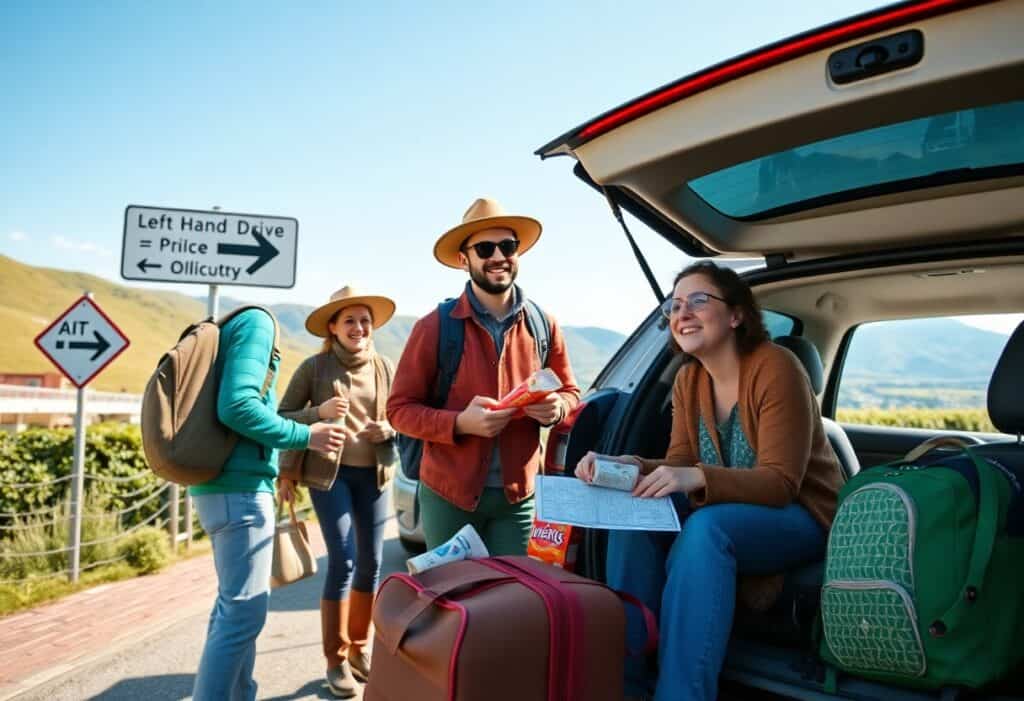
Driving on the opposite side of the road feels unfamiliar at first, but the adjustment is manageable when you focus on a few high-risk moments. If you’re renting a car abroad, start with the basics in this traveler’s guide to renting abroad and then use the practical habits below to stay calm, legal, and safe.
Quick orientation
The safest way to adapt is to slow your first hour down on purpose: confirm the car’s setup, repeat the local lane position out loud, avoid dense city traffic at pickup, and give yourself extra space at roundabouts and turns.
- Check which side of the road local traffic uses before you leave the rental lot.
- Adjust mirrors, seat, and controls before starting the engine.
- Say the turning rule to yourself at intersections: keep left, enter left, exit left where applicable.
- Expect roundabouts, merges, and lane changes to require extra attention.
- Plan a short first drive so you can settle in before tackling highways or unfamiliar cities.
Know The Terminology Before You Drive
The wording matters because these terms are often mixed together. Left-Hand Traffic means cars drive on the left side of the road. Right-Hand Traffic means cars drive on the right side of the road. Left-Hand Drive or Right-Hand Drive refers to the steering wheel position inside the car.
- In left-hand traffic countries, the steering wheel is usually on the Right side of the car.
- In right-hand traffic countries, the steering wheel is usually on the Left side of the car.
- Rental companies usually provide a vehicle that matches the country’s traffic system.
- The main challenge is not the car itself — it’s retraining your driving habits.
If you want the broader traffic-side explanation behind these conventions, the most useful companion piece is why Americans drive on the right. That article covers the bigger picture; this one stays focused on what you actually need to do once you pick up the keys.
What To Check Before You Leave The Rental Lot
Most mistakes happen when travelers rush straight from pickup into traffic. A calmer start makes the rest of the trip easier.
- Seat And Mirrors set everything before moving, even if the car looks familiar.
- Controls check turn signal, headlights, wipers, and hazard lights so muscle memory works later.
- Navigation enter the destination before departure, then keep the phone mounted and hands free.
- Fuel And Tolls ask how tolls, parking, and fuel charges work locally so there are no surprises.
- Insurance confirm what is covered in case of road damage or a minor scrape.
If your pickup includes a short briefing, take it seriously. Rental staff often know the most common local mistakes, including roundabout behavior, road etiquette, and city parking rules. For more general pickup advice, this pickup inspection checklist is a useful companion before you turn the key.
The First-Day Habits That Keep You Safe
Stay Slow On Purpose
The goal is not to drive timidly forever. It is to create a buffer while your brain adjusts to new lane positions and turn patterns.
Repeat The Local Rule
Say the lane and turning direction out loud before each turn, especially at roundabouts or when merging back into traffic after a stop.
Avoid Peak Confusion Points
Try not to start with airport expressways, heavy rain, night driving, or a dense city center if you can choose another route.
Take A Short Break Early
If the first stretch is mentally heavy, stop for coffee or lunch before fatigue makes small errors more likely.
If your trip crosses several countries, it helps to confirm whether your route includes border changes, toll systems, or different enforcement rules. For that planning stage, driving a rental car across European borders is worth checking before you commit to a route.
Where Drivers Get Tripped Up Most Often
The same few situations create most of the risk for first-time visitors. If you prepare for them, the trip gets much easier.
- Roundabouts watch for the correct entry side and never assume traffic will behave like home.
- Turns the first turn after a stop can be the easiest place to drift into the wrong lane.
- Overtaking be extra deliberate about lane choice and mirror checks before passing.
- Parking check curb direction, signage, and local parking time limits carefully.
- Tolls And Gates slow down early so you do not panic at booths, barriers, or ticket machines.
This is also where vehicle familiarity matters. If you normally drive an automatic at home, keeping the same transmission can reduce the number of things you need to think about. For broader rental decisions, choosing the right rental car for your journey helps you match the vehicle to the route instead of the other way around.
Before you book or pick up the car
If you’re still comparing options, start with the broader rental advice in essential U.S. road trip rules and tips and then confirm the local driving side, insurance, and pickup location for your destination.
The best choice is usually the one that keeps the first day simple: familiar transmission, clear insurance, manageable pickup point, and enough time to adapt before a long drive.
Common Left-Hand Traffic Countries, Briefly
A few well-known examples include the UK, Ireland, Malta, Cyprus, Australia, New Zealand, Japan, India, and South Africa. The exact road culture and signage vary, so the safest move is always to study the local rules rather than assuming one country behaves like another.
If your destination is one of the most popular left-hand traffic drives, you may also want destination-specific guidance such as driving in Ireland or a UK road trip guide once you’ve handled the basics here.
A Simple First-Day Checklist
- Confirm which side of the road local traffic uses.
- Check that the car matches local rules and your comfort level.
- Set navigation before leaving the lot.
- Drive your first miles on quiet streets if possible.
- Take roundabouts, merges, and turns more slowly than usual.
- Keep extra distance from the car ahead.
- Stop early if fatigue or stress starts to build.
Frequently Asked Questions
What Is The Easiest Way To Adjust To Driving On The Left?
Keep your first drive short, drive slower than usual, and repeat the lane rule out loud before turns, roundabouts, and merges. Familiar habits return faster when you remove time pressure.
Should I Choose An Automatic Rental Car Abroad?
If you want fewer things to manage, an automatic can make the adjustment easier. It is especially helpful when you are already learning a new road system, parking style, and signage set.
What Should I Watch For At Roundabouts?
Use the correct entry lane, check for circulating traffic, and avoid rushing the exit. Roundabouts reward patience more than confidence.
Do Rental Cars Usually Match The Local Traffic System?
Yes. Rental companies normally provide cars with the steering wheel on the correct side for the country, so the bigger challenge is adapting your driving habits, not the vehicle layout itself.

Jessica Malone is a passionate writer and travel enthusiast, specializing in affordable car rental solutions. With a keen eye for detail, she explores various aspects of cheap car rentals, offering readers practical tips and insights to maximize their travel experiences. Through her engaging articles, Jessica aims to empower travelers to make informed decisions and navigate the world of online car rental services with ease.



Your insights about driving in left-hand traffic countries resonate with me; the first time I drove in the UK, I remember feeling overwhelmed yet excited. It’s fascinating how something as simple as side of the road can impact our mindset and driving habits. I think it’s also important to consider how cultural attitudes toward driving can differ. For instance, in some countries, honking is seen as rude, while in others, it’s just part of the driving experience.
You’ve hit on something really interesting—the way driving is not just about getting from point A to point B, but also how it reflects broader cultural norms and attitudes. I remember my own first experience behind the wheel in the UK. Everything felt backward at first, from the street signs to how I held the steering wheel. I had to school my brain not just in terms of where to drive, but in how to interact with other drivers. It’s like a dance that you’ve never learned the steps to.
You’ve captured that feeling perfectly—the initial chaos of navigating a new driving environment really hits home. I remember having a similar experience when I took a road trip in Australia. The shift to driving on the left was jarring, and those roundabouts took some serious getting used to. It’s fascinating how much our driving style can embody cultural nuances, from how aggressively people merge to the unwritten rules of politeness on the road.
It’s interesting how our experiences behind the wheel can bridge cultural differences, isn’t it? Driving on the left in Australia definitely presents its own set of challenges, especially when you’re used to the right. Those roundabouts can feel like a game of strategy where you’re trying to read not just the road signs but also the other drivers’ intentions.
You’ve described that feeling behind the wheel so well. I remember my own first time driving in a different country, and it really highlighted how ingrained our cultural norms are, even in something as routine as driving. I drove in Japan, where not only did I have to adapt to driving on the other side of the road, but the whole experience felt almost like stepping into an alternate reality.
Driving in a different country can really be a profound experience, can’t it? It’s fascinating how something as ordinary as getting behind the wheel can highlight the subtle but significant differences in cultural norms. When I drove in Italy, I had to adjust my perception of road etiquette; what’s considered courteous driving here felt almost reckless there. The way people interact on the roads, how they use their horns, or even the pace at which they drive speaks volumes about their culture.
You touch on an interesting point about cultural differences in driving behavior. It’s amazing how something so fundamental can change from one country to another. For example, I noticed in Italy, the concept of personal space on the road is quite different. Speeding and merging can feel a bit like a dance—everyone seems to understand the rhythm, even if it looks chaotic at first glance.
You’ve captured that essence of driving in Italy perfectly. It really does feel like a dance, doesn’t it? There’s this unspoken understanding among drivers that allows for a more fluid interaction on the road, even if it has a hint of chaos. I think it speaks to a broader cultural aspect too—how Italians tend to embrace life with a certain passion and improvisation that seems reflected in their driving.
It really is a fascinating experience, driving in Italy. The way everyone seems to flow together on the road has that unique rhythm, much like a dance, as you said. I’ve always felt that it reflects a deeper cultural essence—there’s a sort of poetry in the way Italians navigate their lives, whether it’s on the road or at the dinner table.
I love how you put it—there really is an artistry to driving in Italy. It reminds me of how much of life there revolves around these spontaneous expressions of connection and community, whether in motion on the road or sharing a meal. The rhythm you mention feels almost instinctual; it’s like everyone is attuned to an unspoken understanding of each other’s presence and needs.
You’ve captured something really special there. The way driving in Italy often feels like an extension of the vibrant social fabric is fascinating. It’s interesting how much of that rhythm you mention transcends just driving; it’s evident in how people engage with each other in daily life, from the lively discussions at a café to the animated gestures of street vendors. It creates this palpable sense of belonging.
I completely agree with you—the artistry of driving in Italy is something special. There’s a certain beauty in how the landscape seems to shift with the rhythm of the roads, and it’s almost like each turn invites a story. It’s fascinating how those moments on the road can mirror the larger aspects of life, like community and connection. It reminds me of how meals in Italy are less about just eating and more about gathering. The act of sharing a meal often feels like a celebration of relationships, much like those shared experiences in traffic, where there’s a sense of understanding that transcends language.
You’ve touched on a really interesting point about the way driving in Italy mirrors the broader cultural rhythms. It’s almost like there’s an unspoken understanding among drivers—everyone’s in sync to some degree, moving gracefully through the chaos. It’s not just about getting from point A to point B; it’s a reflection of that deeper tapestry of life here.
You’ve hit the nail on the head. That dance you describe is a fascinating blend of precision and spontaneity. In Italy, there seems to be a collective rhythm that everyone picks up on, where each driver plays a part in a larger performance.
I really appreciate how you framed that. The comparison to a dance resonates deeply with me, especially considering how driving in Italy often feels less about individual navigation and more about harmonizing with others. It takes a certain kind of intuition to adapt to that fluidity, almost like a live jazz session on the road.
Your observation about the fluidity of Italian driving reminded me of an insightful guide I recently read about renting cars in Europe, which touches on how to navigate that unique rhythm seamlessly.
‘Rent a Car Online in Europe: Your Essential Guide’
https://online.rentacar24.org/rent-a-car-online-in-europe-your-essential-guide/.
I resonate with your thoughts on driving in Italy as a kind of dance. There’s a rhythm to it that feels almost intuitive, where each driver becomes a part of a larger performance. It’s interesting how this fluidity contrasts with the often rigid rules of the road we encounter in other countries, like the strict lanes and speed limits you find in Germany, for example, which while efficient, sometimes lacks that spirited energy.
It’s really interesting that you mention that collective rhythm—it’s almost like a form of choreography that goes beyond just driving. When I was in Italy, I noticed how drivers communicate almost instinctively; a subtle nod, a gentle wave, or even a quick tap of the horn can convey so much. It feels less like chaos and more like an intricate dance where everyone is in sync, even amidst the hustle.
It’s interesting how navigating the roads can mirror that rhythm you mentioned; if you’re considering a car rental, there’s a handy guide that lays out everything you need for a smooth journey.
‘Rent a Car Online: Your Safe and Secure Guide’
https://online.rentacar24.org/rent-a-car-online-your-safe-and-secure-guide/.
You bring up a really cool point about driving in Italy. It’s like stepping into a whole other world, right? The rules seem to bend a bit, and it does feel like everyone is part of this unspoken agreement about how to navigate the roads. That melding of chaos and rhythm is something else—like an art form on wheels.
You nailed it with that sense of overwhelming excitement! Driving in a foreign country can feel a bit like trying to juggle flaming swords while riding a unicycle – thrilling and slightly terrifying. The first time I took to the roads in the UK, it was as if I’d stepped onto the set of a British comedy, where everything was just a touch off-kilter. My internal compass was doing somersaults, as I kept glancing to the left when I should have been doing a double take on the right.
I completely understand the nerves that come with driving on the left side of the road for the first time! I remember when I rented a car in Australia; it felt like my brain was doing acrobatics just trying to adjust. One trick that helped me was visualizing the car in the middle of the lane rather than focusing on the curb—this made it easier to relax.
I can totally relate to the nervousness that comes with planning a road trip in a country where you’ll be driving on the left. I remember the first time I rented a car in the UK. The thought of sitting on the right side and navigating those narrow roads was daunting. It took me a while to adjust, especially during those first few roundabouts!
I get where you’re coming from. The first time I drove in the UK, I felt like I was stepping into another world—sitting on the right side was so disorienting, and those narrow roads can be a real test of nerves! I remember gripping the steering wheel like it was a lifeline, especially when it came to those roundabouts. It often feels like a free-for-all, doesn’t it? Trying to figure out who has the right of way while also keeping an eye on the car next to you is quite the juggling act.
I can totally relate to the mixed feelings of excitement and nervousness when driving in a country with left-hand traffic—it’s such a unique experience! I remember my first time renting a car in the UK; I was apprehensive about navigating roundabouts and the whole sitting-on-the-right side of the car thing! But with a bit of practice and patience, I learned to embrace the differences.
I get what you mean about the mix of excitement and nervousness. That first drive in a new country can feel like a rite of passage. The roundabouts can really throw you off, can’t they? I found it helpful to focus on what makes each experience unique rather than stressing about whether I was doing it ‘right.’ Each curve in the road, every different sign, adds a new layer to the adventure. And after some time, those little quirks, like the driver being on the right side of the car, start to feel second nature. It’s fascinating how our brains adapt, isn’t it? Have you found any tips or tricks that helped you ease into it?
I can totally relate to that mix of excitement and nervousness too. There’s something about driving in a new environment that really heightens the experience of travel. I remember my first time in Australia, adjusting to the roundabouts while keeping an eye out for kangaroos—not something we have to deal with back home.
I can definitely relate to that mix of excitement and nervousness. Driving in a different country can feel like a rite of passage—it’s both exhilarating and a bit daunting. When I rented my first car abroad, I was equally worried about all the little things, like understanding the local traffic signs and figuring out the nuances of the road. Roundabouts can be especially tricky at first; the flow of traffic and right-of-way rules can really throw you off.
I totally get where you’re coming from. That mix of excitement and nervousness definitely hits hard when visiting a country where you’ll be driving on the left. It’s like stepping into an entirely different world, right? I remember the first time I ventured out in a car with everything flipped around. My heart was racing as I approached the roundabout, gripping the steering wheel a bit too tightly. It dawned on me how much I rely on muscle memory when driving, and suddenly everything felt like it was in reverse!
I really resonate with your insights about the challenges of driving in left-hand traffic countries. Having recently returned from a road trip in the UK myself, I can vouch for how daunting it can initially feel! The experience is both thrilling and nerve-wracking, especially when you first sit on the right side of the vehicle and navigate those roundabouts.
Your experience really highlights an important point about driving in places with different traffic rules. It’s interesting how something as simple as sitting on the ‘wrong’ side of the car can completely shift your perspective. Those roundabouts can feel like a puzzle at first—juggling speed, direction, and unfamiliar road markings can definitely be overwhelming.
Navigating a new country’s roads can indeed be a daunting yet exhilarating challenge. I remember my first experience driving on the left while traveling in Australia; it felt like my brain was rewiring itself with every turn. The initial confusion often makes us overly cautious, but it’s in that adjustment phase that some of the most memorable travel experiences occur.
Your experience driving on the left in Australia strikes a chord with me. It’s fascinating how our minds adapt to something so foreign, isn’t it? I remember my first time navigating busy streets in Japan. The signs felt like a puzzle, and I was constantly second-guessing myself.
I can totally relate to that feeling of your brain rewiring itself while driving on the left. It’s a unique challenge that makes you so much more aware of your surroundings. The initial confusion might feel overwhelming, but it’s fascinating how that uncertainty can lead to some unforgettable moments.
I totally relate to that feeling; diving into the unknown of unfamiliar roads can be overwhelming yet memorable, and I found a helpful resource that covers navigating car rentals and mobile payments, which might make that adjustment a little smoother.
‘Rent A Car Online With Mobile Payment: Which Platforms Support It And How To Book Safely’
https://online.rentacar24.org/rent-a-car-online-with-mobile-payment-complete-guide/.
I can totally relate to the mix of excitement and anxiety that comes with driving in a country where the traffic rules are flipped. I’ve done a bit of driving in the UK, and I remember the first time I got behind the wheel; I felt like I was in a constant game of mental gymnastics. It’s all about turning those instincts you’ve built up with right-hand traffic upside down!
Navigating the roads in a country with flipped traffic rules can definitely feel like an adventure, can’t it? Your experience in the UK resonates with so many who’ve found themselves in a similar situation. The moment you first grip the steering wheel on the other side of the car, it’s like you’ve stepped into a different world where everything you thought you knew gets thrown out the window.
Navigating those flipped traffic rules really does reframe how we see driving, doesn’t it? It’s like a rite of passage, where every turn and roundabout feels like a little challenge. That first time you make a left turn instead of a right—there’s a rush of adrenaline mixed with a sprinkle of fear, but it’s all part of the experience.
You’re spot on about that feeling when you first get behind the wheel on the opposite side. It truly does feel like stepping into another world. I remember my first time trying to navigate those roundabouts. My brain was in overdrive trying to process everything: the road signs, the flow of traffic, and, of course, the sensation of sitting on the wrong side.
Ah, the thrill of driving on the left! It’s like trying to dance the tango while everyone else is doing the cha-cha—exciting yet potentially disastrous if you’re not paying attention. I remember my first (and somewhat chaotic) attempt at this rite of passage during a trip to New Zealand. There I was, gripping the steering wheel with the strength of someone who had just been told they had to bungee jump off a bridge—eager yet terrified.
It’s interesting how something as seemingly simple as driving can feel so daunting in a foreign country, especially when it comes to left-hand traffic. I remember my first experience driving in England—I was so convinced I’d accidentally turn into the wrong lane that I could barely enjoy the scenery!
Driving in a foreign country definitely brings its own set of anxieties, especially when you have to adjust to a completely different system like left-hand traffic. I remember my first time driving in Australia. The whole experience was nerve-wracking—trying to remember not only which side of the road to stay on, but also the layout of roundabouts, which felt like a puzzle I couldn’t quite solve.
It’s fascinating how driving can bring out a mix of excitement and anxiety, especially when navigating new environments. Your experience in England sounds all too familiar. The sheer challenge of adjusting to left-hand traffic can overshadow the beauty of the journey. I remember my first time driving in Australia, and I felt like I had to almost rewire my brain with every turn I took.
I can relate to that feeling—it’s almost like stepping into a whole new world. The anxiety of turning into the wrong lane can be overwhelming, but it also makes you more aware of your surroundings. I found that after a few nerve-wracking moments, I began to appreciate the little quirks of driving in a different culture. The way people navigate roundabouts, or even how local drivers interact with one another, tells you so much about the rhythm of the place. It might take a little courage at first, but embracing that uncertainty can lead to some of the most memorable experiences. Have you thought about how that initial fear can turn into a new sense of adventure?
You’ve raised an important point about the challenges of driving in a left-hand traffic country. I remember my first experience driving in the UK, where I found myself constantly second-guessing whether I was on the right side of the road—especially at roundabouts! It really underscores how ingrained our driving habits are based on our home country’s systems.
Ah, the joy of driving on the “wrong” side of the road! I remember my first time navigating the left-hand traffic in the UK. A two-second glance at a roundabout nearly sent me spinning into the universe! I was staring at it like it was a Rubik’s Cube and trying to remember if I should yield to my left or right—let’s just say my internal GPS had a meltdown!
Navigating roundabouts in the UK can definitely feel like a real-life puzzle at times. It’s funny how we take for granted the simplicity of driving until we’re thrown into a completely different set of rules. I remember my first experience on the left side as well. I had that same moment of panic, trying to remember which way to look before entering a roundabout. I think what’s interesting is how these experiences push us out of our comfort zones, forcing us to adapt and think on our feet.
You hit the nail on the head about the puzzle-like nature of roundabouts in the UK. The first time I navigated one, I remember feeling like I was in a video game, trying to remember all the rules as I approached. It’s true that driving can seem so straightforward until you face a completely different system. The challenge is definitely a mental exercise, but it also highlights how adaptable we can be in unfamiliar situations.
Ah, the roundabout conundrum—it’s like a game of chess for your car, isn’t it? That moment when you’re just trying to figure out if you should be yielding to the left or right feels like being in a live-action version of a logic puzzle. I remember my own introduction to the left-hand side of the road. I had a similar experience where the roundabout seemed to be laughing at my confusion, while I just sat there, contemplating my life choices.
I completely resonate with your thoughts on navigating the driving realities of countries with left-hand traffic! When I took a road trip to Australia last year, I felt that familiar mix of thrill and anxiety when I hopped into the car. Sitting on the right felt like a strange new world.
I totally get where you’re coming from. That mix of thrill and anxiety is something every driver feels when switching sides of the road. When I made my way to the UK a few years back, I remember gripping the steering wheel a bit too tightly, feeling like I’d entered a whole new game. Everything about driving feels different—how you judge distances, the way the roundabouts work, even which side your passengers get in! It’s wild how something that seems so simple can flip your brain upside down.
I can totally relate to that feeling of being thrown into a different driving world. It’s amazing how our brains can feel so overwhelmed with what seems like a simple task. I remember my first time driving on the opposite side—it was like learning to ride a bike all over again. The roundabouts were particularly tricky for me; I kept second-guessing myself about when to yield or when to merge. It’s interesting how navigating these changes in routine can really highlight our brain’s adaptability, though.
I can completely relate to that mix of thrill and anxiety when driving in countries with left-hand traffic. It’s such an odd feeling, especially when you’re so used to one side of the road. I remember my first time driving in the UK—it felt like I was constantly second-guessing myself, even turning at the simplest intersections.
I get what you’re saying; that feeling of mixing excitement and a bit of nerve when driving in a country with left-hand traffic is definitely something many of us have gone through. I remember my first experience driving in the UK too, and it was like stepping into a new reality where everything felt just slightly off-kilter. Each time I took a turn, I had to remind myself that the familiar concept of “stay right” suddenly didn’t apply.
Ah, the delightful chaos of driving on the left side of the road! It’s like suddenly being thrust into a live-action game of Twister, but with cars instead of colored dots—and trust me, the stakes are much higher than just losing your balance on a blue circle!
Your exploration of driving in left-hand traffic countries is both insightful and incredibly important for travelers eager to embrace the road. I can certainly relate to the nervous excitement that comes with the idea of renting a car in such a setting!
I really appreciate your perspective on driving in left-hand traffic countries. It’s true that the blend of nervousness and excitement can be a bit overwhelming, but it also opens up a whole new realm of experiences. I remember my first time renting a car in the UK; every turn felt like a mini adventure, navigating the roundabouts and getting used to shifting gears with my left hand.
I totally get that mix of nerves and excitement—if you’re thinking about renting a car for the first time, I found some practical tips that really helped me navigate the experience smoothly.
‘First-Time Online Car Renters: Essential Tips to Know’
https://online.rentacar24.org/first-time-online-car-renters-essential-tips-to-know/.