
The Louvre Museum in Paris is the most visited museum in the world, drawing roughly 10 million visitors a year. If you want a fast comparison of the museums that attract the biggest crowds, start with the ranking below and then decide which collections fit your trip best.
Quick take
- The Louvre is the clear number one by annual attendance.
- For a broad art survey, the travel and culture articles hub can help you pair museum visits with city plans.
- If you care most about visitor numbers, the top tier is led by the Louvre, the Vatican Museums, and the National Museum of China.
- If you care most about a specific collection, museums like the Van Gogh Museum, MoMA, and the Prado are especially rewarding.
| Rank | Museum | City | Country | Annual visitors |
|---|---|---|---|---|
| 1 | Louvre Museum | Paris | France | About 10 million |
| 2 | National Museum of China | Beijing | China | About 7.3 million |
| 3 | Vatican Museums | Vatican City | Vatican City | About 6.8 million |
| 4 | British Museum | London | United Kingdom | About 6.2 million |
| 5 | National Gallery | London | United Kingdom | About 6 million |
| 6 | State Hermitage Museum | St. Petersburg | Russia | About 4.2 million |
| 7 | MoMA | New York | United States | About 2.2 million |
| 8 | Van Gogh Museum | Amsterdam | Netherlands | About 2 million |
| 9 | Museo del Prado | Madrid | Spain | About 3 million |
| 10 | Museu de Arte de São Paulo | São Paulo | Brazil | About 1 million+ |
Best Way To Use This List if you are choosing a museum for a first-time city visit, prioritize the museums with the strongest collections and the easiest access. If your goal is simply to see the busiest museum in the world, the Louvre is the one to beat.
Why The Louvre Ranks First
The Louvre is not just famous because of the Mona Lisa. It is a vast former palace with more than 380,000 objects in its collection and around 35,000 works on display, which is why it consistently leads the world in attendance. The museum’s scale, location in Paris, and concentration of landmark works give it a visitor profile that few institutions can match.
If you are planning a France trip and want to pair the Louvre with the best travel conditions, the seasonal guidance in this France weather and timing guide can help you choose a less crowded period for your visit. Early mornings and late evenings are still the most practical times to see the museum’s headline works with slightly lighter traffic.
Visitor tip
For the Mona Lisa, aim for opening hours or the last part of the day. The painting is much smaller than most visitors expect, so patience matters more than distance.
The Museums That Combine Scale With Standout Collections
The next tier in the ranking is important because these museums are not only busy; they are also widely relevant to general visitors. The National Museum of China offers a sweeping view of Chinese civilization, from ancient jade and bronze to imperial objects and modern displays. The Vatican Museums combine enormous attendance with one of the world’s most important religious art collections, anchored by the Sistine Chapel.
The British Museum and the National Gallery remain London’s strongest draws for different reasons. The British Museum is unmatched for global civilization, with the Rosetta Stone, Parthenon sculptures, Assyrian reliefs, and Egyptian antiquities. The National Gallery is more compact in focus but exceptionally strong for European painting, with free entry to its permanent collection and major works by Van Gogh, Leonardo, and Rembrandt.
If you are building a city break around museum time, the article on top attractions to see in Chicago shows the kind of trip-planning approach that works well in museum-heavy destinations: keep one anchor attraction, then cluster nearby stops around it.
Best Museum Choices By Travel Style
| If you want… | Start with | Why |
|---|---|---|
| The most visited museum in the world | Louvre Museum | Highest attendance and the strongest global recognition. |
| A huge historic-arts complex | Vatican Museums | Multiple galleries, major Renaissance art, and the Sistine Chapel. |
| World history and archaeology | British Museum | Deep cross-cultural collection spanning continents and eras. |
| A focused fine-art visit | National Gallery or Prado | Excellent for classic European painting in a concentrated format. |
A Closer Look At The Rest Of The Top 10
MoMA in New York is the modern-art anchor of the list. Its importance comes from the way it shapes the story of 20th- and 21st-century art, with works such as The Starry Night and Campbell’s Soup Cans, plus rotating exhibitions, film, and educational programs. The museum’s renovation added more breathing room to a collection that now includes around 200,000 works.
The Van Gogh Museum in Amsterdam is one of the most satisfying single-artist museums in the world. Its 200-plus paintings, 500 drawings, and hundreds of letters create a clear chronological picture of Van Gogh’s development. That makes it especially strong for visitors who want depth rather than sheer scale.
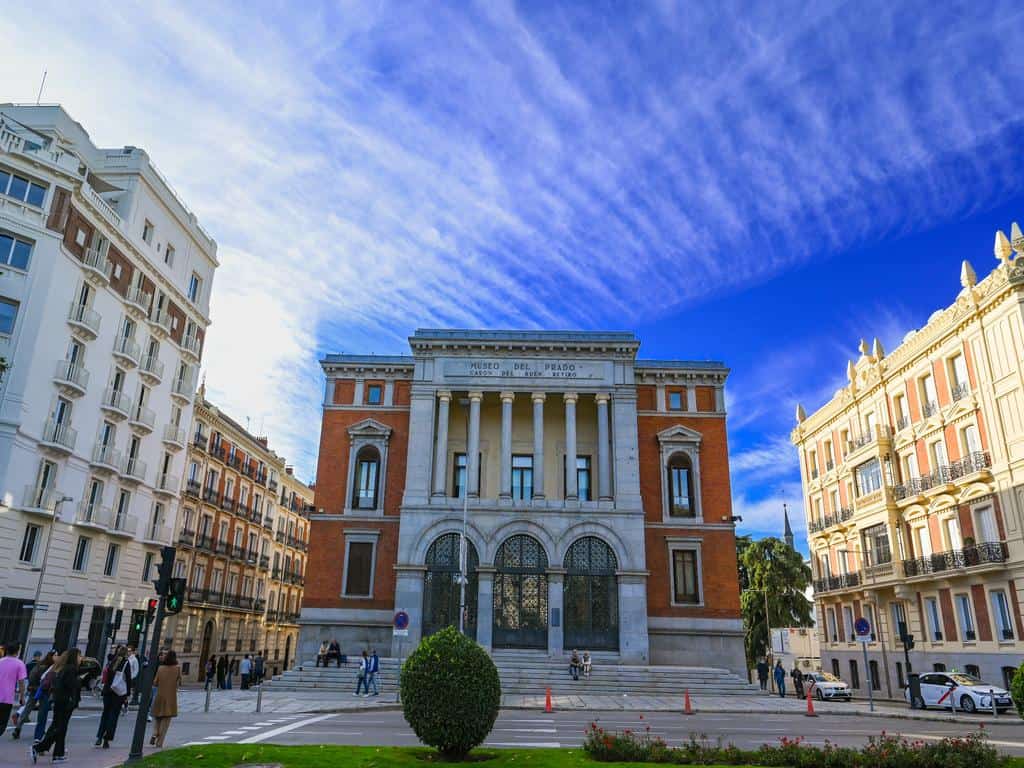
The Prado in Madrid is essential for Spanish art and also strong for European masters more broadly. Highlights such as Las Meninas, Goya’s Black Paintings, and Bosch’s Garden of Earthly Delights give the museum a distinctive profile among the world’s busiest institutions. It rewards visitors who want old master paintings in a serious, museum-first setting.
The State Hermitage Museum in St. Petersburg is another museum where size matters, but it is not just about volume. Housed in the Winter Palace and other historic buildings, it pairs imperial architecture with one of the largest art collections in the world. A full day is the minimum if you want the visit to feel worthwhile.
MASP in São Paulo closes the list with a design that is as recognizable as its collection. The floating easel display system, the broad holdings of Western art, and the building’s suspended form make it one of the most interesting museum experiences in Latin America. Thursday free admission also gives it practical appeal for budget-conscious travelers.
Plan your visit intelligently
Museum crowds are usually driven by city tourism peaks, school holidays, and weekend demand. If your dates are flexible, book timed-entry tickets early for the Louvre, Vatican Museums, and MoMA, and target weekday mornings for the easiest experience.
For broader trip planning around transport, timing, and city movement, this trip-planning guide can help you organize the rest of your itinerary around your museum days.
Why These Museums Keep Drawing Visitors
The most visited museums do not win on attendance by accident. They usually combine a globally known collection, a strong city-center location, major cultural symbols, and enough scale to keep a wide audience interested. The Louvre does all of that at once, which is why it remains the benchmark.
The key pattern across the top 10 is variety. Some museums are visited for a single iconic artwork, some for a national collection, and others for the experience of seeing a major world civilization framed inside one institution. That mix is what makes the list useful for travelers: it shows where the crowds go and why those museums have become destinations in their own right.
Where to go next
If this ranking helped you narrow down which museums to prioritize, keep planning with a practical travel article that fits your route and budget.
Frequently Asked Questions

Megan Hartley is a dedicated writer and travel enthusiast specializing in affordable car rental solutions. With a passion for helping travelers navigate the complexities of securing budget-friendly transportation, she shares insightful tips and engaging content on her platform. Megan’s expertise extends to exploring the latest trends in the car rental industry, ensuring her readers make informed choices for their journeys. Through her work, she inspires others to explore the world without breaking the bank.




Your exploration of iconic museums like the Louvre really highlights how profoundly art and history can shape our understanding of humanity. I often think about how museums serve as time capsules, allowing us to grasp the diverse narratives that inform our present. For instance, the Louvre’s extensive collection exemplifies not just artistic achievement but also cultural dialogue through the ages.
You’ve hit on something really vital about museums and their role in our understanding of history and culture. It’s fascinating to think of them as time capsules, isn’t it? Each piece on display carries its own story, and the way they’re curated speaks volumes about the conversations happening across time and space.
You’ve really tapped into something special with that idea of museums as time capsules. Each artifact is like a little portal to another world, isn’t it? The stories they carry—sometimes joyful, sometimes poignant—are reflections of humanity’s journey. It’s so interesting how the way items are curated can change our perspective. For instance, a single piece might spark multiple discussions depending on the context it’s placed in.
You’ve captured something really special about museums being time capsules. It’s interesting how each piece of art or artifact in places like the Louvre embodies its own story while also contributing to larger cultural narratives. I always find it fascinating to think about how artistic movements respond to the social, political, and technological changes of their times.
It’s interesting how you describe museums as time capsules. They really do serve as portals, don’t they? I often find that standing in a room filled with artworks or artifacts can make you feel a connection to the past that’s almost palpable. The Louvre, with its layers of history, showcases not only the evolution of art but also the shifting cultural paradigms that influence those artistic expressions.
Your reflection on museums really resonates, especially when considering how Marseille’s vibrant culture and history offer a captivating narrative that’s just waiting to be explored.
‘Top things to do in Marseille explore the city’s rich culture and history’
https://rentacar24.org/mustdo-activities-for-exploring-marseilles-culture/.
I appreciate your observations on museums as time capsules; they do have a way of making past lives feel oddly relatable. Walking through the Louvre can indeed feel like a grand game of dress-up, where historical figures glance at us from their frames, judging our lack of togas and the regrettable choice of activewear as everyday attire.
You’ve touched on such an intriguing aspect of museums. They really do act as time capsules, don’t they? It’s fascinating how the Louvre, for instance, isn’t just about admiring stunning pieces of art but also about accessing the stories and dialogues across centuries. Every painting, sculpture, and artifact carries with it a context, a history that connects us to our shared humanity.
Your reflections on museums resonate deeply; it’s fascinating to consider how timing can also shape our experiences of these cultural treasures, which is why I found this seasonal guide to visiting France particularly interesting.
‘Optimal Times to Visit France: A Seasonal Guide’
https://online.rentacar24.org/seasonal-guide-to-visiting-france/.
You bring up an interesting point about the cultural significance of museums, particularly in how they curate and display the narratives of diverse civilizations. The Louvre, with its vast collection, certainly embodies the idea of a global heritage site. However, I wonder how effectively these museums engage with contemporary issues. For instance, many institutions are grappling with repatriation debates regarding artifacts taken during colonial times. This raises questions not just about ownership but also about how these stories are told.
I’ve always been fascinated by how museums like the Louvre not only preserve art but also tell stories of humanity through time. Walking through the Louvre, it’s incredible to think about how many different cultures and eras are represented in just one space. The idea of experiencing art firsthand really changes your perspective, doesn’t it?
You bring up such a compelling point about how museums, like the Louvre, encapsulate stories of humanity. It’s fascinating to think about how each piece of art carries not just aesthetic value but also historical narratives that connect cultures across time. When you stand in front of something like the Mona Lisa, it’s not just about the painting itself but what it represents: the Renaissance, the evolution of artistic expression, and even societal changes that shaped the world.
I completely agree with you about the Louvre’s ability to intertwine art and history. Each piece really does tell a story, and I think that’s one of the most enriching aspects of visiting a museum. There’s something transformative about standing in front of a painting or an artifact that has passed through so many hands and eras. It makes you consider not just the art itself but the lives and cultures that created it.
Speaking of experiencing culture firsthand, I recently came across some great insights on the best UK destinations to explore during Easter that really capture the rich tapestry of history and art we find here.
‘Best destinations to visit during the Easter holidays in the UK’
https://rentacar24.org/top-easter-holiday-destinations-in-the-uk/.
Your exploration of the world’s most renowned museums really highlights their significance as cultural touchstones. The Louvre, with its staggering collection, is indeed an epicenter of art history and global civilization. One aspect that often gets overlooked is how these institutions not only preserve our collective heritage but also engage in dialogue with contemporary issues.
Your exploration of the world’s greatest museums resonates deeply with me. The Louvre, in particular, is a place I’ve dreamt of visiting for years. I often find myself lost in the thought of walking through its grand halls, surrounded by art that spans centuries and cultures. Those 35,000 works of art must tell endless stories about humanity’s creativity and struggles throughout history.
I can relate to that sense of longing for the Louvre; it really is a treasure trove of human expression. The idea of walking through those vast galleries, each piece whispering its own story, is captivating. There’s something quite profound about being surrounded by art that reflects not just individual creativity, but also the collective struggles and triumphs of different cultures over time.
You really captured the essence of what makes the Louvre so special. It’s like stepping into a living history book, where every brushstroke and sculpture reflects human experience across centuries. Walking through those galleries can feel almost like a dialogue with the past.
I completely agree with that perspective on the Louvre. It really does feel like a dialogue with the past, doesn’t it? Each piece has its own story, connecting the viewer to a different time and culture. I remember the first time I saw the Mona Lisa in person. It was almost surreal to stand in front of an artwork that has intrigued so many people over centuries.
I appreciate your insights into the world’s museums! The diversity of collections, especially in places like the Louvre, really highlights how culture transcends time and geography. One of my most memorable visits was to the British Museum in London, where the Rosetta Stone really brought history to life for me. It’s fascinating how artifacts can connect us to different eras and civilizations, sparking a sense of shared humanity.
It’s intriguing how visiting a place like the British Museum can create that bridge between us and the past, especially with an artifact as significant as the Rosetta Stone. It acts almost like a time capsule, doesn’t it? But you have to wonder about the broader implications of how these items are displayed and where they come from.
Your experience at the British Museum really resonates with me. The Rosetta Stone is such a powerful symbol of connectivity through language and culture. It’s interesting how one artifact can unlock so much history and showcase the ingenuity of different civilizations. I remember my own visit to the British Museum, and there was something deeply moving about standing in front of the stone, knowing how it bridged the gap between ancient and modern understanding.
Your exploration of the great museums really brings back memories of my own travels! The Louvre holds a special place in my heart; I remember standing in front of the Mona Lisa, feeling the weight of art history around me. It’s fascinating how a museum can be a time capsule, preserving not just art but also the stories and cultures behind them.
I can completely relate to that feeling in front of the Mona Lisa. There’s something surreal about being in such a storied space, where every brushstroke on the canvas is a connection to the past. It’s interesting to think about how museums, like the Louvre, are not just repositories of art, but also of human experience. Each piece tells a story—not just the artist’s, but the stories of everyone who has come into contact with that work over the years.
Speaking of memorable experiences, I recently came across this guide about a road trip along the Garden Route in South Africa that captures the essence of adventure and the rich tapestry of cultures along the way, reminiscent of those unforgettable museum visits.
‘Garden Route Road Trip: Your Ultimate Adventure Guide in South Africa’
https://online.rentacar24.org/garden-route-road-trip-your-ultimate-adventure-guide-in-south-africa/.
What a compelling overview of the world’s museums! The Louvre certainly holds a special place in my heart, not just for its vast collections, but for how it continues to inspire generations. I remember my visit there, feeling the weight of history in each gallery—each artifact telling a story of its time. It’s fascinating to think about how museums like the Louvre and MoMA are more than just places to display art; they are vital cultural hubs that foster creativity and critical dialogue.
I appreciate your thoughts on the Louvre and its impact. There’s something truly special about standing in front of pieces that have weathered centuries, isn’t there? The stories behind each artifact can awaken a curiosity that lingers long after you’ve left the galleries.
I completely get what you mean about the special feeling that comes with standing in front of centuries-old pieces. It’s almost like a time machine, isn’t it? I remember visiting the Louvre for the first time and feeling a bit overwhelmed, not just by the size of the museum, but by the sheer weight of history encapsulated in those artworks. Each piece feels like a portal to another time, and you can’t help but wonder about the lives of the people who created them and the context in which they existed.
Speaking of exploring the world and uncovering stories, I recently came across some practical tips for renting a car online, especially tailored for drivers under 25—definitely worth a look if you’re planning your next adventure.
‘Essential Guidelines for Renting a Car Online for Drivers Under 25’
https://rentacar24.org/essential-guidelines-for-renting-a-car-online-for-drivers-under-25/.
It really is fascinating, isn’t it? The way history can be encapsulated in a single painting or sculpture has a profound impact on how we perceive our own narrative. Standing in front of the Mona Lisa or the Venus de Milo, I often find myself reflecting on the lives of the creators and the eras they lived in. These artifacts not only tell us about the past but also bridge the gap to our present.
It’s great to hear your thoughts on the Louvre and its significance. You captured a vital aspect of museums—their role as vessels of history and culture. Your experience highlights something that often gets overlooked in discussions about major institutions. While the grand collections and stunning architecture certainly draw visitors, it’s the stories and connections that linger long after a visit.
Your exploration of the world’s greatest museums raises some fascinating points, particularly about how these institutions serve as custodians of human creativity and history. While the Louvre is certainly iconic, I find myself reflecting on how different museums can resonate with visitors in unique ways, depending on their personal interests and backgrounds.
It’s fascinating how museums serve as both guardians and storytellers of our shared human experience. The mention of the Louvre particularly resonates with me, given its profound historical significance and the sheer volume of artwork it houses. However, I often wonder about the accessibility of such colossal institutions. While the Louvre draws millions, it’s easy for the average visitor to feel overwhelmed and lost among its vast collections.
You’ve tapped into something really important about the experience of visiting museums like the Louvre. It’s true that the sheer size and scope of such institutions can be daunting for many. It’s easy to feel like a small fish in a vast ocean of art and history.
You bring up such a good point about the dual role of museums as guardians and storytellers. It’s intriguing how institutions like the Louvre, with its incredible collections, can evoke both awe and a sense of being overwhelmed. I think about my own experiences in large museums. There’s always that moment when you step in and the sheer scale hits you—it can feel like trying to sip from a fire hose.
I totally get that feeling of being overwhelmed in a vast museum; if you’re looking to explore top attractions in Chicago that offer both history and a more accessible experience, I recently came across some great insights that might interest you.
‘Must-See Attractions in Chicago: Top Things to Do on Your Visit’
https://online.rentacar24.org/top-attractions-to-see-in-chicago/.
Your exploration of the world’s greatest museums has really resonated with me, especially as someone who has always believed art and history are profound reflections of our shared human experience. The mention of the Louvre brings back fond memories of my own visit; there’s something truly magical about standing in front of the Mona Lisa and witnessing the diverse array of visitors, each with their unique stories and reasons for being there. It’s almost like you can feel the collective energy of the past and the present converging in that moment.