
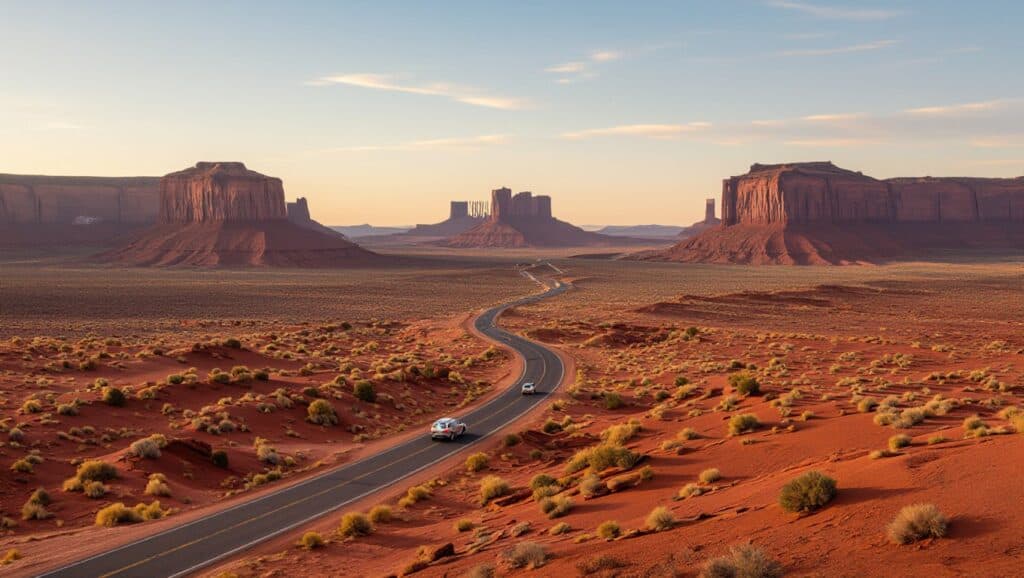
Monument Valley Scenic Drive is one of the most recognizable desert loops in the Southwest, but the practical questions matter first: how long it is, whether you can drive it yourself, and what access rules apply.
If you are comparing it with other open-road trips, you can also look at our broader USA scenic routes overview for context.
Quick Planning Facts
What To Know Before You Go
Monument Valley is not a generic roadside pull-off. It is a Navajo Tribal Park landscape where access, timing, and route choice affect the whole experience. The drive is short on paper, but the stops, light, and road surface determine whether it feels rushed or memorable.
That is why the most useful planning question is not just whether the drive is scenic; it is whether you want a simple self-drive loop, a photo-focused outing, or a deeper visit with local context. For travelers comparing destinations, the Southwest desert drive guide is a useful companion page.
The best way to approach Monument Valley Scenic Drive is to treat it like a half-day outing with a clear plan: arrive before the harshest heat, leave room for stops, and check access rules before you commit to the road.
Best For
Travelers who want a classic desert loop, iconic buttes, and a route that works well for photography and first-time visitors.
Less Ideal For
Anyone expecting a fast, fully paved roadside stop with frequent services or a free-form off-road route.
Good To Bring
Water, sun protection, cash or card for entrance fees, fuel, and a camera with extra battery or memory card.
Route Highlights And The Stops Worth Building Around
The drive is famous for its broad views and landmark formations, but the route becomes much more rewarding when you know which stops matter most. The classic names keep appearing for a reason: they frame the valley at different scales and in different light.
Start With The Iconic Overlooks
Mitten Buttes, John Ford’s Point, and Artist’s Point are the stops most visitors remember because they show the valley’s scale immediately. They are also the easiest places to understand the layout of the loop before you decide how long to linger.
If your goal is a classic Monument Valley image, start early and work toward the viewpoints with the most open horizons first, then save the more detailed formations for slower stops later in the route.
Build In A Few Specialized Photo Stops
The Totem Pole, Three Sisters, North Window, and Ear of the Wind give the route more variety than a simple panoramic drive. Some are especially strong at golden hour, while others are more interesting for close framing and scale.
Agathla Peak sits farther out in the visual story of the drive, but it helps you read the wider desert setting and gives context to the valley’s geology.
Timing, Access, And Road Conditions
This is the section that changes the trip from easy to frustrating if you ignore it. Monument Valley’s scenery is constant, but the experience changes a lot with heat, weather, crowd levels, and the condition of the road surface.
Road conditions can vary, so do not assume the same driving feel year-round. Check local updates before you go, especially after storms or during periods of heavy traffic. Limited cell service also means you should not rely on live navigation alone once you are inside the park area.
If your trip is tied to a broader road-trip schedule, this is where timing matters most: Monument Valley works best when it is not squeezed between long highway legs. Travelers planning a wider loop can pair it with the scenic routes collection to compare how much time to allocate.
Practical Planning For Self-Drivers
One of the most common questions is whether you can drive your own car through Monument Valley. In many cases, yes, but that answer only works if your vehicle, the current road conditions, and the park rules all line up.
Before You Enter
Confirm entrance fees, road status, opening hours, and any restrictions that may apply to private vehicles. Conditions can change, especially after rain or in busy seasons.
What To Expect
The route is scenic rather than fast. Expect slower speeds, photo stops, and stretches where the road surface is less forgiving than a normal highway.
If You Do Not Want To Self-Drive
A guided visit can be a better choice if you want cultural interpretation, easier logistics, or a more relaxed pace without managing the route yourself.
That is also where a rental-car decision becomes useful. For travelers building a Southwest itinerary, a practical vehicle and a clear fuel plan matter more than a glamorous upgrade. If you are still sorting transport, our hidden-fees guide can help keep the trip simple.
A rental with decent ground clearance and the right insurance can make the drive feel easier, but the real win is planning around the park, not the car. If you are comparing itinerary types, the goal is to match the route with the trip you actually want: short scenic loop, cultural stop, or full-day photo session.
Fees, Permits, And The Kind Of Budget To Expect
Visitors often search for a single ticket price, but the real cost depends on whether you are self-driving, joining a tour, or extending the visit with lodging and meals nearby. The drive itself is not a long-distance fuel expense, but the park fee and the quality of the experience add up quickly if you are unprepared.
- Budget for entrance or access fees before arrival so you are not delayed at the gate.
- Bring water and snacks, because food services may be limited or distant from the viewpoints.
- If you want sunrise or sunset, consider staying nearby rather than trying to do the drive as a quick add-on.
- A guided tour can cost more, but it often adds local interpretation that changes the trip from scenic to meaningful.
For many visitors, the best value is not the cheapest entry but the cleanest plan: arrive at the right time, know the access rules, and avoid wasting daylight on logistics.
How To Make The Drive Worth The Time
Because the loop is not especially long, the difference between a good visit and a great one usually comes down to pacing. The valley rewards patience. If you rush it, the famous views still look impressive, but you lose the rhythm that makes the route feel iconic.
A Simple Way To Structure The Stop Sequence
- Start with the broad overlooks so you understand the valley layout.
- Pause at the classic formations when the light is strongest and traffic is lightest.
- Leave time for the lesser-known details, especially if you are photographing textures and silhouettes.
- Do not schedule the drive so tightly that you have to skip the final viewpoints.
If you are building a full road trip around Monument Valley, it can help to compare it against broader scenic-drive options rather than treating it as a standalone detour. The most useful comparison page on this site is still the Southwest desert drive guide, which gives a wider planning frame without taking attention away from this route.
Plan The Visit With The Right Expectations
Monument Valley Scenic Drive is best when you treat it as a deliberate half-day outing, not a drive-by landmark check. The route is short enough to stay manageable, but it becomes much more rewarding when you account for access rules, photo stops, and the cultural setting of the land.
If you are still comparing where this drive fits in a larger route, start with the wider USA scenic routes overview, then come back to this page for Monument Valley-specific planning.
Best Next Step check current access conditions, decide whether you want a self-drive or guided visit, and line up your timing around sunrise, sunset, or the cooler shoulder seasons.
Frequently Asked Questions
How Long Is The Scenic Drive In Monument Valley?
The main loop is about 17 miles, but the total experience is longer once you factor in stops, road conditions, and photo time.
Can You Just Drive Through Monument Valley?
Yes, but “just driving through” undersells the route. The drive is designed around viewpoints and the landscape is best experienced with planned stops.
How Much Does It Cost To Go To Monument Valley Scenic Drive?
Costs vary depending on whether you self-drive or take a guided tour, so check the current park fee and any tour pricing before you arrive.
Can I Drive My Own Car Through Monument Valley?
In many cases, yes, but you should confirm the current rules and road conditions before setting out, especially after weather changes.
Was Forrest Gump Filmed In Monument Valley?
Monument Valley is strongly associated with classic film imagery, and the broader area remains one of the most recognizable landscapes in American cinema.

Clara Bennett is a passionate writer and expert in the world of car rentals, focusing on providing insightful guidance for affordable options available online. With years of experience in travel and a keen understanding of the industry, she aims to simplify the car rental process for her readers. Clara’s engaging articles and practical tips help travelers navigate the complexities of securing the best deals, making her a go-to resource for anyone looking to save money on their next adventure.



I love the way you painted the picture of driving through Monument Valley. It really is like stepping into a painting with every curve in the road. I remember when I drove through last summer; the colors shifted with the light, especially at sunset. You can really feel the history in the air—it’s not just about the scenery but also the stories of the Navajo people tied to the land. Have any of you ever taken the guided tours with the locals? They share fascinating tales that add another layer to the drive. Would love to hear what others think about that experience!
Oh, my goodness, the USA Monument Valley Scenic Drive! Talk about a geological wonderland that fills your Instagram feed faster than you can say “Holy Butte!” Each turn is like unwrapping a gift on your birthday—except instead of socks, you get monumental vistas that make you feel like you’ve landed on another planet. I mean, who wouldn’t want to drive through a place where the landscapes practically scream “This is where they filmed every iconic Western movie ever!”?
The Monument Valley Scenic Drive truly embodies the intersection of nature and culture. I recently had the opportunity to explore this drive, and the experience was both humbling and inspiring. Witnessing the towering buttes at sunrise made me appreciate not only the sheer beauty but also the deep spiritual significance these formations hold for the Navajo Nation.
The Monument Valley Scenic Drive is indeed a remarkable journey that captures not only the stunning beauty of the landscape but also the rich cultural significance of the area. When I think about my own experiences with scenic drives, I often find there’s more to them than just the views — it’s about the connection to nature, history, and even to the self.
Your exploration of the Monument Valley Scenic Drive truly encapsulates the awe-inspiring beauty of this remarkable landscape. I couldn’t agree more that the combination of geological formations and the rich cultural history tied to the area creates a deeply engaging experience for travelers. It’s almost as if each butte and mesa is a storyteller in its own right, whispering tales of the geological processes that took place over millennia and the Indigenous cultures that have lived in harmony with this land for generations.
Your exploration of the Monument Valley Scenic Drive captures the essence of why this region is such a poignant destination for travelers. I recently had the opportunity to drive through this remarkable landscape, and I can attest that every twist and turn truly offers a new perspective on the stunning geological formations. The interplay of light and shadow at different times of the day adds an almost ethereal quality to the vistas, enhancing the sense of connection to both the earth’s history and its enduring beauty.
It’s great to hear that you had the chance to experience Monument Valley firsthand. There really is something magical about how the landscape transforms with the shifting light; it feels almost like the earth is alive in those moments.
The Monument Valley Scenic Drive truly captures the essence of the American Southwest! I remember taking a road trip through that area a couple of years ago, and the sheer beauty of the landscape struck me at every turn. The contrast of the vibrant red rocks against the sky is a sight that lingers long after you’ve left.
I truly appreciate the focus on the geological wonders of Monument Valley; it’s fascinating how these formations tell a story that spans millions of years. As someone who recently took a road trip through the Southwest, I can vouch for the transformative experience of witnessing those buttes in person. It’s more than just a scenic drive—it’s a journey through history and culture.
Your description of the Monument Valley Scenic Drive truly captures the essence of what makes this journey so remarkable. I had the chance to experience this route, and it felt like stepping into a different realm—nature’s artistry on full display. The sheer scale of those buttes and mesas is humbling; they seem to rise from the ground like ancient sentinels guarding stories from eons past.
I’ve always found the Monument Valley Scenic Drive to be a profound experience, not just for its stunning visuals, but for the deep history embedded in its landscape. The towering buttes and expansive vistas offer a tangible connection to the earth’s ancient processes and remind us of nature’s artistry over millennia. It’s interesting how these formations, shaped by erosion and the passage of time, can also serve as a backdrop for stories deeply rooted in Navajo culture, highlighting the spiritual significance of the land.
Your insights on the Monument Valley Scenic Drive highlight the importance of preparation in enhancing the journey. However, I wonder how seasonal variations might impact not just access, but also the experience itself. For instance, visiting during quieter months could offer a more intimate connection with the landscape, free from the crowds that often accompany peak season.
The description of the USA Monument Valley Scenic Drive undoubtedly captures the profound beauty of its landscapes, which serve not only as a visual feast but also as a reminder of the geological history that has shaped our planet. I find it fascinating how such natural formations—particularly those iconic buttes and mesas—have become symbols of both the American West and Indigenous culture. They hold stories that span thousands of years, representing a connection to the land that is deeply embedded in the narratives of the Navajo Nation, which emphasizes the importance of protecting these sacred sites.
The Monument Valley Scenic Drive sounds like such a fantastic experience! I completely agree that planning ahead is crucial, especially in peak seasons. I made the mistake of going to a national park without checking permit requirements once, and it turned into a bit of a scramble!
The allure of the USA Monument Valley Scenic Drive seems to transcend mere tourism; it represents a profound connection to nature and history that resonates deeply with many travelers. Your insights into the importance of timing and permits are particularly pertinent, as they underline how meticulous planning can enhance the experience, allowing visitors to immerse themselves fully in the landscape’s beauty without unnecessary distractions.
The USA Monument Valley Scenic Drive seems like such a magical experience, especially considering how the landscape embodies both beauty and geological history. It reminds me of how our natural surroundings can offer a deeper connection to the Earth and to ourselves. As we navigate through such iconic scenery, we’re not just witnessing nature’s art, but also engaging with a culture that reveres this land, particularly the Navajo Nation.
Your insights on planning for the Monument Valley Scenic Drive really resonate with me. It’s so true that timing and access play such critical roles, especially in areas that see high visitor traffic. I remember my trip to a national park where we didn’t account for peak season, and it turned into a bit of a scramble—definitely not how I envisioned my adventure!
The USA Monument Valley Scenic Drive truly encapsulates the essence of experiencing nature in its grandest form. As someone who has always been captivated by the interplay of landscapes and history, I find it fascinating how places like Monument Valley serve not just as beautiful vistas, but also as living reminders of the planet’s geological tale and cultural significance.
You’ve captured a key part of what makes Monument Valley so special. It’s amazing how these stunning landscapes carry layers of history and culture. The towering buttes are not just visually striking; they tell stories of ancient civilizations and geological changes that have unfolded over millions of years.
I really appreciate the emphasis on planning ahead when it comes to exploring the Monument Valley Scenic Drive. It’s such a breathtaking place, and I’ve often marveled at how the landscape seems to tell a story of its own, one carved over millions of years. I think you hit the nail on the head with the idea that route timing and seasonal access are crucial. I learned the hard way on a road trip a couple of years ago that not all scenic routes are accessible year-round. We ended up missing some phenomenal views because we hadn’t checked the conditions beforehand.
I appreciate the focus on practical tips for navigating the Monument Valley Scenic Drive, especially regarding timing and access. The landscape is truly awe-inspiring, and it’s essential to plan ahead to fully appreciate its beauty without unnecessary stress.
I completely agree with you about the importance of timing and planning when visiting Monument Valley. It’s such a unique landscape, and the right moment can really make a difference in how you experience its grandeur. I remember driving through at sunrise once—the way the light illuminated the red rocks was something almost ethereal.
I’m really glad you found the tips useful! Timing is everything, isn’t it? I’ve gone the early morning route many times, and there’s something about the soft morning light that makes the landscape even more magical. The way the sun creeps up and highlights those iconic buttes and mesas can leave you almost speechless. Plus, the early hours tend to be less crowded, so you can take your time soaking it all in without feeling rushed.
I found your insights on the Monument Valley Scenic Drive really compelling, especially regarding the importance of planning ahead for peak seasons. It’s easy to overlook those logistical details when you’re excited about the adventure. I remember my trip to Monument Valley a few years back; I was caught off guard by the sheer beauty of the landscape, but also how essential it was to get there at the right time of year to avoid the crowds.