
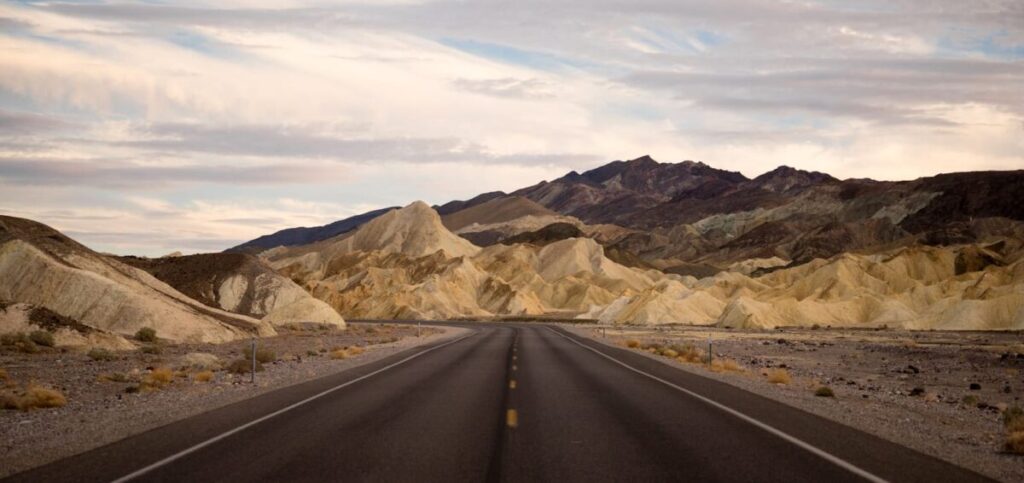
Death Valley is one of the most dramatic places in the United States to explore by car, but the experience is very different from a casual scenic loop. The best drive is part viewpoint chase, part desert logistics, and part heat management, which is why route choice matters so much.
If you want a route-focused overview before you go, start with our California desert parks drive guide for broader planning context, then use Death Valley’s shorter road network to shape the day around the stops that matter most.
| Best route pattern | Start with Furnace Creek, then work toward Badwater Basin, Artist’s Drive, Zabriskie Point, and Mesquite Flat Sand Dunes. |
| Typical drive time | Half a day covers the main highlights; a full day is better if you want multiple photo stops and short walks. |
| Best season | Late fall through early spring is the most comfortable window for most travelers. |
| Key cautions | Extreme heat, long stretches without services, limited shade, and fast-changing road conditions after storms. |
| Must-see stops | Badwater Basin, Zabriskie Point, Artist’s Palette, Dante’s View, and the Mesquite Flat Sand Dunes. |
Choosing The Right Death Valley Drive
The strongest Death Valley scenic drive is not the longest one; it is the one that matches your timing, your vehicle, and how much walking you want to do. For most first-time visitors, the smartest approach is a loop that connects the classic viewpoints around Furnace Creek and the basin floor, then climbs to a higher overlook such as Dante’s View if weather and daylight allow.
That structure gives you the park’s most recognizable contrast in one day: stark salt flats, colorful badlands, broad desert vistas, and a mountain perspective that makes the scale of the valley easier to understand. If you are also comparing other desert road trips, the Desert Southwest monuments road trip is a useful companion read for building a longer itinerary around the region.
A Practical Route Decision Table
| Route choice | Best for | Approx. time | What to prioritize |
|---|---|---|---|
| Classic valley loop | First-time visitors who want the famous stops without overcommitting. | 4–6 hours | Badwater Basin, Artist’s Drive, Zabriskie Point, Furnace Creek. |
| Sunrise-to-midday route | Photographers and travelers who want the coolest part of the day. | 3–5 hours | Dante’s View, Zabriskie Point, Mesquite Flat Sand Dunes. |
| Full-day desert drive | Travelers who want a slower pace and more overlooks. | 6–8+ hours | Add extra viewing stops, short trails, and time for fuel and food planning. |
What To See Along The Way
The most useful Death Valley scenic-drive strategy is to group stops by elevation and terrain rather than trying to chase every landmark in random order. That keeps the drive intuitive and helps you use daylight more efficiently.
Badwater Basin
This is the iconic valley-floor stop and one of the most recognizable landscapes in the park. The salt flat feels almost lunar, especially in the early morning when the light is soft and the air is clearer.
Artist’s Drive And Artist’s Palette
This short side road is one of the best ways to add color to an otherwise stark desert day. It is especially worthwhile when the sun brings out the mineral tones in the hills.
Zabriskie Point
This overlook is ideal when you want a quick, high-impact stop without a long hike. It is one of the clearest viewpoints for reading the valley’s folded badlands and broad desert geometry.
Dante’s View
If you can handle one high-elevation detour, this is the stop that gives the best sense of scale. It is especially valuable on a first trip because it helps orient the rest of the drive visually.
Mesquite Flat Sand Dunes
These dunes are easy to pair with a sunrise or late-afternoon stop and are one of the most photogenic short walks in the park. Sand temperatures can rise quickly, so plan accordingly.
For travelers turning this into a larger desert loop, Joshua Tree road trip ideas pair well with a California desert itinerary, while the park-to-park perspective in Desert Southwest national monuments helps you decide whether Death Valley should be a standalone day or one part of a longer drive.
When To Go And How To Time The Drive
Timing changes everything in Death Valley. The same route can feel relaxed and memorable in cool weather, then punishing and rushed in peak heat, so the season you choose is as important as the sights you plan to visit.
Safety And Vehicle Planning That Actually Matters
Death Valley rewards preparation because services are sparse and conditions can change quickly. A reliable vehicle, enough fuel, and realistic expectations about distance are more important than trying to pack in every possible viewpoint.
- Fill the tank before entering the park and do not assume the next station will be convenient.
- Carry extra water for everyone in the car, even on a short route.
- Check tire condition, coolant, and brakes before you go, especially if you are climbing to overlooks.
- Watch for wildlife, pedestrians, and narrow pullouts on winding sections.
- If roads are affected by storms or washouts, be ready to change the plan rather than forcing the original route.
A practical rental choice can make that preparation easier, especially if you are planning a broader desert loop or arriving by air and want more flexibility. For that part of the trip, our nearby van rental options and broader car rental tips can help you choose the right vehicle and avoid last-minute surprises.
Planning A Desert Drive With The Right Vehicle?
If Death Valley is part of a bigger road trip, compare vehicle type, mileage, and pickup timing before you book. The right rental gives you more freedom to add viewpoints, take a side route, and stay flexible if the weather changes.
Why This Drive Stands Out
Death Valley is memorable because the road is not just a way to move between stops; it is the experience. The changes in color, elevation, and texture are dramatic enough that even short drives feel meaningful, and the emptiness of the landscape gives the whole route a quiet, reflective quality.
That is also why the trip works so well for different kinds of travelers. Photographers get strong light and dramatic forms. Families get clear, easy-to-read stops with short walks. Road-trippers get a route that feels adventurous without requiring complicated navigation. And if you want to expand the trip north or west, the broader desert-drive cluster around California desert parks can help you connect this guide with other nearby scenic roads.
A Few Common Questions

Jessica Malone is a passionate writer and travel enthusiast, specializing in affordable car rental solutions. With a keen eye for detail, she explores various aspects of cheap car rentals, offering readers practical tips and insights to maximize their travel experiences. Through her engaging articles, Jessica aims to empower travelers to make informed decisions and navigate the world of online car rental services with ease.




I love your take on the Death Valley drive! It’s so true that the experience goes beyond just checking out viewpoints. When I ventured there last spring, I started at Furnace Creek and headed toward Badwater Basin. The contrast between the barren salt flats and the surrounding mountains really took my breath away—definitely a photographer’s dream!
It’s great to hear about your experience in Death Valley! Starting at Furnace Creek and heading toward Badwater Basin really sets the stage for a wild contrast, huh? The way those salt flats stretch out against the mountains is surreal. I remember when I first walked out onto the salt flats; it feels almost otherworldly, like you’re on another planet or something.
The exploration of Death Valley is indeed unique, merging stunning landscapes with a necessity for strategic planning, particularly when it comes to route selection and managing the extreme desert conditions. Your recommended path from Furnace Creek to Badwater Basin and beyond encapsulates some of the park’s most breathtaking vistas, but I can’t help but emphasize how vital it is to sync the driving experience with the time of day for optimal photographic opportunities and comfort.
I love the breakdown of the optimal route in Death Valley! I did a similar circuit a while back, starting at Furnace Creek, and it’s interesting how each stop feels like a completely different world. Artist’s Drive especially blew me away with those vibrant colors—definitely bring your camera for that!
What an intriguing look into the rugged, sun-baked beauty of Death Valley! I can almost hear my car tires crunching on the dusty roads and feel the sun blazing down as I mentally plot a route from Furnace Creek to Badwater Basin. Makes me wonder if my car’s air conditioning could handle the challenge—or if it might just decide to take an early retirement amidst the heat!
I love how you’ve captured the essence of driving through Death Valley! It really is a blend of awe-inspiring visuals and a nature-based logistical challenge. The route you’ve suggested is spot on; starting at Furnace Creek before heading to Badwater Basin gives you that natural progression through some of the valley’s weirdest and most beautiful features.
Ah, the allure of Death Valley! It’s like nature’s hot stove, where you can bask in beauty while trying not to bake yourself. Your route suggestions are spot-on; I remember my first time driving through—I thought I was just about to see some typical arid scenery, but the terrain is a vivid masterpiece that’s changed more than I did during my last summer BBQ.
I really appreciate how you broke down the experience of driving through Death Valley! It’s fascinating how a drive can become much more than just a way to get from point A to point B, especially in such a dramatic landscape. Your route suggestion beginning with Furnace Creek and ending at the Mesquite Flat Sand Dunes resonates with me; it’s almost poetic how each stop offers a new perspective on the stark beauty of the desert.
Exploring Death Valley by car is indeed a unique adventure that goes beyond just sight-seeing; it’s an experience that really pushes you to consider how you interact with such an extreme environment. The route you’ve outlined, starting from Furnace Creek and hitting those iconic spots, strikes a balance between breathtaking views and the practicalities of navigating the desert’s challenges.
I completely resonate with your description of the driving experience in Death Valley. It’s not just about getting from one hotspot to another; it’s really an immersive experience that asks you to engage with the stark beauty and challenging environment. I remember my trip there a couple of years ago, and it felt like stepping into another world—the vast expanses of rugged terrain and the dramatic shifts in color and light as the sun moved across the sky truly took my breath away.
I love your route suggestions for Death Valley! I visited last spring, and starting at Furnace Creek definitely set the tone for a fantastic day of exploration. That contrast between the stark desert landscape and the vibrant colors on Artist’s Drive was such a highlight for me.