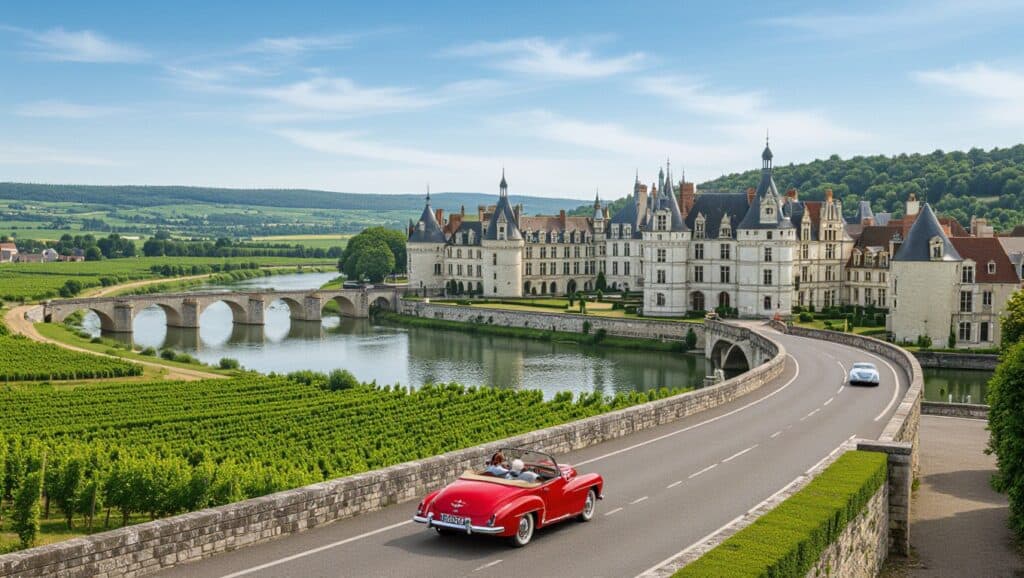
A red convertible and a white car drive on a curved road over a stone bridge beside a grand Loire Valley château in France, set by a river. Lush vineyards and rolling hills surround the elegant, multi-towered palace under a bright blue sky.

Loire Valley Chateaux Drive: A Timeless Journey in France

Loire Valley Chateaux Drive: A Timeless Journey in France by RentaCar24.org: Compare Rental Cars at Airport & City Locations
Serving Loire Valley and Centre-Val de Loire.
RentaCar24.org offers insights into the cultural and historical significance of travel destinations like the Loire Valley.

Discover the Enchantment of Historic Estates

Explore the Architectural Wonders of the Loire Valley

The historic estates located in the breathtaking Loire Valley, especially the magnificent châteaux, serve as extraordinary testaments to human creativity and architectural skill. These architectural wonders boast intricate designs that beautifully merge artistry with engineering excellence. From the stunning facades of Château de Chambord, which exemplifies the distinctive style of French Renaissance architecture, to the refined symmetry of Château de Chenonceau, these estates invite visitors to admire their remarkable grandeur. Each château narrates its own unique story through its architectural features, offering a glimpse into the historical context that shaped its design and construction.

The remarkable engineering achievements involved in the construction of these estates are equally fascinating. Many châteaux employed innovative techniques for their time, such as advanced masonry and elaborate roofing systems that have remarkably endured through the ages. As you wander through these majestic structures, you’ll encounter exquisite details like ornate ceilings, intricately carved woodwork, and grand staircases that elevate the entire architectural experience.

A red vintage car drives on a curved road past a grand chateau in France’s Loire Valley, its white stone walls and gray roofs surrounded by lush vineyards. A stone bridge crosses a wide river, with a village and hills under a clear sky.

What Distinguishes These Estates from Others?

The exceptional character of the Loire Valley châteaux is not solely attributed to their architectural beauty but also to their rich tapestry of history and culture. Surrounded by expansive gardens that are meticulously maintained to mirror the grandeur of the estates, these properties provide a unique atmosphere for exploration. Inside, you will find priceless art collections, antique furniture, and historical artifacts that transport visitors back in time. To fully appreciate what makes these estates distinctive, consider the following key characteristics:

  • Variety of Architectural Styles: Each château showcases different styles, ranging from Gothic to Renaissance, reflecting the evolution of design.
  • Sprawling Gardens: Many estates feature extensive grounds with manicured gardens and ornamental ponds that enhance their beauty.
  • Historical Importance: Numerous châteaux are linked to significant historical events and notable figures, adding depth to their narratives.
  • Art Collections: Estates frequently house impressive art collections, featuring works by renowned artists, enriching the cultural experience.
  • Distinctive Interiors: The interiors of these estates are elaborately designed, showcasing period furniture and decor that tell their own stories.
  • Cultural Events: Many châteaux host vibrant festivals and cultural activities that celebrate their heritage and engage visitors.
  • Stunning Scenery: Nestled along the banks of the Loire River, the picturesque views surrounding these estates are simply breathtaking.

These elements work together to craft an unforgettable experience for visitors, making each estate a unique destination worth exploring in depth.

How Have Estates Shaped Historical Narratives?

The historic estates of the Loire Valley have played an essential role in shaping both local and national narratives throughout centuries. Many of these châteaux served not only as royal residences but also as significant political venues and centers of cultural exchange during the Renaissance era. For instance, Château de Amboise was not only a royal residence but also the final resting place of the renowned artist Leonardo da Vinci, showcasing the intricate relationship between art and politics during that time.

These estates often stood witness to pivotal events that influenced the trajectory of French history, including royal marriages, treaties, and uprisings. Their unique architecture and design reflect the values and aspirations of the eras in which they were constructed, offering valuable insights into the social and political climates of their time. As you traverse these grand structures, it becomes evident that they are not merely buildings; they are custodians of history, preserving tales of love, conflict, and transformation that continue to resonate with visitors today.

Embarking on Your Estate Adventure

What Steps Should You Take to Prepare for Your Journey?

Preparing for a journey through the Loire Valley châteaux involves more than just packing your bags; it demands careful planning to ensure you fully enjoy the experience. Begin by mapping out your itinerary, as there are numerous estates to explore, each exuding its own unique charm. Take into account the distances between the châteaux, and allocate sufficient time to appreciate each one fully. Essential items to include in your travel preparations are:

  • Comfortable Footwear: Necessary for strolling through the expansive estates and beautiful gardens.
  • Camera: To capture the breathtaking architecture and stunning landscapes.
  • Reusable Water Bottle: Stay hydrated while enjoying the great outdoors.
  • Guidebook or Mobile App: Utilize these tools to learn about each estate’s history and key features.
  • Snacks: Convenient for a quick energy boost while on the move.
  • Sun Protection: Sunscreen and a hat are essential for protection against the sun, especially during summer visits.
  • Local Currency: Useful for purchasing tickets and souvenirs during your visit.

By considering these practical tips and packing accordingly, you will pave the way for a smooth and enjoyable visit to these magnificent châteaux, creating memories to cherish.

When Is the Best Time to Experience the Châteaux?

Timing your visit to the Loire Valley can greatly enhance your exploration of the châteaux. The ideal seasons are spring and early fall, when the gardens are in full bloom, and the weather tends to be mild. Each season offers a unique perspective on the estates, with vibrant flowers in spring and rich autumn colors creating captivating landscapes that are perfect for photographs.

Beyond seasonal considerations, the time of day also significantly impacts your visit. Early mornings provide a quieter experience, enabling you to fully appreciate the beauty of the estates without the crowds. Furthermore, many estates offer guided tours at specific times that can provide deeper insights into their history and architectural significance. Ultimately, selecting the right time for your visit can elevate your experience, making it both memorable and enriching.

How to Navigate Between the Estates?

Exploring the various routes between the Loire Valley châteaux can be a delightful adventure. A well-planned itinerary that considers transportation options is essential for maximizing your experience. Renting a car provides the flexibility to visit multiple estates at your own pace, allowing for spontaneous stops along the scenic routes. Alternatively, some visitors may prefer guided tours that include transportation, providing expert commentary on the history and significance of each château.

When planning your route, consider the proximity of the estates to one another. Popular routes connect renowned châteaux such as Château de Versailles, Château de Saumur, and Château de Villandry, making it easy to explore multiple sites in a single day. Utilize GPS or maps to navigate the picturesque countryside, and don’t hesitate to ask locals for recommendations on hidden gems or lesser-known estates. By carefully planning your routes, you can maximize your estate adventure in the Loire Valley.

Insights from Experts on the Loire Valley Châteaux Drive

Understanding the Historical Context and Significance

The Loire Valley châteaux weave a rich tapestry of historical context that has influenced developments in French culture and politics. For example, Château de Chenonceau is often referred to as the “Ladies’ Château,” not only for its breathtaking architecture but also for the influential women who played critical roles in its history, such as Diane de Poitiers and Catherine de Médicis. These estates are not just relics; they were active participants in the narrative of French history, shaping the monarchy and the evolution of society.

Furthermore, many estates were strategically positioned to serve as defensive structures during times of conflict, underscoring their importance in military history. Their architectural styles evolved over time, reflecting shifts in fashion, technology, and political power. This dynamism illustrates how these châteaux were not static but were instead influenced by the changing tides of history, making them invaluable learning experiences for visitors.

Exploring Architectural Styles and Influences

The architectural styles of the Loire Valley châteaux are as diverse as the historical narratives they encapsulate. Visitors can observe a variety of styles ranging from Gothic to Renaissance, each representing distinct periods and cultural influences. For instance, Château de Chambord stands as a quintessential example of French Renaissance architecture, characterized by its grand scale and intricate roofline adorned with numerous dormer windows and chimneys.

Moreover, the regional influences on architecture are noteworthy. Italian Renaissance features can be seen in some châteaux, reflecting the cross-cultural exchanges that occurred during the Renaissance period. The incorporation of classical motifs and local materials highlights these estates’ adaptability to their environment, resulting in unique architectural expressions. By studying these architectural styles, visitors gain a deeper understanding of the cultural dialogues that shaped the very fabric of French history.

Efforts to Conserve and Preserve Historic Estates

Preserving the Loire Valley châteaux is essential for maintaining the rich heritage and history they embody. Many estates engage in active conservation efforts to ensure their longevity, supported by both governmental and private initiatives. Visitors can play a role in these efforts by participating in guided tours, where a portion of the ticket sales often goes toward restoration projects.

Additionally, several châteaux offer workshops and volunteer opportunities that allow visitors to engage directly with preservation efforts. This hands-on experience not only aids in maintaining the estates but also enriches the visitor experience by providing a deeper connection to the history and craftsmanship involved in preserving these remarkable sites. By supporting these initiatives, visitors contribute to safeguarding the future of these magnificent treasures.

Immersing Yourself in the Estate Experience

Connecting with Local Culture During Your Visit

Engaging with local culture during your visit to the Loire Valley châteaux enhances the overall experience immensely. Participating in local traditions, such as attending festivals or performances, allows visitors to appreciate the cultural richness surrounding these historic estates. Many châteaux host cultural events, including concerts, art exhibitions, and historical reenactments, providing valuable insight into the local lifestyle and heritage.

Moreover, exploring nearby villages offers a glimpse into the daily lives of those residing in the Loire Valley. Interacting with local artisans, tasting traditional dishes, and visiting local markets can deepen your understanding of the region’s customs and values. By immersing yourself in local culture, your visit transcends mere sightseeing, fostering a deeper cultural exchange that enriches your overall experience.

What Exciting Activities Await You?

Visiting the Loire Valley châteaux is not just about admiring the stunning architecture; it provides a variety of activities that cater to diverse interests. Here are some popular activities you can enjoy during your stay:

  • Guided Tours: Discover the châteaux with knowledgeable guides who share captivating stories and insights.
  • Gardening Workshops: Engage in workshops that teach traditional gardening techniques used in the estates’ magnificent gardens.
  • Wine Tastings: Experience the local viticulture with tastings held at vineyards near the châteaux.
  • Biking Tours: Rent a bike to explore the scenic routes connecting the various estates.
  • Photography Sessions: Capture stunning landscapes and intricate architecture with guided photography tours.
  • Themed Events: Attend seasonal festivals and cultural events hosted at the estates.
  • Picnics in the Gardens: Prepare a picnic to enjoy in the lush gardens, savoring both the food and the views.

Each of these activities provides a unique way to engage with the rich history and culture of the Loire Valley, ensuring that your visit is both enjoyable and educational.

How to Capture the Beauty of the Estates

To truly appreciate the magnificence of the Loire Valley châteaux, capturing their beauty through photography is essential. The estates, surrounded by verdant landscapes and stunning gardens, offer countless opportunities for breathtaking shots. Begin by planning your photography sessions during the golden hours—early mornings or late afternoons—when the soft light enhances the intricate details of the estates and creates a magical atmosphere.

When photographing the architecture, focus on capturing both wide-angle shots that showcase the grandeur of the estates and close-ups that reveal intricate details like carvings, window designs, and decorative elements. Utilize leading lines, such as pathways, trees, and fences, to guide the viewer’s eye toward the focal point. Additionally, experiment with different angles and perspectives to discover unique compositions that reflect your personal style.

Remember to also capture the surrounding landscapes and gardens, as they play a crucial role in defining the character of each estate. By applying these photography tips, you can create lasting memories of your journey through the enchanting châteaux of the Loire Valley.

A vintage convertible car drives along a curved road lined with trees toward a grand stone chateau with blue rooftops beside a river and arched bridge, surrounded by the lush greenery of France’s Loire Valley under a clear sky.

Delighting in the Culinary Experiences of Estate Visits

What Signature Dishes Should You Savor?

Exploring the culinary scene surrounding the Loire Valley châteaux is a vital aspect of the experience. The region is celebrated for its rich gastronomy, featuring fresh, local ingredients that showcase the flavors of the Loire Valley. Among the signature dishes that visitors should be sure to sample are:

  • Rillettes: A savory spread made from pork, perfect for slathering on crusty bread.
  • Tarte Tatin: An upside-down caramelized apple tart that is a local favorite and a must-try.
  • Goat Cheese: The region is renowned for its delicious goat cheese, best enjoyed with fresh, crusty bread.
  • Sancerre Wine: A local white wine that pairs beautifully with a variety of dishes.
  • Stuffed Cabbage: A hearty dish that reflects traditional French cooking methods and flavors.
  • Bouilli: A rich beef stew that captures the essence of local culinary traditions.
  • Crepes: Thin pancakes filled with sweet or savory ingredients, a delightful treat for dessert lovers.

Sampling these dishes not only satisfies your palate but also provides a deeper understanding of the cultural heritage and culinary traditions that define the Loire Valley.

Indulging in Wine Tasting and Vineyard Experiences

The Loire Valley is famous for its vineyards and wineries, making wine tasting an unforgettable experience during your visit. The region produces a variety of exceptional wines, including robust reds, crisp whites, and delightful rosés. Many estates offer wine tastings, providing visitors with the opportunity to sample local wines paired with gourmet food.

Visiting a vineyard can provide valuable insights into the winemaking process, from grape cultivation to fermentation. Some estates host guided tours that include vineyard walks, where you can learn about the different grape varieties and the unique terroir of the region. Engaging with knowledgeable vintners can enhance your understanding of the complexities of wine production and the significance of local traditions in viticulture.

By indulging in wine tastings and vineyard visits, you not only savor the flavors of the Loire Valley but also connect with the region’s rich agricultural heritage.

Dining in Historic and Elegant Settings

Dining within the magnificent settings of the Loire Valley châteaux adds an extraordinary dimension to your culinary journey. Many châteaux feature on-site restaurants that provide a unique blend of history and gastronomy. Imagine enjoying a meal in a grand dining room that has hosted royalty, surrounded by opulent decor and stunning views of the estate’s gardens.

These restaurants typically focus on local ingredients and traditional French cuisine, offering dishes that reflect the region’s culinary heritage. Additionally, some estates host themed dinners or seasonal events where you can indulge in multi-course meals paired with local wines. These dining experiences not only tantalize your taste buds but also immerse you in the enchanting atmosphere of the châteaux, creating unforgettable memories.

Research-Backed Benefits of Exploring the Loire Valley Châteaux

What Educational Value Do Estate Tours Offer?

Visiting the Loire Valley châteaux provides significant educational value, enhancing one’s understanding of history and architecture. Each estate is steeped in stories and historical significance, offering insights into the cultural and political evolution of France. Guided tours often include detailed explanations of architectural styles, the historical figures associated with the estates, and the events that unfolded within their walls.

Engaging with knowledgeable guides allows visitors to grasp complex historical narratives in an accessible manner. This immersive experience not only broadens one’s knowledge of French history but also fosters a deeper appreciation for the craftsmanship involved in the estates’ construction. Furthermore, learning about the ongoing preservation efforts helps visitors understand the importance of maintaining these historical sites for future generations.

What Psychological Benefits Does Historical Immersion Provide?

Immersing oneself in historical environments, such as the Loire Valley châteaux, can yield significant psychological benefits. Research indicates that spending time in culturally rich settings can reduce stress, enhance well-being, and foster a sense of connection to the past. The serene surroundings of the estates, coupled with their historical significance, create a calming atmosphere that invites visitors to reflect and unwind.

Additionally, engaging with history enables individuals to gain perspective on their own lives and experiences. The tales of resilience, creativity, and innovation encapsulated within the walls of these châteaux can inspire personal growth and development. As visitors navigate through centuries of history, they often leave with a renewed sense of purpose and appreciation for the intricacies of human experience.

How Do Estates Foster Cultural Appreciation?

The Loire Valley châteaux play a crucial role in fostering cultural appreciation by preserving and showcasing the region’s rich heritage. By visiting these estates, individuals gain exposure to various aspects of French culture, including art, architecture, music, and cuisine. This exposure cultivates a broader understanding of cultural expressions and the historical context in which they developed.

Many estates host cultural events and exhibitions that celebrate local traditions, allowing visitors to engage with the community and its customs. By participating in these activities, individuals contribute to the preservation of cultural narratives and artistic expressions that may otherwise fade away. Engaging with the estates fosters a sense of stewardship for cultural heritage, motivating visitors to advocate for the preservation of artistic and historical sites in their own communities.

What Economic Impact Does Châteaux Tourism Have?

Tourism centered around the Loire Valley châteaux significantly contributes to the local economy. The influx of visitors generates revenue for local businesses, including restaurants, hotels, and shops. This economic boost supports job creation and fosters community development, allowing local artisans and producers to thrive and flourish.

Moreover, the revenue generated from tourism often funds conservation and restoration efforts, ensuring that these historic sites remain accessible for future generations. As visitors engage with the history and heritage of these estates, they contribute to a sustainable economic model that balances tourism with heritage preservation. Understanding the economic impact of châteaux tourism reveals the vital role visitors play in supporting the continued appreciation of these cultural treasures.

What Health Benefits Are Associated with Scenic Drives?

Embarking on a scenic drive through the Loire Valley not only offers stunning views of the châteaux but also provides numerous health benefits. Research indicates that spending time in nature can reduce stress, improve mood, and enhance overall well-being. The picturesque landscapes, dotted with vineyards and historic estates, create a serene environment that encourages relaxation and reflection.

Additionally, the physical activity involved in exploring the region—whether through hiking, walking, or cycling—promotes cardiovascular health and overall fitness. Engaging with the natural beauty of the Loire Valley while discovering its rich history fosters a holistic approach to wellness. As visitors take in the breathtaking scenery and experience the architectural marvels, they nurture not only mental rejuvenation but also physical vitality.

Exploring the Art and Culture of Historic Estates

Discovering Masterpieces Within the Estates

The Loire Valley châteaux are not only architectural wonders but also treasure troves of art and culture. Many estates showcase impressive art collections that include paintings, sculptures, and decorative arts from various historical periods. For instance, Château de Chenonceau houses a remarkable collection of art, featuring works by prominent artists and exquisite tapestries that narrate historical tales.

These masterpieces provide insight into the aesthetic values of different eras and the evolution of artistic styles. Visitors can appreciate the craftsmanship involved in creating these artworks and understand their significance within the cultural landscape of France. The integration of art within the estates’ interiors enhances the visitor experience, reflecting the châteaux’ roles as cultural hubs throughout history.

How Have Estates Influenced Art and Literature?

The influence of the Loire Valley châteaux on art and literature is profound and far-reaching. Throughout history, artists, writers, and thinkers have drawn inspiration from the beauty and grandeur of these estates. The romanticized imagery of châteaux has permeated literature, with many authors depicting them as symbols of love, power, and intrigue.

Renowned figures such as Honoré de Balzac and Alexandre Dumas have referenced these estates in their works, illustrating their significance within the cultural narrative. Additionally, the estates themselves have served as canvases for artists, with many painters capturing their stunning architecture and picturesque surroundings. This interplay between the châteaux and the arts enriches the cultural fabric of the region, offering visitors a chance to appreciate the enduring legacy of these historical sites.

Participating in Cultural Events and Festivals

Engaging in cultural events and festivals at the Loire Valley châteaux is an excellent way to connect with the region’s rich heritage. Many estates host seasonal celebrations that showcase local traditions, cuisine, and artistic performances. For example, the annual Festival de Loire celebrates the region’s maritime heritage with boat races, live music, and traditional food stalls.

These events provide opportunities for visitors to immerse themselves in local culture while enjoying the stunning historical backdrop of the estates. Participating in workshops, dance performances, and artisan markets allows for a deeper understanding of the customs that define the Loire Valley. By attending these cultural events, visitors not only enhance their experience but also contribute to the preservation of local traditions and heritage.

Examining the Architectural Styles of Historic Estates

The architectural styles of the Loire Valley châteaux are diverse, reflecting the evolution of design and cultural influences over the centuries. From the Gothic grandeur of Château de Angers to the Renaissance elegance of Château de Blois, each estate offers a unique snapshot of architectural history.

The blend of styles demonstrates these estates’ adaptability to changing tastes and technologies. Features such as intricate stone carvings, elaborate facades, and beautifully designed gardens exemplify the artistic aspirations of the periods in which they were built. By exploring these architectural styles, visitors gain insight into the aesthetic values and societal norms of the times, enriching their overall understanding of the region’s history.

Understanding Preservation and Restoration Efforts

The ongoing efforts to preserve and restore the Loire Valley châteaux are vital for maintaining their historical integrity. Many estates are engaged in active restoration projects aimed at repairing and preserving architectural elements that have deteriorated over time. This includes careful restoration of facades, gardens, and interiors, ensuring they reflect their original grandeur.

Visitors can support these efforts by participating in educational tours that highlight the preservation work being done. Some estates even offer volunteer opportunities for those interested in gaining hands-on restoration experience. By advocating for the protection of these historical treasures, visitors contribute to the legacy of the Loire Valley châteaux, ensuring they remain accessible for future generations to appreciate.

A classic convertible car drives over a stone bridge lined with autumn trees, curving toward a grand Loire Valley château with multiple towers and steep roofs, surrounded by vineyards and reflected in a calm river under the blue sky of France.

Promoting Sustainable Tourism and Estate Preservation

What Practices Foster Sustainable Tourism in the Region?

Promoting sustainable tourism in the Loire Valley is essential for balancing the needs of visitors with the preservation of the châteaux and their surroundings. Practices that encourage sustainable tourism include supporting local businesses, engaging in eco-friendly travel options, and participating in conservation programs.

Visitors can choose accommodations that prioritize sustainability, such as eco-friendly hotels or local guesthouses that utilize renewable energy sources. Additionally, participating in guided tours that focus on environmental education can enhance awareness of the ecological significance of the region. By making conscious choices, visitors contribute to the preservation of the châteaux while enjoying enriching experiences that align with sustainable tourism principles.

How Is Community Involvement Integral to Preservation?

Local communities play a vital role in the preservation of the Loire Valley châteaux. Many estates collaborate with local organizations and residents to foster a sense of stewardship for these historical sites. Community involvement often includes organizing events, educational programs, and volunteer opportunities that engage both locals and visitors.

These collaborative efforts ensure that preservation initiatives are culturally relevant and supported by those who understand the historical significance of the estates. By participating in community-led preservation activities, visitors can forge meaningful connections with the local culture while contributing to the sustainable future of the châteaux.

What Eco-Friendly Initiatives Are Implemented at Estates?

Many Loire Valley châteaux have adopted eco-friendly initiatives aimed at promoting sustainability and minimizing their environmental impact. These initiatives may include the use of solar panels for energy, implementing rainwater collection systems, and promoting organic gardening practices in their grounds.

Visitors can witness these initiatives firsthand during their tours, gaining insight into how historical sites can adapt to contemporary environmental challenges. By supporting estates that prioritize sustainability, visitors contribute to a growing movement that seeks to harmonize historical preservation with ecological responsibility, ensuring these treasures are protected for future generations.

Understanding the Economic Benefits of Sustainable Tourism

The economic benefits of sustainable tourism in the Loire Valley extend beyond the immediate revenue generated from visitors. Sustainable practices contribute to the long-term viability of the region’s economy by attracting environmentally conscious travelers who prioritize experiences that respect cultural and ecological integrity.

Additionally, revenues from sustainable tourism can be reinvested into preserving the heritage and natural resources of the area, creating a positive feedback loop. Local businesses, including artisans and producers, benefit from increased tourism, leading to job creation and community development. By choosing to engage in sustainable tourism, visitors help foster a resilient economy that supports both the châteaux and the local community.

What Challenges and Solutions Exist in Estate Preservation?

Preserving the Loire Valley châteaux presents various challenges, including the impact of environmental factors, increasing visitor numbers, and the high costs associated with restoration. Climate change poses significant risks to the structural integrity of these historic estates, with rising temperatures and extreme weather events threatening their longevity.

To combat these challenges, many estates are implementing innovative solutions, such as utilizing advanced preservation techniques and promoting responsible tourism practices. Collaborative efforts between local governments, preservation organizations, and community stakeholders are critical to ensuring the sustainability of these historic sites. By addressing these challenges head-on, the Loire Valley châteaux can continue to inspire and educate future generations.

Reflecting on Your Journey Through the Estates

How Can Historical Exploration Foster Personal Growth?

Visiting the Loire Valley châteaux has the potential to foster significant personal growth. Engaging with the rich history and culture of the region can lead to a greater appreciation for diverse perspectives and human creativity. As visitors explore the estates, they often find themselves reflecting on the stories of resilience, innovation, and artistry that have shaped the world around them.

Furthermore, immersing oneself in historical environments can inspire curiosity and a desire to learn more about the past. This exploration offers a unique opportunity to draw parallels between historical narratives and contemporary issues, enhancing personal growth and understanding. By reflecting on these experiences, visitors cultivate a deeper connection to history and its relevance in today’s world.

What Are the Benefits of Sharing Your Journey with Others?

Sharing your experiences from visiting the Loire Valley châteaux can inspire others to embark on their own adventures. Documenting your journey through photos, journals, or social media allows you to highlight the beauty and significance of the estates, encouraging friends and family to explore this remarkable region.

Consider sharing stories about your favorite estates, the unique culinary experiences you encountered, or the cultural events you attended. By doing so, you not only contribute to the preservation of these historical sites but also motivate others to appreciate the rich heritage and artistry that the Loire Valley has to offer.

What Lasting Memories Will You Take Home?

The memories created during your visit to the Loire Valley châteaux will undoubtedly endure a lifetime. From the awe-inspiring architecture to the serene gardens and the rich culinary experiences, each moment contributes to a tapestry of memories that shape your understanding of history and culture.

As you depart, consider the personal insights gained from engaging with the stories and artistry of the estates. The connections made with local culture, the beauty of the landscapes, and the lessons learned from history will resonate long after your visit. By reflecting on these memories, you carry a piece of the Loire Valley with you, enriching your perspective and appreciation for the world around you.

Frequently Asked Questions

What are the top châteaux to explore in the Loire Valley?

Some of the most renowned châteaux include Château de Chambord, Château de Chenonceau, and Château de Amboise, each offering unique histories and stunning architecture.

How much time should I allocate for exploring the Loire Valley châteaux?

A typical visit may take several days, depending on how many estates you wish to see. A well-planned itinerary might allow for 3-5 days to comfortably cover multiple châteaux.

Are the châteaux accessible for visitors with disabilities?

Many châteaux strive to accommodate visitors with disabilities, offering facilities such as ramps and accessible restrooms, but it’s advisable to check individual estate accessibility prior to your visit.

What are the best seasons to visit the Loire Valley châteaux?

Spring and early fall are ideal for visiting, as the weather is mild and the gardens are in full bloom, enhancing the overall experience.

Can I take guided tours at the châteaux?

Yes, most châteaux offer guided tours that provide insights into their history, architecture, and cultural significance, enriching your visit significantly.

What local dishes should I sample while in the Loire Valley?

Signature dishes include rillettes, goat cheese, Tarte Tatin, and local wines like Sancerre, which reflect the region’s rich culinary heritage.

Are there wine tasting opportunities near the châteaux?

Absolutely, many châteaux are surrounded by vineyards that offer wine tastings, allowing visitors to sample local wines and gain insights into the winemaking process.

How can I contribute to the preservation of the châteaux?

Visitors can support preservation efforts by participating in guided tours, contributing to restoration funds, or engaging in volunteer opportunities offered by some estates.

What activities are available for families at the châteaux?

Families can enjoy a range of activities including scavenger hunts, gardening workshops, and interactive exhibits that make learning about history fun and engaging for children.

What should I keep in mind when planning my visit to the châteaux?

Plan your itinerary based on distances between estates, check for seasonal events, and ensure to book tickets in advance during peak tourist seasons to avoid crowds.

Connect with us on Facebook!

See also: Car Rental France.

See also: Rent a Car Nantes.

24 thoughts on “Loire Valley Chateaux Drive: A Timeless Journey in France”

  1. The Loire Valley truly is a treasure trove of history and artistry. I remember my visit to Château de Chenonceau—walking through its gardens was like stepping into a painting. The way it spans the River Cher emphasizes how architecture can harmoniously integrate with nature. It’s fascinating to consider how each château not only reflects the era it was built in but also the stories of the people who lived there. This area has such a rich cultural tapestry that extends beyond the châteaux, influencing French art and society. Have any readers explored the local food and wine scene during their visits? I imagine the flavors of the Loire region would add another layer to the experience!

  2. You’ve painted such a vivid picture of the Loire Valley châteaux! It’s fascinating to think about how each château holds its own unique story, as you noted. The rich tapestry of history that surrounds places like Château de Chambord and Château de Chenonceau really does feel like a journey through time.

  3. Maximilian Luwum

    The Loire Valley truly captivates not just with its architectural beauty, but also with the rich tapestry of history and culture it represents. I have always found that the châteaux are more than mere buildings; they embody the stories of the people who inhabited them and the historical events that unfolded in their shadow. For instance, Château de Chenonceau, often referred to as the “Ladies’ Château,” owes much of its fame to the strong women who influenced its design and history, including Diane de Poitiers and Catherine de Medici. This château serves as a reminder of the roles women played in shaping not just the estates, but the social fabric of their time.

  4. Ah, the Loire Valley châteaux—a true feast for the eyes and an excellent excuse to consume vast quantities of baguettes and cheese while pretending to be part of a royal court! I love how each château seems to whisper its own story, like an over-excited relative at a family reunion.

  5. What a captivating exploration of the Loire Valley Chateaux! As someone who has always been fascinated by history and architecture, your description of these remarkable estates resonates deeply with me. Each chateau you mention holds not just architectural beauty, but also a wealth of stories waiting to be uncovered.

  6. Your exploration of the Loire Valley châteaux truly captures their allure and significance. I remember visiting Château de Chambord a few years ago and being struck not just by its architectural beauty but also by the history that seems to echo through every corridor. The grand staircases designed by Leonardo da Vinci exemplify how art and engineering intersect in this remarkable region.

  7. Frederic Mandisa

    What a lovely exploration of the Loire Valley’s châteaux! I visited the region last year and was truly amazed by the unique stories each château tells. For example, at Château de Chenonceau, not only was I captured by its beautiful arches and gardens, but I was also fascinated by its storied past, including its role during the French Wars of Religion. It’s incredible how these architectural marvels are not just structures, but living narratives that encapsulate the rich history of France.

  8. Alexandre Takeda

    Your exploration of the Loire Valley châteaux really captures the essence of why these historical sites are so mesmerizing. I remember visiting Château de Chambord a few years ago; standing under its grand rooflines felt like stepping back in time. The way the architecture mirrors the era’s cultural ambition is fascinating—it’s not just about the aesthetic but also about the stories those walls could tell.

  9. Your exploration of the Loire Valley châteaux truly resonates with me. The rich tapestry of history and culture woven into these architectural marvels is something that continually captures my imagination. Each château seems to whisper tales of nobility, art, and even the very heart of the French Renaissance. For instance, Château de Chambord, with its remarkable double helix staircase that is rumored to have been designed by Leonardo da Vinci, is a perfect illustration of how these structures are not just residences but symbols of an era marked by innovation and artistic exploration.

  10. What an evocative exploration of the Loire Valley and its majestic châteaux! The way the blog highlights the intricate balance between artistry and engineering resonates deeply with me, particularly in today’s fast-paced world, where such craftsmanship can feel increasingly rare. I often marvel at how these historic estates not only serve as eye-catching landmarks but also act as vital storytellers of France’s rich cultural tapestry.

    1. Alfreda Marciniak

      I completely resonate with your perspective on the Loire Valley and its châteaux. There’s something uniquely captivating about how these structures marry artistry and engineering, especially when you consider the time and dedication that went into their creation. It’s a reminder that craftsmanship involves patience and a deep understanding of materials—qualities that can feel overshadowed in today’s instant-gratification culture.

      If you found the blend of artistry and history in the Loire Valley captivating, you might enjoy exploring the enchanting realms of Bavarian castles, where each stone echoes tales of a vibrant cultural legacy.
      ‘Bavarian Castles Drive: Uncover Enchanting Adventures in Germany’
      https://online.rentacar24.org/bavarian-castles-drive-uncover-enchanting-adventures-in-germany/.

  11. The Loire Valley truly feels like stepping back in time, doesn’t it? I’ve always been fascinated by how each château not only displays stunning architecture but also reflects the historical context of its era. For example, the story behind Château de Chenonceau, often called the “Ladies’ Château,” highlights the influence of the women who shaped it—like Catherine de Medici. It makes me wonder how many other untold stories reside within those walls!

  12. Your exploration of the Loire Valley châteaux beautifully highlights not just their architectural splendor but also the stories and histories interwoven within their walls. As someone who has travelled through this magnificent region, I can attest to the feeling of stepping into a living history book when visiting places like Château de Amboise, where Leonardo da Vinci once resided.

  13. I love how you’ve captured the essence of the Loire Valley châteaux! Each time I visit, I’m struck not only by their architectural beauty but also by the stories each one holds. For example, Château de Chenonceau really feels alive with its history—especially the tales of the women who shaped its legacy. It makes you wonder how these spaces have witnessed centuries of change, don’t you think?

  14. Your insights into the Loire Valley châteaux beautifully capture their architectural brilliance and cultural significance. Having visited a few of these magnificent estates myself, I was particularly struck by how each château not only showcases unique artistry but also serves as a reflection of the historical period in which it was built. For instance, the intricate details of the gardens at Château de Villandry offer a fascinating contrast to the more rustic charm of Château d’Amboise, which has deep ties to Leonardo da Vinci.

  15. Violeta Jenkins

    Your exploration of the Loire Valley’s châteaux brings up an interesting perspective on how architecture can encapsulate the history and culture of a region. As you noted, places like Château de Chambord and Château de Chenonceau are not only examples of architectural brilliance but also serve as reflections of the political and social dynamics of their respective eras. It makes one ponder how these magnificent structures would tell tales of the lives once lived within their walls, overshadowed by the passing of time yet preserved within their intricacies.

  16. Milena Iglesias

    Your exploration of the Loire Valley châteaux brought back wonderful memories of my own journey through this enchanting region. Each château not only showcases extraordinary architectural finesse but also offers a poignant glimpse into the complexities of France’s history and culture. As I wandered through the expansive grounds of Château de Chambord, I found myself captivated not just by its striking façade but also by the innovative spirit of its design—particularly the double-helix staircase thought to be influenced by Leonardo da Vinci himself. This blending of art and ingenuity reflects a time when creativity was the very essence of nobility.

  17. Your exploration of the Loire Valley’s châteaux brings to light the region’s profound cultural and historical significance. As I read about the architectural wonders like Château de Chambord and Château de Chenonceau, I couldn’t help but reflect on how these structures not only embody the artistry of their time but also the stories of the people who lived and worked within their walls.

  18. Ah, the Loire Valley—where “château” is a firm reminder that I’ll never own a castle and must instead settle for a two-bedroom apartment! I love how each estate has its own saga, much like my attempts at cooking French cuisine: grand ambitions, a dash of chaos, and always a little too much wine involved.

  19. Your exploration of the Loire Valley châteaux brought back wonderful memories of my own journey through this enchanting region. I distinctly recall standing before the intricate renaissance details of Château de Chambord, feeling as though I had stepped into another era. The scale and artistry of the architecture, particularly its soaring roofs and elaborate embellishments, evoke a sense of wonder about the ambitions and lives of those who inhabited these spaces centuries ago.

  20. Yvonne Truong

    The description of the châteaux in the Loire Valley certainly captures their architectural brilliance and historical significance. However, I find it interesting how these structures not only represent artistic achievements but also reflect the societal values and power dynamics of their time. For instance, the grandeur of Château de Chambord is striking, but it also symbolizes the excesses of the French monarchy, built during a time when the monarchy was asserting its dominance.

  21. I must say, every time I hear about the Loire Valley and its châteaux, I can’t help but imagine myself gallivanting around like a time-traveling noble, complete with a feathered quill and an over-the-top hat. The architectural details of Château de Chambord alone could keep a whole team of architects awake for weeks, poring over those perfect proportions while imagining the soirée they’d host there. But let’s be honest, if I ever set foot in one of those grand halls, I’d probably just end up behind a magnificent fireplace, trying to figure out how to make the best mug of hot chocolate without causing a 17th-century tragedy!

  22. I love the way you captured the charm of the Loire Valley’s châteaux! Each one really does feel like a piece of living history. I recently visited Château de Amboise, and I was struck not only by the stunning architecture but also by the sense of connection to figures like Leonardo da Vinci, who spent his final years there. It really brought the Renaissance era to life for me.

  23. Wilder Nokuthula

    Your exploration of the Loire Valley’s châteaux truly captures the essence of what makes these estates so captivating. As someone who recently traveled through the region, I was struck by how each château not only reflects architectural grandeur but also tells profound stories of their historical context. For instance, the Château de Amboise, with its ties to Leonardo da Vinci, illustrates the rich interplay between art and history.

Comments are closed.

Scroll to Top